Windham Life and Times – November 25, 2016

Frederick Bessell

Bessell joined the adventure in California searching for gold and stayed over 10 years.

Bessell joined the adventure in California searching for gold and stayed over 10 years.

PART 8: FREDERICK BESSELL’S LATER LIFE– AS A SETTLER ON THE FRONTIER, 1849 GOLD MINER AND A CIVIL WAR VETERAN.

So we know that Frederick Bessel was in Salem during the time of the White murder in 1830. What happened to him after that? Well it’s a really interesting story. The story of his later life can be found in “The History of Schuyler County,” in Illinois. It appears that like many Americans, he went West so he could reinvent himself, far from Salem. And it also appears that his love for adventure continued on in his later life.

We learn about Frederick Bessell’s later life in the biography of his son, Charles C. Bessell. “There are few of the interests associated with the material development of Schuyler County that have lacked the co-operation and practical assistance of Mr. (Charles) Bessell…He was born May 11, 1835, the eldest of  of a large family of children born to his parents. Frederick Lewis Alexander and Jane A. (Robinson) Bessell. The mother was a native of  the East, born in Putnam County, N.Y. in 1814, and at the age of twenty (June 15, 1834), she united in marriage with Frederick L.A. Bessell (who was 35) in the village of Rushville, Ill. The parents of this Mr. Bessell (father of the subject of this sketch) lived on the island of Sumatra; but a war breaking out, they sailed to Boston, Mass.. Mr. Bessell being born on the voyage, and in Boston and vicinity made his home until attaining manhood.” (This is totally contradicted by the accounts of the Whites in Salem, which say he arrived as a young boy, with trust funds and was brought up in the loving home of the Whites.) “While he was a mere child in years, he was deprived of the love and protection of both parents, a loss which was later accentuated in the death of his only brother. (He had two brothers.) “Cast upon his own resources at an early age, he proved himself equal to the occasion by accepting any honorable employment that came to hand, which consisted principally of farm work in the vicinity of Boston.”

“With such means as he had been able to save from his earnings, Frederick L.A. Bessell started for the Middle West in 1833, coming direct to Schuyler County, Ill., and after his marriage during the following 34, Brooklyn, Township, which he at once began to improve and in the home which he established in the wilderness all of his children were born. In 1848, he purchased property in Brooklyn, whither he removed with his family the following year. Coincident with this removal came the news of the finding of gold in California, and among those who left Brooklyn for the far West was Mr. Bessell, who made his way overland with ox teams. It was not until about 1860 that he returned to his Illinois home, but fate did not permit him to remain there long, for the drums of war soon sounded and all able-bodied men were called to the defense of the country. Mr. Bessell attempted to enlist from his home town but as the quota was then filled he went to Macon City, Mo., and enlisted in the Seventh Missouri Infantry. His service was brief, however, for he was soon taken with measles from the effects of which he died December 24, 1861.” His wife lived until 1900.

Frederick Bessel had six sons with his wife Jane between 1835 and 1848.

So there you have an end to the mystery of Frederick Bessell and his life before and after he set up camp in Windham. He came to America from Sumatra and was on one of the first American ships to open trade with Viet Nam. Then he went on to hold camp with Major Dudley in Windham, NH., and as a result of excessive spending on credit, was forced to declare bankruptcy. He arose from the ashes and moved to Illinois, where he married and had six sons. Then ever the adventurer, when he heard about the California gold rush, he left his family behind in search of fame and fortune.  After spending 12 years in California, he returned to Illinois, and at 57+/- years of age, volunteers to enlist in the Union Army during the Civil War. Quite a story, quite a life!

Name: Frederick Bessell
Death Date: 23 Dec 1861
Death Place: Regimental Hospital
Enlistment State: Missouri
Rank: Bugler
Company: Hacknago
Regiment: Blackhawk Cae


Windham life and Times – November 18, 2016

Frederick Bessel

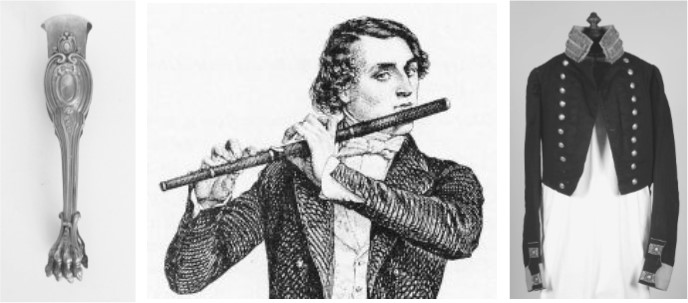
Among the items purchased by Frederick Bessell while at camp in Windham, were gold sugar tongs, military uniforms, flutes, guns, knives a decorated sleigh and plenty of alcohol.

Among the items purchased by Frederick Bessell while at camp in Windham, NH., were gold sugar tongs, military uniforms, flutes, guns, knives, a decorated sleigh and plenty of alcohol.

PART 7: BANKRUPT – THE CONSEQUENCES OF FREDERICK BESSELL’S WILD TIME IN WINDHAM

In a manila file box, held in the collections of the Phillips Library, of the Peabody Essex Museum, are contained all of the claims to Frederick Bessell’s fortune, which were part of his bankruptcy proceedings. In the Prince Family papers, 1732-1839, in Box 1, Folder 11, is referenced “Frederick Bessell bankruptcy.” 1823-1825. Many of the petitions for payment are made by local people, with recognizable names, from the Windham area. There are thousands of dollars in claims! What is truly amazing is the astounding amount of credit, that the good people of Windham and surrounding towns provided to Frederick Bessell.

The claims provide an interesting glimpse into Frederick Bessell’s time in Windham, by detailing the items he purchased, and the various services provided to him while at his camp.

Commonwealth of Mass. August 24th, 1824. Mr. Frederick L.A. Bessell to Abram Pratt Jr. For a short knife: $13.00. November 30th to a silver mounted knife: $60.00. November 30th to a large smooth bored gun: $25.00…

Among the claims are found receipts for copious amounts of alcohol, including, wine, rum, port and brandy.

Then there are the receipts for uniforms, verifying Morrison’s account that Major Dudley used the camp for military training. Among the items in a claim from Amherst, Jan. 10, 1825. Mr. F.L.A. Bessell to Thom. M. Benden. To making a blue uniform coat: $10.00; 5 1/2 yards of gold lace: $9.63; gold chains: $3.50; 6 1/2 …black silk: $8.00; 1 pair of black silk wings: $9.00. 3 yds. Blue cloth: $27.00. 6 gilt buttons: $6.84; The cost of Major Dudley’s coat is as follows: Material Total: $107.85. Labor: $40.00; Gold Wings: $11.00; One brown..$4.00 for a total for $162.85. Must have been a damn fine coat!

Then there were other bills. One has to wonder, if knowing that Bessell was a wealthy man, that they didn’t gouge a little bit with their claims. 1824: Mr. F.L.A. Bessell to William Manning: July 19: Most of Mr. Manning’s bills are mostly for labor and carting material back and forth from Massachusetts to Windham. To horses, wagon and expenses to Windham: $15.00; 2 small wagons, horses and expenses to Ditto: $16.00; …to Windham 6,8 Mr. Manning’s time and expenses: 10.00; Sending man to Windham for you, horse expenses: $3.00; … Merrill’s bill for painting Gig omitted 1823—$14.00; J Sadlers Bill varnishing and ornamenting sleigh: $5.00; 2 pair of lamps 10.00 12.00 –  $22.00… Total Bill for $264.87

Then there is this: F.L.A. Bessell to Robert Barnet. August 1824. Among the miscellaneous charges are: To washing $3.50; To washing: $8.17; to Altering pantaloons: .70; to ribbon: $4.17; Sewing silk ribbon: $1.98; Making window curtains @ 4/6 $5.25; …to Making night gown: $1.75; To Making bed pillows: $2.00…etc, for a total of $37.75.

Attorney J. Thom represented most of the local claimants. In 1824, Isaac A. Smith made a claim for 9 spoons, plate: $2.25; A pair of gold sugar tongs: $25.00; 1 Patent Flute & Flageolet: $10.00 plus other items for a total of $37.75. Bessell played the flute.

The most reasonable claim was from N.W. Pillsbury who worked many days for Bessell and charged just $1.75 per day for his labor with a yolk of oxen.

One of the largest claims was from Thomas and John Nesmith who were demanding repayment and damages of  $300 “for delivery of goods, wares and merchandise.” They operated the store at the Center. Frederick Bessell’s wild time in Windham led to bankruptcy and he became  a man without a fortune but as we will learn later, nothing could extinguish his longing for adventure.

The savage murder of Captain Joseph White, while he slept in his bed, in Salem, Massachusetts, was the crime of the 19th century. It happened in April of 1830. You’ll remember that Frederick Bessell was Captain White’s clerk on the voyage to the Orient. The crime would become the inspiration for various writings of Edgar Allen Poe and Nathaniel Hawthorne. There were thirteen stab wounds and a massive blow to the head, involved in his death. “The possibility that more than one assailant might have been involved and that a conspiracy might be afoot fueled unease. Salem residents armed themselves with knives, cutlasses, pistols and watchdogs, and the sound of new locks and bolts being hammered in place was everywhere. Longtime friends grew wary of each other. According to one account, Stephen White’s brother-in-law, discovering that Stephen had inherited the bulk of the captain’s estate, ‘seized White by the collar, shook him violently in the presence of family’ and accused him of being the murderer.” Since nothing was stolen the murderers motive was unclear. Later it was discovered that the murder was a conspiracy between J.F. Knapp. J.J. Knapp and George Crowninshield. The plot was to murder Captain White, then steal his will, so that when he died without a will, the bulk of his estate would go to the Knapp relatives. Little did the conspirators know, that the most recent will, leaving all to Stephen White, was held securely in his lawyer’s office. At the gathering of the White heirs, just after the murder, we hear the last report of Frederick Bessell. “Stephen White and his four children—son Joseph, the Harvard student, and three daughters, Harriet, Caroline, and Ellen—sat with Eliza Story White and her three daughters, Charlotte, fifteen, Mary, eighteen, and the very pregnant Mrs. Elizabeth Gray, twenty. Stephen’s brother John White was there, and Frederick Bessell…”


Windham Life and Times – November 11, 2016

Frederick Bessell

The Bessell Brothers Return Home

The Bessell Brothers Return Home

PART 6: FREDERICK BESSELL’S BROTHERS DIE TRAGICALLY NEAR THEIR BIRTHPLACE

Just to recap what we’ve discovered about Frederick Bessell, A.K.A “F.L. Bissell,” the wild and rowdy occupant of “Bissell’s Camp,” who arrived along with Major Dudley, in Windham on a May day during 1823. While we’ve learned a lot about the Bessell brothers of Salem, Massachusetts, we know little about Major Dudley, other than the fact, that the Dudley’s were a very prominent family in Massachusetts and produced one of its earliest governors.  So the question remains, why did young Frederick Bessell, who was about twenty in 1823, end up pitching camp in Windham.  It is most certain, that the tragic deaths of his brothers played a part in his seeking an escape. This is what we know about Frederick Bessell’s brothers and how they died far from Salem but close to home.

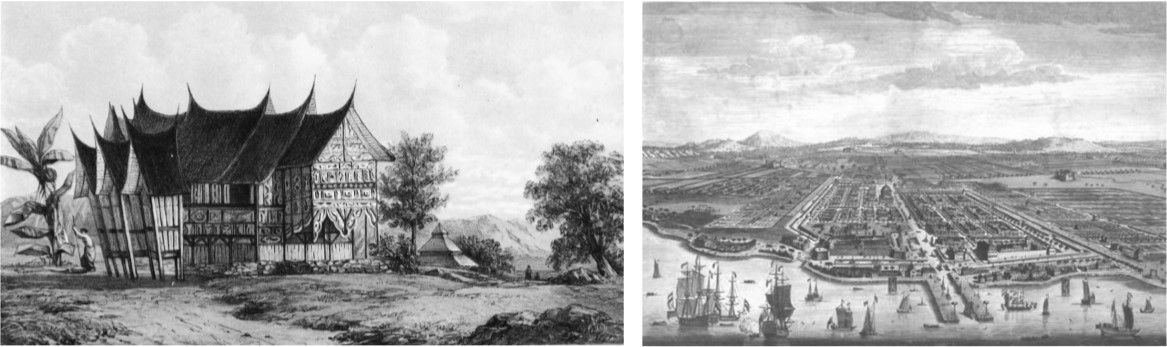
“Far out at sea, on board the Salem brig, Mary & Eliza, the Bessell brothers were thriving. They had cleared Marseilles in April 1821, having gone first to Genoa and then back across the Atlantic to Rio de Janeiro, the capital of Brazil and home of Portugal’s King Joao VI… The Salem men noted with interest that Rio had begun direct trade with India and China, only a seven month round trip.”

“The Mary & Eliza sailed once again for the Mediterranean. As supercargo, Mathias Bessel turned over their cargo at Marseilles, perhaps taking on cases of opium as well as a treasure chest of specie. By 1820, American opium exports from Smyrna to the Orient has outstripped those of the British at Bengal. Batavia was the mart for the trade of Java; in Sumatra, especially along the Pepper Coast, each outpost now expected American vessels to bring Turkey opium as well as specie. Specie made the rajahs rich, and opium helped them consolidate power, for the rajahs and their favored lieutenants were the only suppliers for the growing population of addicts.”

“Well into the Indian Ocean by the end of May 1821, near the lonely volcanic island of Saint Paul, the Mary and Eliza ran into a violent gale from the north…The storm grew monstrous, with deafening winds and raging seas…In early June, Captain Beckford finally brought the battered Mary & Eliza up the channel to Padang. Beckford and the Besells conferred. The vessel needed more repairs than they could get there, but they had come all the way around the world to see their old home, and they had a keen desire to set foot on land, any land, after their terrifying experiences…The Mary & Eliza’s men stayed just long enough to get water and supplies and to make emergency repairs. It was a fatal mistake, for cholera morbus was rampant ashore, and Charles Bessell fell ill and died within days. He had gone home to be buried.”

“The crippled Mary & Eliza moved on eastward, toward the Strait of Sunda. Captain Beckford sailed on to Batavia, where Governor Franz Bessell had worked for the old Dutch East India Company. Here too they found great sickness, as was so often the case; but they had to stay. They came to anchor, and the surveyors inspected her. After hundreds of thousands of miles, eighteen years since her launch at the Magoun shipyard—at a point about as far away from Salem as one could get on the planet—The Mary & Eliza was finished.”

“During the same Thanksgiving season, the White family learned about the Mary & Eliza. Stephen White was especially anxious—losing Charles was a bitter blow, and he could not rest until Mathias was home. He opened Captain Beckford’s letter, and it was not good news. The Mary & Eliza had been condemned at Batavia. As passenger on another vessel, Captain Beckford and the crew were on their way, but not the supercargo; Mathias Bessell had died on July 17, aged twenty-three, a month after his brother. The sudden loss of Charles had been a fatal blow, leaving Mathias deeply depressed and unable to fight the effects of the Batavia epidemic.”

“It seemed impossible that the two brothers had been lost on their voyage of adventure and homecoming. Stephen White and Captain Joseph White experienced terrible grief in the deaths of these young men and in the brutal finish to the story of Joseph White Jr. and the two little boys whom he had promised to raise into gentleman.”

“Stephen composed and elegy for the Register, recounting the arrival of the boys and how, in ‘a family of strangers they were cherished with all the interest and care which the nearest ties could have claimed or created.’ Mathias himself—suave, generous, friendly, talented—was ‘truly, a virtuous man. He valued virtue for it intrinsic excellence, scanning and regulating his actions by its most rigid precepts. Integrity and honor were stamped upon all his transactions with mankind—it was not, however, that appearance of honesty, which circumstances and occasions and interest exact of us for effect, but an habitual and indelible principle upon the mind.’ ”

The tragic death of his only blood relatives, his brothers Charles and Mathias, must have had a devastating impact upon the young Frederick Bessell. It was after this personal blow, that we find him establishing his camp in Windham.


Windham Life and Times – November 4, 2016

Frederick Bessell

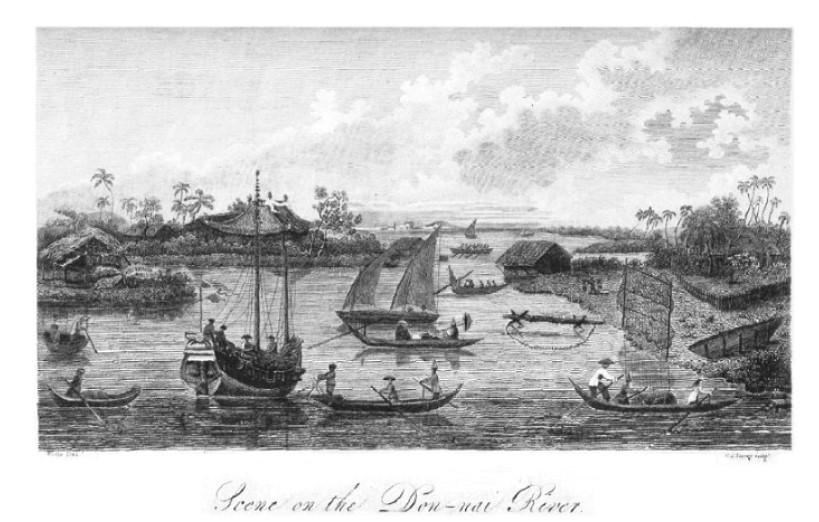
A View of the Don-nai River near Saigon from the book History of a Voyage to the China Sea

A View of the Don-nai River near Saigon from the book History of a Voyage to the China Sea

CAPTIAN JOHN WHITE AND HIS CLERK FREDERICK BESSELL IN VIETNAM

John White published the History of a Voyage to the China Sea in 1823. It is a fascinating account of the merchant ship Franklin exploring the “Orient,” in the early nineteenth century. It seems a decision was made by Captain White and his backers in Salem, to make this voyage in order to establish contacts and to open trade in Cochin China.  After setting sail from Salem to Batavia, the Franklin sailed for Saigon. And on this journey of discovery we also find our intrepid Frederick Bessell acting as Captain White’s clerk.

On May 24, 1819, having entered the Straits of Banca, they were attacked by a large contingent of Malay pirates in their well armed proa canoes including 12 pound cannons. These pirates were notorious for the cruelty toward European, and were known to slowly torture them to death. Having successfully repelled the pirate attack, Captain White entered Mintow, a Dutch settlement where he was told that the pirates were well known as being violent and jacked up on copious amounts of opium. Mintow, which must have been very much like Padang, where Francis Bessell was born, describes the population as being Chinese, Malay and “half-casts,” being the children of Malay, Chinese and the Dutch inhabits. The Franklin then sailed on to the Don-nai River, arriving on June 7th and entered a small bay at Vung-tau, where they awaited permission and a guide to take them up-river to Saigon.

The Captain and crew, upon meeting the local chief by the name of Heo, found him insatiable in demanding that they bestow on him gifts from the ship. In Canjeo “I prepared to accompany them to the village, taking with me Mr. Bessell, a young gentleman who acted in the capacity of clerk…” After spending many days trying to get permission proceed to Saigon, and after many meetings that ended in subterfuge on the part of the locals, a frustrated Captain White and crew departed to explore the coast of “Cochin China.” At Cape Turon, they learned that the king, had left Hue and was doing battle to recover land lost in a recent civil war. They also learned that two French trading vessels were to arrive soon, and the only items valued by the king were side arms which he could use in battle.

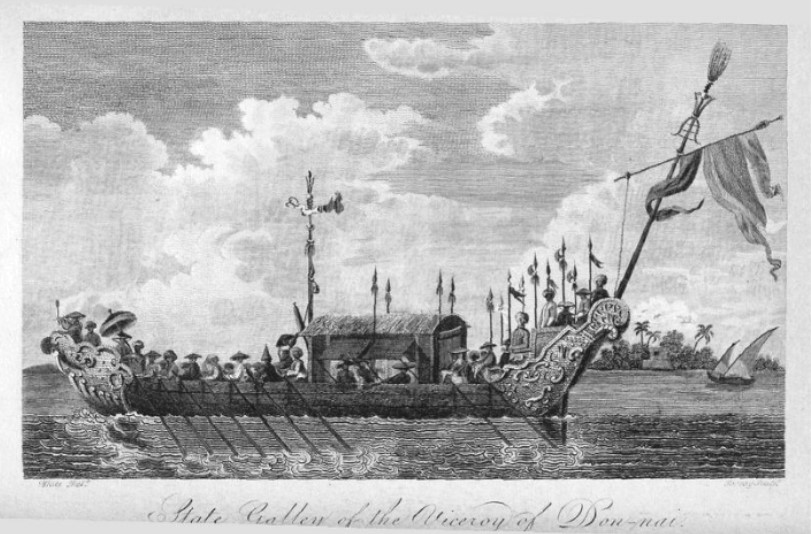
The State Galley of the Viceroy of Don-nai from Captain White's Account of Cochin China

The State Galley of the Viceroy of Don-nai from Captain White’s Account of Cochin China

“At dawn on September 7, (1819) the Franklin of Salem, became the first American vessel to reach Saigon. The crew dropped anchor a mile below the city and admired a wide river filled with ‘boats of light and airy construction, each, in many cases, managed by a single woman, in picturesque costume,’ while ‘great number of native vessels, of different sizes, plying in various directions upon the stream, gave a busy and lively interest to the scene.’ That first night, White and Bessell stayed in a typical riverbank house, standing on pilings two feet above the mud, sided with boards and roofed with enormous palm leaves. Inside were teenage girls, big jars of fish-pickle, pigs, ducks and fowls, a ‘blear-eyed old woman, furrowed and smoke-dried ,’ and asleep in a hammock, a miserable child, covered in filth and vermin, and emancipated with disease.’ The morning tide brought the Marmion, a Boston ship that White had encountered at Manila. Captain Brown and his supercargo, Mr. Putnam, came ashore, and they and White and Bessel were ‘surrounded by a bevy of woman, soliciting employments as merchandise brokers and offering assistance in purchasing cargos.’ He did not realize that they were eunuchs, designated as their culture’s trader caste. The Yankees demurred and went on to Saigon, where their appearance caused a sensation. At the ‘great bazaar or market-place,’ an ‘immense concourse of the wondering natives,’ manhandled these improbable don-ong-olan, strangers from the West, with their unreal faces like pale masks.”

“The Franklin and Marmion swung at their anchors for almost four months as their masters endured insults, indifference, and occasional rock peltings as they laid siege to the traders of Saigon. Through it all, the Yankees kept smiling, trying gamely to break through. Finally, the two captains understood. Women were forbidden to make bulk deals; and Western armament was wanted not goods. Giving up their dream of starting a new commerce, the two captains paid Spanish gold for half cargoes of sugar, promised to return with guns, and sailed away in their tall ships. Each had been given a parting gift of a young royal tiger and pen full of squirming puppies.”

“At Batvia, Brown sold White his sugar and the Franklin sailed for home on April 29 (1820).” The trip home was a disaster. When the tiger ran out of food because of bad weather White was forced to shoot her. Several men died of fever and sickness, and another died after falling from the topsail. Then a most violent hurricane struck, forcing the men to cut away the spars to prevent the ship capsizing. “Diseased and death haunted after two years at sea, Franklin staggered into Salem with an unprofitable cargo and three stumps where the masts had been.”  So ended Frederick Bessell’s harrowing, two year journey, to the Asia.

Sources:

John White,  History of a Voyage to the China Sea in 1823. Free e-book: https://archive.org/details/historyavoyaget00whitgoog

Death of an Empire, Robert Booth