Windham Life and Times January 21, 2022

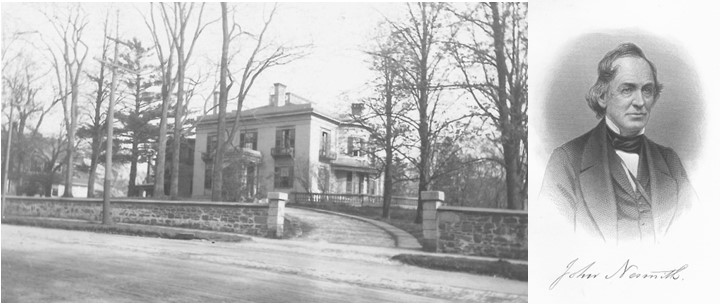
Photograph of the John Nesmith house Lowell MA. Taken about 1910 by Herbert Horne.
 

Windham Native Sons – The Brothers John and Thomas Nesmith Part 2

Lieutenant Governor John Nesmith was born in Windham August 3, 1793. Till his twenty-nineth year his life was intimately connected with the history of Windham, and he actively mingled in its affairs. He was prominent in politics, and acted as treasurer in 1819-20, and represented the town in the General Court in 1821. In 1822 he removed to Derry. The story of his life will be found in the following article, which I take from the Annual Cyclopedia (1869), written by John Bell Bouton.     

    “John Nesmith, one of the most enterprising and successful of New England manufacturers, was born in Windham, N.H., August 3, 1893; died October 15, 1869. Mr. Nesmith commenced life a poor boy, and had only common advantages of education at that time. At fourteen years of age he was placed in a country store, and served an apprenticeship of five years, after which, in connection with his brother Thomas, he went into business for himself. As soon as their cash capital and enlarged credit would warrant the adventure, the brothers removed to New York, and built up an extensive and highly remunerative trade. In 1831, foreseeing the future importance of Lowell, Mass., as a manufacturing center, they settled in that place, invested largely in real estate, and identified themselves with every measure calculated to advance the growth and prosperity of the home of their adoption. Mr. Nesmith’s peculiar tastes and talents soon enlisted him in the manufacture of blankets, flannels, printing-cloths, sheetings, and other textile fabrics, and from thenceforth that was his principle pursuit. He became the agent for, or as owner was interested in, mills in Lowell, Dracut, Chelmsford, Hooksett, and other places, and managed those enterprises with almost unvarying success. He was a large stockholder in the Merrimack Woolen Mills Company.”

     “Appreciating more than any other man the natural advantages of the water-powers which have made Lowell what she is, he bethought himself of securing the supply of water in Winnipesaukee and Squam Lakes in New Hampshire as reservoirs for the Lowell mills in dry seasons, and letting it into the Merrimack by artificial channels. This brilliant conception was at first scouted as impracticable by manufacturers along the river, but Mr. Nesmith, satisfied that they would at last require additional water, bought the right to use both those lakes for the purpose named, and the manufacturers were before long obliged to purchase it from him. Mr. Nesmith was the first to discern the natural fitness of the site now occupied by the flourishing city of Lawrence, on the Merrimack, for a a manufacturing point, and made heavy purchases of land on both sides of the river, securing also the necessary charter to control water-power. About 1844, his bold scheme attracted the attention that it deserved from Boston capitalists, and factories began to rise at Lawrence as if by magic, and that city has since most amply vindicated the wisdom of its real founder.” 

    “While Mr. Nesmith was carrying on these multifarious and arduous undertakings, he devoted his odd hours to philosophical and mechanical studies, in which he became much more than an amateur. Several of his discoveries and inventions were of great importance and value,—among others, the well known machinery for making wire-fence and shawl fringe. Though naturally averse to mingling in politics, and never stooping to the acts by which popularity is often won, he was elected to various offices in the city government of Lowell, where his sound practical sense and extraordinary business capacity were acknowledged and prized by his fellow-citizens without distinction of party… He was lieutenant-governor of Massachusetts in 1862; declined re-election in 1863, and was afterwards appointed United States collector of internal revenue for his district, which office he filled ably and acceptably until his resignation, twelve days before his death. Mr. Nesmith’s attachment to the principles of his party was that of a moralist rather than a partisan, and he never ceased to command the respect of his political opponents. The temperance cause in Massachusetts early engaged his hearty support and liberal contributions and he was for some time a vice-president of the State Alliance. From the large fortune acquired by his tact and industry, he made generous donations to many objects of charity and benevolence which won his sympathy, and was invariably hospitable and kind to his friends and neighbors. In his domestic relations he was especially tender and affectionate. His will made handsome provision for the foundation of the ‘Nesmith Fund’ for the care, support, education and maintenance of the indigent blind of New Hampshire…”

     “The secrets of Mr. Nesmith’s career may easily be found, not more in his high mental endowments, than in his unflagging industry, his indomitable perseverance, his strict integrity. And the concentration of all his faculties and energies on the successive objects in hand, and those temperate and well-ordered habits of life which down to its close preserved his mind in all its youth and buoyancy. He offered a rare illustration of what an active intellect may accomplish, aided by courage and fixity of purpose, and animated by the principles of truth, justice and honor.”

   “Mr. Nesmith married June 1825, Mary-Ann daughter of Samuel Bell, of Chester, N.H. She died at St Augustine, Florida, February 26, 1831, at 28 years of age leaving two children. He married second, Eliza Thom, daughter of John Bell, of Chester. She died at Lowell, Sept. 4, 1836 at age 30 leaving two children. He married his third wife, Oct. 19, 1840, Harriet Rebecca, daughter of Aaron Mansur, of Lowell.

Nesmith House, Lowell MA. https://www.middlesex.mass.edu/historic/nesmith/default.aspx

https://lowellhistarch.omeka.net/items/show/1023

https://www.lowellma.gov/1031/Belvidere-Hill-Historic-District

https://www.lowellma.gov/1035/Washington-Square-Historic-District
Windham Life and Times – January 14, 2022

Windham’s Native Sons

The Brothers John and Thomas Nesmith

    The Nesmith brothers, John and Thomas, were two of Windham’s most successful native sons, making a fortune speculating on and investing in the mill cities of Lowell and Lawrence, Massachusetts. The two brothers grew up with a full exposure to business as their father John Nesmith was a local merchant in Windham.

     John Nesmith (the father) was born on March 29,1762 and lived on the family homestead in Windham which consisted of over 400 acres. He succeeded his father on the homestead in town, and with him lived his aged mother. The original house was  “a roomy old place, consisting of 17 rooms, with a store attached, and a large hall connected with it, which was a famous place for balls and dances in ‘ye olden time.’ A respectable assortment of goods was kept in the store, and a good business done. Mr. Nesmith was successful as a business man. He had just returned from Newburyport, where he had purchased goods, when he was taken with his last sickness, of which he died in a few days, at age of 44 years. His death occurred February 20, 1806, leaving a widow and nine children.  John would have been thirteen at the time of his father’s death, and Thomas would have been eighteen. Luckily for the family, the matriarch, Lucy Martin Nesmith, “possessed remarkable business abilities” which her sons inherited. “Though lame, and obliged to use a crutch, she was able to perform more than most of women. Her portrait is now in the possession of descendants, pictures a face beautiful in expression and of strongly marked character. With the aid of her sons she carried on the store for a few years, until her second marriage to Deacon Daniel McKeen, November 4, 1820. She took her two younger children with her to her new home, the others remaining on the homestead with the grandmother. After the death of Deacon McKeen, November 4, 1820, she returned to her old home, where she remained till near the close of her life.”

     Thomas Nesmith was the favorite of his grandmother, who after the departure of his mother became the head of the Nesmith household in Windham. Morrison says, “Being named for his grandfather, he was especially dear to the heart of his long-widowed grandmother. With whom much of his early life was spent. His education was such as could be obtained from the district schools, and the high school, now Pinkerton Academy, in Derry, taught at that time by Mr. Samuel Burnham.”

     ‘His father dying at the age of forty-four, leaving a family of nine children, his mother decided to continue the store which her husband had operated in one of the rooms of their own home. In this additional labor she had the assistance of her older boys, and here Thomas remained until about 1810, when he went into business for himself.”

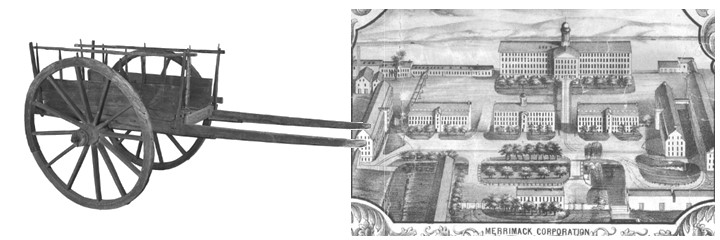
     Morrison continues, “The importation of linen in those days being altogether inadequate to the demand for it, the thread, as well as cloth was spun and woven in various households throughout the country towns. Through this home industry, Thomas thought he saw a way to lay the foundation of a fortune. Buying a horse and one of those primitive two two-wheeled carts then in use, he collected thread, carried it home to his grandmother to color, and his sisters to make into skeins; then took it with the cloth to Lynn, and other large towns, where it found a ready sale. By this means, at the end of a few years he had accumulated six thousand dollars, and could engage his business somewhat. He hired a room, in 1815, of Robert Clark, near the meeting-house in Windham, in which he opened a store with his brother John, with whom he associated as long as he remained in active business. During this period of life he took an active part in the affairs of Windham, and acted as town clerk in 1821.” Six Thousand dollars was a small fortune in the early 19th century, earned with intelligence, hard work, perseverance and overcoming  adversity while trained by the example of his father and remarkable mother.

    “In 1822, Mr. James Nesmith took the Windham store, and the brothers Thomas and John, removed to Derry, occupying the old store of Patterson & Choate, now a dwelling-house. It was during this period of his life that Mr. Nesmith met Lucinda Fay, whom he married May 20, 1832. She was then in Derry as principal of the Adams Female Seminary, and was a woman possessing a fine, strong religious nature, as well as much personal beauty. She was the daughter of Winslow and Betsey (Colburn) Fay, and was born in Lebanon, N.H., June 12, 1810, and was educated at Miss Grant’s school in Ipswich, Mass.” (For those of you keeping up and who are good at math, she was 22 years younger than Mr. Nesmith, he being 44 and she 22. I guess, sometimes, money can buy love…)

     “ Mr. John Nesmith after this went into the commission business in New York City, where he was soon joined by Thomas, but they remained there only a short time. The Livermore estate in Lowell was advertised for sale, (150 prime acres) and the brothers decided at once to purchase it and live permanently in that city. (Belvidere Historic District) Mr. Nesmith was never afterwards connected with any active business outside his own private affairs. What Mr. Nesmith’s special characteristics were, may be told by an old friend and neighbor: ‘To great diligence, he through life added sound judgement and forethought, which produced very remarkable results of gain with small percentage of loss. He accumulated a large estate, but only by regular business transactions. He defrauded no man and left no enemies. His integrity was not questioned and his moral and courteous bearing made him a pattern man in business affairs, a good citizen and neighbor, a gentleman in social life.’ When he went to Lowell, manufacturing corporations and city institutions were just  assuming tangible forms.  He was a member of the city government the first two years of its existence, and helped forward many enterprises that were struggling into being. 

Windham Life and Times – January 7, 2022

Windham Native Sons: Milton A. Clyde

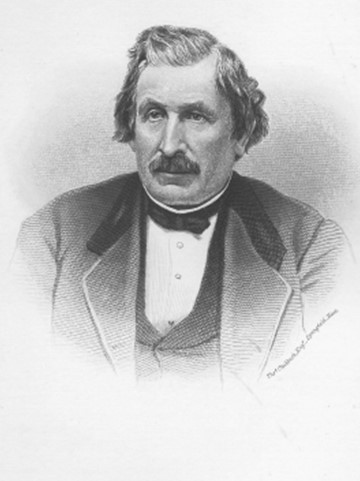
    Most of us in town remember the Clyde family because of the pond named after them on their farm which has now become open space. Many sons and daughters of Windham families left town to make their fortune in the wider world. Milton A. Clyde (1816-1875) was one of those people and his rags to riches story is the stuff of the American dream in the nineteenth century.  He became rich building railroads.

The  firm  of  Stone  &  Clyde  took numerous  small  contracts  for  stone-work  on  the  road  west  of Springfield, and,  on  the  completion  of  the  road  to  Albany,  Mr. Clyde  located  in  Springfield,  and  contracted  to  fill  an  old meadow  east  of  Main  Street,  where  the  Boston  &  Albany freight-yard  and  side-tracks  are  now  located.  Stone  &  Clyde then  took  a  contract  for  grading  on  the  Hartford  &  Springfield Railroad,  and  in  1843  they  contracted  for  the  stonework on  that  railroad.  Mr.  Clyde  was  connected  with  the building  of  the  Niagara  Falls  &  Buffalo  Railroad.  In  1853-4 he  built  the  Hampshire  &  Hampden  Railroad  from  Westfield to Northampton.

     About  this  time  he  became  associated  with  Sidney  Dillon, now  president  of  the  Union  Pacific  Railroad,  under  the  firm name  of  Dillon,  Clyde  &  Co.,  and  from  that  time  till  his  death Mr.  Clyde  was  the  working  manager.  This  firm  was  one  of  the greatest  contracting  companies  in  the  United  States.

     One  of  their  earlier  operations  —  a  most  profitable  one,  too— was  the  “great  fill”  on  the  Lake  Shore  Railroad  between Cleveland,  O.,  and  Erie,  Pa.  Afterwards  they  were  engaged  in similar  operations  on  the  New  Jersey  Central  Railroad.  The firm  of  Dillon,  Clyde  &  Co.  were  also  heavy  contractors  on  the still  unfinished  portion  of  the  Boston,  Hartford  &  Erie  Railroad between Waterbury and  Fishkill,  on  which  they  were  engaged for  several  years.  Some  years  ago  Mr.  Clyde  built  the  first Hartford  reservoir,  and  recently  the  firm  of  Dillon,  Clyde  &  Co. built  the  Connecticut  Valley  road  from  Hartford  to  Saybrook. They  also  built  the  Rockville  branch  of  the  Providence  &  Fishkill road  and  the  Springfield  &  Providence  Railroad  from  Providence to  Pascoag,  R.  I.,  in  which  Mr.  Clyde  was  a  director.

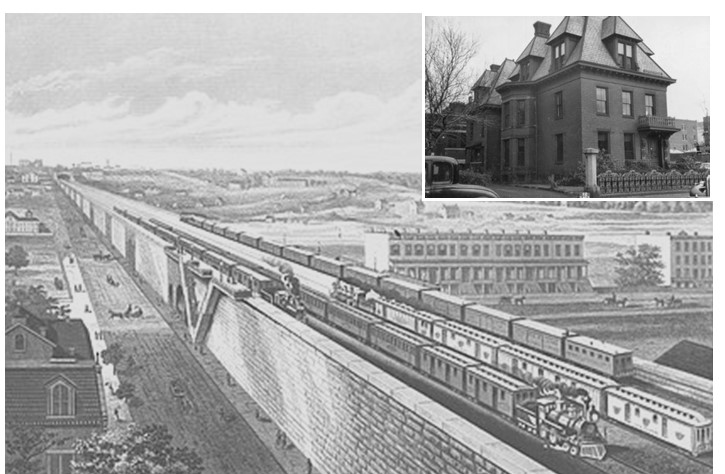
“Work on the project (the New York Central from Grand Central station.) began in fall 1872. The first contract was awarded to Fairchild and Ward and the Watson Manufacturing Company for the section between 45th Street and 49th Street. The preexisting track level in this section was maintained as the streets crossed over the line via iron bridges. The project north of 48th Street was completed by Dillon, Clyde & Company, which submitted the winning bid of $6,395,070 (equivalent to $138,151,000 in 2020). The contract for the project had been awarded on August 1, 1872. The contract for the section between 79th Street and the Harlem River was awarded to them on November 11. On January 14, 1873, the contract for the work between 49th Street and 79th Street was awarded to Dillon, Clyde & Company, which provided the only bid lower than that expected by the New York City Board of Estimate. The contract called for the project’s completion in two years. This section had been put up for bid, but since none of the bids were satisfactory, the bidding process was reopened.” Wikipedia. The Clyde house, 33 Pearl Street, Springfield MA., was modest considering Mr. Clyde’s wealth.
 

But  the  great  work  of  Mr.  Clyde’s  life  was  the  tunneling  and building  of  the famous  underground  railroad  in  New  York  City for  the  New  York  &  New  Haven”,  New  York  Central  &  Hudson River,  and  the  Harlem  Railroads,  from  the  Grand  Central  depot at  Forty-second  Street,  to  the  north  end  of  Manhattan  Island,  a distance  of  some  eight  miles.  The  greater  part  of  the  excavation was  made  through  solid  rock,  of  width  sufficient  to  accommodate the  tracks  of  all  the  roads,  and  from  twenty  to  forty  or  fifty  feet in  depth. The  contract  price  for  this  great  work  was  $15,800,000 while the  extras  swelled  the  sum  to  16,000,000.  The  success  of  this enterprise  was  very  largely  due  to  Mr.  Clyde’s  wonderful  executive ability,  which  was  ever  the  marked  feature  of  his  life.  It was  a  common  remark  among  contractors,  that  Mr.  Clyde  could do  a  job  cheaper  than  any  other  man  in  the  United  State of  an  iron constitution,  he  spared  neither  himself  nor  his  men in  carrying  out  his  enterprises. While  superintending  this  work  he  took  a  severe  cold,  which prostrated  him  with  congestion  of  the  spine,  which  terminated fatally.  While  engaged  upon  a  contract  on  the  Fall  River Railroad  (now  Old  Colony),  he  met  the  lady  whom  he  married four  years  later. He  married  Caroline-Valentine  Read,  of  Fall  River,  Mass.,  Jan.30, 1848.  She  was  b.  at  Fall  River,  March  20,  1825,  and  was  the daughter  of  Joseph-E. and Sybil Valentine  Read.  She  now  res. in  Springfield,  Mass. Mr. Clyde’s grandson, Milton Clyde Long died on the Titanic when it sank. His obituary in Railroad Age noted that, “Mr. Clyde leaves a widow and two daughters, who will probably inherit a handsome fortune.”

This all rather interesting considering the large stone causeway in Windham known as London Bridge, was located on the Clyde property. The question becomes whether the Clyde family was responsible for its construction?

Windham Life and Times December 31, 2021

Where are we headed and who is leading us?

     Best Wishes for 2022. Hopefully, we will still be allowed to laugh. From George Carlin (1931-2008), prophetic words for out times, “They’ll get it all from you sooner or later ‘cause they own this %@#$ place. It’s a big club and you ain’t in it. You are not in the big club. By the way, it’s the same big club they use to beat you over the head with all day long when they tell you what to believe. All day long beating you over the head with their media telling you what to believe, what to think and what to buy. The table is tilted, folks. The game is rigged and nobody seems to notice. Nobody seems to care. Good, honest, hard-working people: white collar, blue collar, it doesn’t matter what color shirt you have on…”  

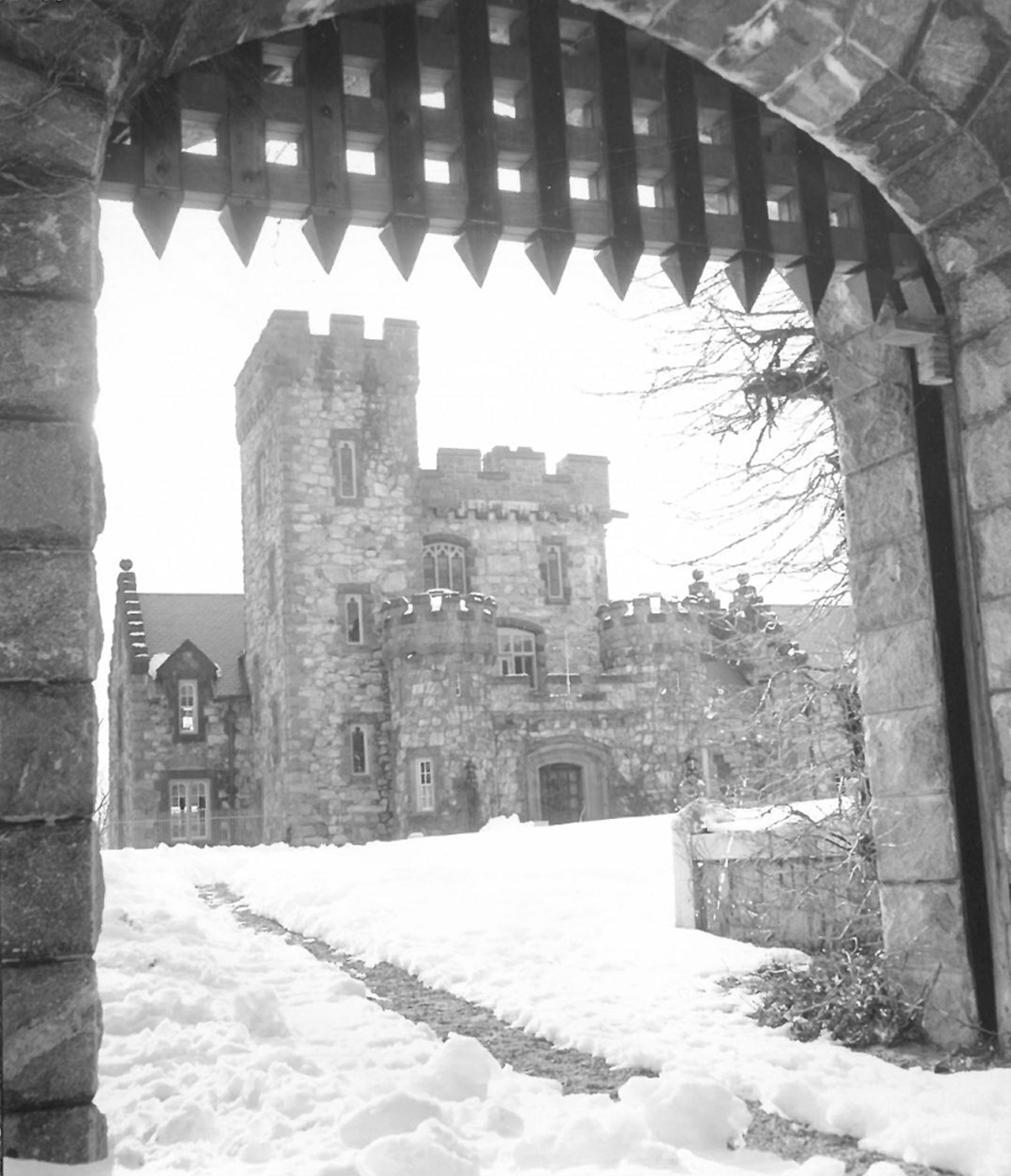
     (Snow Scenes from Searles Castle.)