The Siege of Boston

George Washington’s First Battle in the Revolutionary War
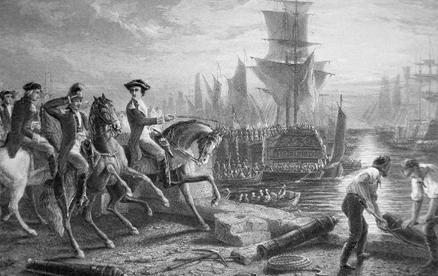
    I have included this historical summary of the Siege of Boston by Mary Stockwell, Ph.D from the George Washington Presidential Library. This will give the background to the letters home from Windham residents who were part of the engagement. I will publish those letters next week including ones from Robert Dinsmoor and John Morrion.

     “The Siege of Boston was George Washington’s first campaign as Commander-in-Chief of the Continental Army. Disdain for British troops stationed in North America to enforce royal policies grew among colonists, especially in cities such as Boston. Subsequently, the British occupied Boston at the outbreak of the American Revolution, and eventually 11,000 British troops were stationed there. American forces undertook the Siege of Boston to force out the British from April 1775 to March of 1776, when the British evacuated the city.”  

     “Militias contained the British to Boston in April 19, 1775 following the battles at Lexington and Concord. Freeing Boston of British control was an early priority in the war, as it was a critical port and ideological American stronghold. However, Americans faced early defeat attempting to advance towards the city in the Battle of Bunker Hill on June 17, 1775. Understanding the need for more competent military leadership, the Continental Congress elected Washington as Commander-in-Chief of the Continental Army, and he was bound for Boston to continue to the siege.”

     “Quickly, Washington was charged with forming military companies into an army and directing the siege of Boston. Knowing that he would be away for many months, Washington wrote to his wife, Martha Washington, “I shall feel no pain from the toil or the danger of the campaign,” he confessed. With the future of the Revolution uncertain, Washington worried that Virginia’s Governor Lord Dunmore would attack Mount Vernon and even imprison his wife while he was fortified outside of Boston.

     “Upon arriving in Cambridge in early July, Washington proposed an attack on Boston. However, his officers were against it as the British were still receiving supplies by sea. They urged Washington to wait until the waters around Boston were frozen.”

     “Washington shifted his priorities, and instead sent an army to Quebec who ultimately failed in their invasion. He also ordered Henry Knox to march to Fort Ticonderoga and bring back the post’s artillery. Knox returned to Cambridge in January 1776 with fifty-nine cannons to assist in future efforts to capture the city. Throughout the winter, Washington contained the British under the leadership of General Thomas Gage to the confounds of Boston.

     Washington desired to “bring the Enemy out of Boston” with a nearby attack in Dorchester Heights that would restrict British usage of the greater harbor. On the evening of March 4, 1776, Washington directed his men to take the cannon retrieved from Fort Ticonderoga up Dorchester Heights south of the city. In a more assertive turn, Washington also ordered his troops in Cambridge to fire on the British. Despite a strong British defensive, the Americans held their position in Dorchester Heights.”
     “General William Howe sent troops up Dorchester Heights to undermine the American fortification, but a snowstorm prevented the assault. Fearing a brutal bombardment at their advance, he decided to leave Boston.   On March 17, 1776, known afterward as “Evacuation Day,” 11,000 British soldiers and hundreds of Loyalists left the city by boat, leaving significant amounts of artillery. his victory was crucial in preventing the British control of a major port in which to receive supplies and troops. Additionally, the victory boosted morale for American independence.” Washington marched into Boston on March 18, but there was little time for rejoicing. He rightly suspected that the British turn their attention to New York City. In the summer of 1776, Washington prepared to launch the New York Campaign as the British moved to occupy another critical port city.” Mary Stockwell, Ph.D., revised by Zoie Horecny, Ph.D., 15 April 2025

https://www.mountvernon.org/library/digitalhistory/digital-encyclopedia/article/siege-of-boston

The Battle of Bunker Hill

    “The day after George Washington’s appointment to command the Continental Army, the American and British forces engaged in one of the bloodiest battles of the Revolutionary War. Washington was still in Philadelphia preparing for his journey to Boston, when the armies of General Artemas Ward and General Thomas Gage engaged in the Battle of Bunker Hill.”  

    “The American force outside of Boston grew in size and strength in the weeks following the Battle of Lexington and Concord. Militiamen from Connecticut, New Hampshire, Rhode Island, and what would later become the state of Vermont streamed into the vicinity of Boston. While the quality of the American soldiers was questionable at best, their sheer numbers troubled Gage. Flush with reinforcements and new subordinates, Gage met with three officers who played key roles in the war in North America and all whom failed time and again to quell the rebellion. Gage held a council of war with Gens. William Howe, Henry Clinton, and John Burgoyne. The problem that lay before them was that the Americans assumed a position on a peninsula of land (the Charlestown Peninsula) bordered by the Mystic and Charles Rivers, and that was only accessible to the British via an amphibious landing. After debate among the Americans, it was decided that they would fortify two of the three high points on the west side of the peninsula—Bunker and Breed’s Hills. As Breed’s Hill sat closer to the British (and at an elevation about 40 feet lower in height) the Americans chose to fortify Breed’s Hill first followed by Bunker Hill. Gage and his subordinates debated the situation, with Clinton advocating for a landing in the rear of the Rebels where they could smash them from their rear and isolate them on the peninsula. Howe advocated for a direct assault. The King’s soldiers would attack the unsecure Rebel left and outflank the enemy from their position. Howe’s proposal won the day.   The Rebels did not play to the British tune. General John Stark from New Hampshire recognized that the left flank was exposed along the south bank of the Mystic River. He and his men assembled a makeshift split-rail barricade to blunt any flanking action employed by the British.”  

    “On the sultry afternoon of June 17, 1775, Gage and his commanders ordered British regulars and grenadiers to be transported across Boston Harbor and disembarked in lower Charlestown. Howe led King George’s troops in the assault, but the situation had changed since the officer advocated his plan. The American left was not open and flanking column of eleven companies of light infantry were stopped cold as the made their way along the narrow beach. A second attempt was made to dislodge the fence defenders in concert with a frontal assault on the main redoubt atop the hill. This attack, too, failed. A third attack against the American fortifications atop Breed’s Hill finally carried the day for the British. Once again marching head on into musket fire, British tenacity and a lack of ammunition on American side finally carried the day for Gage and Howe.  Henry Clinton declared it was “A dear bought victory, another such would have ruined us.” British losses amounted to roughly one-third of the men engaged. Within weeks Washington arrived to assume command of his army, and undertake siege operations. For now, Patriot forces held the advantage in New England.”  https://www.battlefields.org/learn/maps/bunker-hill-june-17-1775

The Battle of Bunker Hill

The Background in Windham | Part 1

“Fifteen  days  after  this  meeting,  on  the 17th  of  June,  1775,  was fought  the  battle  of  Bunker  Hill,  and  Charlestown  was  laid  in ashes.  The Battle of Bunker Hill, fought on June 17, 1775, was a crucial early battle of the American Revolutionary War. While the British won the battle, they suffered heavy casualties, demonstrating the strong colonial resistance. The battle, fought primarily on Breed’s Hill (though misnamed after Bunker Hill), saw the British forces ultimately driving the American militia from the hill, but at a high cost.” 

     “The  Provincials  had  met  the  trained,  disciplined  troops of  England,  and  had  not  found  them  invincible.  With  electrical speed  the  story  of  the  battle  went  through  the  land.  The  cannonading during  the  battle  had  been  heard  in  Windham;  her  sons had  mingled  in  the  deadly  fray,  and  some  of  them  had  sealed their  devotion  to  American  liberty,  by  offering  themselves  as  a sacrifice upon  its  altar.  Tradition  says  that  five  of  her  sons  were  slain,  but  the  names  of  only  one  has  come  down  to  us,  namely, Thomas  Collins,  who  died  on  Winter  Hill. In  Capt.  Elisha  Woodbury’s  company,  Colonel  Stark’s  regiment, of  Salem,  were  John  Kincaid  and  William  Duty,  who enlisted  April  23  to  Aug.  1,  1775.”

    “In  Capt.  John  Marcy’s  company  was  Joseph  Park. John  Jameson  was  not  in  the  battle,  but  enlisted  in  Captain Woodbury’s  company,  July  10,  1775. John  Montgomery  of  the  centre  of  the  town  was  in  the  battle. John  Simpson  and  William  Simpson  were  in  the  fight  in  this company.  John  Simpson  had  a  part  of  his  hand  shot  away  by  a cannon  ball.  This  fact  was  attested  to  by  Dr.  Isaac  Thom,  of Windham,  and  he  was  placed  upon  the  invalid  list,  and  received half  pay  from  Jan.  1,  1776,  to  Sept.  12,  1786,  inclusive,  to  the

amount  of  £127.”

CASULTIES AND LOSSES

     John  Simpson,  lost  a  gun,  value  £1.  10s.

     Ephraim  Kyle,  1  gun  and  bayonet,  £2.  2s.

     Thomas  Collins,  killed,  lost  1  gun,  £2,  8s.

     “In  Capt.  George  Reid’s  company  from  Londonderry,  which marched  to  Medford  and  joined  the  American  forces,  and  were  in the  Bunker  Hill  fight,  are  the  following  men  from  Windham:  — Lieut.  Abraham  Reid. Allen  Hopkins.  Thomas  Wilson. Alexander  Brown.  John  Hopkins.  William  Clyde. James  Gilmore.  Ebenezer  Mcllvain. David  Gregg. This  list  is  as  it  stood  July  28,  1775. In  Capt.  Hugh  Maxwell’s  company,  in  10th  regiment  Continental army, commanded  by  Col.  William  Prescott,  were  Arthur  Darrah  and  William  Darrah,  of  Windham.”    “I  shall  give  of  the  Windham  soldiers  in  the  Revolution. Men in service  eight  months,  and  were    probably   serving  for   Londonderry and were  in  the  battle  of  Bunker  Hill…The  record  of  these  men,  and  many  others  from  New  Hampshire towns,  can  be  found  on  the  ”  Coat  Rolls,”  and  other  muster  rolls  in  the  office  of  the  Secretary  of  State  of  Massachusetts,  at Boston. The  “Coat  Roll”  were  so  called  from  the  fact  that  the  men were,  at  the  end  of  their  term  of  service,  each  to  receive  a  coat as  a  bounty.  By  a  resolve  passed  by  the  Legislature  of  Massachusetts, June  29,  1775,  13,000  coats  were  ordered  for  this  purpose, and  vouchers  for  them  are  on  file  in  the  State  Department of  Massachusetts.”

     “The  news  of  the  attack  at  Bunker  Hill  reached  Windham  in the  night,  and  in  the  morning  the  people  assembled,  and  assistance of  men  and  provisions  was  instantly  dispatched  for  the place  of  hostilities,  the  men  setting  out  on  foot,  and  others  following on  horseback,  with  needful  provisions. “

    “At  the  time  of  the  battle,  some  of  the  Windham  men  rallied to  aid  the forces  in  the  field.  They  left  their  homes  hurriedly, and  reached  Andover  before  Alexander  Park,  one  of  the  men, noticed  that  he  had  left  his  powder-horn  at  Windham.  The  battle was  over,  and  they  returned  to  their  homes.  Two  days  after the  battle,  the  selectmen  gave  their  townsmen  a  three  days’  notice to  tarry  after  the  sermon  on  Thursday,  the  twenty-second  day  of June.”

     “The  twenty-second  day  of  June,  1775,  was  a  notable  day  in the  history  of  the  town,  one  long  to  be  remembered,  and  of  which the  successors  of those  humble  worshippers  and  sturdy  men  who gathered  together  in  the  little  church  on  Cemetery  Hill  may  well be  proud.  After  the  preparatory  exercises  for  the  sacred  observances of  the  following  Sabbath,  the  worthy  men  of Windham convened  and  consulted  together  for  the  general  good.  There was  no  unseemly  haste  or  unmanly  fear,  but  with  calm  heroism and  self-reliant  spirits  they  met  the  momentous  issues  of  the  hour. Religion  and  patriotism  were  thus  harmoniously  blended,  and  a fitting  precedent  established  for  succeeding  generations.  At  this meeting,  James  Betton,  Esq.,  was  chosen  a  “Delegate  to  Represent this  Parish  at  the  Congress  at  Exeter  at  their  Next  sitting.”

     “Voted to  let  the  Constables  warrant  Stand  as  they  are  with the  words  His  Majesty’s  Name  in  them  until  we  Have  the  advice of  the  Provincial  Congress.”

Voted,  to  add  — John  Dinsmoor,  Nehemiah  Hadley, James  Gilmore,  William  Campbell, to  the  Committee  of  Inspection  for  Windham. So  closed  the  second  town-meeting  after  the  commencement  of the  bloody  drama  of  the  Revolution” 

The Windham Guards

The Militias- The Power Behind the Revolution Part 5

The Second Amendment: “A well regulated Militia, being necessary to the security of a free State, the right of the people to keep and bear Arms, shall not be infringed.” Why was this right and duty placed into the United States Constitution? It’s rather obvious that the new country of America realized that they owed their independence from the British to the militias that had been set up to fight the Indians and the French, and which had allowed them to settle a disputed frontier. In other words, if there had not been well organized militias in the 1700’s, America never could have wrested its independence from the powerful British Empire. Its ironic that in more recent times, a well organized, local rebel force, is what allowed the Vietnamese to defeat America in Southeast Asia and local rebel forces defeated both the Russians and Americans in Afghanistan. An effective rebel force, could wreak havoc on a rouge government throughout the heartland of America even today, although those Directed Energy Weapons and Blackhawk helicopters of the U.S. government, make a  terrifying prospect for those in rebellion.

     In Windham, militias continued after the Revolution. Based on birth dates and when people moved into Windham, the “Windham Guards” were active during the early 1800’s.

From Morrison’s History of Windham. Theodore Dinsmoor was born in Windham in 1798. “He was square build, compact in bone and muscle…; He could outrun, out jump and outwrestle the whole town…The ease and grace with which he would beat any competitor, took away all sting and mortification from the vanquished and instead of a sullen foe, he became a fast friend, and as proud of the honor of having contended with him in a trialof strength and skill as most boys would have been in coming out victorious…He was a most skillful drummer…That was in the days of the glorious pomp and circumstances of the training and regimental muster of the New Hampshire Militia, before the military spirit kindled by the War of 1812, had died out, and the militia degenerated into that laughing-stock of the world which characterized its condition in most of the Northern States, at the breaking out of the rebellion in 1861.”