Windham Life and Times – May 27, 2016

Rock Pond

INTRODUCTION

Lucien Caron grilling on Rock Pond with his unhappy nephew Robert.

Lucien Caron grilling on Rock Pond with his unhappy nephew Robert.

Things have changed. It used to be that once Memorial Day hit, there would be released this pent up frenzy of activity, on the waterfront in Windham. Well, OK, there still is, to a degree, but it’s nothing like it was when the summer people were trying to squeeze in as much waterfront frivolity, family gatherings and buzzed activities as possible, with the little time they had to enjoy it. It was a time when summer floated on Budweiser, Schlitz and Narraganset, not craft beer, white wine and martinis. And food, there was always copious amounts of food, all of it bad for you! The smell of roasting meats on the barbecue, ethnic delicacies and home-made deserts wafted over the water.  There were buckets and boxes of Granite State Potato chips that you picked up warm in Salem, on the way to camp. Maybe in the morning your mother would pick out some whoopee pies or other treats from the back of the Cushman baker’s van. Ah, heaven! Family and friends packed the waterfront, chairs in a neat row overlooking the water. Time was spent on the screened porch or the yard, after all there was no air conditioning. You could hear the frivolity and laughter of all of the other people enjoying themselves around the shore of the pond or lake.

I still remember all the great people that rented summer cottages from my grandfather on Cobbett’s Pond. These were rustic affairs, with used furniture and bare stud walls, which had mellowed to a rich, reddish brown and all the cottages had huge screen porches facing the water. People lived on the porches and at night, they glowed with the ambience of a bare yellow light-bulb. There was a mixture of people from Lawrence, northern Massachusetts and Rockingham racetrack.  Horse owners, trainers and hard-working folks who also played hard. It wasn’t golf on the links, it was horseshoes and Bud. I still remember my friend’s Dad, coming home after working long hours as a pipe fitter, taking all of us out on the lake to go water-skiing. A beer in hand, he put up with us, as we asked to go again and again.

Now if you think it was all low brow you’d be mistaken. One of the best summer theaters in New England was located right on Range Road as was a pretty nine hole golf course. In New England, the point was that summer was short, and warm sunny days were few and far between. If you were paying the taxes and expense on a summer ”camp,” that you could use, maybe 3 months a year, you were going to make the most of every minute that you had on the water.

This summer, as the people of the lakes and ponds, lets make a commitment, to pay our respect, to our for-bearers in lakeside living. This year lets “go for the gusto” with non-stop partying, eating, drinking, boating, water-skiing, floating on rafts in the sun, sailing, skinny-dipping, nocturnal boat cruises away from prying eyes, fire-pits, and enjoying family, friends and neighbors. As a tribute to those who floated before us, let’s give it hell, along the shores of Windham’s lakes and ponds! Maybe we should turn off the AC and open the windows, and enjoy the sounds of boats and laughter as they pass in the night. None of us know what tomorrow will bring, a little joy in the small things is good for us all. Stop what you’re doing, stop worrying, crack open a beer and enjoy the moment! This little lecture is as much for me as for anyone else.

Happy Memorial Day

Go forth, grill meat and drink some beer, in memory of our lakeside for-bearers. And get a little too wild while your at it !

Many thanks to Robert Caron for the photographs and stories about his family and uncles Moe and Lucien on Rock Pond, in Windham.


Windham Life and Times – May 20, 2016

Edward Devlin

PART 4 – THE RAKU POTTERY PARTY

Windham May 21, 1974. The Eagle-Tribune.

By Sally Gilman

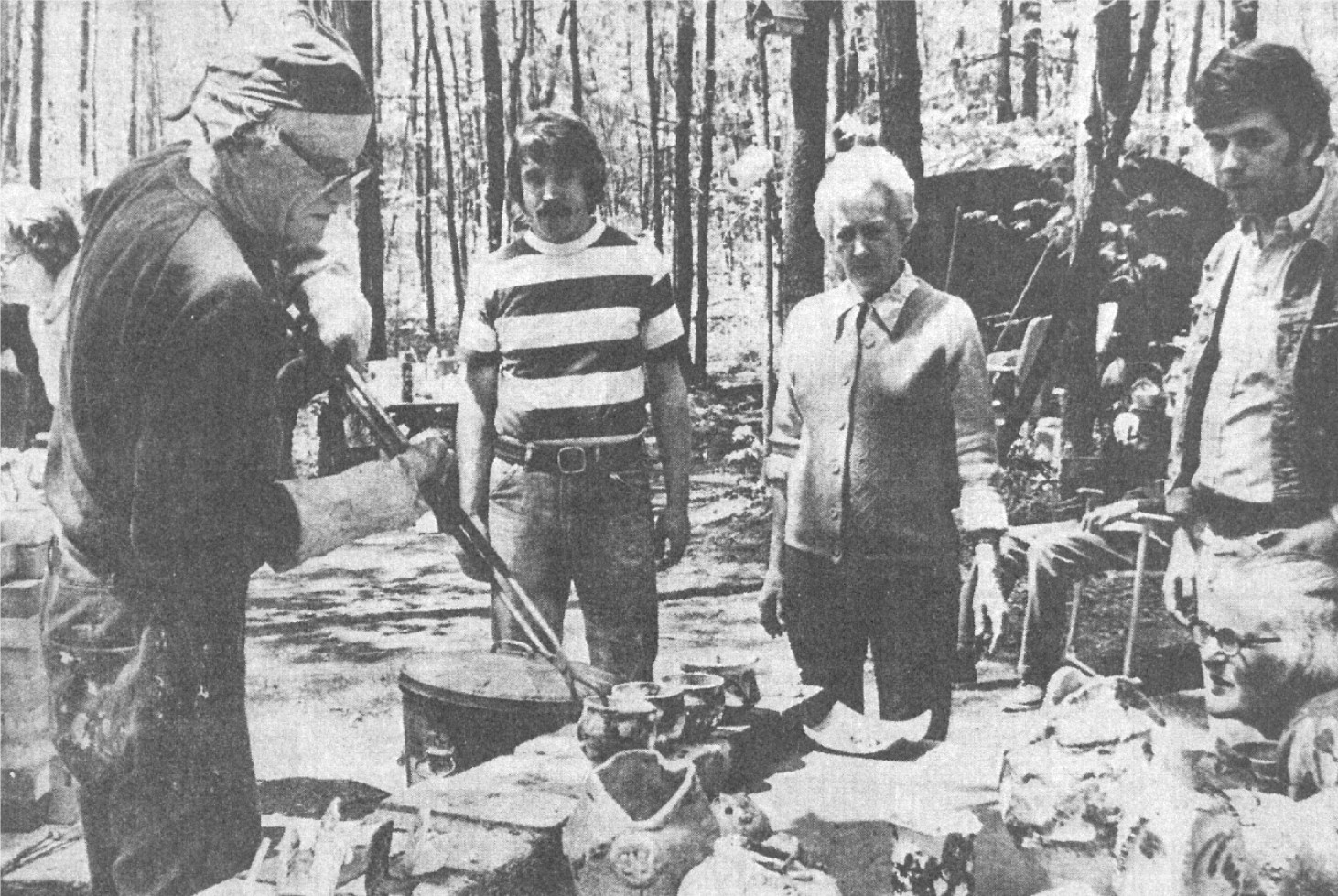
Ed Devlin and Edith Low with Raku pottery pieces.

Ed Devlin and Edith Low with Raku pottery pieces.


“When Edward and Pearl Devlin decided to throw a party for the Windham Arts Association, you could be sure it would be something quite different.”

“Since Devlin is a noted New Hampshire potter, he decided to have all the arts association members over to his studio for a Raku party.”

“Raku pottery had it origin in the tea bowls of the 16th century and the term “Raju” comes from the Chinese character meaning enjoyment, pleasure, contentment and ease.”

“Under the guidance of the Devlins, Raku was the ideal fun project for everyone.”

“Raku emphasizes the accidental and spontaneous and not the unblemished surfaces and sophisticated concepts in pottery.”

“The ground work for the Raku party was laid months ago, when Devlin gave each member of the local group a lump of clay and told them to go home and ‘Create.’ ”

“All sorts of containers, dishes, and plaques were turned out and brought to Saturday’s Raku party.”

“Working outside in old clothes, the members went up to their elbows in cans of glaze mixtures and dribbled paint of all colors over the clay objects, which had already dried and bisque fired by Devlin.”

“After the ‘potters for-a-day’  did their own glazing and decorative work on the pieces they were dried a second time.”

“Devlin using tongs, put the pieces into a glaze fire, leaving them there from 10 minutes to a half hour, depending upon the glaze composition and temperature.”

raku-2

“They were then removed with tongs and allowed to either cool off for subtle reduction effects on the metallic oxides and glazes, the red hot pot was put into a covered vessel containing combustible material. They were also put directly into cold water to freeze the glaze in a molten stage.”

“Devlin supplied everyone with some ‘practice’ pieces before they took on their original creations. The Windham Arts Association was so pleased with the final results, that it is planning to exhibit the Raku work at the Nesmith Library.”


Windham Life and Times – May 13, 2016

Edward Devlin

PART 3 – The Potter’s Craft in His Own Words.

devlin-wheel

     “ ‘Best therapy there is,’ said Edward Devlin as he looked up from his dripping ball of clay on his potter’s wheel. ‘You just work out your frustrations on this ball of mud and before long you are so busy feeling good about what you’ve made and forget about anything else that might have been bothering you. Everybody has an innate desire to make something– to create something that is his own; and nothing is more rewarding than working at something you love.’ ”

These are the words Mr. Devlin used to describe his own work, which he pursues each day in the little studio set back from the road in Windham.”

“ ‘Here you start at the beginning, and get your hands right in the medium. Every-time you make something that is altogether new…People today are more interested in doing what they want to do than what they must do. Young people want an outlet for self-expression, and older people want a chance to relax. They are looking for a gap in the rat race.’ ” Derry News, September 25, 1969.

     “ ‘I like making things with my hands. I like things that have a function and I hope that other people can get as much pleasure in using them as I do in making them.’ he said. ‘Some craftsman like to go on and on about artistic mumbo-jumbo. But I think that whole philosophical thing is a lot of hogwash.’ ”Eagle Tribune

He has had samples of his pottery exhibited in the Cleveland Museum, the Boston museum and Cochran Gallery in Washington D.C. He was an active member of the NH League of Craftsman

He has had samples of his pottery exhibited in the Cleveland Museum, the Boston museum and Cochran Gallery in Washington D.C. He was an active member of the NH League of Craftsman

     “ ‘He admits with a grin that his driveway is filled with things that didn’t turn out the way I wanted them.’ Accidents do happen and sometimes a piece will break…It’s best to know what you’ll find when you open the kiln, but sometimes something unexpected happens that is very nice. No matter what the effect, it’s gratifying to create something beautiful,’ he said.” “ ‘It’s a lucky man who works at what he likes to do best,’ he said, and rubbing his clay covered hands upon his huge apron he went on, ‘like me.’ ””

“Edward Devlin is Windham’s resident potter. Almost anyone in town can direct you to his home…‘These are mostly non-symmetrical pieces—the design motivated by organic growth and plant forms.’ Mr. Devlin said… Pottery can be divided into three general classes: earthenware, stoneware and porcelain. In Mr. Devlin’s studio are many examples of all three classes. But, he works primarily with stoneware, however. “I haven’t been doing too much work on earthenware lately. It involves too much preparing. I like the delicate colors of stoneware—there’s more refinement than in the colors of earthenware,’ he said.” “ ‘Freedom of expression.’ That is how Mr. Devlin sums up his interest in pottery…Sally Gilman, Eagle Tribune, March 18, 1969.


Windham Life and Times – May 6, 2016

Edward Devlin

PART TWO

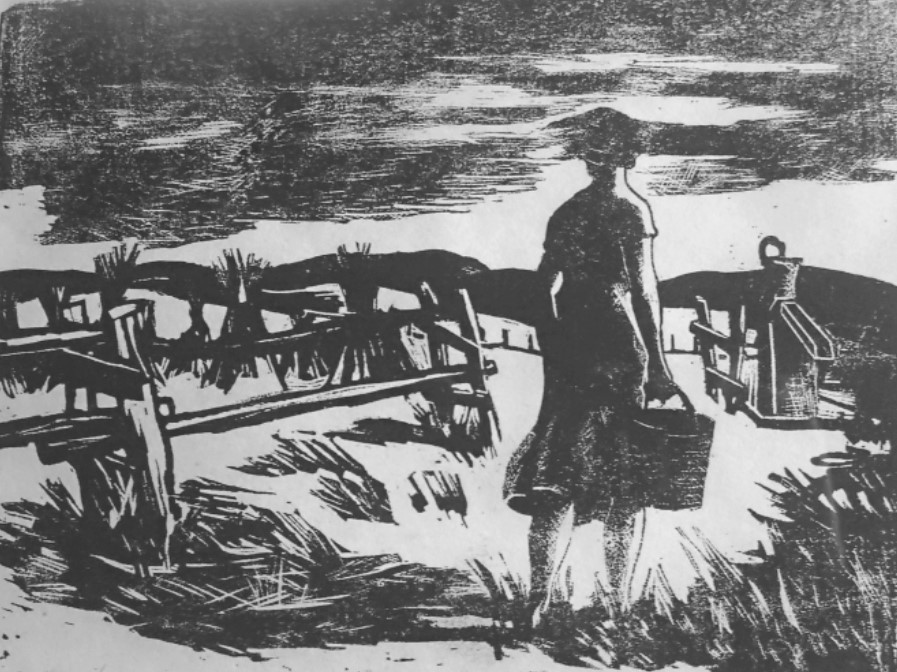
“In the print, Red showed his 19 year old bride walking through the fields in need of water for the strawberry plants. Life so naturally blended with the practical needs of family, that, over time, the gardens expanded, livestock increased, a new farm was bought, and five children were born. Her sole indulgence were flowers, wild and cultivated, where she found beauty after hours of toiling.” On their fiftieth wedding anniversary, Dad nicely summed up their life together when he gently said, ‘Could Not Be Better”. With a wide smile

“In the print, Red showed his 19 year old bride walking through the fields in need of water for the strawberry plants. Life so naturally blended with the practical needs of family, that, over time, the gardens expanded, livestock increased, a new farm was bought, and five children were born. Her sole indulgence were flowers, wild and cultivated, where she found beauty after hours of toiling.” On their fiftieth wedding anniversary, Dad nicely summed up their life together when he gently said, ‘Could Not Be Better”. With a wide smile

We know from Ed Devlin’s own words that “he was never quite satisfied with life in the big city saying ‘I’m a country boy at heart.’ He also was quoted as saying, “New York is just not my bag. It’s too fast a pace for me, the city’s too impersonal.” “And when his friend, George Lloyd called him to help paint the mural for Hamilton Smith Hall, at the University of New Hampshire, Devlin grabbed the offer.  ‘It was a good excuse to get out of New York…I liked New Hampshire so much I decided to stay.’ ”  This was in 1939-40 and the project was a massive mural.

“Artist George Lloyd was on a mission to find a ‘real’ farmer. It was the spring of 1939, and, having been commissioned to paint a mural about agriculture that would cover one entire wall inside Hamilton Smith Hall, he wanted to be sure he could depict a New Hampshire farmer accurately. With UNH agriculture professors as his guide, he soon found his models out in the fields, piecing together a way of life in the aftermath of the Great Depression—much the way he was doing, himself. Lloyd was one of the unemployed artists who had been hired under the auspices of the Federal Art Project branch of the Work Projects Administration, a national program created by U.S. President Franklin D. Roosevelt to provide productive work to some 8.5 million citizens in lieu of unemployment benefits. Coordinated by Manchester artist Omer T. Lassonde, at the time one of the country’s most influential modernist painters. The UNH project included three massive murals, eight feet high and 40 feet wide, in the three main rooms of UNH’s then-library. Lloyd’s ‘agriculture’ mural was to grace the reserve room.” UNH Today. According to the artist’s wife, “this is a mural on farming in New Hampshire, It deals with the four seasons of the year—Spring, Summer, Fall and Winter; and with the four main social institutions around which the farming community is centered—the Home, Town Meeting, School and Church…” UNH Today

“In order to stay in rural New Hampshire, Devlin had to give up his art career. ‘Back in the 40’s there was very little interest in New Hampshire for this sort of thing or with artwork in general. People didn’t have the money to get interested in it.’ He met his wife, Pearl, a native of New Hampshire, and settled down in Nottingham, working a small dairy farm. When their family grew with five children, they bought 100 acres plus in Windham NH.” “He was a farmer for 30 years before he could devote himself to his ‘real work.’ ” “His former art training has given him an artist’s eye for craftsmanship, but he credits farming experience for much of his pottery design. ‘The one thing I have strived for is that a piece not only have a shape, but that shape to have a vitality to it…to live and have appeal,’ he said, ‘It’s a sensitivity of form. My close association with nature, after 30 years of farming helped to develop it’ ”

“But Ed Devlin went back to art work as suddenly as he had left it. Remembering his work with Dedham Pottery where he painted decorations, he remembered an old hankering to learn the potter’s trade.”

“ ‘My daughter was studying pottery at the University of New Hampshire. It restimulated an interest that was in the back of my head,’ he said. ‘I worked with it between farm activities and the more I got into it, the more it interested me.’ ‘As the years went by. This (Windham)  was no longer a farming community. We finally got rid of the cows, then I put all my time into pottery.’ ”


Windham Life and Times – April 29, 2016

Edward Devlin

PART ONE: “WHAT DO YOU MEAN, YOU DON’T WANT TO BE A DOCTOR ?!”

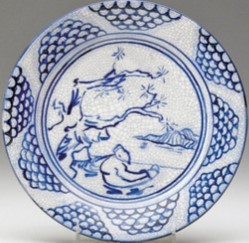
eddevlinplate

The plate shown above is described by the auction house as, “Dedham pottery crackleware, very rare plate painted by Ned Devlin, Asian inspired scene, 1934. Indigo Registered stamp, artist signature and date. Estimated at between $1,250 and $1,750.” (2008 auction)

Edward Devlin was born in 1912, a Boston native, he grew up in a comfortable home. His father had as they say, “pulled himself up by the bootstraps” and through hard work and determination had become a dentist. It was presumed in the Devlin household that owing to all the advantages given them, that all of the boys would enter the professions, preferably becoming doctors. We can only imagine the conversation, when Edward announced to his father, that he wanted to attend art school. That being said, his father must have recognized that he had “shown artistic inclinations from an early age.” Edward went on to “graduate from the School of the Museum of Fine Arts in Boston where he received a scholarship for painting in 1929.” He also attended Massachusetts Art Institute and studied sculpture at the Copley Society.

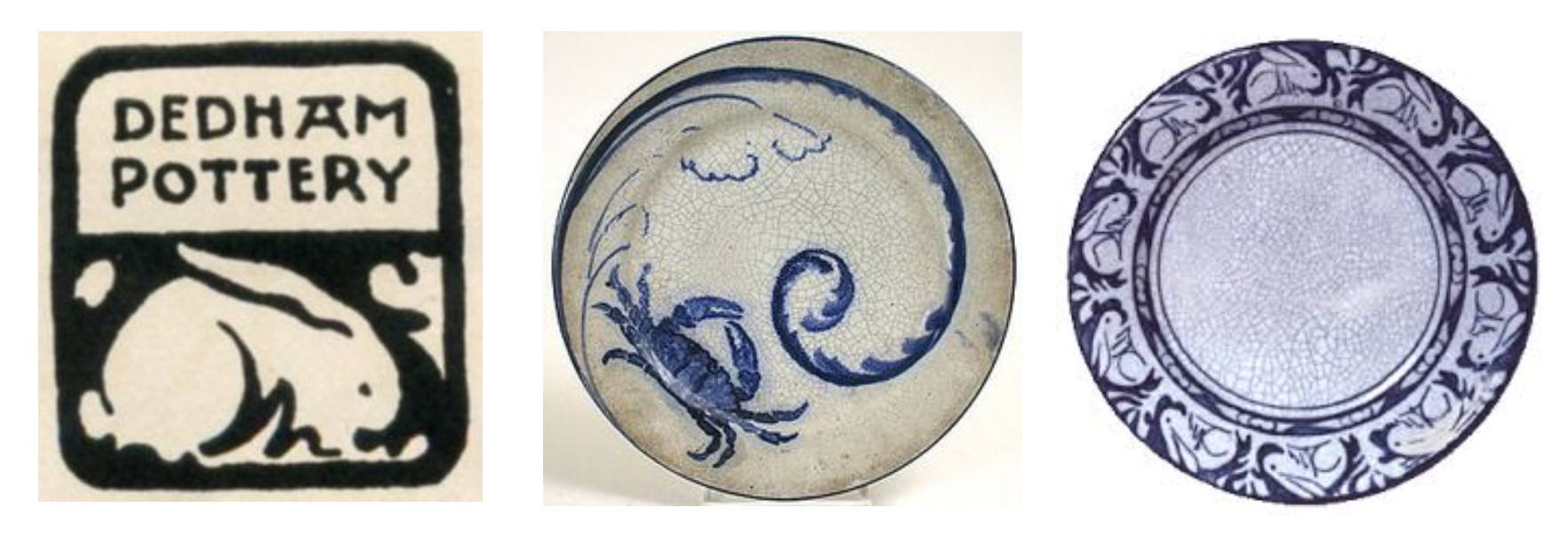
Ed began his career in the 1930’s as a decorator at the Dedham Pottery in Dedham, Massachusetts. When he worked for Dedham, he signed his work as Ned Devlin. While there he created Chinese landscape designs among other motifs. Dedham had been founded by a fifth generation Scottish potter named Hugh Robertson, and operated from 1896 through 1943. It was known for its high-fire stoneware characterized by a controlled and very fine crackle glaze with thick cobalt border designs. A Yankee Magazine article says of Dedham that, “This homage to the raw beauty of nature was never more apparent than during the Arts & Crafts movement. Its back-to-nature aesthetic rejected the industrialization of the late 19th century and embraced a return to the simplicity of handmade goods. American artists heard this call of the wild and, so inspired, produced some of the finest decorative pieces ever made in this country. Beautiful ceramics were one of the movement’s greatest legacies, and among the most popular wares was Dedham pottery, made right here in New England. You likely already know Dedham pottery: that simple tableware with the bluish-gray crackle glaze and cobalt-blue border of flora and fauna. The charming patterns repeat in a right-facing (or, occasionally, left-facing) rotation. It’s reminiscent of Chinese export porcelain, but with a whimsical edge. Both modern and traditional in its appeal, Dedham pottery’s most recognizable border design, the crouching ‘Dedham Rabbit,’ doubles as the image for the company logo.” All of the designs were painted by hand by the artists at Dedham.

The ubiquitous Dedham pottery rabbit plate and other Dedham pottery items.

The ubiquitous Dedham pottery rabbit plate and other Dedham pottery items.


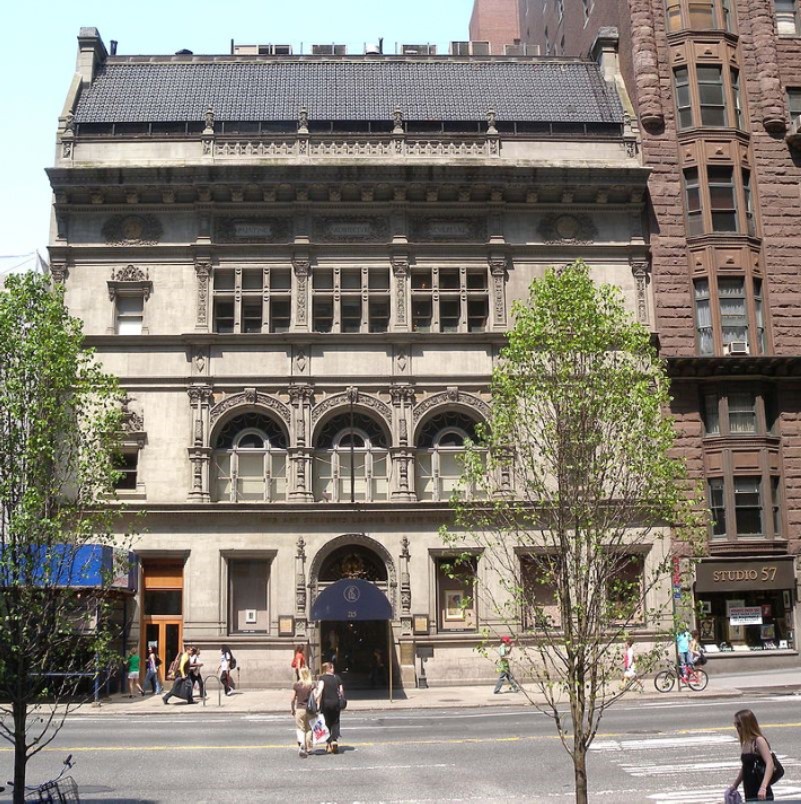
The Art Student League building in New York City. Notable Alumnae include Mark Rothko, Roy Lichtenstein, Georgia O'Keefe and Jackson Pollock.

The Art Student League building in New York City. Notable Alumnae include Mark Rothko, Roy Lichtenstein, Georgia O’Keefe and Jackson Pollock.

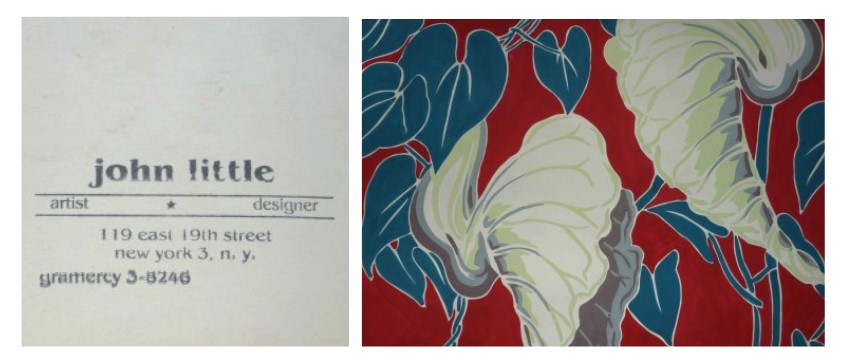
After working at Dedham, Ed decided to head for New York City. While there, he was a member of the Arts Students League. Another member of the league, at the same time, was John Little, who studied there under Georg Grosz (a famous German expressionist painter who emigrated to America in the 1930’s,) and Hans Hoffman. Little was according to the New York Times, “an abstract expressionist artist who founded a New York company that made fabrics and wallpapers with designs inspired by abstract impressionism.” “In 1921, Mr. Little founded the fabrics-wallpaper company, which he called the John Little Studio. By the mid-1930’s the concern was attracting wide praise for fabrics that combined high-quality designs with affordable prices.” Little went on later to paint with his friend and neighbor, Jackson Pollock. Edward Devlin designed fabrics and wallpaper at John Little Studios, during the 1930’s, at the highpoint of the company.

Fabric Designed at The John Little Studios. Date Unknown.

Fabric Designed at The John Little Studios. Date Unknown.


Windham Life and Times – April 21, 2016

Edward Devlin

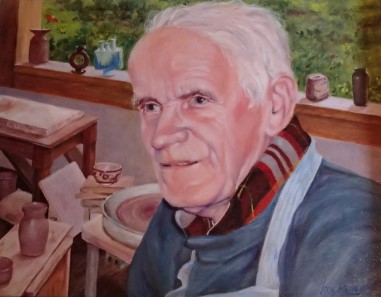
eddevlin-painting

INTRODUCTION: FARMER, ARTIST, POTTER

When you think of artists associated with Windham, you might think of the impressionist painter Mary Braddish Titcomb or the western artist, Howard Everett Smith, both of whom grew up in town, but became noted for their art elsewhere. Well, there was another artist, who moved to Windham in the 1940’s, who was a designer, painter and potter, who became very well known in art circles in New Hampshire and beyond.

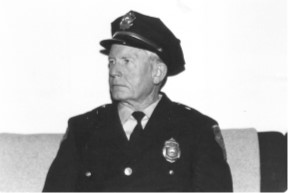
 Over the years, learning about Windham’s history,  his name kept coming up in conversation, but I knew very little about him. Of course, I knew his wife Pearl, personally, from my trips to the Nesmith Library as a child. Then one day, I was given a piece of pottery, that bore the imprint of Ed Devlin on the base. The vase had belonged to long time Windham, Chief of Police, Willis Low. Little did I know at the time, that the potter and the chief were close friends, as you might have expected them to be in a small town, like Windham was, during their lifetimes. Back then, the rhythm of life was a bit slower and more humane. Willis will always be remembered for the way he handled the kids who went astray, working in his unique way to put them back on the straight and narrow, without all the fuss and hysteria often seen with juveniles today. And it’s Willis Low’s vase that renewed my curiosity about Ed Devlin.

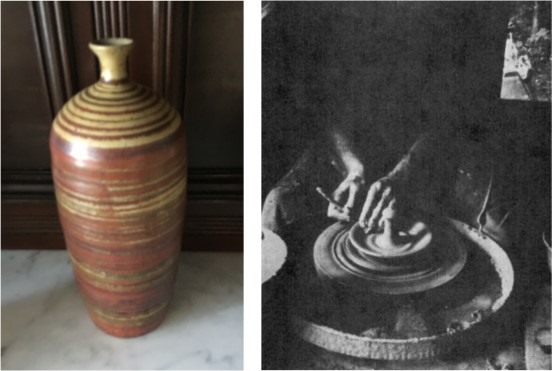
Low’s vase is pictured below. It is a beautiful form, with warm hues of rich, deep russet and brown on a natural speckled background. Well, now I had a piece of the man’s pottery, but still didn’t know anything about him. Finally,  determined to tell his story, I called his family to find out more about him and his career as an artist.

devlin-group

The Devlin family, especially Mary, was very gracious to me in providing the detailed information I was seeking about her dad and his craft. I really enjoyed finally hearing his story, about his life in the arts, and his life in Windham. I hope that over the next few weeks, I will be able to do justice to a man I only know through those that loved him, newspaper accounts and by the art he created.


Windham Life and Times – April 14, 2016

Passaconoway

His Ascent into Heaven

“It was about the middle of February, 1684. From comparative Indian accounts, it was well below zero, with a sky of azure blue and not a cloud to be seen anywhere. Passaconaway had been told to journey to what we now know as Dustin Island, where the wild rushing Contoocook divides that it may quietly enter the Merrimack. With whom he had journeyed hither he did not know and could not remember, for now he found himself erect and alone amidst a circle of glowing coals, whose rising heat gave him perfect protection from the elements.”

“Now well past the century mark, the heavy sinews and muscles of former years shrunken and face much wrinkled, he nevertheless was able to stand erect and with folded arms await the will of the Great Spirit. Presently the message came and in almost though not quite audible tones he was told, “Passaconaway, thy time has come. Watch the southern sky and do my bidding, for thou art speedily to be made ready for the journey to the Happy Hunting Grounds which the Great Spirit prepared for those who have done their best.”

“The message ceased and immediately his eyes, still keen and little dimmed by age, scanned the sky southward to what we now know as Concord. Here there appeared to be very small white clouds, which as he watched intently seemed to be coming northward, following the “River of Swift and Broken Waters.”

“Nearer and nearer they came to his lonely isle at the mouth of the “Silver Stream that Winds among the Hills.” As the clouds drew nearer they grew larger and began to swirl round and round, until to his great delight he saw they were filled with wolves,―wolves, the fastest thing in the forest, and better still, a sweeping count showed one hundred and twenty, the Indian’s idea of the largest wolf pack ever known.”

“In wonderment filled with trust he stood erect and strong, with arms folded as the fires burned low and his own clothing seemed to take on added winter strength. He noticed that the wolves in the clouds were stringing out in great circles, two by two, until with one grand sweep they sped past him before his very eyes.”

“Was this an apparition or was it real? He was to know almost instantly. It took only a few brief moments for the wolves to speed by and come to a sudden stop. Instantly he found before him a magnificent sledge, heavily laden with well curried and finely softened furs of all the animals of forest, lake and stream, he had been accustomed to hunt throughout his long life.”

“No heavenly message was needed now. The wolves were already tugging at their traces anxious to be up and away. ‘Passaconaway stepped on a splendid bearskin mat, the largest and best he had ever known, for was he not “The Son of the Bear?” The softer and finer furs surrounded him with their warmth, and as his left hand grasped the side of the sledge for steadiness, he found a long rawhide whip in his right hand. He had seen the settlers’ use these and had always wanted one for himself. Now his wish was fulfilled.”

“One crack of the whip was the signal, and away they sped over the frozen wastes of the Merrimack, crossing meadows at open rapids or broken waters (falls), but generally following the river northward through what we now know as Boscawen, Franklin, Tilton, Winnisquam, Laconia, and Lakeport to Lake Paugus, named after his grandson.”

“At Arquedahkenash, (The Weirs) it was necessary to slacken speed for here was his last earthly view of the representatives of his people. Out on the ice where the Weirs Station now stands, the brief stop was made, and as he looked upward and to the left, he saw several rows of the spirit forms of sachems and sagamores with whom he had worked so many years. All those on the shore had hands and arms extended high in the air,―the Indian’s sign for “Welcome, brother.”

“He started to address them, but the Great Spirit sealed his lips. The wolves were again tugging at their traces, anxious to perform their task. He had given them a quick glance and then again turned to the left, this time to see the spirit forms of his sachems and sagamores fading away, with the single right arms and hands of each one lifted high,―the Indian’s sign for “Farewell, brother.”

“A small group of former Winnepesaukees now appeared on the shore and this is what they saw. The wolf train with its precious load sped onward over the glassy surface of the lake, so beautifully streaked with windrows of the whitest and purest snow. The speed increased, (we can understand it now as we have seen a modern plane do the same thing) until the watchers on the shore saw them in the air, making straight for Agiococook (Mt. Washington) the highest of the hills.”

“Now but a speck in the sky, they were at the top, and a brief moment of heavenly light such as they had never experienced before, illumined the scene. Here in a brilliant light, between two white clouds they saw their beloved Passaconaway, Greatest Chieftain of the tribes, received into the welcoming arms of the Great White Spirit,―the God of the Indian, and the God of all mankind.”

George Calvin Carter, PASSACONAWAY: THE GREATEST OF THE NEW ENGLAND INDIANS. Granite State Press

Windham Life and Times – April 7, 2016

Passaconoway

PART 5: SURRENDER TO THE EUROPEANS

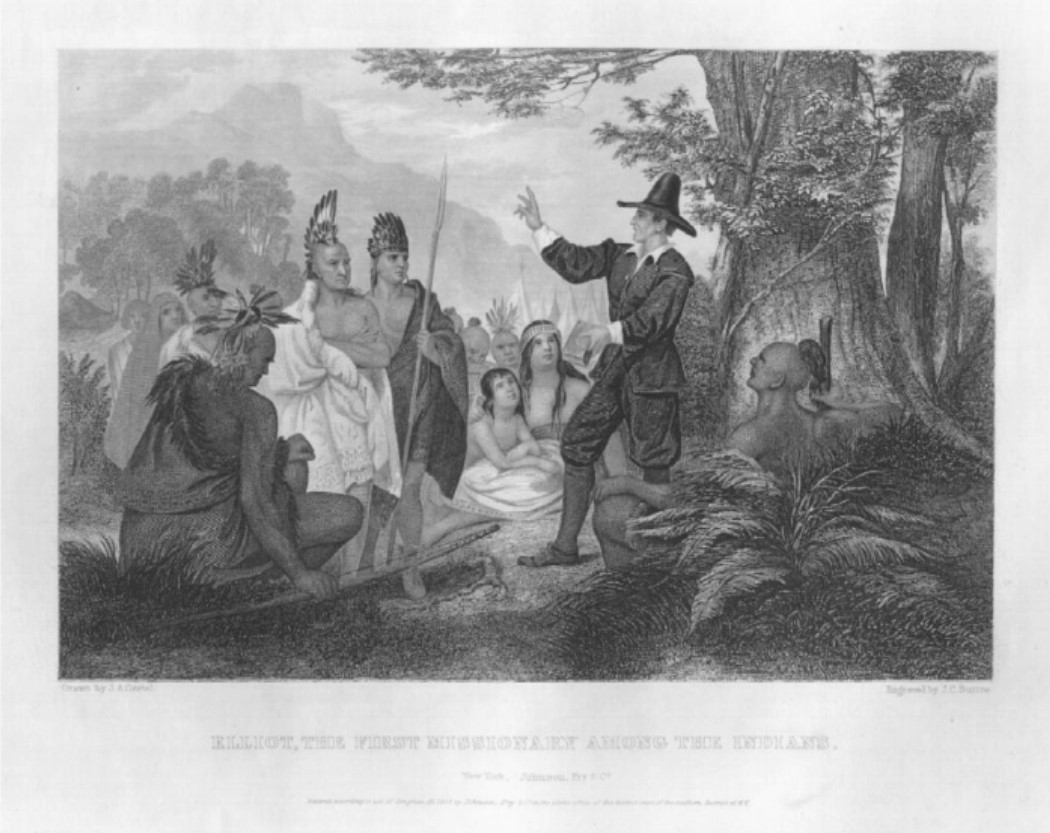
eliot

In the end Passaconaway knew that his people would be swept away by the advance of the Europeans. Joseph M. Wilson, in his History of Dracut says that, “Up to this time all of the wilderness north of the Merrimack belonged to Passaconaway and his tribes and seeing by this grant that the English were going to claim it all without considering his or their rights” he knew that his people’s ability to keep control of their land was doomed.  Potter in his History of Manchester says, “We hear nothing more of Passaconnaway or his people, till 1660. At that time, being of very great age, he was seen by an Englishman at Pawtucket, who was much conversant with the Indians upon the Merrimack. It is possible that this Englishman was Gen. Gookin. There was a vast assemblage of the Indians at Pawtucket, and borne down with age and cares, the old Sagamon, at a public feast, made a farewell speech to his people.”

” ‘Hearken to the words of your father. I am an old oak that has withstood the storms of more than a hundred winters. Leaves and branches have been stripped from me by the winds and frosts — my eyes are dim — my limbs totter — I must soon fall! But when young and sturdy, when my bow — no young man of the Pennacooks could bend it — when my arrows would pierce a deer at a hundred yards — and I could bury my hatchet in a sapling to the eye — no wigwam had so many furs — no pole so many scalp locks as Passaconaway! Then I delighted in war. The war whoop of the Pennacooks was heard when the Mohawks came — and no voice so loud as Passaconaway’s. The scalps upon the pole of my wigwam told the story of Mohawk suffering.’ ”

” ‘The English came, they seized our lands; I set me down at Pennacook. They followed upon my footsteps; I made war with them, but they fought with fire and thunder; my young men were swept down before me when no one was near them. I tried sorcery against them but still they increased and prevailed over me and mine, and I gave place to them and retired to my beautiful island of Natticook. I that can make the dry leaf turn green and live again — I that can take the rattlesnake in my palm as I would a worm, without harm — I who have communion with the Great Spirit dreaming and awake — I am powerless before the Pale Faces. The oak will soon break before the whirlwind — it shivers and shakes even now; soon its trunk will be prostrate, the ant and the worm will sport upon it! Then think, my children, of what I say; I commune with the Great Spirit. He whispers to me now — Tell your people Peace, Peace is the only hope of your race. I have given fire and thunder to the pale faces for weapons — I have made them plentier than the leaves of the forest and still shall they increase! These meadows shall they turn with their plow — these forests shall fall to their axe — the pale faces shall live upon your hunting grounds and make their villages upon your fishing places. The Great Spirit says this, and it must be so. We are few and powerless before them. We must bend before the storm; the wind blows hard; the old oak trembles; its branches are gone; its sap is frozen; it bends; it falls! Peace, peace with the white men — is the command of the Great Spirit — and the wish — the last wish of Passaconaway.”

According to Wilson, Passaconaway lived out his days “on the Indian reservation at Pawtucket Falls on the north bank of the Merrimack which later became a large part of Dracut.” Potter says he lived north of Manchester in his old ancestral home. Both agree that that he did eventually convert to Christianity as result of the preaching of Rev. Eliot. Potter provides the reliable evidence to back his claims. “It has been supposed that Passaconnawy died about this time, and our historians give no account of him after the time of the delivery of ‘his dying speech to his children.’ But this supposition is erroneous. Passaconaway was alive in 1663, and at the head of his tribe, so his speech of 1660 can hardly be considered his ‘dying speech,’ without some stretch of the imagination.

Passaconoway finding his planting and fishing grounds encroached upon by those having grants from the government of Massachusetts; already deprived of his planting grounds at Natticook where he had planted for a long while; and the legislature having announced their intention to grant his lands at Pennacock whenever ‘so many should be present to settle a plantation there.’—he began to think he soon should not have land enough to erect a wigwam upon.” Accordingly. May 9th, 1662, Passaconaway presented a petition to the Massachusetts legislature which was approved, giving Passaconoway a grant 3 miles square along the Merrimack which included parts of what is now Manchester, Merrimack, Londonderry, Bedford and Litchfield, NH.  The irony of this petition is highlighted by Potter who says, “The record of this grant discloses an important fact. In less than twenty years from the time Passaconaway submitted himself to the colonists, and put himself under their protection, he and his tribe were literally reduced to beggary. The Bashaba of the Merrimack valley, and the rightful owner of all its broad lands, had become a ‘poor petitioner’ and ‘pore supplicant’ for a plantation of pine plains, and did ‘earnestly request the Honored Court to grant two small islands and ye patch of Intervaile’ to him—receiving them doubtless with all due submission and thankfulness, if not humility! Old age, as well as contact with civilization, must have done its work upon the spirit of this haughty sagamon, for him thus to have meekly asked his usurpers to grant him what properly was his own.”

Windham Life and Times – March 31, 2016

Passaconaway – John Greenleaf Whittier’s Account

PART FOUR

Whittier penned these lines long after the Native Americans had surrendered the Merrimac to the mills, leaving the cruel contrast of industrial bondage, along a river that had once been so free.


  1. THE MERRIMACK

O child of that white-crested mountain whose springs
Gush forth in the shade of the cliff-eagle’s wings,
Down whose slopes to the lowlands thy wild waters shine,
Leaping gray walls of rock, flashing through the dwarf pine;
From that cloud-curtained cradle so cold and so lone,
From the arms of that wintry-locked mother of stone,
By hills hung with forests, through vales wide and free,
Thy mountain-born brightness glanced down to the sea.

No bridge arched thy waters save that where the trees
Stretched their long arms above thee and kissed in the breeze:
No sound save the lapse of the waves on thy shores,
The plunging of otters, the light dip of oars.

Green-tufted, oak-shaded, by Amoskeag’s fall
Thy twin Uncanoonucs rose stately and tall,
Thy Nashua meadows lay green and unshorn,
And the hills of Pentucket were tasselled with corn.
But thy Pennacook valley was fairer than these,
And greener its grasses and taller its trees,
Ere the sound of an axe in the forest had rung,
Or the mower his scythe in the meadows had swung.

In their sheltered repose looking out from the wood
The bark-builded wigwams of Pennacook stood;
There glided the corn-dance, the council-fire shone,
And against the red war-post the hatchet was thrown.

There the old smoked in silence their pipes, and the young
To the pike and the white-perch their baited lines flung;
There the boy shaped his arrows, and there the shy maid
Wove her many-hued baskets and bright wampum braid.

O Stream of the Mountains! if answer of thine
Could rise from thy waters to question of mine,
Methinks through the din of thy thronged banks a moan
Of sorrow would swell for the days which have gone.

Not for thee the dull jar of the loom and the wheel,
The gliding of shuttles, the ringing of steel;
But that old voice of waters, of bird and of breeze,
The dip of the wild-fowl, the rustling of trees.

II. THE BASHABA

Lift we the twilight curtains of the Past,
And, turning from familiar sight and sound.
Sadly and full of reverence let us cast
A glance upon Tradition’s shadowy ground,
Led by the few pale lights which, glimmering round
That dim, strange land of Eld, seem dying fast;
And that which history gives not to the eye,
The faded coloring of Time’s tapestry,
Let Fancy, with her dream-dipped brush, supply.

Roof of bark and walls of pine,
Through whose chinks the sunbeams shine,
Tracing many a golden line
On the ample floor within;
Where, upon that earth-floor stark,
Lay the gaudy mats of bark,
With the bear’s hide, rough and dark,
And the red-deer’s skin.

Window-tracery, small and slight,
Woven of the willow white,
Lent a dimly checkered light;
And the night-stars glimmered down,
Where the lodge-fire’s heavy smoke,
Slowly through an opening broke,
In the low roof, ribbed with oak,
Sheathed with hemlock brown….

…Here the mighty Bashaba
Held his long-unquestioned sway,
From the White Hills, far away,
To the great sea’s sounding shore;
Chief of chiefs, his regal word
All the river Sachems heard,
At his call the war-dance stirred,
Or was still once more.

There his spoils of chase and war,
Jaw of wolf and black bear’s paw,
Panther’s skin and eagle’s claw,
Lay beside his axe and bow;
And, adown the roof-pole hung,
Loosely on a snake-skin strung,
In the smoke his scalp-locks swung

Gloomed behind the changeless shade
By the solemn pine-wood made;
Through the rugged palisade,

Grimly to and fro.                                                                                   Nightly down the river going,
Swifter was the hunter’s rowing,
When he saw that lodge-fire, glowing
O’er the waters still and red;
And the squaw’s dark eye burned brighter,
And she drew her blanket tighter,
As, with quicker step and lighter,
From that door she fled.

For that chief had magic skill,
And a Panisee’s dark will,
Over powers of good and ill,
Powers which bless and powers which ban;
Wizard lord of Pennacook,
Chiefs upon their war-path shook,
When they met the steady look
Of that wise dark man.

Tales of him the gray squaw told,
When the winter night-wind cold
Pierced her blanket’s thickest fold,
And her fire burned low and small,
Till the very child abed,
Drew its bear-skin over bead,
Shrinking from the pale lights shed
On the trembling wall.

All the subtle spirits hiding
Under earth or wave, abiding
In the caverned rock, or riding
Misty clouds or morning breeze;
Every dark intelligence,
Secret soul, and influence
Of all things which outward sense
Feels, or bears, or sees,—

These the wizard’s skill confessed,
At his bidding banned or blessed,
Stormful woke or lulled to rest
Wind and cloud, and fire and flood;
Burned for him the drifted snow,
Bade through ice fresh lilies blow,
And the leaves of summer grow
Over winter’s wood!…

Not untrue that tale of old!
Now, as then, the wise and bold
All the powers of Nature hold
Subject to their kingly will;


Windham Life and Times – March 24, 2016

Passaconaway – Strong Magic

PART THREE

We all are aware of the legends of the Native Americans and how their lives were interwoven with the natural world which surrounded them. Charles Leland in his book The Algonquin legends of New England writes, “…the poetry of nature, has quaint and beautiful superstitions. To every Algonquin a rotten log by the road covered with moss, suggests the legend of the log-demon; the Indian corn and sweet flag in the swamp are the descendants of beautiful spirits who still live in them; Meeko the squirrel, has power of becoming a giant monster; flowers, beasts, trees, have all loved and talked and sung, and can even now do so, should the magician only come to speak the spell.”

“Both before and after accepting Christianity, Passaconaway was famous for his almost superhuman feats of strength and magic. While he performed some of these elsewhere as he went among the tribes from the Winnepesaukees and Ossipees on the north, to the Narragansetts on the south, his best work in this line was done at Amoskeag, where was to be found the perfect setting for all that he desired to accomplish in maintaining his position among the tribes.”

“Many of the things he did seem difficult to explain, but he did them, in full view of both Indians and whites, there is no doubt. Both official and unofficial groups came from afar on divers occasions. Ample testimony to the authenticity of these events was given both verbally and in writing, to the authorities at Massachusetts. One member of an investigating committee reported that he did so with the aid of his ‘Consort the Devil.’ After he accepted Christianity he sought the advice of the Apostle Eliot who advised wisely, in view of his intimate knowledge of the Indian mind, that they might continue so long as he did not ascribe what he did as due to the favor of deity.”

“What did the Amoskeags and their visitors witness at Amoskeag Falls in what is now Manchester? They saw ‘rocks move, trees dance, green leaves in winter, blocks of ice in summer, squirming, harmless adders in winter, frozen fish and frosted branches in summer, and at any season dry leaves curling up and burning in a bowl, without apparent cause.’ ”

“He could seemingly call mists to envelop himself together with all those immediately near him, and to disperse the same mist at will. He would stand erect upon a pile of small dry sticks, have them ignited until he seemed to be a veritable flaming man. The mist would come and when presently it had gone, he would be found calm and unharmed. Reversing the process, the mists would come while there was no fire. Instantly flames would appear, only to have entirely vanished when the fleecy clouds passed on.”

Perhaps the most spectacular feet was accomplished while there were a number of his own and white visitors grouped on the river bank. The mist would come and when it was gone he would be found on the other shore with arms upraised. The watchers would soon be again en-veiled in mist, which soon passed on, when,  Passaconoway would be found coming up the river bank, dripping wet as one just out of the water.” This is similar to the legend told by Charles Leland, who writes, “There are stones in the forest with names on them. They give great power to dream. I have seen in my dreams the m’teoulin of ancient times,—the magicians my father told me of long ago. I have seen them diving under the waters from one island to another. I have seen them, dive ten miles.”

No Indian ever attempted to explain how these things were done. Was not their Passaconaway, greatest chieftain of them all, able to do great things that no other Indian could do? The Great Spirit himself had given him these powers. Why should they inquire? Many a white man who did, received a stern rebuke, as was his due. Among the whites, whether sent officially or as voluntary visitors, there was much verbal and many written explanations, but the fact that almost none of these ‘explanations,’ were like any of the others, is an indication of how well the great bashaba guarded his secrets, which he carried to the grave. It is well, for they served their time and served it well, and helped cement the confidence that existed between the leader and his people.”

William Wood, was one of the original sources of the information which he reported in his New England Prospect, written in 1634. “…their powwows betaking themselves to their exorcisms and necromantic charms by which they bring to pass strange things, if we may believe the Indians who report of one Passaconaway that he can make water burn, the rocks move, the trees dance, metamorphise himself into a flaming man. But it may be objected, this is but deceptio visus.  He will therefore do more, for in winter, when there is no green leaves to be got, he will burn and old one to ashes, and putting those into water produce a new green leaf which you shall not only see but substantially handle and carry away, and make a dead snake’s skin a living snake, both to be seen and felt, and heard. This I write but on the report of the Indians, who constantly affirm stranger things.”

“But to make manifest that by God’s permission, through the Devil’s help, their charms are of force to produce effects of wonderment, and honest gentleman related a story to me, being an eyewitness of the same; a powwow having a patient with the stump of a small tree run through his foot, being past the cure of his ordinary surgery, betook himself to his charms, and being willing to show his miracle before the English stranger, he wrapped a piece of cloth about the foot of the lame man and upon that wrapping a beaver skin through which he—laying his mouth to the beaver skin—by his sucking charms he brought out the stump which he spat into a tray of water, returning the foot as whole as its fellow in a short time.”

Much of the foregoing comes from C.E. Potter in his History of Manchester.