Windham Life & Times – June 21, 2019

Nutfield 300

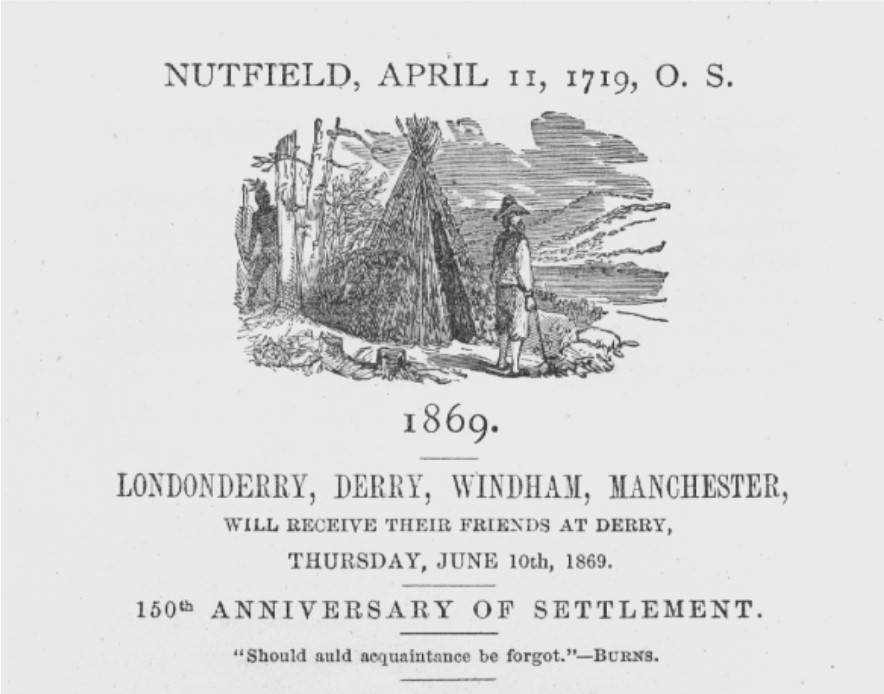
Above: The front piece from the Londonderry Celebration book with an Indian lurking in the trees

Nutfield Celebration 1869
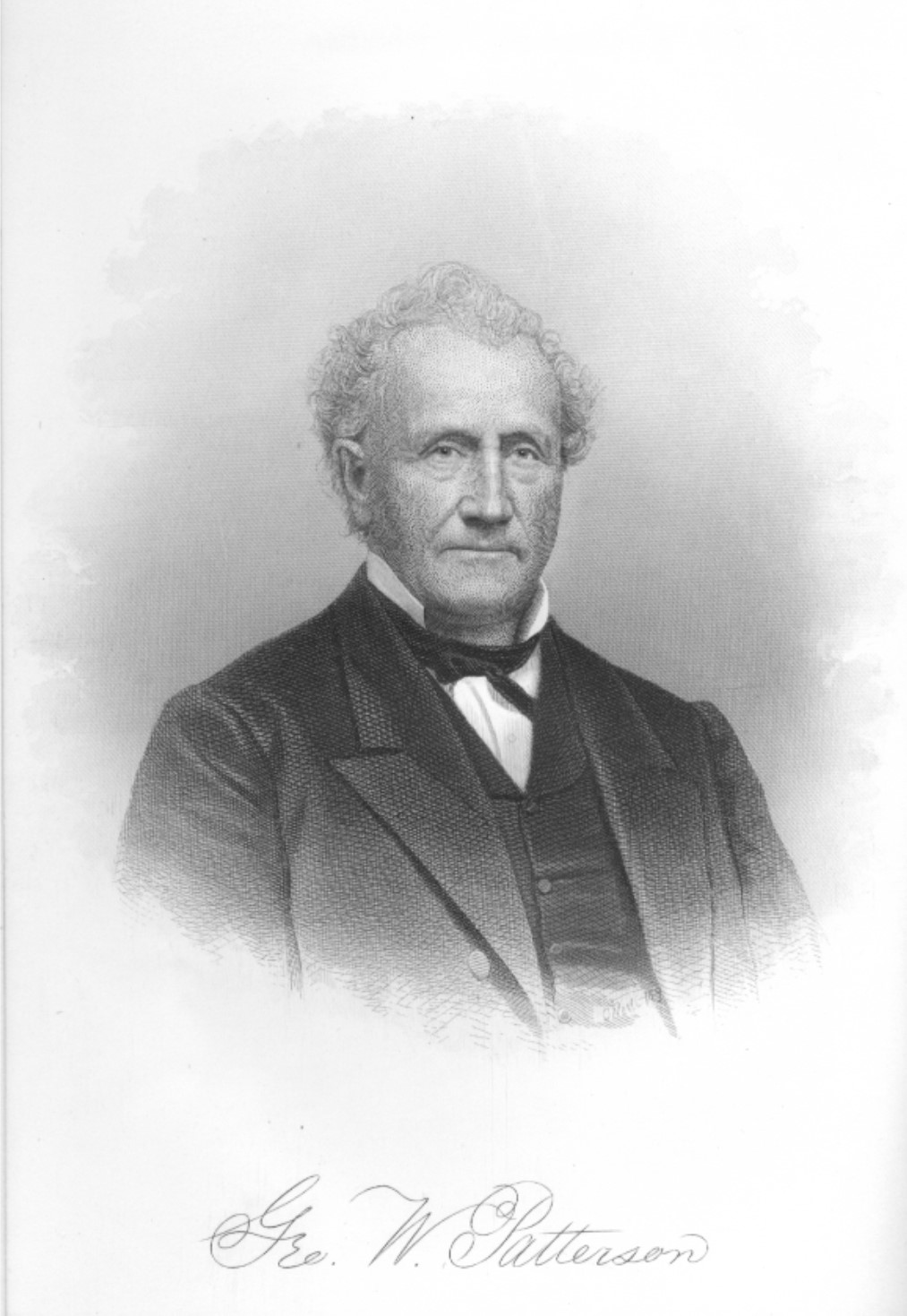
George Patterson

If the evening is just right, when I’m sitting in my yard overlooking Cobbett’s Pond, I imagine Indians, standing there, ready to push their canoes out onto the still water. I have  also been intrigued by the many stories of Indian artifacts, told by Bob Thorndike and Ray Barlow that were found in Windham. I was told that at one time,  when the water was low on Canobie Lake, you could walk along the shore and find arrowheads. And of course, there was the huge trove of Indian artifacts that were found when the state rebuilt Cobbett’s Pond Road in the 1950-60’s. The Windham Range once supported a large Indian settlement. To the Nutfield settlers and their English precursors, the Indian meadows were highly coveted land grants.

“It seems that in the early settlement of Haverhill, the most desirable tracts, was land that had been cleared by the Indians. Howe states, “….It is said that the uplands at the time were mostly covered by a heavy growth of timber, except and occasional spot burned over by fires set by the Indians. The meadows were, many of them, cleared and covered with a tall and dense growth of grass. The Indians were accustomed to burn the grass in the fall, that they might more easily capture the deer resorting to them to feed on the young grass in the spring. These meadows appear to have been much sought after by the early settlers, who obtained from them the principle subsistence for their cattle. They cut and stacked the hay in summer and in the winter drew it home on sleds. An early writer says of Haverhill: ‘keeping of cattle…encourages them to spend their days in those remote parts… being an overwhelming desire in most men after meadow land.” Joseph Howe’s Historical Sketch of the Town of Methuen

 By the time that the Nutfield settlers had arrived, most Indians had migrated north to escape the hordes of European settlers. Passaconoway, a powerful sachem and shaman who had long ago prophesized the end of his people and who had advocated making peace with the settlers because he could only see hopelessness in the Indian cause. He lived to be nearly 120 years old, a ruler of all the tribes in this entire region; he was forced the indignity of begging for a place to live from the Puritan government in Massachusetts. They granted him the right to live on an island in the middle of the Merrimack River near the falls at Lowell, which they took back when he died.

Well back to one of the speakers at the 1869 Nutfield Celebration who made an impassioned speech on behalf of the Native Americans. The honorary George W. Patterson, was born in Londonderry in 1799, the youngest of twelve children. He was a politician from New York who served in the United States House of Representatives and as Lieutenant Governor of New York: “How little do those who now inhabit the town know of the privations and sufferings of the early settlers. When they came here they had no shelter but the broad canopy of heaven, and for many years the log cabin was their only dwelling place. They located themselves on each side of ‘West Running brook,’ in what was, and still is, known as the ‘Double Range.’ This was said to be for safety in case of Indian attack. History shows that the early settlers, when attending religious worship on the Sabbath, always went armed, and the first minister, Rev. Mr. MacGregor, carried his gun into the pulpit, well loaded and primed, ready to repel attack. (if this seems odd, odder still is the fact that the settlement stored its required allotment of gunpowder in the attic of the meeting-house.) But if the early settlers had known the true character of the Indians, they would have feared no danger from them.  They had dealt fairly and honestly with the natives, and after acquiring title from the Crown of Great Britain they, like honest me, (as they were,) purchased and paid the Indians for their right to the township, which was originally about twelve miles square, and during all the Indian wars of New England, no man or child in Londonderry was ever injured or disturbed in their persons of property by the Indians.” (This politician, as is often the case, was a little off on his facts, since it was well known that in 1721, fourteen year old John Gregg was killed by Indians on Golden Brook in Windham.)

“I have had the occasion to know much of the Indian character. After my settlement in western New York, near the Genesee river, the Indians were my nearest neighbors for several years, and I never experienced anything but kindness at their hands, and I have never known an instance of Indian troubles from the landing of the Pilgrims at Plymouth Rock to the present day, where whites were not the aggressors. The Indian fires are hardly extinguished in their wigwams till the worthless white race take possession (In 1869, the West was being settled and the Indians moved onto reservations.) Even before the title to the land is obtained by the government, and when the Indians defend their rights, the newspapers are filled with accounts of ‘Indian outrages…’”


Windham Life and Times – June 14, 2019

Nutfield 300

Nutfield Celebration 1869 | Speaker Horace Greeley

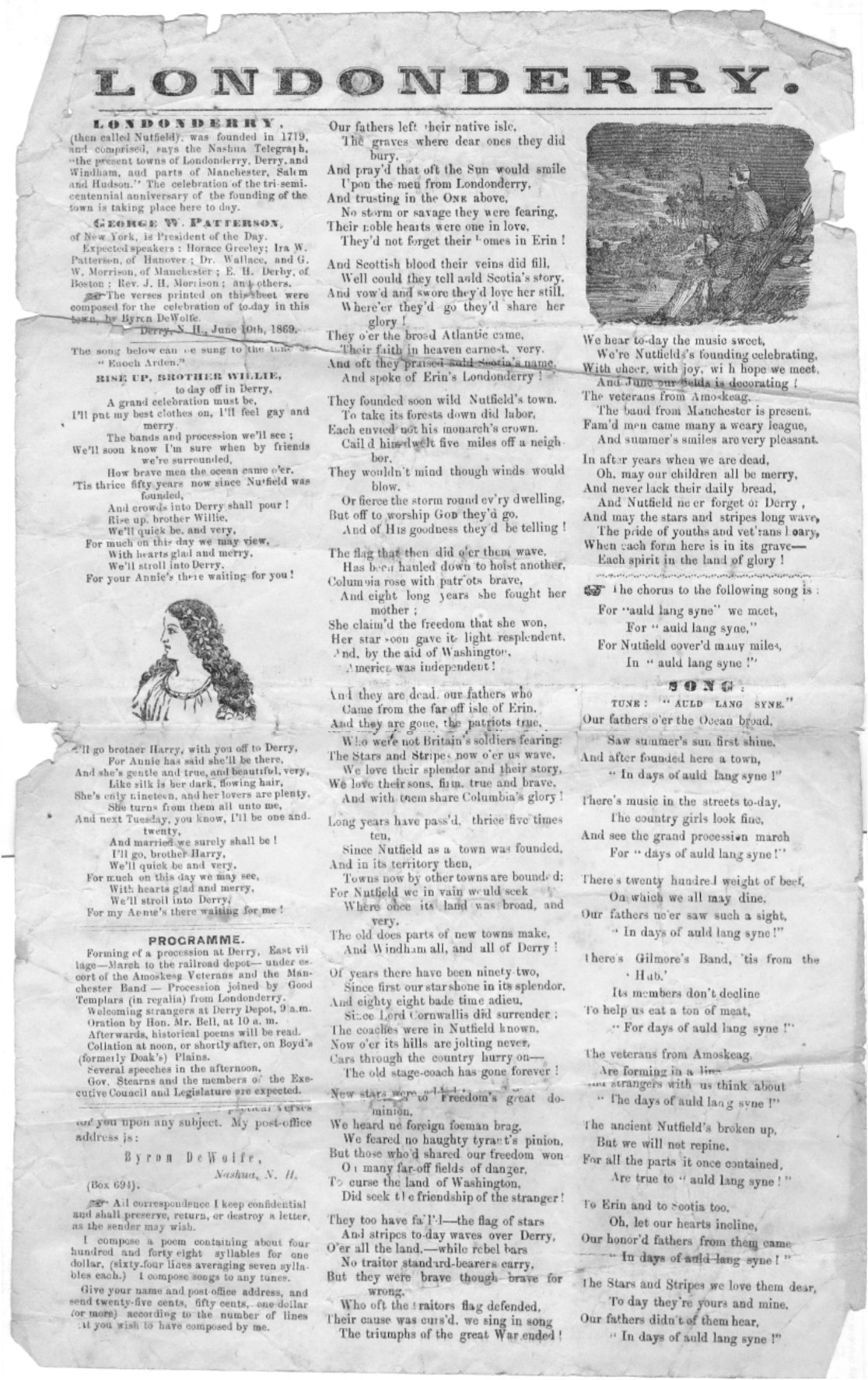
The program above for the 1869 Celebration of Nutfield. “Londonderry, (then called Nutfield), was founded in 1719, and comprised, ‘the present towns of Londonderry, Derry, and Windham, and parts of Manchester, Salem and Hudson.’

One of the speakers that day was Horace Greeley, who was an American author, statesman, and the founder-editor of the New York Tribune. On that day, he was introduced as having “…sprung from Londonderry stock, and widely known and honored.” Some excerpts from his speech give a flavor of the American ideals of 1869. The celebration took place just four short years after the Civil War. “…I trust we shall cordially agree to the devote the memory of the festival to the memory of that Scotch-Irish race who first settled the town of Londonderry, and gave it the character it still proudly maintains…” The Scotch-Irish were eminently men of conviction. They saw clearly; they reasoned fearlessly; and they did not hesitate to follow wherever truth led the way. Migration to Ireland cracked the shell of their insular prejudice; removal thence to America completed their emancipation. Liberalized by crossing the strait, the passage of a stormy ocean made them freemen.”

The Scotch, whether at home or abroad, were an intellectual, an inquiring, and Bible-reading people. Whether Bible-reading made them such early zealous Protestants, or Protestantism opened to them the Bible, they have been eminently familiar with the Good Book for three centuries. Their knowledge of its contents kindled and has kept alive in their breasts the sacred fire of Liberty…”

“Hence their early and steadfast devotion to Common Schools. Their Christianity and their love of Liberty alike impelled them to educate their children, including those of the humblest and least esteemed. A meeting-house was the first building not of logs erected in this township; but a school-house soon followed; and the children of Londonderry have ever been blest with excellent common schools. And the good they enjoyed they were eager to impart and diffuse. I presume that more teachers now living trace their descent from the Scotch-Irish pioneers of Londonderry than to an equal number anywhere else. New England is to-day teaching our country. If you should visit all the school-houses in California you would find two-thirds of them under the sway of teachers from New England, and a sixth of these tracing their lineage to Londonderry, whose early devotion to the Bible and to common schools is still cherished by her children.”

“In New York we feel, as in Londonderry you do not, the pressure of the Old-World prelacy in determined, though as yet quiet, efforts to break up our common schools into theological fragments, each under the control of the hierarchy of some sect or denomination. I deprecate the change thus sought as perilous, if not fatal, to republican institutions. When the time shall have come for apportioning our children to Catholic, Orthodox, Liberal, Baptist, Methodist and Unitarian primary schools, I shall apprehend that the last sands of the Republic are nearly run. When our common schools shall have perished we may still have a country; but it will not be the land of Liberty and Equality for which our fathers toiled and suffered, and poured out their blood.”

Let me not seem to speak as one filled with apprehension. Despite its trials and perils, the Republic will live and not die. It has cost too much — it is worth too much — to be tamely surrendered. In one of the many dark hours of our late and terrible struggle, a doubting friend asked me, ‘Do you not consider Popular Rule about played out here?’ ‘No,’ I replied. ‘We have Common Schools and Trial by Jury left, and we can afford to fight fifty years longer rather than give them up.”

“Burke said the chief end of government was twelve honest, intelligent men in the jury-box to decide all contested issues. In the same spirit I hold that, so long as we can maintain common schools free to all children, and be tolerably sure of twelve fair men in the jury-box when issues of fact are to be tried, so long will our country remain a lighthouse to the nations and a star of hope to the oppressed throughout the world. And so long, I trust, will our people gather on anniversaries like this, to honor the virtues of their ancestors and hand down the fame of their grand achievements to their latest posterity.” With recent calls to tear down even the statues of Jefferson and Washington, in order to erase their memory from the national consciousness, Greeley’s hope may soon be extinguished.


Windham Life and Times – June 7, 2019

Nutfield 300

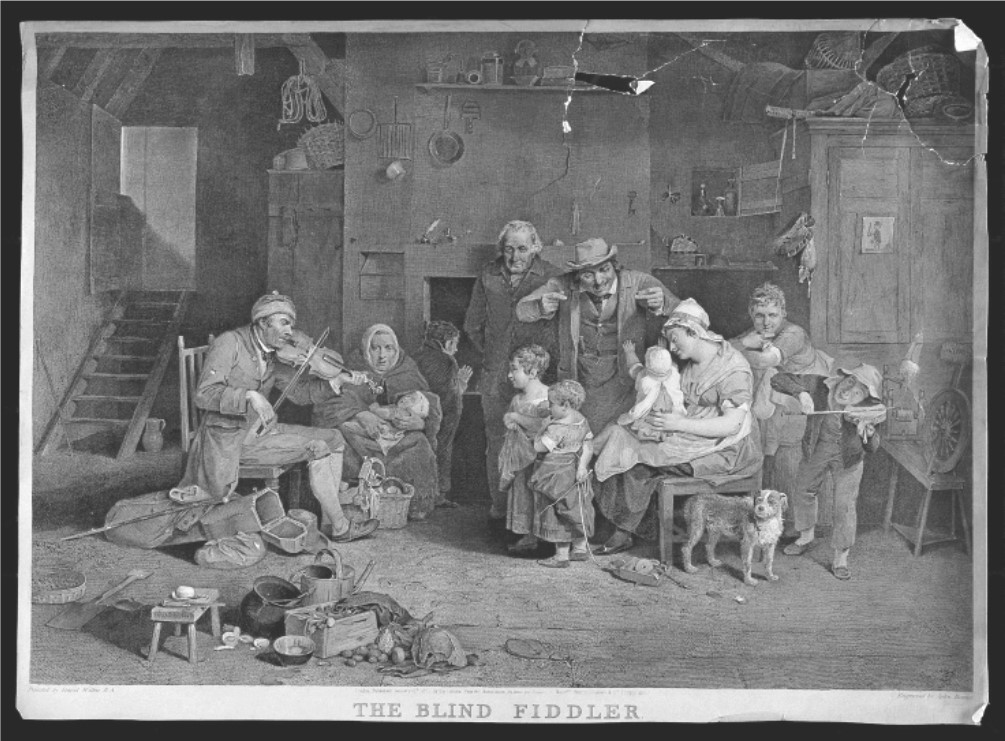
A blind man plays the fiddle to a family audience. Coloured engraving by J. Burnet after D. Wilkie, 1806. Credit: Wellcome Collection. CC BY.

Reverend MacGregor’s Fiddle

Scots-Irish Influence on American Music

E.H. Derby in his address to the Londonderry Celebration of 1869 says, “..and, if tradition may be trusted, even their clergy introduced musical instruments into New Hampshire. I do not refer to the ear-piercing fife alone, or the spirit-stirring drum, whose ‘toot’ so engrossed the ear that Matthew Clark, when presiding over the Session, that he could do no business,— I allude to a stringed instrument of music. The pastor of whom the tale is told had served as a chaplain in the army, and while in camp had learned to play the violin. He brought one to America — doubtless at the bottom of his chest — and in his log cabin, in the dreary winter nights, found solace in the music. But, late one night, an elder heard the ‘linked sweetness drawn out,’ and peeping through the crevice in the cabin, liked the elders who watched Susanna, decried his pastor in the very act of drawing the bow, and reported him to the session; and the elders decreed that he should ‘hang up the fiddle and bow’ for three successive Sundays, in front of the pulpit. And this, I presume, was the first display of stringed instruments of music in New Hampshire. Derry must not, therefore, be forgotten at the great Musical Festival, for which Mr. Gilmore is rearing a structure that reminds of the Coliseum.”

Well if fiddle playing was frowned upon by the early elders of Nutfield, it soon took on a prominence within the community. In Old Portraits and Modern Sketches, 1850, John Greenleaf Whittier reports the following about the fairs held in early Londonderry. “Their moral acclimation in Ireland had not been without its effect upon their character. Side by side with a Presbyterian as austere as that of John Knox, had grown up something of the wild Milesian humor, love of convivial excitement and merry-making, Their long prayers and fierce zeal in behalf of orthodox tenants, only served, in the eyes of their Puritan neighbors, to make more glaring still the scandal of their marked social irregularities. It became a common saying in the region round about, that, ‘the Derry Presbyterians would never give up a pint of doctrine or a pint of rum.’ …Ere long the celebrated Derry Fair was established in imitation of those with which they had been familiar in Ireland. Thither annually came  all manners of horse-jockeys and peddlers, gentlemen and beggars, fortune-tellers, wrestlers, dancers and fiddlers, gay young farmers and buxom maidens. Strong drink abounded… A wild, frolicking, drinking, fiddling, courting, horse-racing, riotous merry-making— a sort of Protestant carnival, relaxing the grimness of Puritanism for leagues around.” The Scots-Irish seem to be characterized by an uneasy dichotomy,  the side by side need for both religious revival and the “hooting and hollering” of a jolly good time!

The same Scots-Irish people who settled in Nutfield were also the dominant cultural force in the settlement of the Appalachian Mountain areas of Virginia, West Virginia, Kentucky, Tennessee and North Carolina.  And these Scots-Irish settlers certainly brought the fiddle with them and used it plenty, in the mountains and valleys where American country music had its roots. There is a great New York Times best seller, called Wayfaring Strangers, written by Fiona Ritchie and Doug Orr, with a forward by Dolly Parton, that traces this “musical voyage” from Scotland and Ulster to Appalachia. These settlers, “brought with them a wealth of traditional ballads and tunes from the British Isles and Ireland, a carrying stream that merged with the sounds and songs of English, German, Welsh, African American, French, and Cherokee origin.”

I’m just a poor wayfaring stranger
Traveling through this world below
There is no sickness, no toil, nor danger
In that bright land to which I go

I’m going there to see my Father
And all my loved ones who’ve gone on
I’m just going over Jordan
I’m just going over home

I know dark clouds will gather ’round me
I know my way is hard and steep
But beauteous fields arise before me
Where God’s redeemed, their vigils keep
I’m going there to see my Mother
She said she’d meet me when I come

So, I’m just going over Jordan
I’m just going over home
I’m just going over Jordan
I’m just going over home

     Getting back to Pastor MacGregor and his fiddle, Wayfaring Strangers in explaining the origin of the Scottish fiddle states, “Throughout the long history of migrations from Scottish Lowlands and Highlands, the fiddle was the ideal traveling companion, whether for sailors, journeymen, merchants, or emigrants. It was portable, adaptable to new playing styles, the instrument of choice for dances, and perfect both for soloists and playing partners. So it is not surprising that the fiddle eventually followed the Scottish emigration trail all the way to the southern Appalachians. Beginning in the seventeenth century, it took its place as the most popular dance instrument on both sides of the Atlantic. Hanover County, Virginia, hosted the first fiddling contest of colonial times in 1736, held on November 30 in honor of the holiday of St. Andrew, patron saint of Scotland.” In Scotland “…the music of the classical violin was the initial attraction, folk-style fiddle playing soon followed. These adaptions of the instrument were no doubt related to the widespread interest in dancing at community gatherings, weddings, funerals, and local festivals and fairs, as well as the ballrooms and drawing rooms of the landed gentry…”

Wayfaring Strangers: The Musical Voyage From Scotland and Ulster to Appalachia. On Amazon

Windham Life and Times – May 31, 2019

Nutfield 300

The Windham Range at Policy Pond | 1728

An example of a proprietors grants for what became the Windham Range. Londonderry, October 22nd, 1728. Then laid out to William Humphrey fifty six acres of land which is the amendment and twenty acres of addition which his home lot was allowed said land laying southeasterly of Cobbets pond, bounded on the west by a dry oak tree marked standing on said pond, from thence running southeast to Policy pond and bounding on John Stewart’s land to a stake and stones, from thence running northeast twenty seven rods to a stake and stones bounding on Policy pond, from thence running northwest and bounding on John Anderson’s land to the pond first mentioned to a white oak tree marked, from thence running southwesterly on said pond to the bounds first mentioned. Not there is land within the bounds for two highways running across said land reserved for the use of the town, one four rods wide and the other two rods wide, when they think fit to lay them out….”

Rev. Jesse G. McMurphy states that, “In 1728 a fine area of about twelve hundred acres was laid out in the southern part of Londonderry between two beautiful ponds. One of these ponds in recent years has become famous as a summer resort, (1895) and the location of a station there on the line of the Boston & Maine railroad has facilitated the coming of numerous pleasure parties to the shores of this body of water once called Policy pond, but now widely known as Canobie, with station and post office of the same name. The farms laid out in this range were planned according to a more general usage, being long and narrow, with the longest lines running northwest and southeast, and with slight variations in length filling the space between Policy and Cobbetts ponds. The farm at the northeast end is characterized as the head of the range, and was originally allotted to the Rev. James McGregor as an amendment to his former grants. The present owner of this farm is Hon. Leonard A. Morrison, author of ‘Morrison Family,’ ‘History of Windham,’ ‘Windham Centennial Celebration,’ ‘Norris Family,’ ‘Dinsmoor Family,’ ‘Allison Family,’ ‘Rambles in Europe,’ and ‘Scotch-Irish Characteristics.’ He is a man who has done much for his townsmen and for the preservation of valuable historic facts in the town of Londonderry, in which his ancestors were charter proprietors. Next to this farm were the amendment lands of James and John Morrison, the first now occupied by Albert A. Morrison and the second by Oliver G. Woodbury. The original lot of John Barr is now the property of John A. Park, George F. Armstrong occupies the farm laid out to Samuel Allison. These five farms are identified by Mr. Morrison, and from him chiefly the identification of the remainder is obtained. In the relative positions of the sixth, seventh and eight farms there is a conflict of testimony. I quote from a letter of Mr. Morrison: ‘I once owned half of John Stuart’s farm. The range road divided it, and his old cellar is on the half owned by my relative, Albert Morrison as pasture land. He may have owned another piece. Once some forty-six acres in this piece. There is no room between his place and that of Samuel Allison. Allison’s farm was sold to Mr. Park and where Park’s house stood was some twenty-five rods from John Stuart’s. The bounds of the farms have changed, of course, and I cannot write any more definite than was my last letter the other day. Exeter records would be the place to trace them.’ ”

Mr. Morrison writes that ‘William Humphrey’s land is included in the farm of Joseph W. Dinsmoor; John Anderson’s land (Meaning the farm of John Stewart on the map) is included in the farm of Jacob Myers; John Barnett’s land is now Isaiah W. Haseltine’s; William Nichols’ land is included in the farm of George N. Noyes; Robert Wear’s land now in B.F. Senter’s farm; Archibald Clendenbrnen’s land was at the base of Senter’s hill going from Canobie Lake to Cobbet’s pond. In this part of the range it is quite evident that the original order of the allotments has been altered and probably so far back that traditions alone cannot determine the correctness of the plans adopted, and only an exhaustive treatise compiled from town records and old deeds requiring years of patient toil could establish the certainty of many controverted facts of lines, bounds, and even residences. It is greatly regretted that the plans of the town of Londonderry or Nutfield, originally made, however fragmentary and crude, have not been preserved. Great care has been taken to secure the accuracy in this map, and in order that the student may have easy access to the material certifying to the correctness of the plans, the numbers of the pages in Volume II of the town records are given for reference in the lower right corner of each lot.”