Windham life and Times – December 2, 2016

100 Years Ago in Windham

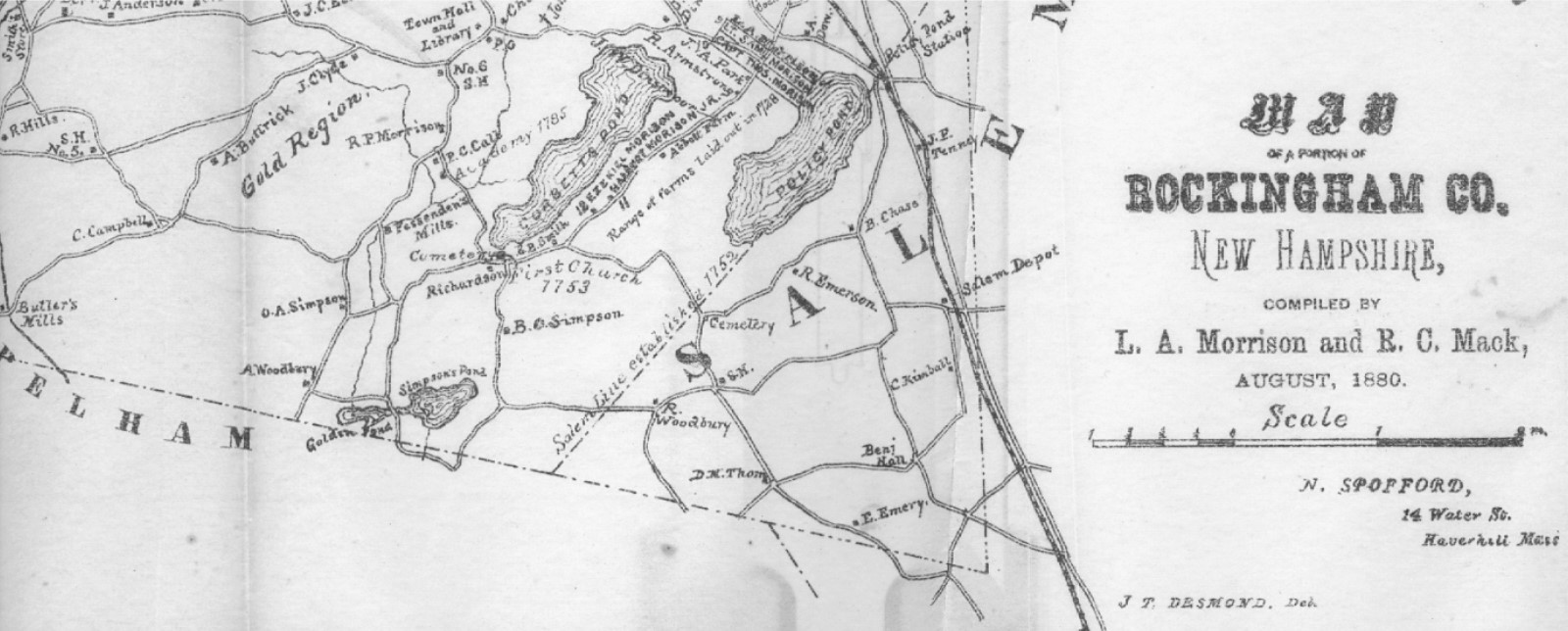
Top Left: “Goldings” or Golden Brook as it passes under Cobbett’s Pond Road (1910). Top Right: “Deer Ledge.”

Top Left: “Goldings” or Golden Brook as it passes under Cobbett’s Pond Road (Photograph taken about 1910). Top Right: “Deer Ledge” now know as Deer Leap.

W.S. HARRIS | THE EXETER NEWSLETTER

“WINDHAM, October 2.— Mrs. N.W. Garland has a dahlia plant with flowers of a lavender color, but one branch bears blossoms that are pure white.”

“J.E. Cochran and son Olin are building a large new hen-house and intend to enlarge their poultry business in the spring.”

“James E. Armstrong, formerly of this town, died recently in Lempster, and the body was brought here for burial.”

“Isaac A, Cochran, of Melrose, Mass., a member of the prominent Windham family, died lately at the age of 73 years.”

“Mrs. Flora O. Armstrong, the widow of George W. Armstrong, the donor of our library building, died recently at the Hotel Somerset, Boston. She inherited from her husband an estate of a half million dollars or more, which goes to her son and daughter.”

“Rev. Abraham Dunton, much to the regret of many, will terminate his pastorate here very soon and will remove to the scene of former labors in Illinois. His sermons during the two and one half years of his service here have been uniformly excellent; the social qualities of both Mr. and Mrs. Dunton are exceptional. We fear it will be a long time before their places here are filled.”

goldings-2

“The brook that flows out of Cobbett’s Pond and pursuing a southerly course joins Beaver Brook near Pelham Center, is called Golden Brook. The name originally was Golding’s, derived from a Peter Golding, of Boston, who as we are informed by Edwin M. Currier, of Dracut, Mass., purchased in 1682 a tract of  200 acres originally laid out to Jonathan Negus, ‘clerk of the writs.’ This land lay on the brook about a mile northeast of Pelham Center, near where it empties into Beaver Brook. The site of an old dam is still pointed out, where was located ‘Golding’s Mill.’ This man or some of his family undoubtedly owned land in Windham on the brook, as the early town records of Windham mention ‘Goldings meadow’ in 1762, ‘Goldings Road,’ 1742, or ‘Goldings Highway,’ 1749, as well as ‘Goldings Brook,’ in 1742. A small natural pond in the south part of this town and connected with the brook has been marked as Golden Pond on the maps for one hundred years. It is usually spoken of by people in its vicinity as Rock Pond, and Mr. Currier says this was its ancient name by which it was frequently referred to in the Dracut town records and the registry of deeds of Middlesex County. The name was sometimes Ledge of Rocks Pond, evidently derived from the remarkable cliff in its vicinity, known as Deer Ledge.” W.S.H.


Windham Life and Times – November 25, 2016

Frederick Bessell

Bessell joined the adventure in California searching for gold and stayed over 10 years.

Bessell joined the adventure in California searching for gold and stayed over 10 years.

PART 8: FREDERICK BESSELL’S LATER LIFE– AS A SETTLER ON THE FRONTIER, 1849 GOLD MINER AND A CIVIL WAR VETERAN.

So we know that Frederick Bessel was in Salem during the time of the White murder in 1830. What happened to him after that? Well it’s a really interesting story. The story of his later life can be found in “The History of Schuyler County,” in Illinois. It appears that like many Americans, he went West so he could reinvent himself, far from Salem. And it also appears that his love for adventure continued on in his later life.

We learn about Frederick Bessell’s later life in the biography of his son, Charles C. Bessell. “There are few of the interests associated with the material development of Schuyler County that have lacked the co-operation and practical assistance of Mr. (Charles) Bessell…He was born May 11, 1835, the eldest of  of a large family of children born to his parents. Frederick Lewis Alexander and Jane A. (Robinson) Bessell. The mother was a native of  the East, born in Putnam County, N.Y. in 1814, and at the age of twenty (June 15, 1834), she united in marriage with Frederick L.A. Bessell (who was 35) in the village of Rushville, Ill. The parents of this Mr. Bessell (father of the subject of this sketch) lived on the island of Sumatra; but a war breaking out, they sailed to Boston, Mass.. Mr. Bessell being born on the voyage, and in Boston and vicinity made his home until attaining manhood.” (This is totally contradicted by the accounts of the Whites in Salem, which say he arrived as a young boy, with trust funds and was brought up in the loving home of the Whites.) “While he was a mere child in years, he was deprived of the love and protection of both parents, a loss which was later accentuated in the death of his only brother. (He had two brothers.) “Cast upon his own resources at an early age, he proved himself equal to the occasion by accepting any honorable employment that came to hand, which consisted principally of farm work in the vicinity of Boston.”

“With such means as he had been able to save from his earnings, Frederick L.A. Bessell started for the Middle West in 1833, coming direct to Schuyler County, Ill., and after his marriage during the following 34, Brooklyn, Township, which he at once began to improve and in the home which he established in the wilderness all of his children were born. In 1848, he purchased property in Brooklyn, whither he removed with his family the following year. Coincident with this removal came the news of the finding of gold in California, and among those who left Brooklyn for the far West was Mr. Bessell, who made his way overland with ox teams. It was not until about 1860 that he returned to his Illinois home, but fate did not permit him to remain there long, for the drums of war soon sounded and all able-bodied men were called to the defense of the country. Mr. Bessell attempted to enlist from his home town but as the quota was then filled he went to Macon City, Mo., and enlisted in the Seventh Missouri Infantry. His service was brief, however, for he was soon taken with measles from the effects of which he died December 24, 1861.” His wife lived until 1900.

Frederick Bessel had six sons with his wife Jane between 1835 and 1848.

So there you have an end to the mystery of Frederick Bessell and his life before and after he set up camp in Windham. He came to America from Sumatra and was on one of the first American ships to open trade with Viet Nam. Then he went on to hold camp with Major Dudley in Windham, NH., and as a result of excessive spending on credit, was forced to declare bankruptcy. He arose from the ashes and moved to Illinois, where he married and had six sons. Then ever the adventurer, when he heard about the California gold rush, he left his family behind in search of fame and fortune.  After spending 12 years in California, he returned to Illinois, and at 57+/- years of age, volunteers to enlist in the Union Army during the Civil War. Quite a story, quite a life!

Name: Frederick Bessell
Death Date: 23 Dec 1861
Death Place: Regimental Hospital
Enlistment State: Missouri
Rank: Bugler
Company: Hacknago
Regiment: Blackhawk Cae


Windham life and Times – November 18, 2016

Frederick Bessel

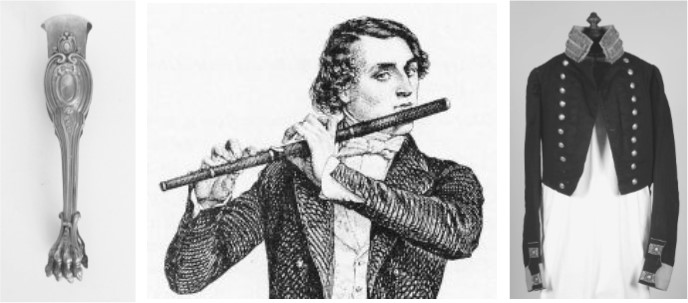
Among the items purchased by Frederick Bessell while at camp in Windham, were gold sugar tongs, military uniforms, flutes, guns, knives a decorated sleigh and plenty of alcohol.

Among the items purchased by Frederick Bessell while at camp in Windham, NH., were gold sugar tongs, military uniforms, flutes, guns, knives, a decorated sleigh and plenty of alcohol.

PART 7: BANKRUPT – THE CONSEQUENCES OF FREDERICK BESSELL’S WILD TIME IN WINDHAM

In a manila file box, held in the collections of the Phillips Library, of the Peabody Essex Museum, are contained all of the claims to Frederick Bessell’s fortune, which were part of his bankruptcy proceedings. In the Prince Family papers, 1732-1839, in Box 1, Folder 11, is referenced “Frederick Bessell bankruptcy.” 1823-1825. Many of the petitions for payment are made by local people, with recognizable names, from the Windham area. There are thousands of dollars in claims! What is truly amazing is the astounding amount of credit, that the good people of Windham and surrounding towns provided to Frederick Bessell.

The claims provide an interesting glimpse into Frederick Bessell’s time in Windham, by detailing the items he purchased, and the various services provided to him while at his camp.

Commonwealth of Mass. August 24th, 1824. Mr. Frederick L.A. Bessell to Abram Pratt Jr. For a short knife: $13.00. November 30th to a silver mounted knife: $60.00. November 30th to a large smooth bored gun: $25.00…

Among the claims are found receipts for copious amounts of alcohol, including, wine, rum, port and brandy.

Then there are the receipts for uniforms, verifying Morrison’s account that Major Dudley used the camp for military training. Among the items in a claim from Amherst, Jan. 10, 1825. Mr. F.L.A. Bessell to Thom. M. Benden. To making a blue uniform coat: $10.00; 5 1/2 yards of gold lace: $9.63; gold chains: $3.50; 6 1/2 …black silk: $8.00; 1 pair of black silk wings: $9.00. 3 yds. Blue cloth: $27.00. 6 gilt buttons: $6.84; The cost of Major Dudley’s coat is as follows: Material Total: $107.85. Labor: $40.00; Gold Wings: $11.00; One brown..$4.00 for a total for $162.85. Must have been a damn fine coat!

Then there were other bills. One has to wonder, if knowing that Bessell was a wealthy man, that they didn’t gouge a little bit with their claims. 1824: Mr. F.L.A. Bessell to William Manning: July 19: Most of Mr. Manning’s bills are mostly for labor and carting material back and forth from Massachusetts to Windham. To horses, wagon and expenses to Windham: $15.00; 2 small wagons, horses and expenses to Ditto: $16.00; …to Windham 6,8 Mr. Manning’s time and expenses: 10.00; Sending man to Windham for you, horse expenses: $3.00; … Merrill’s bill for painting Gig omitted 1823—$14.00; J Sadlers Bill varnishing and ornamenting sleigh: $5.00; 2 pair of lamps 10.00 12.00 –  $22.00… Total Bill for $264.87

Then there is this: F.L.A. Bessell to Robert Barnet. August 1824. Among the miscellaneous charges are: To washing $3.50; To washing: $8.17; to Altering pantaloons: .70; to ribbon: $4.17; Sewing silk ribbon: $1.98; Making window curtains @ 4/6 $5.25; …to Making night gown: $1.75; To Making bed pillows: $2.00…etc, for a total of $37.75.

Attorney J. Thom represented most of the local claimants. In 1824, Isaac A. Smith made a claim for 9 spoons, plate: $2.25; A pair of gold sugar tongs: $25.00; 1 Patent Flute & Flageolet: $10.00 plus other items for a total of $37.75. Bessell played the flute.

The most reasonable claim was from N.W. Pillsbury who worked many days for Bessell and charged just $1.75 per day for his labor with a yolk of oxen.

One of the largest claims was from Thomas and John Nesmith who were demanding repayment and damages of  $300 “for delivery of goods, wares and merchandise.” They operated the store at the Center. Frederick Bessell’s wild time in Windham led to bankruptcy and he became  a man without a fortune but as we will learn later, nothing could extinguish his longing for adventure.

The savage murder of Captain Joseph White, while he slept in his bed, in Salem, Massachusetts, was the crime of the 19th century. It happened in April of 1830. You’ll remember that Frederick Bessell was Captain White’s clerk on the voyage to the Orient. The crime would become the inspiration for various writings of Edgar Allen Poe and Nathaniel Hawthorne. There were thirteen stab wounds and a massive blow to the head, involved in his death. “The possibility that more than one assailant might have been involved and that a conspiracy might be afoot fueled unease. Salem residents armed themselves with knives, cutlasses, pistols and watchdogs, and the sound of new locks and bolts being hammered in place was everywhere. Longtime friends grew wary of each other. According to one account, Stephen White’s brother-in-law, discovering that Stephen had inherited the bulk of the captain’s estate, ‘seized White by the collar, shook him violently in the presence of family’ and accused him of being the murderer.” Since nothing was stolen the murderers motive was unclear. Later it was discovered that the murder was a conspiracy between J.F. Knapp. J.J. Knapp and George Crowninshield. The plot was to murder Captain White, then steal his will, so that when he died without a will, the bulk of his estate would go to the Knapp relatives. Little did the conspirators know, that the most recent will, leaving all to Stephen White, was held securely in his lawyer’s office. At the gathering of the White heirs, just after the murder, we hear the last report of Frederick Bessell. “Stephen White and his four children—son Joseph, the Harvard student, and three daughters, Harriet, Caroline, and Ellen—sat with Eliza Story White and her three daughters, Charlotte, fifteen, Mary, eighteen, and the very pregnant Mrs. Elizabeth Gray, twenty. Stephen’s brother John White was there, and Frederick Bessell…”


Windham Life and Times – November 11, 2016

Frederick Bessell

The Bessell Brothers Return Home

The Bessell Brothers Return Home

PART 6: FREDERICK BESSELL’S BROTHERS DIE TRAGICALLY NEAR THEIR BIRTHPLACE

Just to recap what we’ve discovered about Frederick Bessell, A.K.A “F.L. Bissell,” the wild and rowdy occupant of “Bissell’s Camp,” who arrived along with Major Dudley, in Windham on a May day during 1823. While we’ve learned a lot about the Bessell brothers of Salem, Massachusetts, we know little about Major Dudley, other than the fact, that the Dudley’s were a very prominent family in Massachusetts and produced one of its earliest governors.  So the question remains, why did young Frederick Bessell, who was about twenty in 1823, end up pitching camp in Windham.  It is most certain, that the tragic deaths of his brothers played a part in his seeking an escape. This is what we know about Frederick Bessell’s brothers and how they died far from Salem but close to home.

“Far out at sea, on board the Salem brig, Mary & Eliza, the Bessell brothers were thriving. They had cleared Marseilles in April 1821, having gone first to Genoa and then back across the Atlantic to Rio de Janeiro, the capital of Brazil and home of Portugal’s King Joao VI… The Salem men noted with interest that Rio had begun direct trade with India and China, only a seven month round trip.”

“The Mary & Eliza sailed once again for the Mediterranean. As supercargo, Mathias Bessel turned over their cargo at Marseilles, perhaps taking on cases of opium as well as a treasure chest of specie. By 1820, American opium exports from Smyrna to the Orient has outstripped those of the British at Bengal. Batavia was the mart for the trade of Java; in Sumatra, especially along the Pepper Coast, each outpost now expected American vessels to bring Turkey opium as well as specie. Specie made the rajahs rich, and opium helped them consolidate power, for the rajahs and their favored lieutenants were the only suppliers for the growing population of addicts.”

“Well into the Indian Ocean by the end of May 1821, near the lonely volcanic island of Saint Paul, the Mary and Eliza ran into a violent gale from the north…The storm grew monstrous, with deafening winds and raging seas…In early June, Captain Beckford finally brought the battered Mary & Eliza up the channel to Padang. Beckford and the Besells conferred. The vessel needed more repairs than they could get there, but they had come all the way around the world to see their old home, and they had a keen desire to set foot on land, any land, after their terrifying experiences…The Mary & Eliza’s men stayed just long enough to get water and supplies and to make emergency repairs. It was a fatal mistake, for cholera morbus was rampant ashore, and Charles Bessell fell ill and died within days. He had gone home to be buried.”

“The crippled Mary & Eliza moved on eastward, toward the Strait of Sunda. Captain Beckford sailed on to Batavia, where Governor Franz Bessell had worked for the old Dutch East India Company. Here too they found great sickness, as was so often the case; but they had to stay. They came to anchor, and the surveyors inspected her. After hundreds of thousands of miles, eighteen years since her launch at the Magoun shipyard—at a point about as far away from Salem as one could get on the planet—The Mary & Eliza was finished.”

“During the same Thanksgiving season, the White family learned about the Mary & Eliza. Stephen White was especially anxious—losing Charles was a bitter blow, and he could not rest until Mathias was home. He opened Captain Beckford’s letter, and it was not good news. The Mary & Eliza had been condemned at Batavia. As passenger on another vessel, Captain Beckford and the crew were on their way, but not the supercargo; Mathias Bessell had died on July 17, aged twenty-three, a month after his brother. The sudden loss of Charles had been a fatal blow, leaving Mathias deeply depressed and unable to fight the effects of the Batavia epidemic.”

“It seemed impossible that the two brothers had been lost on their voyage of adventure and homecoming. Stephen White and Captain Joseph White experienced terrible grief in the deaths of these young men and in the brutal finish to the story of Joseph White Jr. and the two little boys whom he had promised to raise into gentleman.”

“Stephen composed and elegy for the Register, recounting the arrival of the boys and how, in ‘a family of strangers they were cherished with all the interest and care which the nearest ties could have claimed or created.’ Mathias himself—suave, generous, friendly, talented—was ‘truly, a virtuous man. He valued virtue for it intrinsic excellence, scanning and regulating his actions by its most rigid precepts. Integrity and honor were stamped upon all his transactions with mankind—it was not, however, that appearance of honesty, which circumstances and occasions and interest exact of us for effect, but an habitual and indelible principle upon the mind.’ ”

The tragic death of his only blood relatives, his brothers Charles and Mathias, must have had a devastating impact upon the young Frederick Bessell. It was after this personal blow, that we find him establishing his camp in Windham.


Windham Life and Times – November 4, 2016

Frederick Bessell

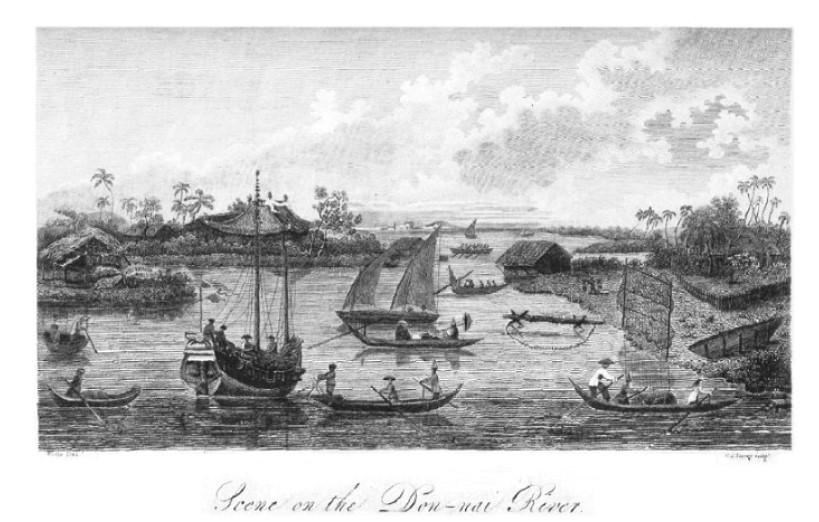
A View of the Don-nai River near Saigon from the book History of a Voyage to the China Sea

A View of the Don-nai River near Saigon from the book History of a Voyage to the China Sea

CAPTIAN JOHN WHITE AND HIS CLERK FREDERICK BESSELL IN VIETNAM

John White published the History of a Voyage to the China Sea in 1823. It is a fascinating account of the merchant ship Franklin exploring the “Orient,” in the early nineteenth century. It seems a decision was made by Captain White and his backers in Salem, to make this voyage in order to establish contacts and to open trade in Cochin China.  After setting sail from Salem to Batavia, the Franklin sailed for Saigon. And on this journey of discovery we also find our intrepid Frederick Bessell acting as Captain White’s clerk.

On May 24, 1819, having entered the Straits of Banca, they were attacked by a large contingent of Malay pirates in their well armed proa canoes including 12 pound cannons. These pirates were notorious for the cruelty toward European, and were known to slowly torture them to death. Having successfully repelled the pirate attack, Captain White entered Mintow, a Dutch settlement where he was told that the pirates were well known as being violent and jacked up on copious amounts of opium. Mintow, which must have been very much like Padang, where Francis Bessell was born, describes the population as being Chinese, Malay and “half-casts,” being the children of Malay, Chinese and the Dutch inhabits. The Franklin then sailed on to the Don-nai River, arriving on June 7th and entered a small bay at Vung-tau, where they awaited permission and a guide to take them up-river to Saigon.

The Captain and crew, upon meeting the local chief by the name of Heo, found him insatiable in demanding that they bestow on him gifts from the ship. In Canjeo “I prepared to accompany them to the village, taking with me Mr. Bessell, a young gentleman who acted in the capacity of clerk…” After spending many days trying to get permission proceed to Saigon, and after many meetings that ended in subterfuge on the part of the locals, a frustrated Captain White and crew departed to explore the coast of “Cochin China.” At Cape Turon, they learned that the king, had left Hue and was doing battle to recover land lost in a recent civil war. They also learned that two French trading vessels were to arrive soon, and the only items valued by the king were side arms which he could use in battle.

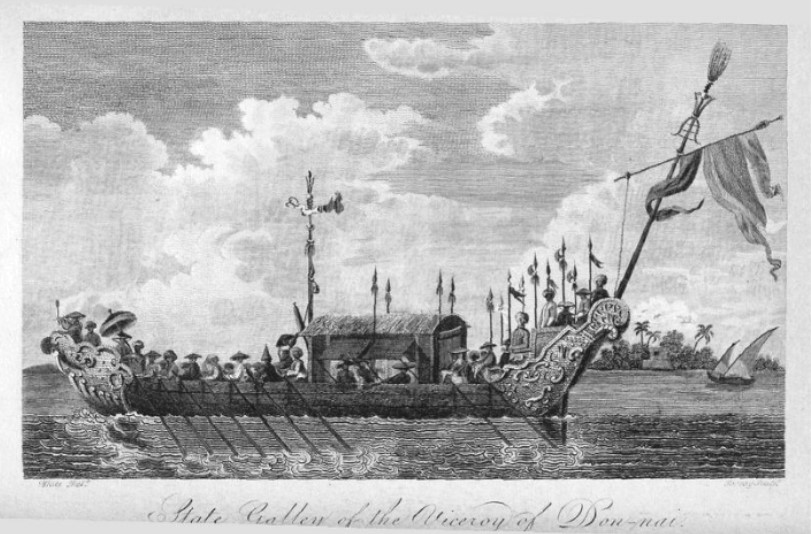
The State Galley of the Viceroy of Don-nai from Captain White's Account of Cochin China

The State Galley of the Viceroy of Don-nai from Captain White’s Account of Cochin China

“At dawn on September 7, (1819) the Franklin of Salem, became the first American vessel to reach Saigon. The crew dropped anchor a mile below the city and admired a wide river filled with ‘boats of light and airy construction, each, in many cases, managed by a single woman, in picturesque costume,’ while ‘great number of native vessels, of different sizes, plying in various directions upon the stream, gave a busy and lively interest to the scene.’ That first night, White and Bessell stayed in a typical riverbank house, standing on pilings two feet above the mud, sided with boards and roofed with enormous palm leaves. Inside were teenage girls, big jars of fish-pickle, pigs, ducks and fowls, a ‘blear-eyed old woman, furrowed and smoke-dried ,’ and asleep in a hammock, a miserable child, covered in filth and vermin, and emancipated with disease.’ The morning tide brought the Marmion, a Boston ship that White had encountered at Manila. Captain Brown and his supercargo, Mr. Putnam, came ashore, and they and White and Bessel were ‘surrounded by a bevy of woman, soliciting employments as merchandise brokers and offering assistance in purchasing cargos.’ He did not realize that they were eunuchs, designated as their culture’s trader caste. The Yankees demurred and went on to Saigon, where their appearance caused a sensation. At the ‘great bazaar or market-place,’ an ‘immense concourse of the wondering natives,’ manhandled these improbable don-ong-olan, strangers from the West, with their unreal faces like pale masks.”

“The Franklin and Marmion swung at their anchors for almost four months as their masters endured insults, indifference, and occasional rock peltings as they laid siege to the traders of Saigon. Through it all, the Yankees kept smiling, trying gamely to break through. Finally, the two captains understood. Women were forbidden to make bulk deals; and Western armament was wanted not goods. Giving up their dream of starting a new commerce, the two captains paid Spanish gold for half cargoes of sugar, promised to return with guns, and sailed away in their tall ships. Each had been given a parting gift of a young royal tiger and pen full of squirming puppies.”

“At Batvia, Brown sold White his sugar and the Franklin sailed for home on April 29 (1820).” The trip home was a disaster. When the tiger ran out of food because of bad weather White was forced to shoot her. Several men died of fever and sickness, and another died after falling from the topsail. Then a most violent hurricane struck, forcing the men to cut away the spars to prevent the ship capsizing. “Diseased and death haunted after two years at sea, Franklin staggered into Salem with an unprofitable cargo and three stumps where the masts had been.”  So ended Frederick Bessell’s harrowing, two year journey, to the Asia.

Sources:

John White,  History of a Voyage to the China Sea in 1823. Free e-book: https://archive.org/details/historyavoyaget00whitgoog

Death of an Empire, Robert Booth


Windham Life and Times – October 28, 2016

Frederick Bessell

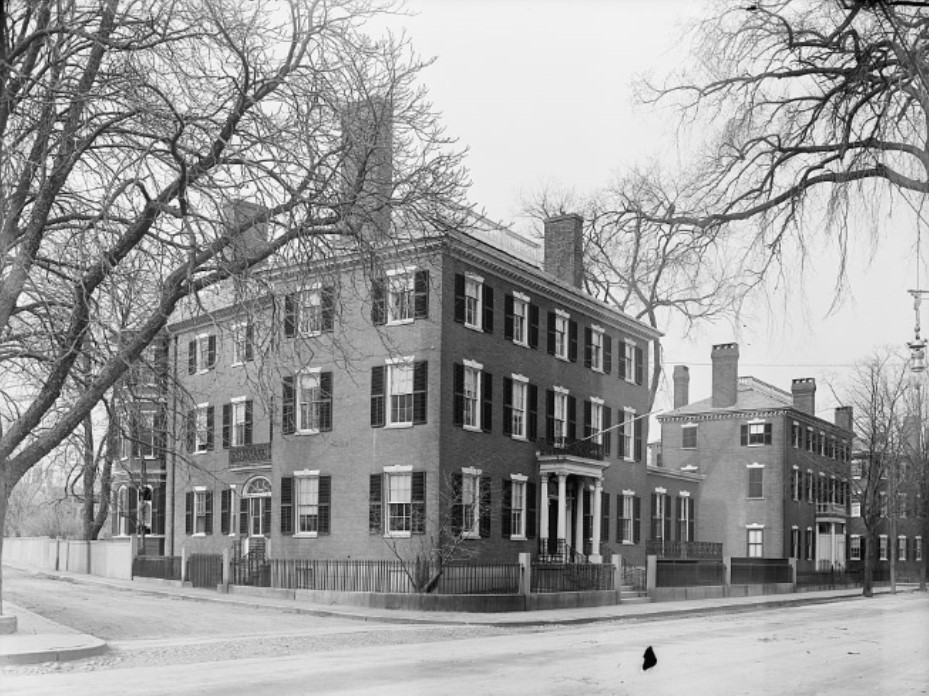
Stephen White mansion in Salem MA. where the Bessell brothers were raised.

Stephen White mansion in Salem MA. where the Bessell brothers were raised.

PART 4: THE BESSELL BROTHERS IN SALEM MASSACHSUETTS

So the three Bessell brothers, “with large trust funds” arrived in Salem Massachusetts with Stephen White on separate ships in 1805 and 1806. Their father also arrived in 1806.  One question I couldn’t answer is if  the boys ever lived with their father while he was alive. It appears that they did not and were rather raised in the Stephen White mansion that was built in 1811.

“After his brother’s death, Stephen White stepped up: he had many new responsibilities, as a Republican politician, principal of an international merchant house, head of two families of young children, and guardian to the three teenage Bessell brothers.”

This period was difficult on the Salem merchant houses because Britain had again risen to dominate international trade, especially in Asia. One profitable line for the Salem merchants was opium. “White continued to send his tall ships to ports all over the world, although specie was scarce. Now he turned to the Mediterranean, where he did a large business in wine and fruits and marble; and he pushed his vessels farther east to Smyrna, in Turkey, to enter the opium trade. Turkish opium was better than that of Bengal, but London had forbidden British carriers to take it to the Orient. Since 1800, however, Boston vessels had been shipping opium to Europe and America, where apothecary shops sold the drug mixed with alcohol as a sedative known as Laudanum.”

Mathias Bessell was employed in Stephen White’s merchant house. In August of 1816 , at seventeen years of age, he sailed to Sumatra on the ship Mary & Eliza as supercargo. A “supercargo” is “the  representative of the ship’s owner on board a merchant ship, responsible for overseeing the cargo and its sale.” So young Bessell was given a great deal of responsibility at a very young age. “Ships sailing under his (Stephen White’s) tricolor house flag represented America in its relationships with the world. He savored the moment, in which foreign trade had at last recovered, thanks to lucrative coffee and pepper voyages; and White’s success were multiplied throughout the town. America had a hunger for these commodities, as did Europe, and somehow, despite many competitors, the demand still exceeded supply.”

“When he sought a new partner, he turned to his brother-in-law, Franklin H. Story, now twenty-one. who entered the White brothers employ in 1809 or so alongside the Bessell brothers. By the age of eighteen, in1813, he had been signing company documents and serving as a member of Stephen’s militia company. (is this how Frederick Bessell became acquainted with Major Dudley?) In 1817, Stephen made him co-owner of a brand-new brig, christened with his name, Franklin.”

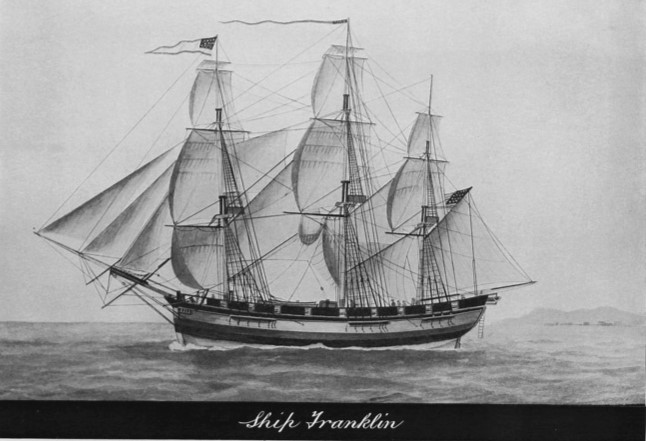
Stephen White completed the outfitting of his fifth vessel, the 251 ton brig Franklin, with new rigging and several additional cannon, to use on the pirates of the eastern seas. She would be commanded by Stephen’s older brother, the gallant Captain John White, forty, assisted by captain’s clerk Frederick Bessell, twenty, bound for Sumatra to Vietnam in Conchin China, a place not visited by a Salem vessel in sixteen years.” So here we have  the another mention of our Frederick Bessell of “Bissell’s Camp” notoriety. What is amazing in reading the accounts is how young the captains and crews of many of these ship were.

The brig Franklin on which Frederick Bessel was captain's clerk when it visited Saigon, Vietnam.

The brig Franklin on which Frederick Bessel was captain’s clerk when it visited Saigon, Vietnam.

“In a light rain of an April afternoon, Stephen White and the Bessell brothers, his former wards and current associates, walked from Washington Square down to Derby Street, past the big distillery and the warehouses and workshops and out to the dock of White’s Lower Wharf. One block from the ship yard where she had been built, Stephen’s Mary & Eliza waited, refitted and ready to begin her twelfth voyage to the Orient. Mathias Bessell, twenty-two, was supercargo, and Charles, twenty-three, was captain’s clerk. Their brother Frederick, was still at sea as clerk to Captain John White in the Franklin…Coming into the family when Stephen was sixteen, Charles and Mathias were more like his younger brothers, essential members of the clan. White’s affection, confidence and privilege had produced a pair of tall, smart young American gentleman. Mathias, in particular, consciously aimed for a life of personal virtue and honor and integrity in his dealings as a merchant.”  Next Week, The tragic deaths of his older brothers Mathias and  Charles Bessell, may have been the reason a depressed Frederick Bessell sought solitude, solace and a place to numb the pain at “Bissell’s Camp” in Windham.

All quotes in this section are from “Death of an Empire,” by Robert Booth. Also see, Captain John White’s book, A History of a Voyage to the China Sea, written in 1823, which talks about the incredible voyage and Frederick Bessell being in Saigon Vietnam.


Windham Life and Times – October 21, 2016

Frederick Bessell

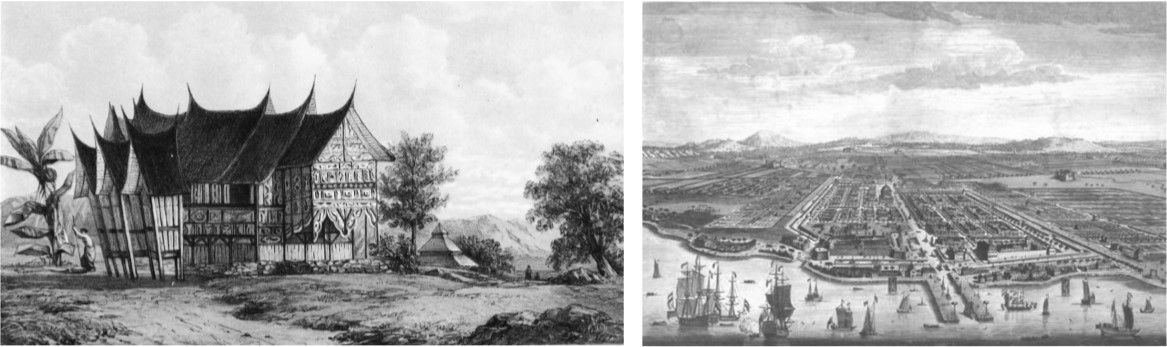
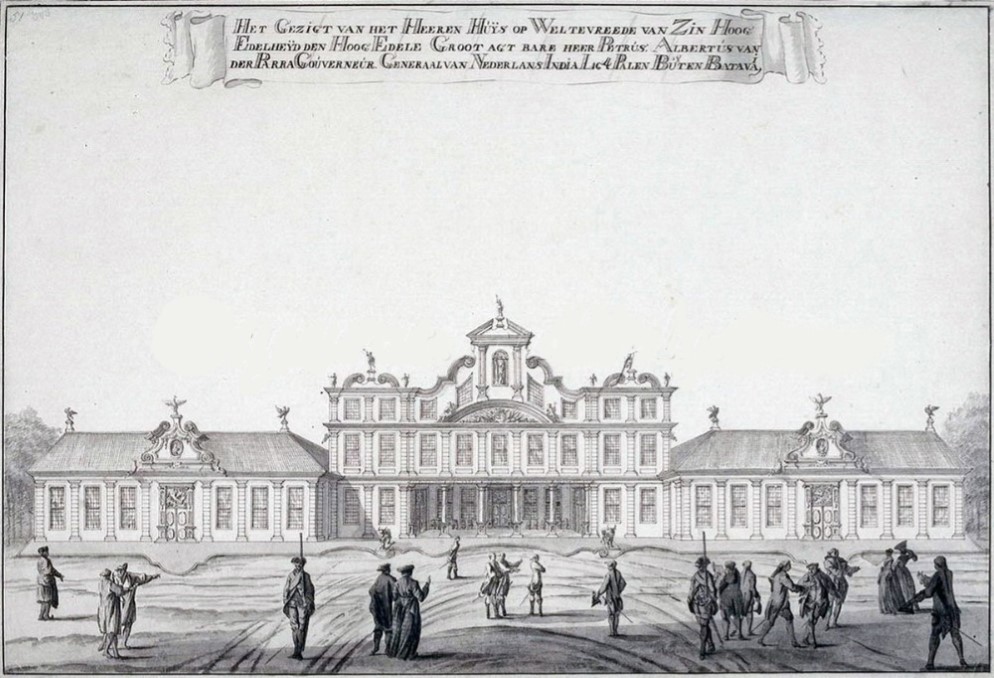
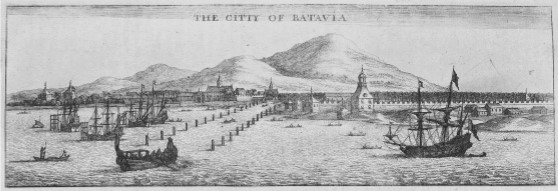
Batavia (Jakarta) on the island of Java Indonesia was the headquarters of the Dutch East India Company and was founded in 1619. It features magnificent homes of wealthy Dutch merchants.

Batavia (Jakarta) on the island of Java Indonesia was the headquarters of the Dutch East India Company and was founded in 1619. It featured magnificent homes of wealthy Dutch merchants.

PART 3: FRANZ BESSELL IN SUMATRA AND HIS ARRIVAL WITH HIS SON IN AMERICA

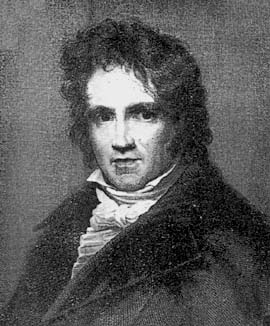
Frederick Bessel, the astronomer.

Frederick Bessel, the astronomer.

Franz Bessell was born in Minden, Westphalia in Germany. His father was a civil servant and his family was very large. His brother was Frederick Bessel, the  famous astronomer and mathematician who was the first person to determine reliable values for the distance from the sun to another star by the method of paralix. A special type of mathematical functions were named Bessel functions after his death.

Franz Bessell’s obituary from the diary of William Bentley, D.D. the pastor of the East Church in Salem Massachusetts reads as follows: “Last night died in Beverly, F.L.A. Bessell Esq. aged 55. He had lived 22 years upon the western coast of Sumatra and chiefly at Padang and had formed a friendship with Captain Joseph White of this town and by him was persuaded to come to America. He has been several years a resident of Salem and for the first part of the time in my neighborhood. He had every honor his situation in Sumatra allowed and passed with us as the Governor. He has lately purchased a farm at Londonderry and another very lately in Upper Beverly three miles from Salem at which he died. He has visited different parts of our Country. He has been noticed for his hospitality but nothing has been done since his arrival in America to bring him out of his first circle of acquaintance and while all were willing to give him the common tokens of respect, few speak of him as known to them.”

"Weltevreden" country house built by governor general Jacob Mossel in Batavia about 1761.

“Weltevreden” country house built by governor general Jacob Mossel in Batavia (Jakarta) about 1761.

In an entry in Reverend Bentley’s diary, at the death of one of Besssell’s sons we read “his father ‘was a native of Germany, and for the course of Twenty-two years was a resident of Padang, and other places on the Western Coast of Sumatra, in which time he held many posts of the greatest rank and responsibility in those colonies. He died at his country seat in Beverly, Mass., 21st Aug., 1810, 55 years, and was buried in Salem.’

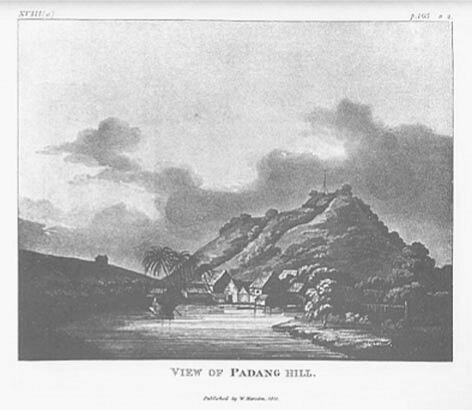
Padang

Entrance to the Padang River.

So the life story related by Reverend Bentley is one of a very wealthy man who kept to himself. One interesting item in this entry is the fact that he owned a farm in Londonderry, NH., which gives a clue as to why his son might have been drawn to Windham, for the site of his “camp.” I have seen the deeds for the Londonderry property where he purchased the farm of Robert Archibald, December 9, 1809 for Two Hundred Dollars. Through another deed we learn that the Londonderry property was sold after his death. In the deed of February 24, 1814, signed by his executor, Joseph White Jr., the farm was sold back to Robert Archibald for six hundred dollars. We also learn on this deed that Mr. Bessell’s full name was Francis Lewis Alexander Bessell, Esq.

Much of the following information about Franz Bessell comes from the book, Death of an Empire. The first mention of Bessell is the following: In Calcutta, Joseph White Jr. had negotiated for a fortune in cotton textiles, and then, after dropping down to Batavia to acquire first-quality sugar, he had met Franz Bessell, the Prussia-born agent of the Dutch East India Company for both Java and Sumatra. Bessell, a man who had been out in the islands too long, had recognized in White the very fellow to whom he might entrust his most prized possessions. No super cargo of Salem had ever brought home boys from his travels, but Joseph White Jr. stepped onto White’s wharf holding the hands of little Charles and Mathias Bessell, who came complete with large trust funds. Joseph’s adoptive parents helped the young bachelor in his new role as father, but they themselves had not finished with their own family.” This was in 1805.

bessell-bativia-2

In 1806, Stephen White was employed as a super cargo on the Mary & Eliza, which was owned by his adoptive father. His older brother John White was the Captain. After trading in India, he began his homeward trip, but not before stopping in Batavia, to pick up two additional passengers, “Franz Bessell, fifty-two, and his third son Frederick, looking forward to a reunion with his two Salem brothers.”

“In 1811, on adjoining lots, overlooking the town Common, Stephen and Joseph Jr. put up splendid three-story brick mansions…” and it was here that the Bessell boys were raised. In May of 1813, Joseph White Jr. one of the richest men in Salem, died suddenly and “his passing was treated as a public calamity.”

So why do I suppose that Franz Bessel had gone native and taken up with a Sumatran woman with whom he had three sons? First, the description of him as having “been out in the islands too long.” Second, the fact that Morrison describes “Bissell” as being a “Sumatran or Malay.” While this could indicate that the children were full blooded natives adopted by Bessell, this is contradicted by the fact that everywhere they are described as Francis Bessell’s sons. Also, it is noted in several places how “Americanized and civilized” the boys had become. While we only have Morrison’s solid description of F.L. Bissell as being Sumatran, (or half Sumatran,) every indication is that they were Francis Bessell’s sons from a relationship with a native woman on Sumatra. After all, he was in Java and Sumatra for over 22 years and it would only have been natural that he would have taken up with a woman there. Next week, the Bessell brothers in America.


Windham Life and Times – October 14, 2016

Frederick Bessell

sumatra-1

PART TWO: SALEM MASSACHUSETTS AND THE PEPPER TRADE WITH SUMATRA

“It was to the ‘rich East,’ indeed, that Salem owed its brief but dazzling period of commercial glory. In the two decades following the American Revolution, Salem’s sailing ships returned from China and East India (as Americans then called India, Indochina and the Malay Archipelago) brimming with tea and spices, silks and porcelain, ivory and gold dust. “Boston was the Spain, Salem the Portugal, in the race for Oriental opulence,” wrote historian Samuel Eliot Morison in 1921. Salem’s hugely profitable trade with the Orient transformed this hardscrabble New England seaport into a global powerhouse and, by the early 1800s, the wealthiest city per capita in the United States.” Read more: http://www.smithsonianmag.com/history/salem-sets-sail-2682502/#ygqOlWtuEoq8jH0k.99 Doug Stewart, 2004

“The origins of Salem’s multi-million dollar pepper trade with Sumatra are somewhat mysterious. Although the intrepid ship captains of Salem had long undergone lengthy and hazardous voyages to the East, the trade with Sumatra seems to have begun with Captain Jonathan Carnes who discovered an island teeming with pepper that could be bought directly form the suppliers without the charges of Dutch middlemen.”

In 1795, Jonathan Peele, a wealthy distiller of Salem, purchased and altered a large schooner called the Rajah, fitting her out for a long voyage to procure a cargo of pepper. The command was given to Captain Carnes. The Rajah was armed with four iron guns, and she carried a crew of ten men. This voyage was to last eighteen months. After arriving in Padang Sumatra, he procured intelligence that he would find large quantities of pepper to the north. “Without chart or guide of any kind, he made his way among numerous coral reefs, of which navigators have much dread even at present day, as far as the port of Analaboo, touching also at Soo-Soo, where he succeeded in procuring a large portion of his cargo.” With his vessel gone so long, Mr. Peele began to grow anxious over his investment in the ship. “But one fine morning, October 15, 1799, a vessel entered the harbor, with colors flying, and as rusty as a coal barge. The people hurried to the wharves, and great curiosity was manifested to learn what part of the eastern world Captain Carnes had been so successful in loading his vessel in so short a time with pepper. The cargo had been purchased of the natives for a few boxes of trinkets and hardware of comparatively little value, and was sold in Salem for thirty-seven cents a pound. The long absence of Captain Carnes was owing to the necessity of remaining in port until a second crop of pepper had ripened and had been gathered. There had never been so much pepper brought in one vessel to the United States. It is worthy of remark also, that at this time  period a vessel of 150 tons was deemed large enough to bring the whole crop raised on the west coast of Sumatra. The cargo was sold at a profit of seven hundred percent.”  Salem Vessels and Their Voyages: A History of the Pepper Trade with the Island of Sumatra.

sumatra-2

     “Carnes managed to keep the source of his cargo secret from the other Salem ship-masters for one more voyage on the Rajah before it was discovered. Needless to Say, the other ship owner and masters in Salem were eager to get in on the action.” “Pepper was exceedingly valuable, as both a spice and a preservative, but the Dutch and the British had forfeited most of their Atjeh trade through futile efforts at conquest. Salem men were recognized as a different breed of ‘white devil,’ and Salem’s merchants took full advantage to corner the American pepper market while also shipping to Europe and the Caribbean. They insisted that their ship-masters show respect to the rajahs and exercise great restraint if provoked. Living up to their ideals, they found themselves winning friends and growing rich.” “A typical Salem ship was “loaded with valuable cargoes: on typical merchantman of three hundred tons burthen might carry away goods worth $50,000, or tens of millions of dollars in today’s prices.” “The pepper ports known to the Salem merchants…are located in what is now known as the Aceh Province. In the years between 1799 and 1846, 179 ships sailed between Salem and Sumatra, with even more landing their cargoes in other American or European ports…” Death of and Empire, The Rise and Murderous Fall of Salem, America’s Richest City. Robert Booth

“The pepper trade was extremely dangerous. The island was surrounded by treacherous reefs and the natives of the island were often hostile and extremely eager to captures American ships, killing crew members and plundering their cargo while ships lay in port. It could be days before a ships holds were full, exacerbating the risk of midnight raids by pirates. The actual trading of pepper occurred on dry land—the captain and a couple of crew members would go ashore with scales (Hopefully leaving the ship adequately guarded) to weigh the pepper and negotiate prices, which could change during the transaction, based on supply, the local authorities whim, or whether another ship happened to arrive in port and offered a higher price. As the pepper trade went on, captains were sometime captured while trading onshore and held for ransom. In the eyes of the Salem captains, however, the rewards outweighed the risks.” To the Farthest Points of the Rich East: Salem and the Sumatra Pepper Trade. Massachusetts Historical Society August 2012

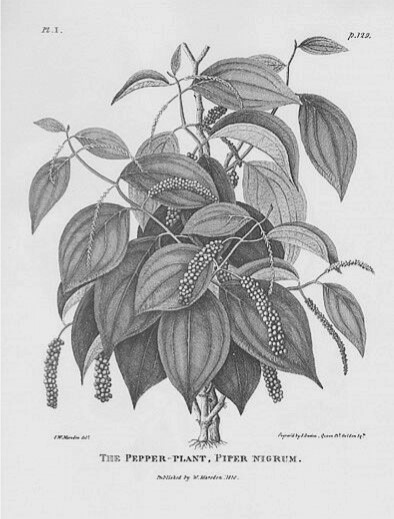
pepper

“The Salem Captains found that adopting the ways of the natives helped with trade and lowered the amount of violence. Captain “Nichols moved easily among the natives, picking up their language and adopting their mode of dress, in the tropical heat: a turban, a short, open jacket, and striped silk cutoffs, with a kris, or dagger, and a short sword tucked in the waistband. He respected their reputation for violence and never spent a night onshore…In showing respect to the locals by dressing in their attire and learning some of their language and speeding time with them, Captain Nichols won a trading advantage. ‘Nothing pleased the natives more than to find me ready to conform to their customs. I often walked arm-in-arm with their leading men, went into their huts to light my cigars, and, offering them some. Would sit down and smoke with them.”

Friendship, improbably, would permanently mark the relations between Christian Salem and Muslim Sumatra, good partners across the waters separating a sophisticated Western capital and a scattering of bamboo villages. For all of their daunting reputation, the Atjehnese would not cause problems for the ships and sailors of Salem; and trade along the Pepper Coast would be preserved in unbroken peace over the course of hundreds of voyages and many millions of dollars in profits.” Death of and Empire, The Rise and Murderous Fall of Salem, America’s Richest City. Robert Booth

Next week:  Franz Bessell goes native.


Windham Life and Times – October 7, 2016

Frederick Bessell

PART I: MORRISON’S ACCOUNT OF F.L. BISSELL IN WINDHAM
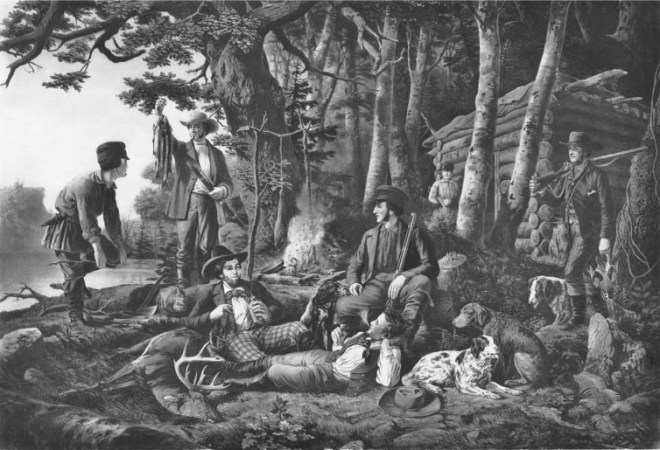
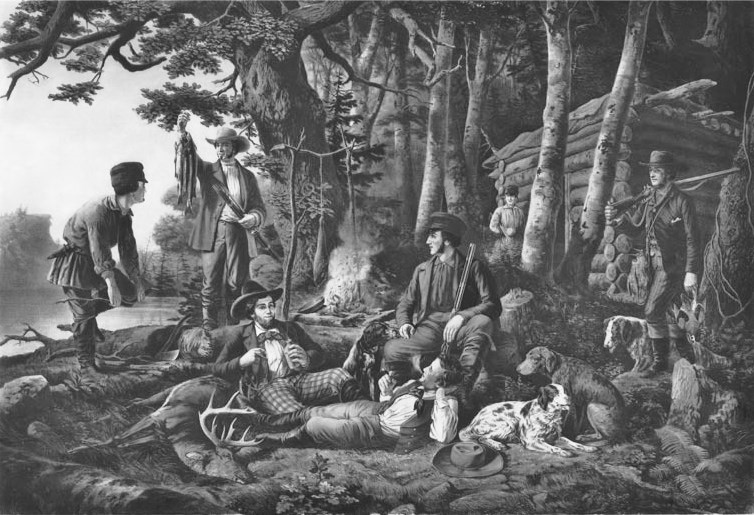
Louis Maurer (German-born Amercan artist, 1832-1932) published by N. Currier,  Camping Out Some of the Right Sort.

Louis Maurer (German-born American artist, 1832-1932) published by N. Currier,  Camping Out Some of the Right Sort. 1852. Bessell’s Camp in Windham was founded thirty years earlier.

I have always been intrigued by the account of  Bissell’s Camp which was located in Windham. It was described as weird and a little wild, and out of place in Windham’s history. I never really could understand how F.L. Bissell ended up in Windham and where he went to after he left. Actually, Frederick Bessell’s story is quite fascinating and is tied to the incredible wealth created by the maritime trade of Salem, Massachusetts, in the early 19th century.  Salem was America’s richest city at the time and the city’s merchant fleets had made many families there as rich as the Buffets or Gates of our time. While I have tracked down more information about Frederick Bessell, we will probably never know what induced him and Major Dudley to set up camp in the woods of Windham. So let’s begin with the retelling of Morrison’s description of Bissell’s Camp.

“At the age of eighteen or nineteen, F.L. Bissell came to Windham, in the month of May, 1823. He was a Malay or East Indian, a native of the isle of Sumatra, and came to this country in early life. He had a good English education, and was heir to a large estate, which was in the hands of a trustee or guardian, whose name was White of Salem, Mass. When he came to Windham he was accompanied by a man by the name of Major Dudley, a teacher of military tactics. They selected a spot and built a camp of pine boughs, with a stone fireplace. This camp was founded on a rock, which was but a little higher than the ground around it. It was soon supplied with all kinds of the best liquors, and with such food as was suitable for camp life.

“The next movement was the purchase of guns, pistols, swords, dirks, etc., also fishing gear and several dogs, all of which were of the most costly kind. Thus equipped, he with his friends, Major Dudley, and two or three others, were ready for fishing at Mitchell’s Pond, and for hunting wild game through the woods on each side of the brook that runs easterly from Mitchell’s Pond. They went into it with a keen relish, and from that time forward the yelping of hounds and the crack of the gun made music for the whole neighborhood. The novelty of the place and the odor of rum induced a great many people to visit Bissell’s camp.”

“Bissell evidently did not intend stopping long when he went there, but the attractions of the place drew so much company that he though it best to stay, and change in some measure what appeared to be a savage course of life, and take steps toward civilization. Therefore, the brush camp was torn down, and a log house built in its place. The house contained two rooms and a hall across the west end of the building; the inside of the house was finished in the most elaborate manner, the walls frescoed with pictures of East-Indian scenes, but the outside left in the worst condition possible. A stable was next built, then horses and carriages were bought, quite a number of each; in fact, he used money as though it were not worth having. In proof of this an incident will be related. He with another took a ride through the adjoining town of Salem; passing a farm-house, he saw a flock of geese, and having his shot-gun with him, he raised it and fired into their midst; killing and wounding several. He then ordered his driver to stop, and having found the owner of the geese, stated to him, what he had done, and asked what he must pay for the shot. The sum, (Not a small one,) was quickly named, and quickly paid by the sportsman, who then went on his way rejoicing.”

“Bissell was very fortunate in locating his camp, for the woodland which extended westward from his camp, on both sides of the brook to Mitchell’s Pond, was formerly the greatest place for game that could be found. It was the home to owls, hawks, crows, and pigeons, also of foxes, raccoons, woodchucks, mink and squirrels.”

Thus passed the first year of his camp life. He afterwards made additions to his house and stables, erected a large summer house, prepared an artificial pond, and stocked it with gold and silver fish. And so he went on for three or four years, till the money that he thought was lying back for his benefit was exhausted, or withheld from his use by his guardian or trustee. In the mean time he had contracted many debts, and his creditors were not slow in attaching his goods when the proper time came. They by due process of law took possession of all his personal estate. His financial embarrassment was the cause of his immediate departure from the place. He left these parts, and his subsequent history is unknown to the writer.”

“F.L. Bissell was a good penmen, and he embellished his writing very much by using (apparently) gold-dust instead of black sand, as a blotting material.”

“After Bissell’s departure, the premises was used, several years, as a kind of hotel, which was principally patronized by the thousands that were attracted by it romantic situation, and who were generally too thirsty to go away without seeing the inside of one particular room, where intoxicants were dealt out.”

“The first keeper of this hotel was a man by the name of Robinson, the next was Daniel Hunt, and the third was one Ferguson, neither of whom remained more than two or three years.

All the glory and attractions of ‘Bissell’s Camp’ passed rapidly away, after the hasty retreat of its founder. The buildings passed into the hands of one who was a manufacture of choice lace, which was then a remunerative business…The factory was torn down; the log camp was demolished about 1865. The lattice-made well-house still exists; the artificial pond is still there; and there are other ruinous evidences to remind the visitor of the places where buildings stood. But ‘the pomp and circumstances’ of its early state are gone forever.”

“Having closed the account of our common schools, mention will be made of a military school which but few of the present residents of Windham ever heard of. Among the companions of that wild, strange, eccentric man, F.L. Bissell, founder of ‘Bissell’s Camp,’ was Major Dudley, reported to have been an officer in the 1812-15 war. He came to town in May 1823, and was here several years. He was well versed in military tactics. He established a military school for the soldiers of the town, which was well patronized by those that loved the military profession.”

Next week: The connection between Salem Massachusetts and Sumatra.