Windham Life and Times – February 11, 2016

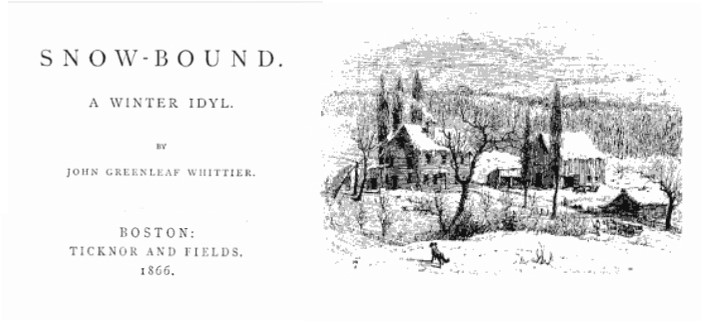
Snow-Bound

A WINTER IDYL

Images of the Embracing Intimacy of Snow and the Power of Fire.

snowbound     “WINDHAM FEBURARY 14.—Winter certainly took another flight… Yesterday was the day to read “Snowbound,” again—or do you know it by heart?” W.S. Harris, The Exeter Newsletter.

I didn’t know Snowbound at all, so while the snow was falling today, I read this poem written by John Greenleaf Whittier in 1865. In it, a snowstorm brings normal daily activity to a halt, allowing time to ponder the larger realities of life. Whittier eulogizes his family and the rural past. Written in the context of the destruction of the Civil War and the changes being brought about by the industrial revolution it was a popular success. The full poem runs for 747 lines and can be read at the Poetry Foundation-Snowbound.

…For such a world and such a night
Most fitting that unwarming light,
Which only seemed where’er it fell
To make the coldness visible.
Shut in from all the world without,
We sat the clean-winged hearth about.
Content to let the north-wind roar
In baffled rage at pane and door,
While the red logs before us beat
The frost-line back with tropic heat;
And ever, when a louder blast
Shook beam and rafter as it passed,
The merrier up its roaring draught
The great throat of the chimney laughed.
The house-dog on his paws outspread
Laid to the fire his drowsy head,
The cat’s dark silhouette on the wall.
A couchant tiger’s seemed to fall;
And, for the winter fireside meet,
Between the andirons’ straddling feet,
The mug of cider simmered slow,
The apples sputtered in a row,
And, close at hand, the basket stood
With nuts from brown October’s wood.
What matter how the night behaved?
What matter how the north-wind raved?
Blow high, blow low, not all its snow
Could quench our hearth-fire’s ruddy glow.
O Time and Change! – with hair as gray
As was my sire’s that winter day,
How strange it seems, with so much gone
Of life and love, to still live on!…

Found in Whittier’s introduction to Snowbound is a poem by Emerson and a quote illustrating the ancient spirituality of fire.

“As the Spirits of Darkness be stronger in the dark, so Good Spirits, which be Angels of Light, are augmented not only by the Divine light of the Sun, but also by our common Wood Fire: and as the Celestial Fire drives away dark spirits, so also this our Fire of Wood doth the same.” — Cor. Agrippa, Occult Philosophy, Book I.ch. v.

The Snowstorm (in part) by Ralph Waldo Emerson

Announced by all the trumpets of the sky,
Arrives the snow, and, driving o’er the fields,
Seems nowhere to alight: the whited air
Hides hills and woods, the river and the heaven,
And veils the farm-house at the garden’s end.
The sled and traveller stopped, the courier’s feet
Delayed, all friends shut out, the housemates sit
Around the radiant fireplace, enclosed
In a tumultuous privacy of Storm.’

This is all in a round about way bringing us to the principle of spirituality that is found in the essence of fire. Who hasn’t sat transfixed in front of the flames of a fire losing all trace of time. “Fire is one of the four classical elements in ancient Greek philosophy and science. It was commonly associated with the qualities of energy, assertiveness, and passion. In one Greek myth, Prometheus stole fire from the gods to protect the otherwise helpless humans, but was punished for this charity.

St John of the Cross, the Spanish mystic, In Dark Night of the Soul, uses a beautiful depiction of fire to illustrate the path to spiritual Oneness with God. Essentially, we begin as green wood, with which it is very difficult to start the spiritual flame, so the fire often goes out, having to be restarted many times before a self sustaining fire can be established. Eventually, the  fire burns brighter and hotter as we become one with God. Of course, the wood can never become the flame, but it can become totally subsumed within it. That’s the hope offered by the saint.

The 3,500 year Zoroastrian religion has fire as a central symbol. In ancient times, when Zoroastrians built no temples, possessed no religious imagery and had no books on the teachings of the faith, light served as the focus of their religious practices. Fire (athra / atarsh / atash) was a means of producing light. When using a flame, a source of light, as the focus while contemplating the spiritual aspects of one’s life, the symbolisms carried by the fire and the light it produced, conveyed some of the essential principles of the faith. For instance, carrying a fire into a dark place dispels the darkness giving us the metaphor of the light of wisdom banishing the darkness of ignorance. From wisdom are derived the principles of justice and order. The temporal fire was also the symbol of the cosmic fire of creation, a fire that continues to pervade every element of creation. In this sense, fire takes on a much broader meaning than a flame, a meaning we discuss below. Light and fire were also essential elements for sustaining life…Zarathushtra makes reference to the mainyu athra – the spiritual fire – as one that illuminates the path of asha. The universal laws of asha govern and bring order to the spiritual and material existences. Asha is available, through individual choice, to bring order to human thoughts, words and deeds. As an ethical choice, asha principled, honest, beneficent, ordered, lawful living.” HeritageInstitute.com

Enough said about this radical personification of snow and fire, its time to head home and start a blaze of my own. And to remember the more down to earth words of Robert Dinsmoor, Windham’s own “Rustic Bard”:

“And at my door a pile of wood, A rousing fire to warm my blood— Blessed sight to see!”

Windham Life and Times – February 4, 2016

Is the “Yankee” an Endangered Species ?

yankee

100 YEARS AGO IN WINDHAM | WILLIAM S. HARRIS

One look around today, and it is pretty obvious that the “Yankee,” with his stoic, sturdy ruggedness and independence, is an endangered species. What is a true “Yankee” you might wonder? Well Judson Hale, editor of Yankee Magazine says that “a Yankee is someone who is either native to New England or perhaps whose ancestors were.” NH Magazine Online in an excellent piece entitled, New Hampshire’s Real Life Yankees says that “Certain traits do exemplify the Yankee character: common sense, dry wit, a deep connection to the natural world and an acceptance of hardship. Yankees either have a penchant for storytelling that may stretch the truth or they’re taciturn.” The article further says, “But a Yankee preserves much more than material goods. The zeal for conservation also includes local culture, whether it’s the mom-and-pop maple syrup operations, the traditional music of the state or how town government is run.” “Hale further states in his book, Inside New England that “though frugality and shrewdness in business dealings are traits characteristic of New Englanders as a whole, I think New Hampshirites are the most frugal of all.” But is it still true? In the past, old time Yankees would debate for hours at town meeting about a 100 dollar expense. Today, the U.S. national debt is 17 trillion dollars. Where is Yankee culture in all of that. It is in this light that I present the Exeter Newsletter column from January 28, 1916, written by William S. Harris about “Thrift.”

‘There is more need to teaching children to save than there is of teaching them to give,’ was a remark made in our Sunday School lately. It was rather a novel idea, but on consideration there appears much truth to it. There are so many things, good and bad, calling for money, that the homely precepts of Benjamin Franklin on economy have been too much forgotten, and the traditional thrift of the New England character has been too much outgrown. Thrift in the poor is a necessary condition of comfort, but in the well-to-do also it is a virtue.”

“We are a nation of spendthrifts, and probably present conditions are making us more so. ‘Easy come, easy go.’ Many a well-to-do American family wastes enough to support a European family in comfort. I have heard a Westerner say that everybody in the West spends up to the full limit of his income.”

“Of course, frugality may degenerate into parsimony and become ridiculous, as in the case of Mrs. C., whose husband owned half the town, who on being solicited for a jar of preserves for a church supper asked, ‘Will I get the jar back?’ But this habit of looking after the small outgoes is one of the foundation stones of prosperity.”

“Reckless personal habits have opened the way to an alarming increase of public debts, of which the end does not appear, although statesmen are sounding the alarm. Governor McCall, of Massachusetts, in his inaugural address dwelt on the increase of his state’s expenditures, seven millions in 1900, thirteen and a half in 1910, and in 1915 almost twenty millions. His words, ‘Public expenses have been mounting with such frightful rapidity as to constitute a menace on our prosperity,’ may well be heeded beyond the limits of his own state…”

“…We get in the habit of depending more and more on the public, the state, the government, to do things things that we formerly did for ourselves. The result is that, forgetful of the fact that the public has no way to create wealth out of nothing, we become careless of expenditures so long as the money comes out of an unseen source—the public. In this way we get half values for the money spent, and debts pile up for posterity to pay interest on.”

A rather dim view of “Yankees,” is presented by the British author Frances Trollope in, Domestic Manners of the Americans, written in 1832. “…I like them extremely well, but I would not wish to have business transactions with them, if I could avoid it, lest, to use their own phrase, ‘they should be too smart for me.’ It is by no means rare to meet elsewhere, in this working-day world of our people who push acuteness to the verge of honesty, and sometimes, perhaps, a little bit beyond; but, I believe, the Yankee is the only one who will be found to boast of doing so. It is by no means easy to give a clear and just idea of a Yankee; if you hear his character from a Virginian, you will believe him a devil: if you listen to it from himself, you might fancy him a god—though a tricky one; Mercury turned righteous and notable. Matthews did very well, as far as ‘I expect,’ ‘I calculate,’ and ‘I guess;’ but this is only the shell; there is an immense deal within, both of sweet and bitter. In acuteness, cautiousness, industry, and perseverance, he resembles the Scotch; in habits of frugal neatness, he resembles the Dutch; in love of lucre he doth greatly resemble the sons of Abraham; but in frank admission, and superlative admiration of all his own peculiarities, he is like nothing on earth but himself.”

So is the final “Yankee” about to draw his last breath? I don’t know, I have to pin my hopes on the Millennials. Maybe a rejection of the rampant indebtedness and materialism foisted upon them by the baby-boomers will turn them into the new Yankees.

For and interesting look at “Modern Yankees” check out the article in NHMagazine.com “New Hampshire’s Real Life Yankees by Lynn Tryba.

Windham Life and Times – January 28, 2016

Christianity and War | William S. Harris

exeter

January 21, 1916. 100 YEARS AGO IN WINDHAM

“A clergyman of some prominence in the state, in an address, after defining Militarism as ‘that policy of government by which the nation trusts in force for the achievement of its ambitions in disregard of the claims of justice, humanity, and international morals,’ apparently indorses this policy by avowing: ‘There is only one way to meet the militarists that history records: that is with his own weapons on the field of battle.’ ”

“From other statements in the same strain, some of which I myself heard the preacher make, I think I do not misapprehend his position and I cannot refrain from recording a protest against such teaching by those called to interpret and apply the principles of religion and to be leaders of public opinion. It is their place to give us not only warning from the past, but inspiration from the future. Those who believe that humanity can and should ‘make progress upward and onward’ need to look ahead as well as back.”

“One hesitates to denounce war to the full extent of his convictions because so many excellent and esteemed men who fought in our Civil war seem to think arguments for peace are a personal reflection on them. Do they realize that the Civil war ended fifty years ago? If our people have made one-half the progress in the moral realm in these fifty years that they have made in material inventions and scientific knowledge, who will say that the causes which produced the Civil was could not now be adjusted without bloodshed?”

“The apologies for militarism appear to amount to something like this: so long as we have to deal with bad men, there is no use for any one to try to be good. The good need not try to make the bad better, but should descend to their level and overpower them with their own evil weapons.”

“We are told that the ‘national honor’ (whatever that that may be) can be vindicated only by giving blow for blow. The noble statements of President Wilson that ‘a nation can be too proud to fight,’ I heard ridiculed in a sermon by the same clergyman referred to. He should have lived a hundred years ago, when a high toned gentleman could not be too proud to fight his personal enemy or friend if differences involving ‘honor’ arose between them. The duel then must decide which was right, and one or the other must be killed to uphold somebody’s honor!”
“The civilized world has outgrown that barbarous foolishness. We even have laws to forbid individuals arming themselves and avenging their disputes. The time is surely ripe for nations to discard that primitive way of settling differences and to speedily find some way worthy of intelligent, not to say moral, beings. Is it not at least an ideal worth working for? Even though the advocates of force have only derision and the cry of ‘mollycoddle’ and ‘poltroon’ for those who believe the Christian world at least, after two thousand years, should be approximating the precepts of its Great Teacher.”

“The attempt is sometimes made to justify war in the present age by an appeal to the Old Testament. If this can be done, certainly other evils, such as human slavery and polygamy, can be so justified, institutions which the Christian consciousness of this age has utterly repudiated, but which never caused one half of the havoc and misery that war caused.”
Again, if the Old Testament had been sufficient for the world’s moral needs, why did Christ come and teach and exemplify a morality far in advance of that which the world had previously known? Christ recounted things which had been allowed ‘by them of old time,’ but, affirmed, ‘I say unto you’— something higher and better.”

“Christianity was not needed to teach men courage or patriotism. The Spartans, centuries before Christ, were as courageous and a s patriotic as any people ever have been or need to be. The ‘new commandment’ or Christianity is love, good-will, brotherhood. There is no place in the teachings, example, or spirit of Christ for the hatreds, selfish ambitions, and jealousies from which wars spring and which wars in turn aggravate. Christianity has made men more willing to suffer, to die if need be, in defense of truth and principle, but we can not believe that the spirit of Christ has ever made a man more inclined to kill or injure his fellow man.”
“We are told that our country’s only safety lies in having an army and navy sufficient to repel any nation that might wish to attack us; especially Germany or Japan, or both together. But why stop at two nations? Looking at history and human nature one can imagine Great Britain, France, Germany, Austria, Russia, Turkey, Spain, Japan, China, and a few more banding themselves together to despoil America! Why assume we can have the privilege of fighting them one or two at a time? If to meet force with force is are only hope, when are we safe? What amount of preparedness will avail?”

“No, our security is in obeying the command of God and of reason ‘ do justly, and to love mercy, and to walk humbly with thy God.’ If as Voltaire said, ‘God is always on the side of the heaviest battalions,’ away with such a God, the ally of cruelty and injustice! He is worse than useless in the evolution of humanity. Shame on so-called Christianity that has nothing better to offer as a principle of action than that might makes right, and force can only be overcome with force. The whole idea is far aside from the teachings of Christ. Even the Old Testament is full of the teaching that righteousness and not superior force is the surest defense of a nation as it is of an individual.”

     Will we resist the call of the modern war-mongers? We really need to get our own house in order before we arrogantly tell the rest of the world how to act. America now seems to muck up everything it touches. Eisenhower, a Republican, warned us about the evils of the “military industrial complex.” We didn’t listen. His successor died at the hands of the “deep state,” the enablers of the military industrial complex, who wanted wars in Cuba and Viet Nam. Politicians, industrialists and bankers win wars and the propaganda methods of Edward Bernays compels us to blindly do their will. “When the truth is found to be lies, And all the joy within you dies…”Jefferson Airplane. “War=Peace. We’ve always been at war with Eastasia.” 1984 Blah, blah, blah…

Windham Life and Times – January 14, 2016

Granite State Grove, Canobie Lake

canobie-1

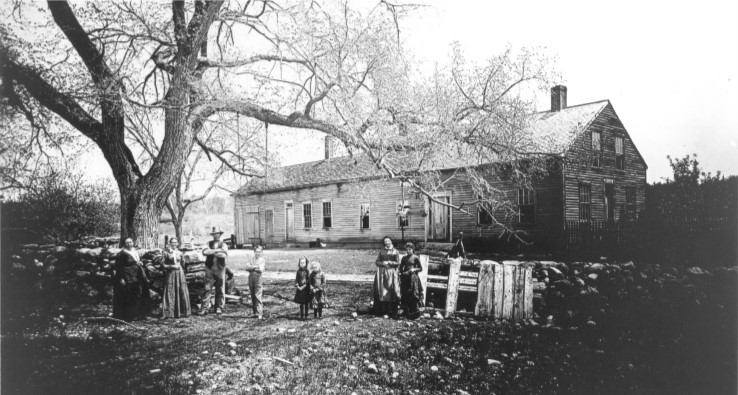
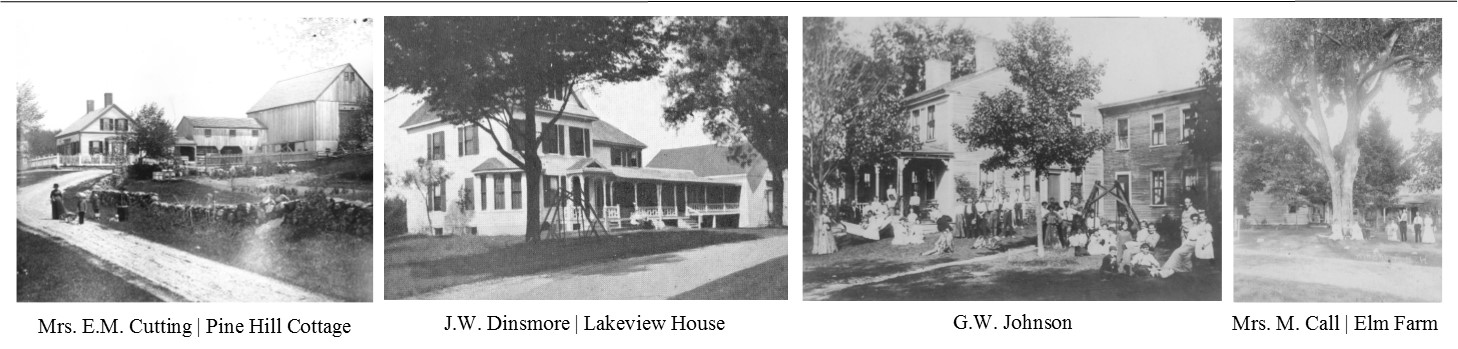
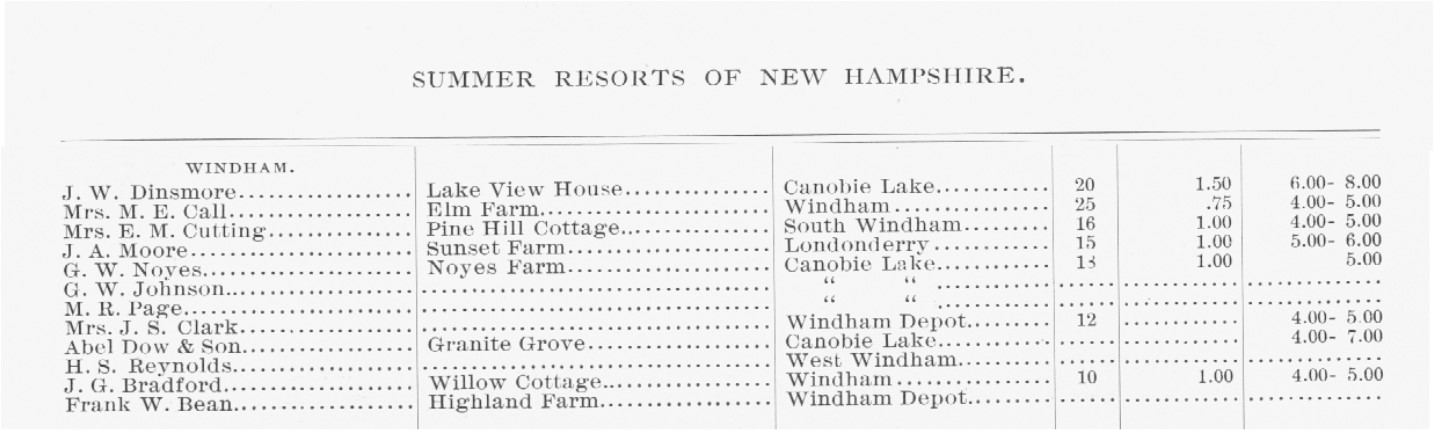
This photograph is from a tourist brochure, produced by the Agriculture Department of the State of New Hampshire. With the abandonment of many farms in New Hampshire in the late 19th Century, N.J. Bachelder took a two prong approach to overcome the problem. First, he encouraged farmers to operate boarding houses on their farms, during the summer months, (the rates of boarding houses could be found in this brochure.) Secondly, he encouraged wealthy and middle class people to purchase New Hampshire farms as summer homes. The Saint Gaudens artist colony in Cornish is a notable success, among others. This photograph shows Canobie Lake in Windham, where Hayes Hart Road is today. At the time, Granite State Grove was operating here. From the brochure: “Within the borders of New Hampshire are thousands of private summer homes varying in quality from rustic cottage to the elegant mansion, and affording ideal rest and recreation. Vacant farms have generally been utilized for this purpose, the buildings being transformed in accordance with the taste and necessities of the purchaser. A list of such farms, with tenantable buildings still for sale, can be obtained by addressing the secretary at Concord.” The brochure was provided to me by Dick Hannon, a long time resident of West Shore Road in Windham.

canobie-2

Windham Life and Times – December 18, 2015


100 Years Ago in Windham NH – W.S. Harris

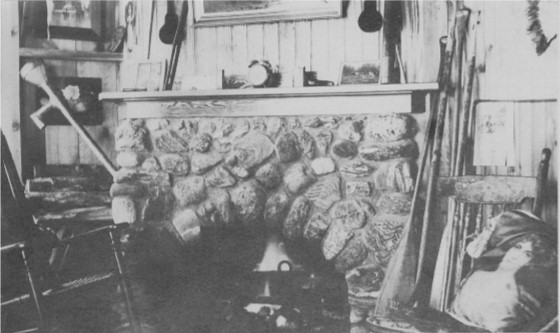
A fireplace in a cottage on the North Shore of Cobbett's Pond

A fireplace in a cottage on the North Shore of Cobbett’s Pond

WINDHAM, December 7. — Deer, which were often seen a few weeks ago, now appear quite scarce, much to the regret of hunters.

The last meeting of the Woman’s Club, held at the town hall December 1, was a notable one, the Derry Woman’s Club being invited, and 40 or more from there attending. Mrs. Annie P. Shepard, of Derry, president of the State Federation gave an interesting address on the statewide work. Other ladies from D.erry rendered musical slections. Mrs. Belle Harrington Hall, of Lowell, gave readings, her longest selection being Henry van Dyke’s beautiful story of “The Mansion.”

One of the town’s picturesque spots and natural curiosities which is not so well known as it should be, is a formation called by some the “Devil’s Den,” while to others it is known as the “Wolf’s Den.” It is located in the easterly part of town, perhaps a half mile northwest of Hamlin B. Sanford, near the road leading northwest towards Mitchell’s Pond and Windham Junction. Where an extemporized roadway curves around a bad hill on the highway is seen a bold ridge of granite of which great masses have become detached and slid down upon one another, some of them hanging as if about to topple over. Under these rock masses is a cave large enough to crawl into, and the rocks are fringed with green mosses and ferns and shaded by large trees, presenting a romantic picture. A short distance to the south of the main cave is a smaller den under the face of the cliff. This picturesque spot belongs to Mr. Searles and he has had the undergrowth cleared up, and the surroundings rendered more sightly, and no fences keep the public out. It is well worth the visit. (This spot must be located somewhere in the Castle Reach neighborhood. If anybody knows the whereabouts of “Devil’s Den” or has pictures, I would be most interested in hearing from them.)

WINDHAM, December 15.—Mail carrier Tellis R. Wells has a new auto

Fifty-three hunter’s licenses have been issued by the town clerk.

The private telephone company, which served the people of the central and western parts of town, has sold out to the New England Company, and the lines have been changed over. Subscribers in the central and northwestern parts are now on the Derry line, those at West Windham are connected with Nashua, and those in the South part with Salem. The cost is increased, but the service is better.

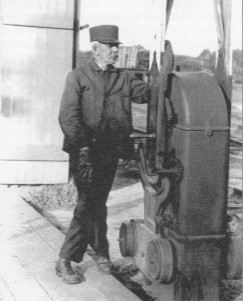
Howard C. Boyce, gate-tender at Windham Depot.

Howard C. Boyce, gate-tender at Windham Depot.

Horace C. Boyce the gate-tender at the Depot, in raising the snow laden gates Tuesday morning, by some mishap, broke one of the bones of his wrist.

The school at the Center, taught by Miss Faye A. Dame, will have a Christmas entertainment on Thursday evening. School will close Friday for two weeks. It takes some energy for Ethel Hawley to attend Pinkerton Academy in these short cold days. She lives five miles from Windham Depot, which point she has to reach before eight o’clock every morning, to go to Derry by train.

After a pleasant November, winter appears to have set in early. Tuesday morning found all out-doors decorated in true Christmas style, and the ground covered in six inches of heavy snow, which will make good sleighing when trodden. Now for the delights of the wood fire, of which Roland D. Sawyer writes so appreciatively. That is not a real fire which you cannot hear; as well as see and feel but only like ‘a painted ship upon a painted ocean.’ In building his Walden cabin, Thoreau says he, ‘lingered most about the fireplace, as the most vital part of the house.’ And when the second winter he substituted a stove for the open fire he felt as if he had lost a companion. In such weather as we are now having, it is true as he says, that ‘every man looks at his wood pile with a kind of affection.’ And speaking of some old stumps which he dug out of his bean-field the quaint hermit philosopher says ‘They warmed me twice, once when I was splitting them and again when they were on the fire. W.S.H.
Merry Christmas

Windham Life and Times – December 11, 2015

The Death of William H. Armstrong

The Armstrong Homestead Windham NH

The Armstrong Homestead Windham NH

WINDHAM, November, 1915.— “In the death of William H. Armstrong, which occurred last Thursday, the 11th, the town has lost one of its old and well known residents and a representative of one of its early and prominent families. He was the son of John Davidson Armstrong, of Bedford, and was born in that town November 29, 1840, consequently he had nearly reached the age of 75 at the time of his death. In 1861 he married Elizabeth, the daughter of his cousin, Samuel Armstrong, and settled on the ancestral Armstrong farm here, which was thereafter his home. (Just to make clear, David Armstrong, was the first Armstrong on the property and he was the thrice great-grandfather of Elizabeth, who married her cousin William, who then took over the property.) The house built in 1762, according to Morrison’s history, has been changed but little from its original appearance. Besides farming, Mr. Armstrong for many years drove a butcher’s cart through town. Whenever a customer would chose an item from his cart, will would say, ‘Its delicious, I had some myself for breakfast.’ His size indicated he may have been telling the truth. He was of genial disposition and in his bluff way was a friend to all. In politics he was a staunch Democrat. Three sons and one daughter survive, all residing here. Urvin S., Eugene W., Almy A., and Edna M., who has been her father’s faithful house-keeper, his wife having died many years ago. The funeral on Sunday afternoon was attended by a large number of neighbors and townspeople. The service was conducted by Rev. A.L. Dunton.” The house is still standing on Londonderry Road.

Windham Life and Times – December 3, 2015

A Blast from the Past: The North Shore Shopping Center

northshore shopping

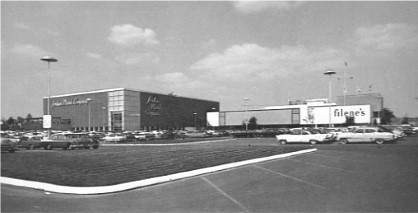
The North Shore Shopping Center opened in September of 1958. You might be wondering why a shopping center in Peabody, Massachusetts is relevant to Windham’s history. When it opened, North Shore was the only major shopping center, with first class stores, that could be easily reached by car from Windham, especially after Interstate 93 was built. If you grew up North of Boston in the 1960’s, I’m sure you’ll remember making shopping trips here. A trip in August, for school clothes, was always on the agenda and signaled that summer was almost over.

The major draw was the huge Jordan Marsh store which anchored the center along with Filenes. I always got Buster Brown shoes which meant my foot was measured with an x-ray fluoroscope machine, which was really neat, except that it probably caused cancer. The best part of the Jordan Marsh store was the top floor, because that was where the toy department was located. There was no such thing as Toys R Us back in the day. We always saw Santa there, because he was a first class type of Santa, and then we would stare endlessly at the model train display which was the centerpiece of the department. I got my first Lego set, which was brand new to America from Jordan Marsh. But the best thing about visiting Jordon Marsh, was that when you got through shopping, you could stop at the bakery and bring home a box of the most delicious blueberry muffins you ever tasted.

My family always preferred Filenes when shopping for clothes. And when I became an adult I always preferred the selection at Filenes better than either Jordan Marsh or Macy’s. North Shore began as an open air center and there was a grand staircase between Jordon’s and Filenes. You will probably also remember the wooden soldier’s that decorated the place during the holidays.

Of course, there were many other stores as well. One was S.S. Pierce, which had bright red and white stripes on their store-front. They were a Boston tradition with fancy canned goods and other food and liquor products. There was also the Windsor Button shop, yes woman needed a wide selection of buttons because many of them bought patterns from places like Vogue and actually sewed their own clothes. Brigham’s was there for lunch, ice cream or a Raspberry Lime Ricky. Kennedy’s was a nice men’s store where I got one of my first sport jacket. Others stores included Thom McCann shoes among others, Liggett-Rexall Drugstore, S.S Kresge, J.J. Newbury, Lauriat Books, Charles Sumner and a Stop and Shop.
There was also a Showcase Cinema, which was convenient, because the kids could be dropped off while their parents shopped. I cried through the shooting of “Old Yella” in that very theater. There was also a small amusement park called Kiddie Towne. In 2015, with online shopping growing, the question is if brick and mortar retail will even exist in a few years. I was thinking recently, how over the past 100 years, shopping has come full circle. We are back to a preference for “mail order” shopping like Sear Roebuck & Co. pioneered in 1894, only now we shop online rather than in a catalog.

Windham Life and Times: October – November

100 Years Ago in Windham

The Cochran Family Home on Lowell Road, Windham NH.

The Cochran Family Home on Lowell Road, Windham NH.

Olin Cochran’s Diary

Olin Cochran kept a diary for many years. 1915 is a particularly interesting year because it was a time when modern technology was coming to the forefront even in a rural place like Windham. The people in Windham at the time were buying automobiles for the first time, were looking at tractors to work in the fields, and were installing modern pumps to deliver water directly into their homes. World War One was also raging in the background but in Windham, it was the technology that had people’s interest, and that included Olin Cochran.

FRI-OCT. 1: 65-Wind W– Cloudy. Not much doing this forenoon. Pa and I took the engine in the shop apart. __ auto parts not right. Pa went to Boston after and changed them. I worked soldering the crack in the cylinder of the engine this afternoon. Gas man came, brought a new tank, 60 gal. left 170 gal. gas. Pigs got out. Pa got home a 4:30. Cloudy, Looks like rain tomorrow.
SAT-OCT. 2: 60-Wind E– Rain. Rained all day. Pa and I worked on the auto. We got it put together and cleaned out the shock absorbers. Large job. Glad the thing is in running order now. Nothing stirring. Still raining.
SUN-OCT. 3: 60-Wind W-Cloudy. Pa went to church today. Senter preached. Not much doing. Made some peach ice cream. Went after a paper this afternoon. Mr. ___ and wife came down for a few minutes. Took the auto out and over by J Park’s ____engine missed some. Got back on our own power. Wonderful! Cloudy and damp all day.
MON-OCT. 4: 70-Wind W-Fair. Worked digging a hole for a new ___ by the bee hived this forenoon. Going to put in a ___ frame 4’x8’ x 2 1/2’ deep. This afternoon we got the hole nearly dug. Pitched dirt on the road. I finished mowing the second crop. Ma went to W.W. after grains. Did not get home until late. Nice day. Warm.
TUE-OCT. 5: 65-Wind S-Rainy. Not much doing forenoon. J. Ridge of the Swift Morse Co. came here and we ordered a new water pump of him. He was up to Nesmith’s and helped him fix his engine. We made a trip to the Depot in the Stude and took him up. We worked in the shop cleaning the engine. This afternoon got a coat of paint over most of it. Some job. Ma went to grange tonight, Warm and damp.
WED-OCT. 6: 65-Wind W-Cloudy. Pa and I went up to the Depot this morning in the car, ran on 1 cylinder; adjusted carb and it ran fine. We went to Lawrence and got home around 1:15 Good trip. No trouble. This afternoon Ma went to a Woman’s Club. meeting at Proctor’s. Pa and I worked on the engine in the shop. Went after Ma in the car. Getting ready for the garage. Fair tomorrow.
THUR-OCT 7: 65-Wind E-Cloudy. Went down to the Big Windham Grange Fair today. Great show. Had a lot of stuff here. We took down a tree of ____. 1st premium. Some woodwork, potatoes, peas and jelly. Rufe Baily came up and drew Junior and G. Armstrong. Cloudy all day.
FRI-OCT 8: 63-Wind E– Rainy. Nothing doing this forenoon. Rained. Pa and I worked in the shop. This afternoon it stopped raining. Pa and Ma went to Derry. Got home at 6:30. I got most of the chores done. Cloudy and damp this afternoon.
SAT-OCT 9: 60-Wind W-Fair. Nothing doing this forenoon. Pa and I worked around the shop making a new frame for a window in the ___. Found a piece of pipe in the well rusted through leaking. We took the pump out. Pa and I went to Derry this afternoon in the car. Car ran fine. Did not shift gears going or coming. Got home and put in the pipe. Took the car and took Ma down to Mrs. Hills. Mr. and Mrs. Gross came down to spend the evening. Cold tonight.
SUN-OCT 10: 60-Wind W-Fair. Ma and I went to the Depot in the car to get a paper. Pa and Ma went to church. This afternoon Frank Bradford came up in a Hupmobile. After he went home we took the car up to see a wrecked auto. It was on the hill beyond Nat Esty’s place. Rambler, big 4 cylinder car. Got afire about 2 o’clock last night. Nobody knows anything about it. The number plates were gone. The body is burnt completely off. The engine is badly damaged. 3 good tires. Presto tank. Almost a 12 ___. Good car. Some of the things have been taken. Could be fixed over into a truck.

Cochran-autos

What’s interesting about the diary entries is that it shows how the Cochran’s and others in Windham are adapting to new technology in 1915, including cars and gasoline water pumps. Truly “modern” times in Windham.

MON-OCT. 11: 60-Wind W– Fair. Pa and Ma did the washing this forenoon. I worked on the new hotshed (?) this afternoon. I raked up the 2nd crop and Pa and I finished making the hotshed forms. Ma went to WW after grain. Good white frost this morning.
TUES-OCT. 12: 70-Wind W– Fair. Tellis (the mail carrier) couldn’t start his Ford this morning. Telephoned for me . I went around the route with him and got back around 10:15. Car ran fine. Got home and Pa and I got a load of sand and some crushed stone up to the crusher. This afternoon Ma went to the WWC (Woman’s Club) at Mrs. Austin’s. Pa and I got in the second __ 2 small loads. After that we mixed some cement and started on the Hotshed Nice day, Warm! Great. This finishes our haying for this year.
WED-OCT. 13: 70-Wind W– Fair. Pa and I worked on the hotshed this forenoon. We took the car and met Everett the insurance inspector. I took him to the old Prescott place and then to Pelham. (John Cochran was an insurance agent.) Bob Jackson came over. We finished the hotshed, worked pretty late. It took 4 1/2 bags of cement @ .55 and two loads of sand and 1 of crushed stone. Warm. Extra good weather. Got a pair of work shoes from S.R. & Co.
THURS-OCT. 14: 68-Wind S– Cloudy. Not much doing today I was sick last night. Pa and I went up to the Depot this forenoon. The 11:14 train from Rochester ran into an auto at Palmers Crossing. Mr. Thomas Howard and wife of Derry. Killed the woman and the man is not expected to live. Auto destroyed. We got in two loads of corn this afternoon. Warm and sultry…looks like rain.
FRI-OCT. 15: 65-Wind E- Raining. Rained this forenoon. Pa and I husked corn awhile. We went up to the Depot to see an agent for the J.M. Co. (John Mansville?) Asbestos shingles. He figured about the same as the K&M agents. This afternoon we had some company and husked some corn. We got 6 bushels husked, good corn, not much pig stuff. Almost 2 shocks to the ___. Cloudy tonight.
SAT-OCT. 16: 70-Wind W- Fair. Not much doing today. Pa and I started to pick apples, got about 2 1/2 bushels picked. My stomach went bad and I came in and went to sleep. Slept 3 hours and woke up better. Warm this afternoon.
SUN-OCT 17: 68-Wind W– Fair. Great old day. Warm and nice. We took the Stude and went to Malden to see Herbert and Mabel in their new house. They have got some house! Large and Nice. We started at 10:30 and got there at 12:30. Left at 4 and got home ay 6:15. Made 69.5 miles. Used 5.5 gallons of gas. Car ran extra well. Never saw it pull better. Went up Andover Hill at 25 MPH “Everything on high.” Nice roads. Great trip. Got S tubes fixed at Andover. Lizzie came home with us. She gave me Warren’s watch and fob. He bought it when he was 21 $50.                                           MON-OCT. 18: 60-Wind E– Fair. Took the car and went around the Range this forenoon. Took Lizzie to Canobie Lake Station and she went home. This afternoon, not much doing. Took the car tonight up to the Depot and got J. Gagnon and took him back. Car ran fine. Filled it up on oil and gas tonight and got it ready for another run. Pa picked a few apples. Nice day.
TUES-OCT. 19: 60-Wind SE– Cloudy. We took the Stude and Mary Ellen and J Park and went down to Hampton Falls to Apple Crest Farms. They had a demonstration of tractors there today. A “bull” and a Bates Steel Mule also had a “Big 4” of his own tearing up a new piece of land. They had a dynamite demonstration and also showed of the hen plant. That is a real farm. Had to shift tires while there. The old front Goodyear went flat. Then we went down to Hampton beach and over the long bridge home. Stopped at Whittier’s Birthplace on the way. Made about 75 miles, car ran extra fine. We got home about dark. Ma has gone to the Grange tonight.

From left to right: The Big 4, the Steel Mule, and the Big Bull.

From left to right: The Big 4, the Steel Mule, and the Big Bull.

The Big 4 was introduced in 1912 in Minneapolis MN. The company later merged with JI Case. The “Steel Mule” was a product of the Joliet Oil Tractor Co. They were one of dozens of small companies vying for a place in the lucrative small tractor market. One of its key selling features was that a farmer could use it to pull his horse drawn equipment. The Bull Tractor Company began business in 1913, also in Minneapolis. In 1915, they introduced the “Big Bull,” which had a 25 HP twin cylinder engine. When Ford entered the tractor market in 1917 it was the downfall for many small manufactures of tractors.

WED-OCT. 20: 68-Wind SE– Rain. Pa and I went over to Dan Roy’s this forenoon. Staid till noon. This afternoon we husked corn. 9 bushels. Ma and I went to Gross’s after milk tonight. Rained all day. Got my pay for carrying the wood. $48.39.
THURS-OCT. 21: 75-Wind W-Fair. Went around the route with Tellis today. “Henry Ford” has gone bad again. The old Stude went right along. Got in about 10:45. Pa fixed up the spare tire and picked apples. This afternoon worked around the shop. Pa picked apples. Nice and warm today. Cleared of last night.
FRI-OCT. 22: 60-Wind W-Fair. Not much doing this forenoon. J.W.M. came up with a job of soldering. Started to pick apples and Charles Woodman came along. This afternoon we took the car and went up to the Depot. Got our pump and an order from Sear Roebuck & Co. Picked apples and got in the pumpkins. Tonight we went over to Bert Farmer’s house warming. Big crowd there. They gave him a dinner set, a table cloth and napkins, one set of knives, forks and spoons, 6 plates, glass dish, 3 chairs. Great time! Home about 11:15 (You’ll remember that Farmer’s house was burnt to the ground by a passing train and was replaced ay a new Aladdin home.)
SAT-OCT. 23: 55-Wind NW-Fair. Cold today, windy. Pa and I picked apples this forenoon. This afternoon we went up to Rufe Bailey’s to draw a special Juror, got Fred Webster and went over to notify him. Ma and I went to the Depot tonight and got some grahams. The Rev. had 2 men come this afternoon. Took them down to Point A in Salem (trolley stop?) tonight. Started at 8 and got back about 9. Good trip.
SUN-OCT. 24: 50-Wind W-Fair. Pa and I went up to the Depot and got a paper. (Does anybody buy the Sunday paper anymore? It used be a highlight of the week.) We went at 6 o’clock. Not much doing. Rather cold.
MON-OCT. 25 60-Wind w-Fair. We went up to Harold Barker’s to see J. Ridge. Harold has just got a new 8 HP sawing rig. Not much doing. This afternoon Ma went to W.W. after grain. Pa and I picked the big russet tree. ( a golden apple tree.) Tonight J. Gagnon came down and we took him up to the train.
TUES-OCT. 26: 65-Wind S-Fair. Pa and I went up to the Depot this morning. Took J. Gagnon and 2 men over to the Goodwin place. Picked apples the rest of the forenoon. This afternoon picked apples and finished them up. Clouded up and looks like rain. Tonight we went up to Berry’s with the “bonds” cow. Thundering tonight.
WED-OCT. 27: 63– Wind W– Fair. Foggy this morning but cleared off fine and warm. Mr. French of the J.M. Company (John Mansville?) was here this morning with a roofing proposition. Pa & I dug potatoes awhile this afternoon. Ma went to Derry to get the horse shod. Pa and I dug potatoes. We got about 9 bushels dug. They have rotted some, about half the crop. What there is are good and sound.

Out, Out

Published by Robert Frost in 1916.

“Out Out” tells the story of a young boy who dies after his hand is severed by a “buzz-saw”. The poem focuses on people’s reactions to death, as well as the death itself, one of the main ideas being that life goes on. The boy lost his hand to a buzz saw and bled so profusely that he went into shock, dying in spite of his doctor’s efforts. Frost uses personification to great effect throughout the poem. The buzz saw, although technically an inanimate object, is described as a cognizant being — “snarling” and “rattling” repeatedly, as well as “leaping” out at the boy’s hand in excitement. Frost concentrates on the apparent innocence and passivity of the boy — which is relevant to the time period — as Frost was forced to move back to America due to war in Britain just a year before the poem was written. Bearing this in mind, the poem can be read as a critique as to how warfare can force innocent, young boys to leave their childhood behind, and ultimately be destroyed by circumstances created by the ‘responsible’ adult. The title of the poem alludes to William Shakespeare’s tragedy Macbeth (“Out, out, brief candle …”Wikipedia

Buzz-saw from 1915 like the one seen by Olin Cochran.

Buzz-saw from 1915 like the one seen by Olin Cochran.

The buzz saw snarled and rattled in the yard
And made dust and dropped stove-length sticks of wood,
Sweet-scented stuff when the breeze drew across it.
And from there those that lifted eyes could count
Five mountain ranges one behind the other
Under the sunset far into Vermont.
And the saw snarled and rattled, snarled and rattled,
As it ran light, or had to bear a load.
And nothing happened: day was all but done.
Call it a day, I wish they might have said
To please the boy by giving him the half hour
That a boy counts so much when saved from work.
His sister stood beside him in her apron
To tell them ‘Supper.’ At the word, the saw,
As if to prove saws knew what supper meant,
Leaped out at the boy’s hand, or seemed to leap—
He must have given the hand. However it was,
Neither refused the meeting. But the hand!
The boy’s first outcry was a rueful laugh,
As he swung toward them holding up the hand
Half in appeal, but half as if to keep
The life from spilling. Then the boy saw all—
Since he was old enough to know, big boy
Doing a man’s work, though a child at heart—
He saw all spoiled. ‘Don’t let him cut my hand off—
The doctor, when he comes. Don’t let him, sister!’
So. But the hand was gone already.
The doctor put him in the dark of ether.
He lay and puffed his lips out with his breath.
And then—the watcher at his pulse took fright.
No one believed. They listened at his heart.
Little—less—nothing!—and that ended it.
No more to build on there. And they, since they
Were not the one dead, turned to their affairs.

WED-OCT. 28: 60-Wind W– Fair. Pa and I dug potatoes awhile in the forenoon. Dug about 7 1/2 bushels. This afternoon we took the Stude and went over to the Range to Dan Roy’s. Got home and picked up the potatoes. Tonight we went over to Hudson to the Grange meeting. Neighbor’s night. Big crowd, around 302, 45 from Windham, 40 from Pelham. Great time. Took the Rev. and Mary Burnham at 50 cents per person. Got home around 12:30. Good trip.
FRI-OCT. 29: 58-Wind S– Changeable. Not much doing today. We carried Ma and Nettie and Chilla Webber over to Jewitt’s to a Ladies’ Aid Meeting. Went after her at night. We did not do much. Got some stuff from the stone crusher. Cloudy, rain and fair today. Had to put the auto top up.
SAT-OCT. 30: 55-Wind W– Fair. The men came and sorted the apples this morning. Will Dinsmoor brought them at 2:25. Pa and I dug the rest of the potatoes this forenoon. 21 bushels in all. Awful windy today. This afternoon I worked on the car putting on a leather cover for the _______. Did not get quiet through.
SUN-OCT 31: 60-Windham S.W.-Fair. Not much doing this today. Pa and Ma went to the Depot and helped another auto out of the sand on the new road. They went to church. I did not go. Ma and I went for a walk in Arthurs’ pasture this afternoon. Windy today.
MON-NOV. 1: 60-Wind S.W.-Fair. Not much doing this forenoon. Pa and Ma washed. Finished up work on the auto. This afternoon Ma came out and we picked up the cider apples. All picked, russets and all. Nice and warm today. Great weather.
TUE-NOV. 2: 55-Wind W-Fair. Ma went to Manchester this forenoon. Took her up in the car and went after her. She got a $5 hat free. Pa and I went up to the mill with cider apples. Had 35 bushels @ 30 per 100 lbs. Counting the russets we must have picked about 50 bushels yesterday afternoon. Thunder shower came up and we got some wet coming home. Pa and I worked on the new shop the rest of the day. Got along pretty well. Jewett and wife came down this evening then Ma went to the Grange.
WED-NOV. 3: 50-Wind W-Changeable. All kinds of weather today. Nice this morning. Rained before noon, then cleared off cold this afternoon. Pa and I worked on the new shop today. Got the forge and the anvil out there and the doors on. Took Ma and a load down to Mrs. Smith’s to a W.W.C. meeting. (Woman’s Club) Pa and I went to Arthur’s to look over his pump.
THURS-NOV. 4: 65-Wind S.W.– Fair. Pa and I worked on the shop today. We finished the outside of the new shop and began to shingle the end of the old shop by the saw. Will Dinsmoor came and headed the apples this forenoon. Pa and I went up to the Depot in the Stude this afternoon.          FRI-NOV. 5: 45-Wind E.– Rain. Rained in good shape this forenoon. Pa took the apples up to the car. I worked in the blacksmith shop. This afternoon Pa and I worked in the dug well tearing out the old pump and putting a foundation for the new pump. Cold and rain today. Not much doing. Got a book on blacksmithing from L.R. & co.
SAT-NOV. 6: 55-Wind W-Fair. Selectmen meeting all day at the hall. I worked around the shop awhile this forenoon and shingled some more on the side. This afternoon I took the Selectmen up to the stone crusher in the car. Ma and I went to W.W. (West Windham) after grain. Pa and I went up to see Hutchinson’s tonight about painting the inside of the town house. Car ran well. Cold today.
SUN-NOV. 6: 50-Wind W.-Fair. Pa and I went up to the Depot and got a paper this morning. Then we went to church. Ma did not go. This afternoon we went down to Haverhill and took the River road to Lawrence and came home on the Turnpike. Took J. Park and Mary Ellen with us. Good trip. Car ran fine. Rather cool today. This is the first morning that the ground stiffened and water skimmed over in good shape.
MON-NOV. 8: 55-Wind S-Fair. Nice weather today. Pa and Ma washed this forenoon. We worked on the shop awhile. This afternoon we finished shingling the end of the main shop, this completes the outside. Pa and I husked the rest of the corn that was on the floor and got in another load. Warm today.
TUE-NOV. 9: 60-Wind W-Fair. Pa and I worked awhile on the pump this morning. Got it in place. Pa went down to the hall with a man to see about fixing the inside of it. This afternoon Pa and I took the Stude and went to Derry. We took nearly 15 bushels of russets up to the mill. Got the car weighed—2,705 lbs. There was a ___ which would make the car about 2,700 lbs. Got some pipe fittings. Paid 40 cents per 100 for the apples. Great day. Warm and nice.
WED-NOV. 10: 50-Wind W-Fair. Pa and I husked corn all the forenoon. We husked 8 bushels. This afternoon we put the husks up with the hayfork. Then we worked the rest of the time on the shop trying to loop a… Ma went down to Worledges to a meeting of the Ladies’ Aid afternoon and evening. Great time. Windy today.
THURS-NOV. 11: 55-Wind W-Fair. Pa and I husked out the rest of the corn that was on the floor. 5 bushels and got two loads more. Mr. and Mrs. Chamberlain came over and had dinner. This afternoon we started to paint the shop, got to the end next to the road. Red and white trimmings. Bill Armstrong died this afternoon? There was a fire at Crowley’s the old Prescott place about 2 o’clock this morning. Caught from a chimney. No great damage done. Nice day today.

Advertisement for a 1915 Chalmers

Advertisement for a 1915 Chalmers

FRI-NOV. 12: 60-Wind W–Cloudy. Pa and I put away the mowing machine, horse rake, sulky plow ___. Then we killed 8 cats. Have 3 left now. We husked corn awhile. 2 bushels. This afternoon Ma went to West Windham after grain. Will Dinsmore came down in his Chalmers 6 and took Pa and I down to Lowell. Some ride! He averaged about 30 m.p.h and once down in Dracut he got going 50 m.p.h. We came back through the village at 43 and at Worledges Hill the car sailed up off the ground and came down with some bumps. Sprinkled a little tonight.
SAT-NOV. 13: 55-Wind W-Fair. Pa and I went down to the Warren place with Everett Griffin this morning. Then we worked painting the shop. Got along pretty well. Late in the afternoon Ma and I went up to Derry in the Stude. Car ran slick. We went down to the library tonight. Windy today and rather cold.
SUN-NOV. 14: 58-Wind SW-Fair. Pa and I went up to the Depot and got a paper. Then we all went to church. This afternoon we went up to Bill Armstrong’s funeral. 2 o’clock. Pa was a bearer. I went down to the Cemetery with Worledge and helped lower the box and fill in the grave. Clouded up tonight. Feels like snow.
MON-NOV. 15: 60-Wind W-Raining. Not much doing today. Pa and I worked in the shop. This afternoon Ma came out and we all husked corn. Did not rain much this afternoon. Grown very cold and windy tonight.
TUE-NOV. 16: 50-Wind W– Fair. Not much doing this forenoon. I worked around the shop and Pa and Ma washed. Pa and I went up to the 10:43 train and met Everett. Then went down to see about the fire at Crowley’s. Then took him to Pelham and met Gagnon and some men to look over Mrs. Stuart’s woodlot. Then we carried him up to the Depot and then went down to Crowley’s again. Went about 28 miles with the car. Roads some muddy. Pa and Ma went to the Grange tonight. Red___ ___ last night.
WED-NOV. 17: 50-Wind W– Fair. Ma was sick all day today. Not much doing. I went down to Gilson’s and got his pipe ____. Worked on the new pump and piping the engine. Cold today. Pa and I went to the Depot this noon.
THU-NOV. 18: 55-Windh W– Fair. Fine day. Ma and the bunch went to Derry to a WWC meeting. Worledge carried them up and Pa and I went after them tonight. Came down the Turnpike over the new road. Pa went down to Crowley’s this forenoon. Worked in the shop. Got the pump and engine pretty well piped.
FRI-NOV. 19: 58-Wind E– Rain. Pa went up to the lot and got a load of wood this morning. We started to run it up and the engine blew a hole in the piston. Began to rain so we went to work on the engine. Took out the piston and fixed it. Rained hard all day and cleared off to moonlight this evening. Never saw it rain much harder or clear off quicker. This afternoon we husked corn. 5 bushels. Not much doing.
SAT-NOV. 20: 50-Wind SW-Fair. Went around the R.F.D. route with Tellis today. “Henry Ford” has gone bad again. Got in by 11. Then Pa and I sawed up the 1/2 cord of wood for the Hall and took it down. The paint looks fine. They will be through in about a week. This afternoon Ma went to the Depot and got some grain. Cloudy. Pa got 1/2 cord of wood and sawed it up for Lizzy. Engine ran fine after we got it started. Took the car and went down to Crowley’s tonight.
SUN-NOV. 21: 53-Wind S. Cloudy. Ma and I went up to the Depot in the car and got a paper. Car ran fine. Then we all went to church. Nothing much doing. Nason’s folks came over this afternoon. Had a haircut. Dark and Cloudy. Curious weather.
MON-NOV. 22: 55-Wind W-Fair. Nice day. Went around the route with Tellis. Had good luck and go home about 11. Repaired the hitching post. Pa went down to Lizzy’s with a load of wood this afternoon. We got in one load of corn. Clear and cold tonight. The Gilson family came up this evening. Some men from Derry are at work painting the church.
TUE-NOV. 23: 50-Wind S-Fair. Tried to start the car to take Tellis around this morning and nothing doing. Went up to the depot in the team. Tellis took his horse for the first half of his route. I worked on the car, points and carburetor and got it running. Took Tellis around the last half and then he came and got his horse. We then took the car and went to Derry and got some Russet cider. Got home about 6. Car ran pretty well. (Neither the Ford or the Dodge were as reliable as a horse.)

Hunter's in Windham Shoot a horse.

Hunter’s in Windham Shoot a horse.

WED-NOV. 24: 50-Wind E-Cloudy. “First Snow” About an inch of snow on the ground this morning. Melted before night but was cloudy with snow squalls this afternoon. Not much doing. Worked around the shop. This afternoon Ma went to West Windham after grain. Pa and I husked corn.
THU-NOV. 25: 53-Wind N-Fair. “Thanksgiving” Pa and I went up to the Depot and got the mail this morning. J. Park and Mary Ellen came over and spent the day. Nice day. Good time. We started the engine and ran the new pump a few minutes. Got about 20 lbs. of pressure. About dark an auto ran off the road on Minister’s Hill, (Thompson’s) and took a pole out at the edge of the gravel pit. Made 4 pieces out of the telephone pole and pulled out the stump, twisted the lines, then they went along, zigging and ran into the wall by the side of the meadow. They did not stop and nobody knows who it was. Worledge, Pa and I fixed the line so it is working tonight.
FRI-NOV. 26: 54-Wind none-Fair. Spent the day fighting the crowds at the Black Friday sales. (Only kidding.) Not much doing this forenoon. Pa went up to the Depot. I worked in the shop. Put more aluminum paint on the engine pipes. Got the floor fixed on the ___. This afternoon we finished painting the shop, all but the trimmings on the end next to the saw. The gas man came and left 200 gallons of gas @ 20 cents and 25 gallons of kerosene @ .09 cents. Tonight we went down as far as Messenger’s after ___. Great weather today. Warm and nice.
SAT-NOV. 27: 60-Wind E-Fair. Nice day. Warm. This forenoon we started the engine and pumped some water. Ran about an hour and got the tank 1/2 full. Must be a leak somewhere. Charles Esty came down. Ran the lathe awhile. This afternoon Pa went down to the hall to a selectman’s meeting. I worked around the shop. Cloudy today.
SUN-NOV. 28: 58-Wind W-Fair. Nice day. Warm. Pa and I went up and got a paper. Pa went to church. Ma and I did not go. This afternoon got the car and found the gasoline pipe leaking. Got that fixed and went down to see F. Hadley. Got home about dark. Car ran well.
MON-NOV. 29: 60-Wind E.-Rain. Foggy and damp this morning. We dug up a water pipe leading from the well to the shop. The union on the suction pipe leaked and that was the reason the pump did not work faster. Began to rain and we gave it up. This afternoon I worked in the shop, put a circuit breaker on the engine. Ma came out and husked corn. Got about 15 bushels husked. Cleared off and is starlight tonight. The painters have got through painting the inside of the hall.
TUE-NOV. 30: 55-Wind W– Fair. Worledge broke his windshield hinge and Pa and I fixed that this forenoon. This afternoon Ma went down to the Hall to help decorate. Pa and I worked on the water pipe. Started the engine and ran about a 1/2 hour. Pumped better. The circuit breaker worked fine. Engine finally stopped as the battery gave out. Started about 4 o’clock and went to West Windham after grain. Got back around 5:30.
WED-DEC. 1: 50-Wind W-Fair. We took the Stude and went to Lawrence this forenoon. Got down there by 9 and left about noon. Court business. Car ran well. This afternoon there was a big Windham Woman’s Club meeting at the Hall. Ma went down. The neighboring clubs came, federation officers. Pa and I worked on the water pipe, put on a new union and I think we have it tight. Put some new batteries in the engine and it ran slick. Belts slipped some. Some fellows from Lawrence shot a horse accidentally, while deer hunting at Butterfield’s Rock on the Dracut road. Deer Season begins today and lasts until the 15th.

After writing this I received an e-mail from Tom Tufts. He povided photographs and more information about the Applecrest Tractor Demonstration that Olin Cochran talks about in his diary…He says, “No way to be sure if these attached pictures are from Applecrest or the tractor demo you mention in your blog post/diary entry. My grandfather’s negative envelope said 1915-1916 so the time is right. My grandfather James A Tufts II bought our farm on High Street in Exeter in 1923 but he was an ag. student at NHC (UNH) near this time also. Our farm was right on the corner of High street and rte 88 in Exeter which is the road to Applecrest.”

Here are his photographs for your enjoyment.

tractor-1

tractor-2

tractor-3

He has a blog dedicated to Tufts family genealogy.

Windham Life and Times – October 15, 2015

100 Years Ago in Windham NH – W.S. Harris in the Exeter Newsletter

The Austin Estate as it appeared during the time period of the article.

The Austin Estate as it appeared during the time period of the article.

“WINDHAM, October 13.— The first annual fair given by the Windham Grange last Thursday was considered a marked success. The exhibits of farm products, fancy work, etc., were in great number and variety, and the attendance was large. About $25 was cleared, which was an unexpected feature.

Mrs. A.E. Austin, of Boston, entertained the Windham Women’s Club in a very interesting meeting at her summer home on the Range Tuesday afternoon. The company, which numbered over 60, assembled in the house and then proceeded to the new and spacious barn where a portion had been decorated for the occasion and furnished seats and a refreshment table form which in due time an abundant supply of good things was dispensed. The literary feature of the meeting was a lengthy and finely written account by Miss Bessie Emerson of her trip to the Pacific coast last summer. This trip included about all the points of chief interest including the Grand Canyon of Arizona, the Yellowstone Park, the two Expositions, and the coast states from the Mexico line to Washington.”

"Barn Manor" a Pennsylvania Dutch barn in Windham NH

“Barn Manor” a Pennsylvania Dutch barn in Windham NH

According to Eugen Gaddis, in the “Magician of the Modern,” Mrs. Austin bought the property in 1913. This was a time in America when wealthy city dwellers were building “cottages” on lakes and the ocean and purchasing “gentleman’s farms in the country. “In the summer of 1913, Laura took steps to find a special place for herself and her boy. The cottage on the Maine coast, the address in Boston’s Back Bay, and Chick’s enrollment at Noble and Greenough were all outward signs of the Austins’ increased social status. Now Laura wanted to join the landed gentry…’I decided to buy a farm in the country, where my boy could have a taste of country life, which I think is the inheritance of every boy, rather than a city street…’ She heard of a piece of property on Range Road in Windham, New Hampshire…comprising about eighty acres of woods and fields, which Laura eventually enlarged to a hundred, it ran along the crest of a hill and included a farmhouse, two barns, and the colonial house of her imaginings already furnished with antiques. The land went down to the edge of Cobbett’s Pond…The main house looked out across forested hills to Mount Monadnock, sixty miles away. Later she turned the barn next door into a Pennsylvania Dutch- style house which she called Barn Manor.” Later, her son would establish the Windham Playhouse in the 1940’s-50’s. Despite being a cosmopolitan and sophisticated man, Austin always loved the Windham property and is buried on the Cemetery on the Hill.

“The Ladies Aid Society, of Canobie Lake, hold a harvest supper this evening at the Searles Chapel.” “This evening occurs the marriage of Miss Ruth Abbott, of Wakefield, Mass., who has spent the past thirteen summers at Fairview on Cobbett’s North Shore, to Walter A. Hendrickson, of Wakefield.