Windham Life and Times – March 12, 2021

Black History in New England
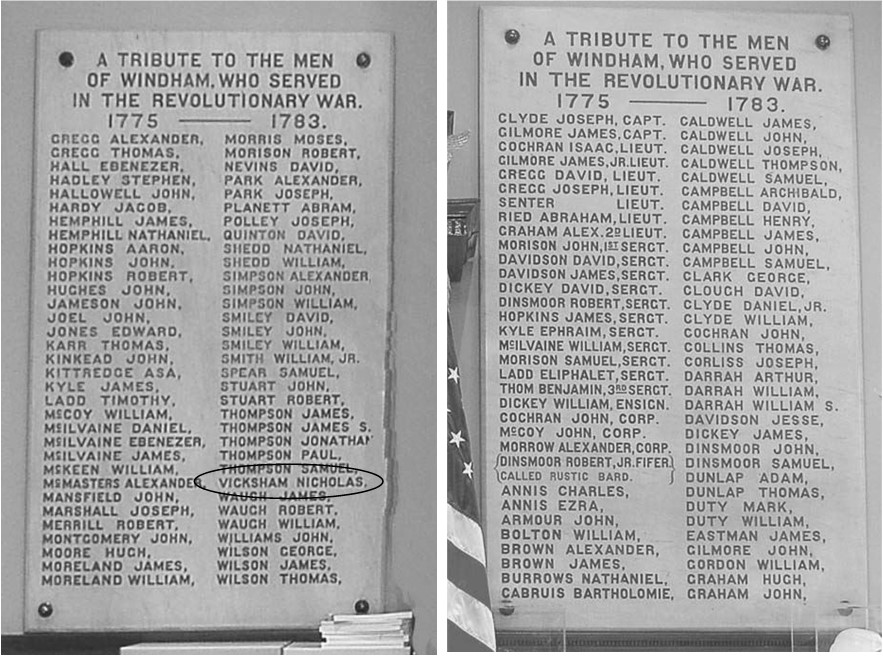
Nicholas Vicksham is listed as having served from Windham in the Revolutionary War

Nicholas Vicksham African-American Patriot

Nicholas Vicksham (Vixtrom, Vintrom) was an African–American from Windham NH., who fought in Captain James Carr’s Company as part of Colonel Poor’s Regiment (later Hale) during the Saratoga campaign.

    Joseph Cutshall-King in a Post Star article from March 2, 2020 says “American patriot blacks fought at several key engagements in Burgoyne’s campaign. The Battle of Hubbardton, Vermont, on July 7, 1777, is a case in point. Simeon Grandison of Scituate, Mass., fought at the battle, but it not known with what regiment he served. Asa Perham (also spelled Purham and Pearham) served and fought that day with Col. Nathan Hale’s 2nd New Hampshire Regiment, as did Nicholas Vintrom. Vintrom also spelled Vixtrom, who was captured by the British, but survived. The Battle of Hubbardton by Col. John Williams notes the presence of four black patriot soldiers at that battle. Titus Wilson of Peterborough, N.H., fought with Col. Cilley’s Regiment. Wilson was wounded and captured, and died that same day…”

    “You’ve probably surmised that black patriots, such as Minutemen Peter Salem and Cuff Whittemore, fought at so many of the pivotal Revolutionary battles. For example, both Salem and Whittemore faced Burgoyne twice: once at Bunker Hill in 1775 and again at Saratoga in 1777. I’ll end with a recounting of Whittemore’s bravery. Whittemore fought at Saratoga, where British forces captured him. Brought to Burgoyne’s tent, he was ordered by a British regular to take Burgoyne’s horse, as if to hold the reins like a groom or some such thing. Whittemore did, indeed, take Burgoyne’s horse, but not as ordered. Instead he mounted it and, amidst whizzing musket balls, sped off to freedom on Burgoyne’s own steed! Whittemore added an ultimate insult to the overall injury of defeat Burgoyne would suffer at Saratoga.”

     Battlefield.org summarizes the battle at Hubbardton this way: “During the 1777 Saratoga Campaign, there were several crucial limited engagements that played a role in slowing down General John Burgoyne’s 8,000-man invasion force as it made its way south from Canada to rendezvous with other British forces near Albany, New York. One of those places was Hubbardton located in present day Vermont. The British attacked the American rear guard, which had abandoned Fort Ticonderoga without firing a shot after the British placed cannons on the hills overlooking the fort. With Fort Ticonderoga made untenable, General Arthur St. Clair ordered the fort evacuated on July 5, 1777.”

     “With intelligence in hand that the Americans had left their defensive position at Fort Ticonderoga and were headed south, the British opted to take advantage of the situation. Burgoyne’s adjutant, General Simon Frasier, pursued the Americans, catching up with them on July 7 at Hubbardton. Elements of Saint Clair’s rear guard had encamped at Hubbardton and were taken by surprise by the British, reinforced by a detachment of Brunswick Grenadiers and Jägers led by General Friedrich Adolf Riedesel. The Americans put up stiff resistance, and almost succeeded in turning the British flank, only to have the Brunswick Grenadiers arrive on the field, singing Hymns as they crashed into the American flank, staving off a British defeat. Joining in the fight for the Americans was Colonel Seth Warner, a grizzled Veteran of the French and Indian War and his band of Green Mountain Boys. These were the Americans who provided the heavy fighting on the American side.”

    “While many Americans were taken prisoner and marched back to Fort Ticonderoga for confinement, the bulk of Saint Clair’s army was able to escape further south along the Hudson. The result was a British tactical victory, but an American strategic victory.” According to Battlefield.org, 2,230 troops were engaged in the battle, 1,200 Americans, 1,030 British. There were 557 casualties: Americans: 367– 41 killed, 96 wounded, 230 missing or captured. British: 190– 49 killed, 141 wounded. I have the names of four African-Americans at the Battle of Hubardton including our Windham man, Nicholas Vicksham: “Four black American soliders took part in the Battle of Hubbardton: Titus Wilson (Willson), Peterborough, NH., Col. Cilley’s Regiment. He was wounded, captured and died at Hubbardton on the day of the Battle. Simeon Grandison, Situate Massachusetts, regiment not known, Asa Perham, Col. Hale’s regiment. Nicholas Vintrom (Vixtrom) Col Hales’s regiment, captured July 7,  John Rees, in his book “They Were Good Soliders” mentions a fifth African-American at Hubbardton, “Scipio Bartlett enlisted in Colonel Ebenezer Francis’s Regiment in February 1777 and fought at the Battle of Hubbardton in Vermont that July, where Colonel Francis was killed. Bartlett added this postscript: ‘I further on oath declare that I was emancipated at the commencement of the Revolutionary War and was a free man during my whole term of service… I am a Black man—but free—and of the age of sixty-six years…’” So at least five African-American’s fought at Hubbardton.

     Unfortunately, we know very little about Nicholas Vicksham, as his name is spelled on the marble plaque in the Windham Museum, memorializing his service in the Revolutionary War. We don’t know whether he was a freed black or a slave since both lived in Windham. Morrison records that in July 14, 1776 that, “We the subscribers acknowledge that we have each of us received the sum of six pounds sixteen shillings lawful money from the selectmen in Windham in behalf of the town as a reward to serve on the Continental army for the space of five months: Allen Hopkins, John McCoy, John Jobe, (Joel?) William Dickey Sergt., James Gilmore, David Davidson, Samuel Dinsmoor, Robert Dinsmoor, Nathaniel Hemphill and Nicholus Vickstrum.” The fact that “Vickstrum” enlisted with slave-owner, Nathaniel Hemphill, leads to questions with no answers…was Vickstrum a slave of Hemphill’s or a free man? We also know from the regimental roles that he was 28 years old, stood five foot ten inches tall upon enlistment and that he received a twenty dollar bounty.  Here is what we do know from Morrison: “Windham May 8, 1777.—There is enlisted out of Windham, William Darrah, Robert Stuart, in the Continental Army to serve for three years. Enlisted with Lieutenant Cherry, John Joal (Job?), and Nicholas Vicksham.” (“On November 8, 1776 Ensign Cherry was commissioned a Lieutenant in Capt. James Carr’s Co. in 2nd New Hampshire Regiment, Col. Nathan Hale commanding.”) “Lieutenant Cherry, from Londonderry was in Capt. James Carr’s company of Colonel Nathan Hale’s Second NH. Regiment. Morrison says, “Vicksham, was taken prisoner at the battle of Hubbardton, and was never heard from afterwards.”

  We know little of the other commanders at Hubbardton. Colonel Ebenezer Francis was like Warner a huge man with some military experience, for he had commanded a regiment at the siege of Boston. He commanded a Massachusetts regiment at Hubbardton, was killed at the head of his men, and buried by the Hessians. Colonel Francis was a fine example of the patriotic citizen-soldier. He died-as every true soldier would wish to die-in the forefront of the battle his face to the foe. “No man died on that field with more Glory than he yet many died and there was much Glory.”

“Colonel Nathan Hale was still somewhere down the hill near Sunker Brook with a remnant of his regiment, including Captain James Carr’s company, (Vicksham’s Company), Captain Caleb Robinson, and several stragglers and invalids. Despite being taken by surprise, Hale’s men had done their best to delay the crush of redcoats. However, as a fighting unit they ceased to exist, the men, faced with overwhelming odds, had slipped into the woods and continued the fight individually and in small groups…” According to another account, “…Colonel Nathan Hale, at the first onslaught of the enemy, retired with his regiment, as many of his men were sick and exhausted; he was overtaken on the road to Castleton and surrendered. Colonel Hale was bitterly criticized for his action and asked for a court martial, but before it could be granted, he was taken prisoner and died on Long Island. He was thirty-seven years old.” It is likely then this is how Nicholas Vicksham was captured by the British at the battle. What we also know is he never returned from the war and likely perished in captivity. Hadden’s version confirms   

    Ethan Allen’s statement, that Hale surrendered to ” an inconsiderable number of the enemy ;” for Allen, in writing of the affair at Hubbardton, says: — “It was by this time dangerous for those of both parties who were not prepared for the world to come ; but Col. Hale being apprised of the danger, never brought his regiment to the charge, but left Warner and Francis to stand the blowing of it, and fled, but luckily fell in with an inconsiderable number of the enemy, and to his eternal shame, surrendered himself a prisoner.”  A letter, evidently written by a member of Col. Cilley’s New Hampshire Regiment (which was on the retreat from Ticonderoga, but not in the engagement at Hubbardton), dated Moses’ Creek, July 17th, 1777, and indorsed, ” Letter from Cogan to Gen’l John Stark,” &c., to be found in vol. 8, of the New Hampshire State Papers, page 640, gives a very graphic account of the disorder and confusion attending the retreat from Ticonderoga. Although his regiment was not in the action, Cogan writes as if he had been ; and undoubtedly many, who had straggled from their regiments, were with the rearguard.

“Our situation puts me in mind of what I have heard you often say of Ticonderoga. Such a Retreat was never heard of since the Creation of the world. I was ordered about five of the Clock in the afternoon to draw forty-eight Rounds per man :afterwards, nine days allowance of provision which I completed about 2 of the clock in the morning, and about the time I got home the Tents were struck, and all was ordered to retreat ; but it was day light before we got below your old house \ such order surprised both officers & soldiers ; then they wished for General Sullivan to the Northern army again ; they left all the Continental clothing there ; in short every article that belonged to the army ; which if properly conducted might be easily saved. Surely we were fifty thousand times better off than General Sullivan was in Canada last year ; our men was in high spirits, and determined to a man to stick by the lines till they lost their lives, rather than quit so advantageous a Post ; Drove us a long two or three & thirty miles that day, till the Rear Guard got to Bowman’s Camp; the men being so fatigued were obliged to stay, and were attacked in the morning by the Regulars, who travelled all Night, and just got up by the time we were beginning to march in a disorderly manner; our men being in confusion, and made no great of a Battle. But some behaved & some did not. Col°. Reed acted his part very well. Col°. Hale they said did not. Col°. Hale is either kill’d or taken. Little Dwyer behaved like a lusty fellow & died in the Bed of Honor ; as nearly as I could conjecture, we had odds of a thousand that attacked them ; our main body was within six miles of us, the Indians took & killed a vast number of our men on their Retreats ; then was hurried at an unmerciful rate thro’ the woods at the rate of thirty-five miles a day, oblidg’d to kill oxen belonging to the Inhabitants wherever we got them; before they were half-skinned every soldier was obliged to take a bit & half Roast it over the fire, then before half-done was obliged to March, — it is thought we went 100 miles for fear of seeing a Regular (I mean out of the way) there never was a field officer consulted, whether we should retreat or not, which makes them very uneasy ; so that the blame of our Retreat must fall on our Commanders; never was soldiers in such a condition without cloaths, victuals or drink & constantly wet. Caleb* and I are just as our mothers bore us without the second shirt, the second pair of shoes, stockings or coats, — but however its all in the Continent. Caleb does vastly better than he ever did with you. Col. Cilley is very fond of us. Indeed, I suppose we are pretty diligent for the most part. Give my compliments to Peggy, Arch & Jenny & Martha.

” I am Respects Yours, 

“N. B. The officers lost their Baggage, writings & all. The

Rear Guard were mostly Invalids, and our Gen” took away

the main Body, and even refused to send assistance when the

Cols, begged him to do it.”

“Indorsed — ‘Letter f.om Cogan to Gen’ John Stark,’ “

*” Caleb was the eldest son of Gen. John Stark. — Ed.
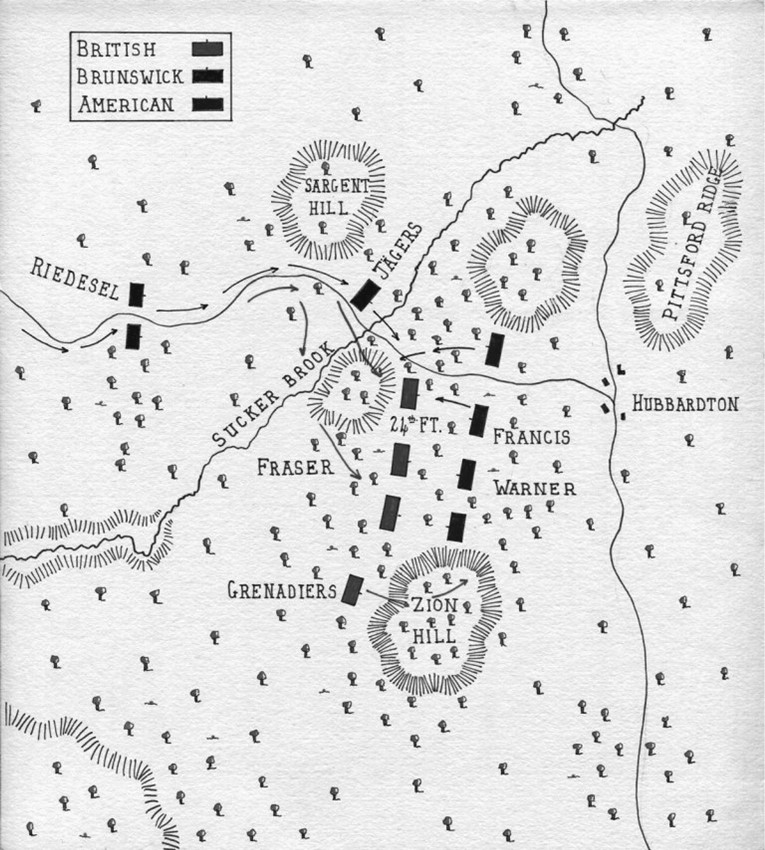
  “Although Hale was the official commander of the 2nd New Hampshire Regiment, he was delayed in joining Warner because of the large number of sick, disabled, and stragglers, who St. Clair had assigned to his regiment. (In the entire Northem Army, 532 men were listed as “Sick, Present,” or roughly eighteen percent of the rank and file as of June 28, 1777. These were the men who made Hale’s fob so difficult. G.W. Nesmith states in his book New Hampshire at Hubbardton that Hale was six miles behind the other American troops. Finally, when Francis arrived about 4 p.m., Warner took command of the entire rear guard. Upon Hales’s arrival at the bivouac area that aftemoon, the three commanding officers gathered at the log cabin of John Selleck, which stood at the junction of the military and Castleton roads at what is now East Hubbardton. “

    “Colonel Hale perhaps had one of the most difficult parts to play in the Battle of Hubbardton. General St. Clair had placed him in charge of the invalids, walking sick, wounded, and stragglers, including some who were intoxicated, from the retreating Northern Army in the forced march from Mount Independence. By the time they finally reached Hubbardton late on the afternoon of July 6, this unorganized group may have numbered three hundred. They were from all ten of the regiments in St. Clair’s rapidly retreating army.”

   “When Colonel Hale finally came up with his group, Warner, now in overall command of the reinforced rear guard, assigned them to an area well west of the military road and along Sucker Brook, downstream, where they could clean themselves up and rest. They were attached to Captain Carr’s company of Hale’s 2nd New Hampshire Regiment, already in place as an outpost to secure the extreme left flank on the west. This position was near the site of the Old Manchester Farm road, a likely approach by the British.”

     “A number of the soldiers were recovering from measles and were very weak. Ebenezer Fletcher, a fifer in Carr’s company, writes, “Having just recovered from the measles and not being able to march with the main body [Northern Army] I fell in the rear.” Some no doubt suffered from dysentery, diarrhea, hangovers, and other troop disorders, as well as the aftermath of measles. The day was reported as excessively hot, and the distance marched was well over twenty miles at a grueling pace. After seeing to his group of sick and exhausted men, Hale reported to Warner at the Selleck cabin on the south side of Monument Hill.”

    “The next morning, July 7, about 7:00 Captain Carr’s company and the group of sick and stragglers were surprised by the British as they attacked across Sucker Brook. Ebenezer Fletcher, continuing his narrative, reported the opening of the battle as he observed it first hand:

    “The morning after our retreat, orders came very early for the troops to refresh and be ready for marching. Some were eating, some were cooking, and all in a very unfit posture for battle. Just as the sun rose [down deep in a valley, with steep hills to the east, this could well have been about 7:00], there was a cry “The enemy are upon us.” Looking around I saw the enemy in line of battle. Orders came to lay down our packs and be ready for action. The fire instantly began. We were but a few in number compared to the enemy. At the commencement of the battle, many of our party retreated back into the woods. Capt. Carr came up and says, “My lads advance, we shall beat them yet.” A few of us followed him in view of the enemy. Every man was trying to secure himself behind girdled trees, which were standing on the place of action. I made shelter for myself and discharged my piece. Having loaded again and taken aim, my piece misfired. I brought the same a second time to my face, but before I had time to discharge it, I received a musket ball in the small of my back, and fell with my gun cocked…’

“Fletcher hid himself under a tree but was discovered by the British after the Battle, brought into camp, and treated well by two doctors who told him that he had some prospect of recovering. It appears to have been this relatively isolated unit and Hale’s group of sick and stragglers out on the extreme west or left flank that were surprised, suggesting strongly that enemy scouts and Indians “took of [off] a Centry . . .” during the night, as was reported by Captain Greenleaf. The Indians had captured or tomahawked the sentry or picket so that the British attack, which came later, came without warning. As explained by Fletcher, these troops withdrew, firing at the British from behind trees as they did so. They withdrew into Warner’s sector and across the Castleton road, where they were defeated, with many killed and wounded and with many prisoners taken by the pursuing and overrunning British troops under Lindsay and Acland.”

    “The location of Colonel Hale during this early phase of the battle is not clear. Since he was still responsible for the sick and stragglers group in Captain Carr’s area, and since Carr was one of his subordinate company commanders, it would appear that he would have exercised early morning responsibilities there, and no doubt he did so, and may have been midway between his regiment on Monument Hill and his group of invalids and stragglers down at Sucker Brook when the British attacked.

“In any event, Hale had placed his understrength 2nd New Hampshire regiment under the temporary command of Major Benjamin Titcomb, his second in command. Titcomb brought the regiment to Monument Hill while Hale was struggling with his sick and straggler group in the rear. Titcomb was assigned the northern sector of the hill, on the American right flank, the first to face the British assault.”

“On July 7, shortly after 7:00, as Warner and Francis were assembling for marching, Titcomb had not yet assembled Hale’s regiment when the British attacked. One soldier there testified that “the action began on Francis’s right, which soon gave way.” It is likely that Hale’s troops, temporarily under Titcomb, had not as yet formed for marching and were the ones who initially gave way. But although they were in greater disarray than the other two regiments, the 2nd New Hampshire men apparently recovered and held out as long as the other two commands, suffering more disabling wounds than the other two combined. After withdrawing behind the high log fence, elements reorganized, and in company with Francis’s troops attacked the British left flank that had become exposed. The Americans were bringing pressure on the British left and were about to get behind them when the Germans attacked them from the front, flank, and rear. At this point the Americans disengaged and scattered east toward Pittsford ridge.”

    “Since Hale’s men did not leave any description of the action in their sector, our presumption of activity is based upon the pension records of disabling wounded among Hale’s men and the killed, as well as upon Bird’s statement that Hale’s men were on the right flank. That Hale had a dual mission there can be no doubt, which may explain the several conflicting accounts as to his actions and locations.”

“Hale and about seventy men were surrounded after the battle and captured when threatened by a ruse. Hadden, recognized as the authority on Hale, wrote, “As proof of what may be done against Beaten Battalions while their fears are upon them, an officer and 15 men detached for the purpose of bringing in Cattle fell in with 70 Rebels, affecting to have the rest of the party concealed and assuring them they were surrounded [by a larger number], they surrendered their arms and were brought in [as] prisoners.”

   “By the time Hale and his men were captured, the firing had ceased. Certainly, a detachment would not be looking for cattle in the vicinity of a battlefield when the shooting was in progress. Hale and his men, many of whom were seriously wounded, were like the rest of the retreating Americans trying to reach a road or trail across the mountains toward Rutland. There can be no doubt that Hale acted to save the lives of his men. Actually, the feigning of a larger concealed force was more a reality than a deception when we consider that von Breymann’s 1,000 Germans had just arrived at the very close of the most violent phase of the Battle.”

“In Travels through the interior parts of America, Thomas Anburey, a member of Burgoyne’s army wrote about the action with Colonel Hale: “The Indians under the command of Captain Frazer, supported his company of marksmen (which were volunteer companies from each regiment of the British) were directed to make a circuit on the left of our encampment, to cut off the retreat of the enemy to their lines: this design, however, was frustrated by the impetuosity of the Indians who attacked to soon, which enable the enemy to retire with little loss. General Phillips took Mount Hope, which cut off the enemy…”

      “During the battle (at Hubbardton) the Americans were guilty of such a breach of military rules, as could not fail to exasperate our soldiers. The action was chiefly is the woods, interspersed with a few open fields. Two companies of grenadiers, who were stationed in the skirts of the woods, close to one of the fields, to watch the enemy did not outflank the 24th regiment, observed number of Americans, to the amount near sixty, coming across the field, with their arms clubbed, which is always considered to be a surrender of prisoners of war. The grenadiers were restrained from firing, commanded to stand with their arms, and show no intention of hostility: when the Americans got within ten yards, they in an instant turned round their muskets, fired upon the grenadiers, and rum as fast as they could into the woods; their fire killed and wounded a great number of men, and those who escaped immediately pursued them, and gave no quarter….” “…we laid upon our arms all night, and the next morning sent back the prisoners to Ticonderoga, amounting to near 250. A very small detachment could be spared to guard them, as General Fraser expected the enemy would have reinforcements from the main body of the army…He told the colonel of the Americans (Hale), who had surrender himself, to inform the rest of the prisoners, that if they attempted to escape, no quarter would be shown them, and that those who might elude the guard, the Indians would be sent in pursuit to scalp them…”

1) https://www.battlefields.org/learn/revolutionary-war/battles/hubbardton

2) https://poststar.com/news/local/black-patriot-soldiers-were-unsung-heroes-of-revolution/article_0968d94d-d1ea-5922-9e00-764336fb0c45.html

3) Great video about the Battle of Hubbardton by Howard Coffin; You-tube: https://www.youtube.com/watch?v=VIm44hoKuu8

4) Animated map of battle: https://www.youtube.com/watch?v=pdCdykHbP4s&t=11s

5) https://historicsites.vermont.gov/hubbardton-battlefield/exhibits

https://historicsites.vermont.gov/hubbardton-battlefield/research

6) Detailed description of battle: https://historicsites.vermont.gov/sites/histsites/files/documents/Hubbardton%20Battlefield%20Research%202018.pdf

7) https://mountindependence.org/visit/

8) https://vermonthistory.org/journal/78/VHS780101_1-14.pdf

9) http://www.revolutionarywarjournal.com/battle-of-hubbardton-july-7-1777/

10) Battle of Hubbardton,  Bruce Ventor: https://www.amazon.com/dp/B00XZPQOD4?ref_=k4w_oembed_UYFb0SULw5xims&tag=revolution035-20&linkCode=kpd

11) https://www.nps.gov/bost/learn/education/upload/Boston%20Lesson.pdf

12) https://www.amrevmuseum.org/read-the-revolution/they-were-good-soldiers

13) Colored Patriots of the American Revolution, 1856, William C. Nell.

14) https://www.nhssar.org/PdfFiles/NHRevWarDead.pdf

15) https://www.dar.org/sites/default/files/media/library/DARpublications/Forgotten_Patriots_ISBN-978-1-892237-10-1.pdf

16) http://www.bobfarley.us/1777freedomsgateway/1777printbooks/Battle%20of%20Hubbardton.pdf

17) https://vermonthistory.org/journal/misc/BattleOfHubbardton.pdf

18) https://allthingsliberty.com/2014/07/tis-evacuation-and-the-battle-of-hubbardton/

19) Hadden’s Journal of Burgoyne’s Campaign: https://archive.org/details/haddensjournalor00hadd/page/n603/mode/2up

20) Prisoner of War Ships: https://www.mountvernon.org/library/digitalhistory/digital-encyclopedia/article/prisoners-of-war/

21) https://www.varsitytutors.com/earlyamerica/early-america-review/volume-6/pows-during-the-american-revolution

22) https://archive.org/details/rebelprisonersat00mche

23) Interior Travels Through America: https://archive.org/details/travelsthroughin_01anbu/page/206/mode/2up

24) https://www.myrevolutionarywar.com/battles/770707-hubbardton/

25) Narrative of Ebenezar Fletcher:  https://quod.lib.umich.edu/e/evans/N25420.0001.001?rgn=main;view=fulltext
Windham Life and Times – March 5, 2021

Black History in New England


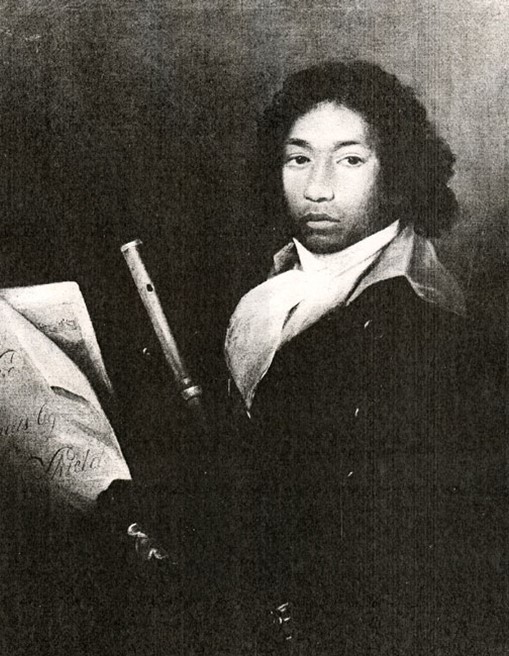
Barzillai Lew played the fife at the Battle of Bunker Hill, Fort Ticonderoga and the surrender of General Burgoyne. Today his portrait hangs U.S. Sate Department in Washington D.C. ”The Flutist” Attributed to Gilbert Stuart
 

Barzillai Lew and the Lew Family

     Barzillai Lew was born on November 5, 1743, in Groton MA to Primus and Margaret Lew. Barzillai (pronounced BAR-zeal-ya) was often called “Zeal” or “Zelah.” His parents were free African-Americans who owned their own farm there. His father Primus was a musician who served in the French and Indian War. Barzillai also served in the French and Indian War with his father. Barzillai wed Dinah in 1768, whose freedom he needed to purchase for $400 before they could be married.

    Lew, living in Chelmsford, was listed as a fifer/drummer in Captain John Ford’s Company, in Colonel Ebenezer Bridge’s 27th Massachusetts Regiment on May 6, 1775. He was listed as 30 years of age, occupation cooper, a negro from Chelmsford, and a fifer and drummer. He was one of 150 African Americans who fought at Bunker Hill, on June 17, 1775, “which represented about 5% of the Patriot’s forces there.” “He is said to have played the tune “There’s nothing Makes the British Run Like Yankee Doddle Dandy.”

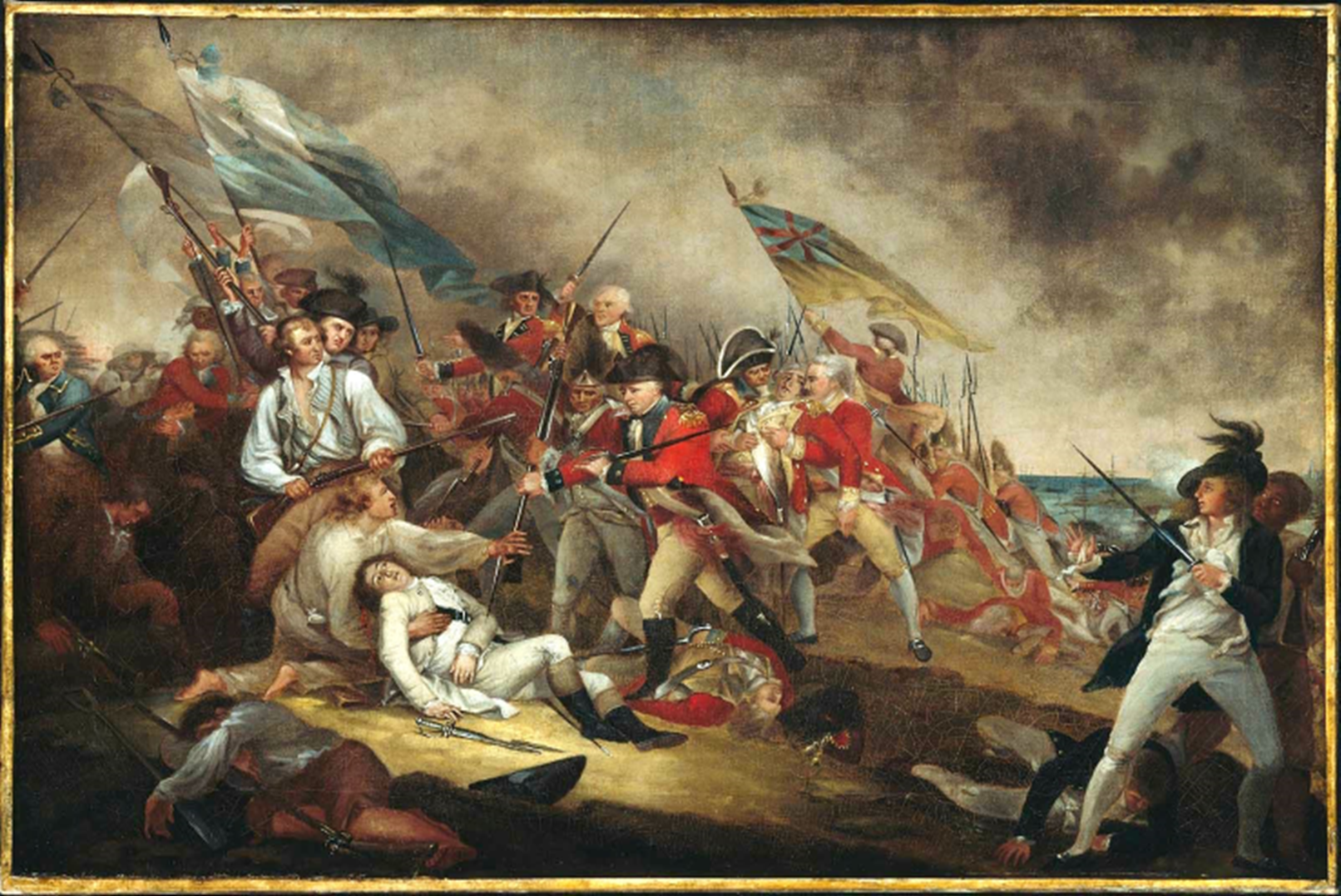
    “There were quite a number of the sons of Africa fighting side by side with their countrymen of the white race at Bunker Hill, several of whom were conspicuous for their bravery, among them Salem Poor, Titus Coburn, Alexander Ames, Barzillai Lew, and Cato Howe each of whom received a pension. This fact is established by the painting of Colonel Trumbull, who witnessed this battle from Roxbury and reproduced it upon canvas in 1786. He reproduced several Negroes in the front ranks fighting valiantly, with visible results.”

     Lew also participated in the Successful raid at Fort Ticonderoga in 1775 that brought the cannons back to Boston that drove the British out in 1776. 

   After Bunker Hill, Lew joined Dracut’s Joseph Bradley Varnum’s regiment, which marched to Ticonderoga in 1777. He was in Varnum’s regiment when the British general John Burgoyne surrendered to American forces at Saratoga, New York in 1777. “Varnum wrote in his diary. ‘Zeal is a fifer and fiddler for the grand appearance the day that Burgoyne’s Famous Army is brought in’”. He was also cited for bravery “The powder horn he carried throughout the war now sits in an African-American history museum in Chicago.”

    After his service in the American Revolution, Lew returned home and the family moved from Chelmsford to Dracut. “With wages from his military service, Barzillai and Dinah purchased a large tract of farmland on the far side of the Merrimack River on today’s Totman Road in Lowell’s Pawtucketville neighborhood (Pawtucketville was part of Dracut until 1872). They built a house near Varnum Avenue on Zeal Road named for Barzillai (now called Totman Road.) . (Zeal being Barzillai’s nickname.) Lew not only farmed, but he was also a cooper (barrel maker) sometimes for the Middlesex Canal Company. Together, Lew and his wife Dinah had thirteen children. Together, Lew and his wife Dinah had thirteen children. Zadock (1768) Amy (1771), Serviah (1773), Eucebea (1775), Barzillai II (1777), Peter (1779), Rufus (1780) – impressed at sea by the British in 1808, Eri (1782), Dinah II (1784), Zimri (1785), Phebe (1788), Lucy (1790) and Adrastus (1793).The family was active in the Pawtucket Church on Mammoth Road not far from their home. Lew passed along the family’s musical gift to his children and the family was active in the church’s choir. It should also be noted that the church organized the first anti-slavery meeting in the area in 1832.” “Barzillai, Dinah, and several of their sons and daughters sang and played wind and stringed instruments all over New England. They were noted throughout the 19th and 20th centuries as well-educated, skilled, and talented musicians. It was said “no family in Middlesex County from Lowell to Cambridge could produce so much good music.’  They formed a complete band in their family and were employed to play at assemblies in Portland Maine, Boston Massachusetts and other large cities and towns, as well as commencement exercises at several New England colleges.” “A long line of musicians and entertainers followed in the Lew family, and the patriarch Barzillai became so well known historically that Duke Ellington honored him with a piano composition, Barzillai Lew, recorded in 1943 on the Hurricane record label.”

     They kept an elegant coach and fine span of horses and came on the Sabbath to the Pawtucket Society Church in as much style as any family in the town of Dracut. Dinah Bowman Lew may have been the first African-American woman pianist in American history. Barzillai Lew died in Dracut on January 18, 1822, at 78 and was buried in Clay Pit Cemetery. Years later, Dinah Bowman Lew petitioned and received from the Commonwealth of Massachusetts a pension for her husband’s military service in the American Revolution.”

    Adrastus Lew, Zimri’s son, married Elizabeth Freeman of Derry, New Hampshire in 1844. They purchased and cleared a piece of woodland off Riverside Street in the Pawtucketville section of Dracut (now Lowell) and built a house which still stands on Mount Hope Street. In 1912, at the age of 91, Elizabeth Freeman Lew recounted in an interview with the Lowell Sun: “The house where I live was, one of the houses which in slavery times, formed one of the underground railroad where runaway slaves would come for shelter and protection on their way to Canada. Those were terrible times.” Adrastus and Elizabeth had five sons and one daughter. James, moved to Cambridge, formed a popular dance band, and served as the music advisor to the Cambridge School Committee. William and Fred had a successful dry-cleaning and dyeing business in Lowell.”

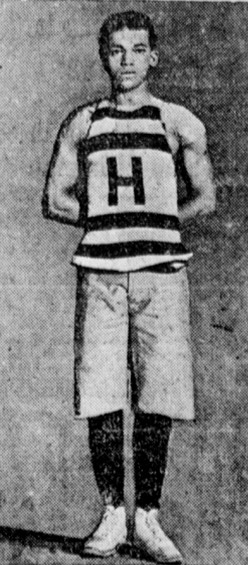
    Harry “Bucky” Lew, the great-great grandson of Barzillai Lew, was the first black man to play professional basketball in the United States. Like generations of Lews, Bucky Lew was a talented musician and played a violin solo at his graduation from Pawtucketville Grammar School. In 1902, at the age of 18, he was recruited to join Lowell’s Pawtucketville Athletic Club “P.A.C.” of the New England Professional Basketball League. His teammates considered him one of the best double dribblers in the league, which was still legal. The team manager hesitated to put Lew in the game, but the local press put pressure on the team to play Lew. He got his first chance after a series of injuries to other players resulted in being allowed on court.

“Years later “Bucky” Lew was interviewed by Gerry Finn for the Springfield Massachusetts Union on April 2, 1958 about that first game. “I can almost see the faces of those Marlborough players when I got into that game,” said Lew, who was seventy-four when the article was published. ‘Our Lowell team had been getting players from New York, New Jersey Pennsylvania  and some of the local papers put the pressure on by demanding that they give this little Negro from around the corner a chance to play. Well, at first the team just ignored the publicity. But a series of injuries forced the manager to take me on for the Marlborough game. I made the sixth player that night and he said all I had to do was sit on the bench for my five bucks pay. There was no such thing as fouling out in those days so he figured he’d be safe all around.'”

“It just so happens that one of the Lowell players got himself injured and had to leave the game. At first this manager refused to put me in. He let them play us five on four but the fans got real mad and almost started a riot, screaming to let me play. That did it. I went in there and you know . . . all those things you read about Jackie Robinson, the abuse, the name-calling, extra effort to put him down . . . they’re all true. I got the same treatment and even worse. Basketball was a rough game then. I took the bumps, the elbows in the gut, knees here and everything else that went with it. But I gave it right back. It was rough but worth it. Once they knew I could take it, I had it made. Some of those same boys who gave the hardest licks turned out to be among my best friends in the years that followed.”

“The finest players in the country were in that league just before it disbanded and I always wound up playing our opponent’s best shooter,” Lew said. “I like to throw from outside but wasn’t much around the basket.”

“Of course, we had no backboards in those days and everything had to go in clean. Naturally, there was no rebounding and after a shot there was a brawl to get the ball. There were no out-of-bounds markers. We had a fence around the court with nets hanging from the ceilings. The ball was always in play and you were guarded from the moment you touched it. Hardly had time to breathe, let alone think about what you were going to do with the ball.”

“Lew has never been inducted into the Basketball Hall of Fame. His daughter, Phyllis Lew, had been trying to get her father included since the 1970s”

What an incredible family story! 

1.   https://madwomanintheforest.com/hero/barzillai-lew/

2 https://www.fold3.com/page/747/african-american-patriots-of-the-revolutionary-war/stories

3. https://www.battlefields.org/learn/articles/african-american-service-during-revolution

History of the Town of Groton: Including Pepperell …, Volume 42; Volume 440

5. By Caleb Butlerhttps://en.wikipedia.org/wiki/Barzillai_Lew#cite_note-Butler,_Caleb_1848,_p._278-3

6. Harry Bucky Lew: First Black Professional Basketball player: https://www.blackfives.org/happy-birthday-1884-harry-bucky-lew-americas-black-pro-hoopster-2/

7. https://www.wikitree.com/wiki/Lew-51

8. https://en.wikipedia.org/wiki/Harry_Lew

9. History of Dracut, MA


Windham Life and Times February 26, 2021

Black History in New England

African Americans in the American Revolution (II)


The painting at left by John Trumbull, shows the death of Gen. Warren at the Battle of Bunker Hill. Abercrombie is shown lying on his back to the right of Warren. Salem Poor may be depicted behind the man with the sword to the right in the scene. MFA Boston

    I have been pouring over the local histories of Andover, Dunstable, Dracut, Nashua and others and have been totally astounded by the rich African-American history contained in these local accounts. Blacks were a vibrant part of many local communities, but we also have to remember that many were also marginalized, subject to segregation and ill-treated. It was pointed out to me that they were denied access to many of the advantages of white society; most could not vote and they were denied access to higher education. Massachusetts ended slavery in 1788, but racial segregation in transportation did not end until the 1840’s and schools in 1855. Some might argue that segregation continued in Boston up until the 1970’s.

     After the Revolutionary War, the cities and towns of New England became the home to the newly freed African-Americans, many of whom earned their freedom by serving as soldiers. There are also accounts before the Civil War of unscrupulous men kidnapping these free men in order to sell them in the South. 

     The Lew family of Dracut is of particular interest and I will write more about them next week. They were able to rise above the prejudice and succeed in many endeavors. What has truly amazed me, is the large number of African-Americans that served (and served with their masters) over the course of the war, and some of whom were lauded for the bravery and courage. I’ve read over the lists of hundreds and hundreds, of African-American and also Native-Americans in, “Forgotten Patriots…” a DAR Publication, who fought in the American Revolution.

     My ancestor, Robert Dinsmoor was at Charlestown during the Revolution, I now understand that when he was facing down the British, there were many black men fighting bravely beside him. The Oxford African American Studies Center says, “According to one estimate, approximately five thousand black Americans took part in the fight for independence. Although many of these patriots, both free and slave, are remembered for their service, far more are unknown.”

   Glenn Knoblock, who has written extensively about African-American history  in New England, says that,  “What buried much of New England’s African American history was the refusal by local and even regional historians (at places like Harvard), who either refused to recognize that slavery existed in the region, or if they did recognize it, painted it as a benevolent type of slavery. Interestingly, in New England, it was taught that slavery did not exist here for many years, well into the 1950’s.” Check out his book, “Strong, and Brave Fellows, New Hampshire Black Soldiers and Sailors of the American Revolution, 1775-1784.”

    And I have found the name of a least one African-American from Windham who served in the Revolutionary War and I will write about him in a  future column.

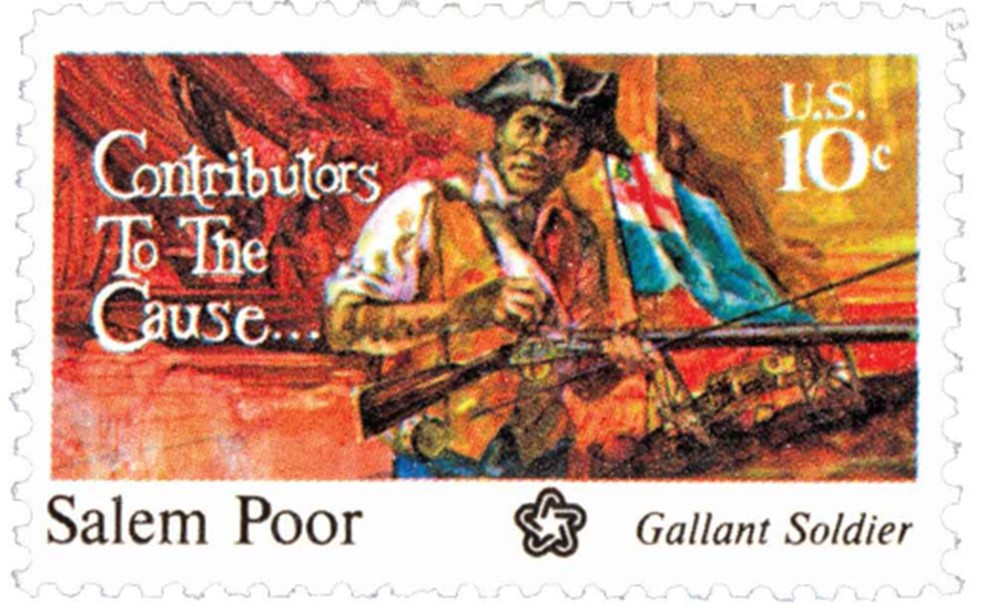
     So lets begin with one of the most well known African-American patriots; Salem Poor. He was a black Revolutionary War solider who fought at the Battle of Bunker Hill. There are some disputes among historians about his role in the battle, but I have found eyewitness accounts from the time are often the most reliable. He was cited for his bravery to the Massachusetts Legislature, by his fellow townsmen from Andover, Massachusetts. Surely he was a hero in the battle.

      In “Historical Sketches of Andover, (Baily)” Poor’s role in the battle is described by the men who witnessed it.There is a tradition in regard to the bravery

a negro servant in the battle, which is also confirmed by the State records. The story goes that  “Salem Poor,” a slave, owned by Mr. John Poor, shot Lieutenant-colonel Abercrombie. As that officer sprang on the redoubt, while our men were in retreat, and exclaimed, ‘The day is ours,’ Salem turned and took aim and fired. He saw the officer fall. The record in the Archives is as follows : —”

Recommendation of Salem Poor, A Negro, for Bravery.

“To the Honorable General Court of Massachusetts Bay.

The subscribers beg leave to Report to your Honorable House, which we do in justice to the Character of so Brave a Man that came under our observation. We declare that a Negro Man called Salem Poor, of Col. Frye’s Regiment, Capt. Ames’ company, in the late battle at Charlestown behaved like an experienced officer as well as an excellent soldier; to set forth Particulars of his conduct would be tedious. We would only beg leave to say, in the Person of this said Negro centers a Brave & Gallant soldier. The Reward due to so great and Distinguished a Character we submit to the Congress.” Cambridge, Dec. 6, 1775  Jona Brewer, Col; Thomas Winon, Lt.-col; Wm. Prescott, Col; Epheraim Cary, Lieut; Joseph Baker, Lieut; Joshua Reed, Lieut.”

     “On 17 June 1775, Abercrombie led the grenadier battalion in their charge of the redoubt on the Americans’ left wing at the Battle of Bunker Hill. During the assault on Breed’s Hill, he sustained a large gunshot wound on his right thigh from an African soldier named Salem Poor, although there is probability that it was friendly fire. After removal from the Bunker Hill battleground, he was treated at a hospital facility in Boston. He succumbed to his wound a week later at the residence of British Military engineer John Montresor.”

    After the war, Poor was able to purchase his freedom, he married, three times, lived for a time in Rhode Island, and ended up in a Boston Almshouse in 1793. He died in 1802 at the age of 55, and is interred at Copp’s Hill Burial Ground in Boston. There were 28 slaves in Andover MA. according to the 1754 Slave Census.

1. https://oxfordaasc.com/page/photo-essay-african-americans-in-the-revolutionary-war

https://www.seacoastonline.com/news/20180118/exeters-black-revolutionary-war-veterans

If you have an interest in this subject, Glen Knoblock has written a comprehensive history titled Strong and Brave Fellows: New Hampshire’s Black American Revolution, 1775-1784.

Forgotten patriots African American and American Indian Patriots in the Revolutionary War. http://www.cei.edu.py/biblioteca/files/ARCHIVO_777f403e50.pdf

Windham Life and Times – February 19, 2021


Our black residents from an earlier time, lay buried in unmarked graves, in a quiet corner of the Cemetery on the Hill. Now might be a good time to recognize them
 

Early Black History in New England

Slavery in Windham NH (Part I)

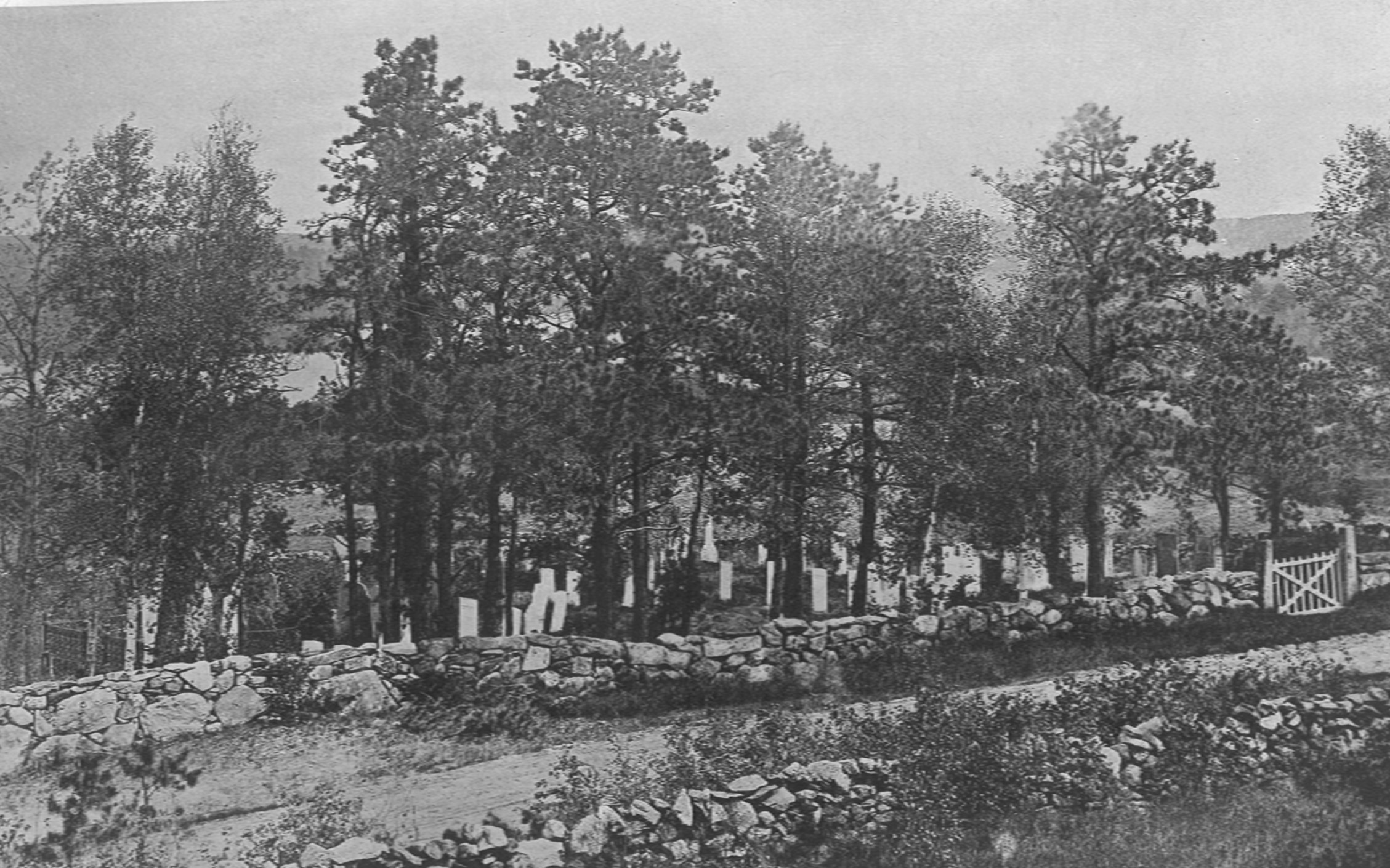
    Beside the wall on the Cemetery on the Hill in Windham, in the south-east corner, in unmarked graves, lie the remains of Windham’s early black residents. I am probably one of the few people who is aware of their resting place. They had names like Jeff and Pomp and most were owned as slaves. Some were literate, all were hard-working and capable, entrusted with important tasks, and by their very presence here contributed much to the early town of Windham. They rest from their labors in the same ground as the Dinsmores, Morrisons, Parks, Cochrans and others, but only the African American’s resting place remains unmarked.  It has always been my hope and wish that the town would see fit to erect a granite monument in this unmarked space, to preserve the memory of these important African Americans. It would be an appropriate way of showing that black lives do matter in Windham. As Leonard Morrison so elegantly wrote in his history of Windham, in 1883; “In the grave they find perfect equality, which they never found when living. In its unbroken silence there is no distinction between white and black, bond or free, cultured or ignorant, and the quietness of peace resteth over all.” As I will show in the coming weeks, many African Americans were far from “ignorant” and some could write more eloquently than most whites during the same time period.

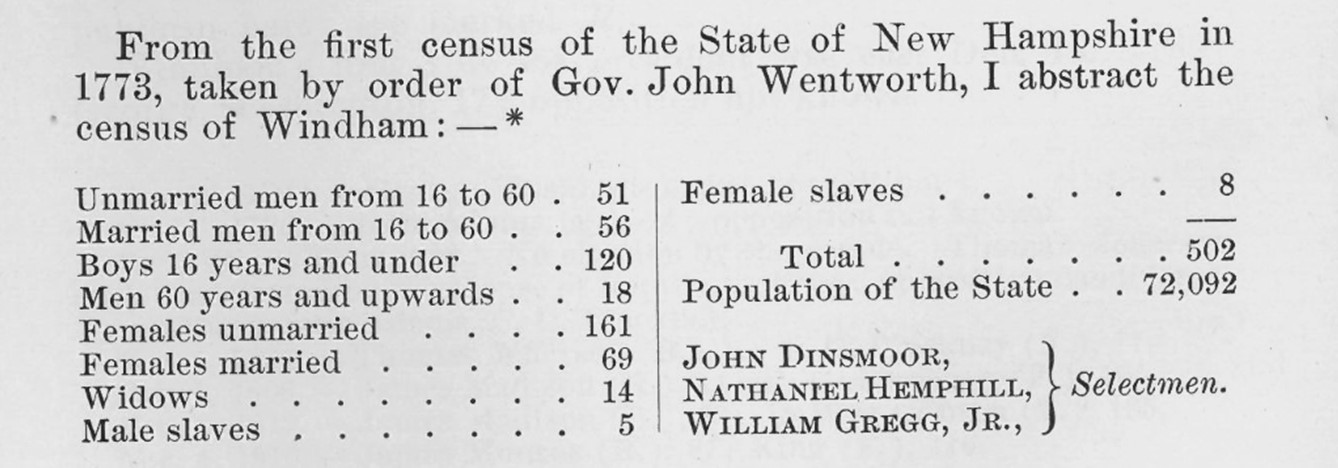
     Morrison explains that, “this town had never been largely populated with colored people. Near the commencement of the present century, a family of negroes lived in a house which stood on the road from George Copp’s house, over the hill to Isaac Emerson’s. Rose, Pomp, and Jeff, three negroes, lived in town. Rose lived at Squire John Dinsmoor’s (the John Kelley place), (the brother of Robert Dinsmoor, the Rustic Bard).  Jeff died at Squire John Nesmith’s (Horace Berry’s place). When he went to church he did not go inside, but sat on the porch. Pomp died in town. They were all buried in that part of the original cemetery on the hill, in the southeasterly corner, near the highway.”  According to a Windham census from 1773, there were 13 slaves in Windham in 1773. 

“In New England of 1776, 2.3% of the total population was African. This compares to the middle Atlantic states where 12.4% of the population was African and in the deep South where 39.2% of the population was African.” While the numbers are much lower in New England, there still was a large black presence and many of that population were slaves. Diversity in Colonial Times, April 21, 2008.

     According to Leonard Morrison, “Slavery was never legalized, or established by authority of law in New Hampshire; but as it existed in other colonies it crept in here, was tolerated, and regulated by law, so that Indian and negro servants or slaves were owned and held as property.* They were taxed as other property. In 1728, each negro, mulatto, or Indian slave being male was assessed at 20 pounds; each woman slave was excluded…Rev. Nathaniel Bouton, D.D. compiler of the Provincial and State Papers of New Hampshire, thinks that by the adoption of the first and second clause of the Bill of Rights in the constitution of the State, virtually and in effect slavery was abolished in New Hampshire.”

     “In 1775 the number of ‘negroes and slaves for life’ in New Hampshire was 657; in 1790, six years after the adoption of the Constitution, 158; by 1800, 8; by 1810, 0; in 1830, 3; and 1840, 1,—mistake of census taker.

     “While such is the history of the institution in the State, we shall have brief notices of its existence in Windham. Allusions are occasionally made of ‘slaves’ upon the reords of the town. In 1767, there were four slaves in town; in 1773, there were thirteen, five males and eight females. September 15, 1775, the number of negroes and slaves for life were thirteenth.”

     “In 1785, Windham voted the use of pew 36 in the church for negroes, if their masters would pay rates.”  I wonder in old Jeff was ever invited in, felt comfortable enough to enter, or had a master willing to pay for his pew so that he could abandon the porch and make his way inside the house of God to pray?

Windham Life and Times – February 12, 2021

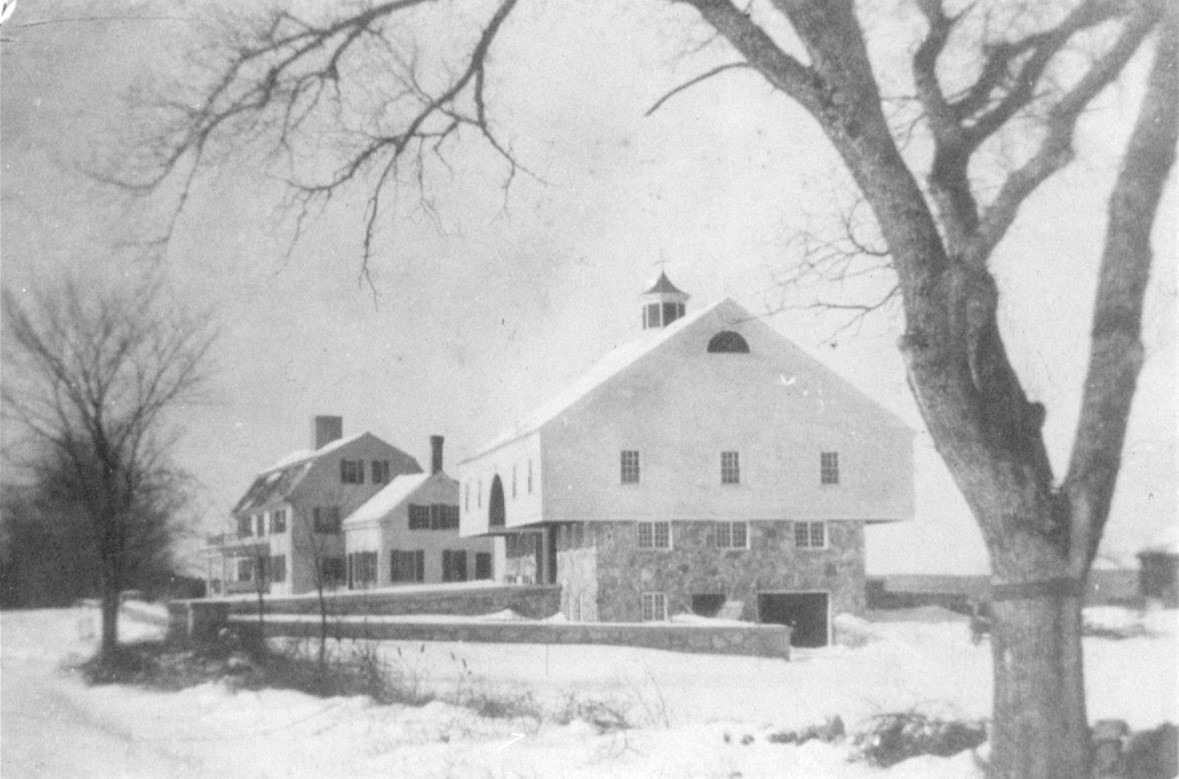
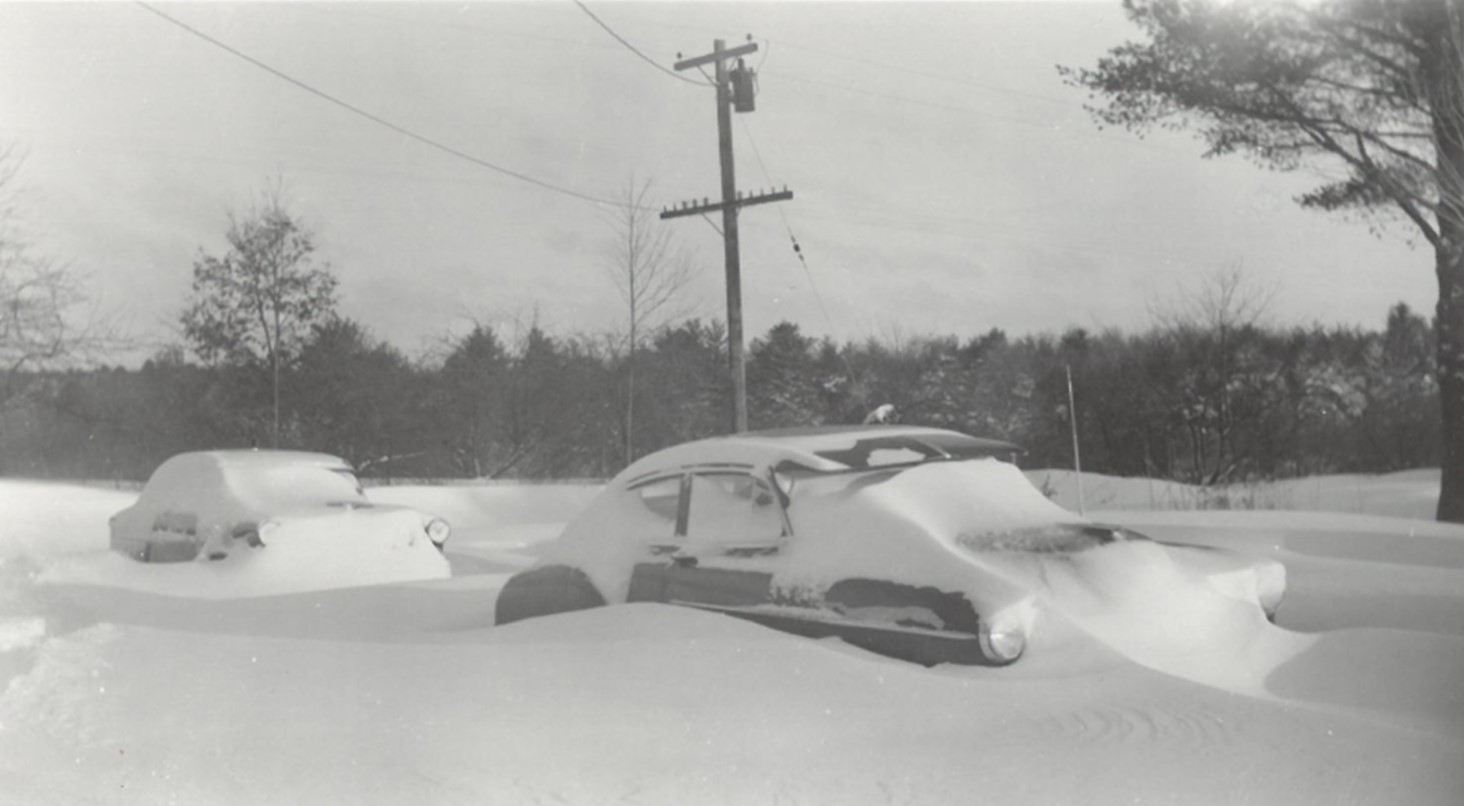
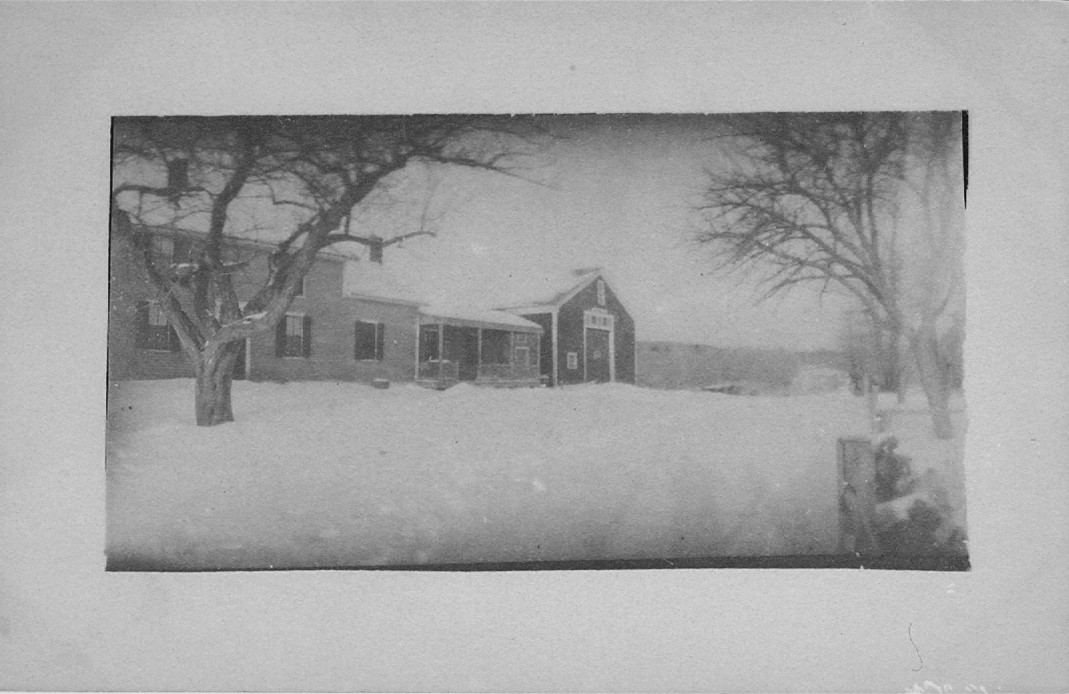
The Austin house and barn in the snow,

The Night Before a (hoped for) Snow Day Ritual

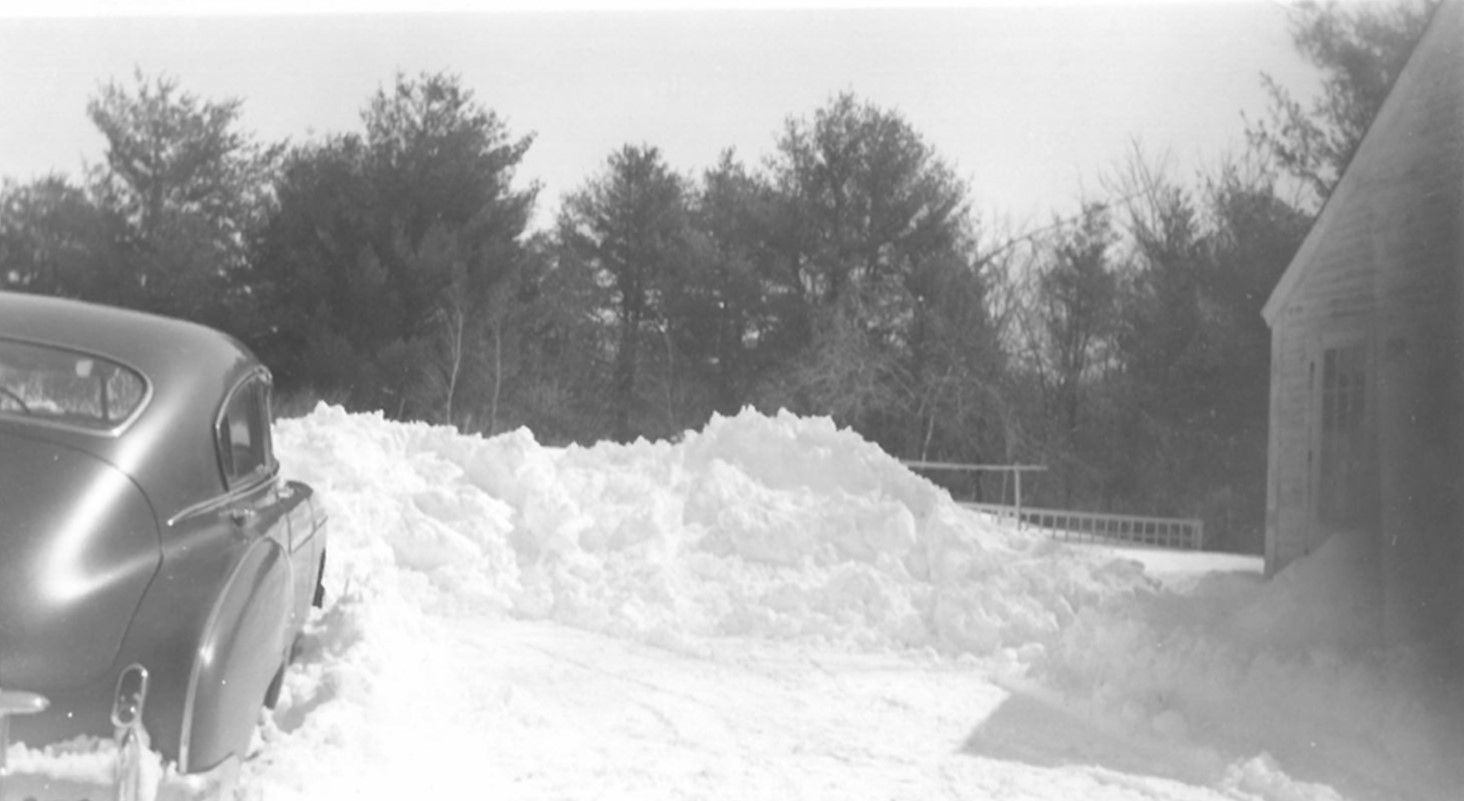
   So after reading last weeks article about the death of the beloved snow day, my wife reminded me that our kids used to wear their pajamas inside out when going to bed in order to force the snow gods to deliver for them. So it seems that there is a snow-day tradition that I was clueless about. On a night before there is a chance of snow, you wear your pajamas inside out and put a spoon under your pillow. The Western version of the rite also requires that you to flush an ice cube down the toilet. The Old Eastern rite requires that you wear your pajamas inside out and backwards. Hopefully, we will soon be able to enjoy these simple, heart-warming, snow-day customs again soon! The photograph is of the Austin place on a “snow-day.” Range Road, Windham

Windham Life and Times – February 5, 2021

Tell Me It Isn’t So…Remote Learning Ends the Snow Day?

So I’ve heard a rumor about something that tears at my heart, and clouds my mind with sadness and depression, because of its colossal awfulness! Is it really true that the utter joy of contemplating the Snow-Day has come to an end; destroyed by the ability to learn remotely. SAY IT ISN’T SO! What kind of evil people, would conspire to take away the Snow-Day from the children of New England.

    This is what it says on WindhamSD.org: “The Windham School District will be implementing virtual learning days in place of delays and/or cancellations due to inclement weather (or any other reason schools may be closed). The Superintendent will make the decision to revert to a virtual learning day and communicate to all parents via SchoolMessenger, social media (Facebook and Twitter), and local new stations once the decision is made.” That’s pithy way of describing your soul crushing order, Mr. Superintendent. This is worse than having to write: “I will not throw snowballs” a hundred times on a chalk board. Which I never had to do by the way. “K-2 Full Remote Only Students will continue with their regular daily learning remotely via live zoom sessions as they already do. Pre-K-2 In-Person Students will be provided with virtual learning packets to receive credit for the school day. 3-12 Students will be reminded to bring home their 1:1 device and will continue their regular daily schedule remotely via live zoom sessions.” Ugh! This is the very reason I’m a Luddite. (…a person opposed to new technology or ways of working.) You see what technology brings in its wake…nothing but sadness for the Children! Do you know how much I learned being free during a Snow-Day? A lot! Stuff I could never have learned in a class room or in front of a horrid screen.

    Seriously, is nothing sacred anymore? A Snow-Day is a right of passage. Its also a child’s human right. How can a child ever grow up normally, without the possibility of those beautiful, white, ice crystals setting the world right and the kids free; from books, schools and teacher rules! The whimsical chance of getting out of homework or an exam. “Virtual Learning Packets,” Mr. Superintendent, Let the Children Play!

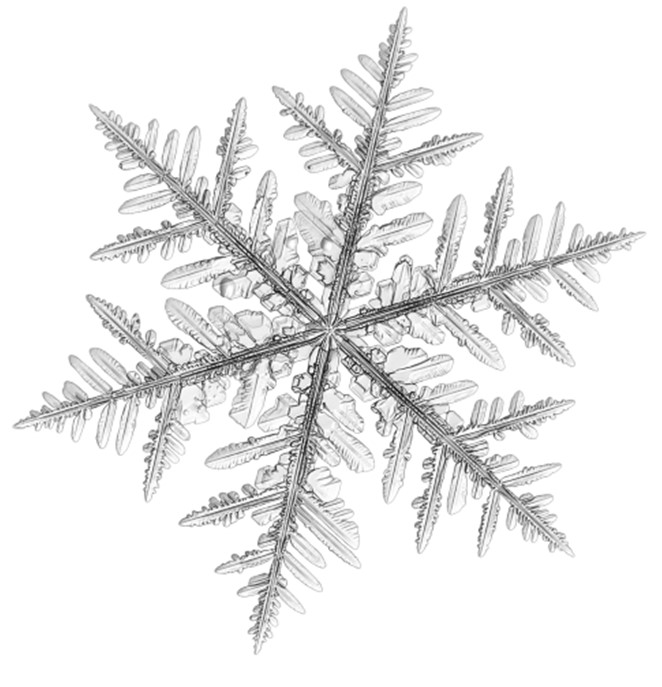
    And speaking of snowflakes. Did you see the guy in New York who has taken the highest resolution photographs of snow flakes yet? His name is Nathan Myhrold and he has developed a camera that captures snowflakes at a microscopic level never seen before. They’re gorgeous and they can’t be seen while doing no stinking remote learning in front of a screen. You have to catch them on your tongue. https://www.smithsonianmag.com/innovation/these-are-highest-resolution-photos-ever-taken-snowflakes-180976710/

Snow-Day

By Billy Collins

Today we woke up to a revolution of snow,   
its white flag waving over everything,
the landscape vanished,
not a single mouse to punctuate the blankness,   
and beyond these windows

the government buildings smothered,
schools and libraries buried, the post office lost   
under the noiseless drift,
the paths of trains softly blocked,
the world fallen under this falling.

In a while, I will put on some boots
and step out like someone walking in water,   
and the dog will porpoise through the drifts,   
and I will shake a laden branch
sending a cold shower down on us both.

But for now I am a willing prisoner in this house,   
a sympathizer with the anarchic cause of snow.   
I will make a pot of tea
and listen to the plastic radio on the counter,   
as glad as anyone to hear the news

that the Kiddie Corner School is closed,   
the Ding-Dong School, closed.
the All Aboard Children’s School, closed,   
the Hi-Ho Nursery School, closed,
along with—some will be delighted to hear—

the Toadstool School, the Little School,
Little Sparrows Nursery School,
Little Stars Pre-School, Peas-and-Carrots Day School   
the Tom Thumb Child Center, all closed,
and—clap your hands—the Peanuts Play School.

So this is where the children hide all day,
These are the nests where they letter and draw,   
where they put on their bright miniature jackets,   
all darting and climbing and sliding,
all but the few girls whispering by the fence.

And now I am listening hard
in the grandiose silence of the snow,
trying to hear what those three girls are plotting,   
what riot is afoot,
which small queen is about to be brought down

Snow-Day 

In the winter it’s every kids dream,
As snowflakes begin to appear,
That suddenly there’ll be a blizzard,
And they’ll cancel school for the year.

Though most kids are willing to settle,
And I am inclined to agree,
They could merely close school for one day –
One day off would be just fine with me.

A day free from all forms of homework,
A day without science or math,
When you leave all your schoolbooks at home
And run out the door with a laugh.

A day full of sledding and cocoa,
And snowmen who wear dad’s old clothes,
No writing out boring equations
After lunch when you’d rather just doze.

A snow day’s a day meant for lounging,
Where idleness isn’t condemned,
A day where you sleep in till lunchtime,
A day that you don’t want to end.

And if you are truly quite lucky,
The snow will continue its flight,
And you’ll spend the afternoon hoping
The next day will be just as white.

~ Barbara Vance

Windham Life and Times January 29, 2021

Crows, Eagles and Red Tail Hawks

An Active Time for Our Local Avian Friends.

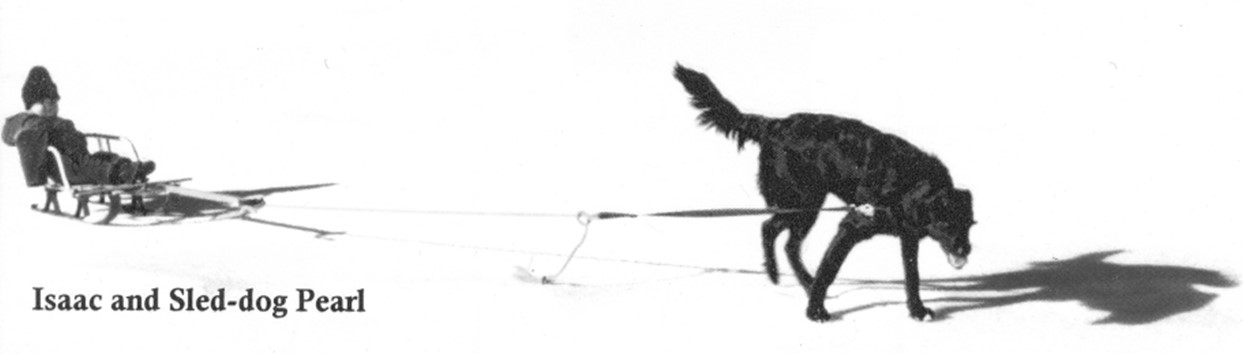
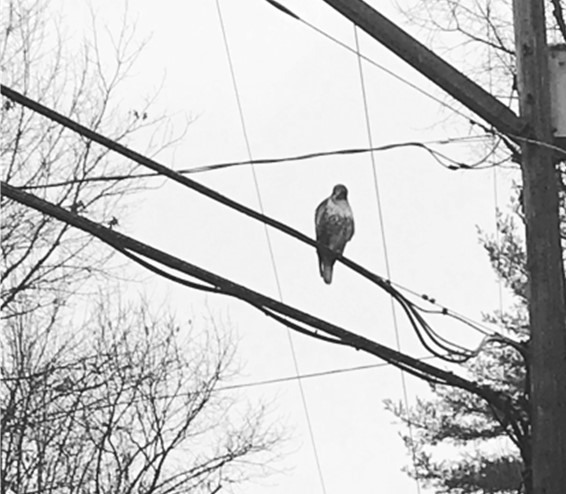
    It has been a very active time for the birds in Windham and the surrounding region. There has been a Red Tail Hawk hanging around Cobbett’s Pond Road. Donna at Howie Glynn’s also has pictures of this bird near the store. A Bald Eagle has been active over Cobbett’s Pond over the past several weeks, (which means he/she is on Canobie as well). I saw the eagle flying above the lake on Saturday and Sunday this past weekend. An eagle was also spotted by my son Isaac fishing in open water in front of my parents house. There were also four crows strategically stealing parts of the fish that the eagle had so nicely caught for them. And speaking of crows; the great gathering of crows along the Merrimack River in Lawrence will soon be coming to an end. Thousands of crows, return to the same spot on the Merrimack every year to socialize in their giant crow party.

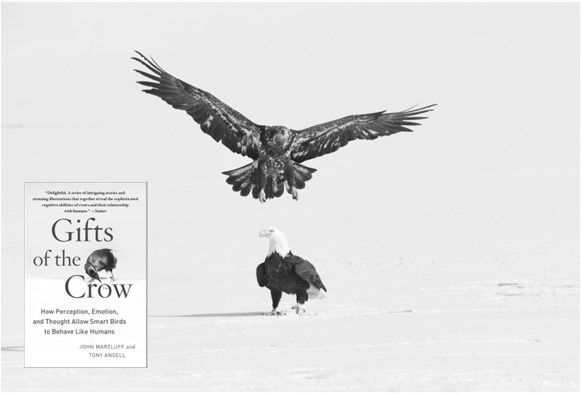
   Brian Mertins, on nature-mentor.com says, “Given that crows are so much smaller than eagles, you might be tempted to think eagles would be more dominant…But if you’ve ever watched a group of crows wildly chasing and dive-bombing an eagle through the sky, you know it doesn’t always work that way! Eagles are sometimes seen as royalty of the bird kingdom, so why would a smaller bird like a crow put their life in danger and chase the much larger and threatening eagle? Why do crows chase eagles? Crows do this to protect their nest site from possible danger. They will also steal food from eagles in places where their feeding territories overlap. Of course, to really understand why Crows are able to get away with such a risky behavior, we need to do more detailed comparisons of crows and eagles. This is a way to gain deeper insights into the lives of two incredibly fascinating birds. So let’s take a look at the unique behavior of crows and how their social intelligence gives them anthem the edge against larger predatory birds like eagles….Eagles are relatively defenseless against large gangs of crows. In places where their territories overlap, it’s quite common to see Eagles swooping down to catch a fish, only to have it snatched away by a group of crows. Without any other Eagles around to help in the fight, there’s often no other choice but to go back and catch another meal. You can find the full article at https://nature-mentor.com/crows-chase-eagles/

A spectacle of crows similar to the one that takes place annually along to Merrimack in Lawrence-North Andover MA.

   My wife Kristie bought me just one, really great Christmas present this year; “Gift of the Crows” by John Marzluff and Ton Angell which I recommend.

In an Eaglet Tribune article: “So many crows. So many questions” published on January 28, 2020 we learn the following about the crow gathering in Lawrence: “It’s a bone-chilling sunset in January and 15 men and women, their boots anchored to the snow-covered riverbank, are taking in a spectacle. They watch 15,000 cawing crows breaking into smaller groups and “leap frogging” among trees. Why this knocking around in cliques before settling in for the night — all together — at a final roosting spot along the Merrimack River? Christian Rutz, a biology professor visiting from St. Andrews University in Scotland, wonders about this. And why do the Lawrence crows, on occasion, switch to a new overnight roosting spot? And, more broadly, what brings the crows here? The Lawrence winter roost has been going on for decades, back to the 1980s, says Craig Gibson, a Roman Catholic chaplain at Lawrence General Hospital and dedicated crow watcher. In late fall, the birds start migrating here. Before daybreak they take wing with a few friends and explore locations within about a 20-mile radius. At sunset they return to Lawrence….” Eagle Tribune So Many Crows, So Man Questions

“For decades, the city has hosted a significant winter crow roost. The winter crow roost consists of mostly American Crows, along with a smaller number of Fish Crows. Typically, an hour before sunset, the crows gather in smaller pre-roost groupings. These pre-roost (staging) locations may change on any given night. The crows then converge about a half hour after sunset, into a final roost location. For many years, the final roost location had been along the south side of the Merrimack River, by the New Balance building complex. Over the winter of 2017-2018, and 2018-2019, the final roost location changed many times.  Since October 2020, the roost has continued along the Merrimack River by the New Balance building. The size of the winter roost typically grows from an initial group of 2,500 in October to almost 10,000 crows in January and February!” For more information on where to spot the crows in Lawrence go to http://www.wintercrowroost.com/http://www.wintercrowroost.com/

In an article published in Mass Adubon on March 15, 2018 William Freedberg writes: “Every night between November and March, a steady trickle of American Crows pours through the skies of Lawrence and Andover, MA. The trickle quickly becomes a stream. Soon, a deluge. Crows spread from horizon to horizon as they fly together to their communal roost. The number of crows varies every year, but there can be as many of 12,000 or 15,000 at a time…”

“As some of the world’s most intelligent birds, what could American Crows be up to at these roosts? Traditional theories dictate that crows roost together for safety or warmth, or use communal roosts to be able to select mates from a larger pool of candidates. But hungry crows also follow better-fed birds from the roost in the morning, suggesting they are seeking out productive feeding sites, and that roosts can facilitate cooperation. Some roosts are furthermore located strategically near feeding sites, such that crows can grab a reliable snack when they leave for the day and when they return at night.”

“Thousands of crows gathering together in the same place every night make easy pickings for predators like Great Horned Owls. As a result, American Crows gather at a secondary location, or “staging area,” before continuing on to their real roost after nightfall. American Crows will further confuse predators by changing the location of the staging area, or even the roost itself, every few nights. Some human observers confuse these staging areas for the actual roost, not knowing the roost is several hundred feet to several miles away— unless they stay after dark to watch the crows move a second time.”

“The American Crows in Lawrence are surprisingly wide-ranging when not at their roost. Pellets they cough up have revealed saltmarsh snails, telling us that they forage at least as far away as the New England coast. Some of the birds are seasonally migratory, and spend the breeding season far to the north on the St. John’s River in Canada…”

A red tail hawk on Cobbett’s Pond Road, Windham NH.

Windham Life and Times – January 22, 2021

Winter Fun at Community Beach

Cutting Ice for next Summer on Cobbett’s Pond

This group of guys are cutting ice on Cobbett’s Pond at Community Beach, but I really can’t explain why the man in the foreground is dipping his face in the icy water? Carolyn Webber was kind enough to share this photograph with me a few years back.  At the time of this photo, ice was still used to refrigerate food and drinks during the summer months.