Windham Life and Times – March 15, 2019

Gilbert Alexander Farm

Gilbert Alexander Farm North Lowell Road, Windham

Gilbert Alexander built this house about 1835 on a portion of the original Nesmith farm. His son Charles owned the property when this photograph was taken. The house still stands on North Lowell Road and was for many years the residence of the Low family. (Baldwin Coolidge No. 258-A; courtesy of SPNEA

Windham Life and Times – March 1, 2019

Benjamin Thompson- Lord Rumford

The Rumford Fireplace

When Lord Rumford was not chasing skirts, he put his brilliant mind to work solving practical problems in the world. This was a common attribute of many of the  settlers of America in the 18th century and brings to mind other “Renaissance men” such as Benjamin Franklin and Thomas Jefferson.  If you have lived in New England for awhile, you have probably heard of the “Rumford” fireplace, but might not have understood why it was such an advance in woodburning technology.

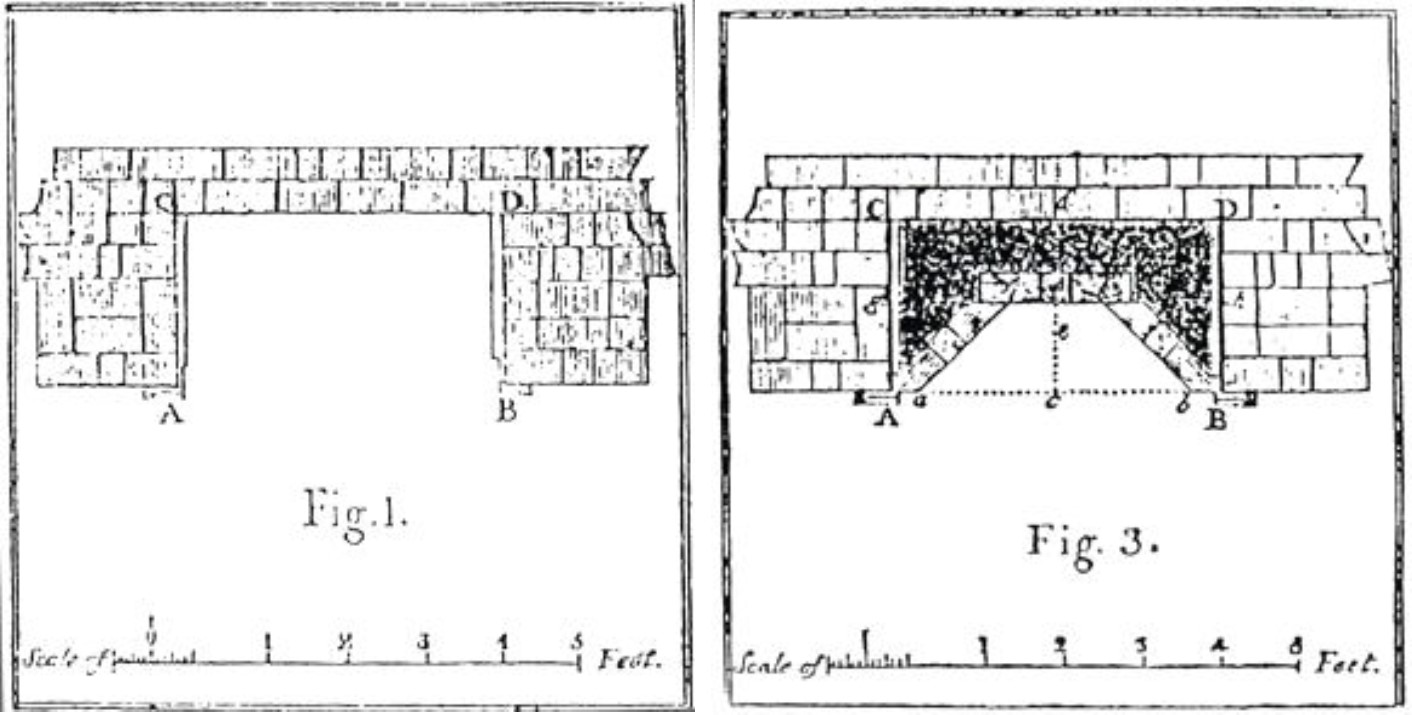
A plan of a traditional fireplace next to the Rumford design.

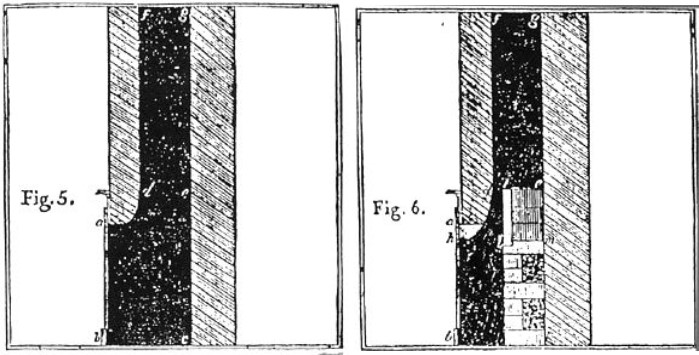
“Rumford applied his knowledge of heat to the improvement of fireplaces in the 1790s. He made them smaller and shallower with widely angled covings so they would radiate better. And he streamlined the throat, or in his words “rounded off the breast” so as to “remove those local hindrances which forcibly prevent the smoke from following its natural tendency to go up the chimney…” Rumford wrote two papers detailing his improvements on fireplaces in 1796 and 1798. He was well known and widely read in his lifetime and almost immediately in the 1790s his “Rumford fireplace” became state-of-the-art worldwide. Subsequent testing of Rumford’s designs has shown that their efficiency would qualify them as clean-burning stoves.” The Rumford fireplace created a sensation in London when he introduced the idea of restricting the chimney opening to increase the up draught. He and his workers changed fireplaces by inserting bricks into the hearth to make the side walls angled, and they added a choke to the chimney to create a circulation of air inside the chimney. In the unmodified chimney, smoke rises up the chimney propelled only by buoyancy…Thompson became a celebrity when news of his success became widespread. In an age when fires were the principal source of heat, this simple alteration in the design of fireplaces was copied widely… Rumford fireplaces were common from 1796, when Count Rumford first wrote about them, until about 1850. Jefferson had them built at Monticello, and Thoreau listed them among the modern conveniences that everyone took for granted.” Wikipedia

A cross section of a traditional fireplace next to the Rumford design.

“The work for which Rumford is perhaps best known today is his energy-efficient design for fireplaces. His essay “Chimney Fireplaces, with Proposals for Improving them to Save Fuel; to Render Dwelling-houses more Comfortable and Salubrious, and Effectually to prevent Chimneys from Smoking” was first published in 1796, in the Bibliotheque Britannique in Geneva, and in volume I of his Essays, Political, Economical and Philosophical, published in London. An American edition of the Essays was published in 1798…A Rumford-design fireplace in the South Square Room…Thomas Jefferson owned volume I (Boston, 1798) and volume II (1799) of the three-volume American edition of Rumford’s Essays. However, it seems that Jefferson was familiar with Rumford’s designs well before 1798. Jefferson’s remodeling notes for Monticello, begun in November of 1796, contain sketches and notes for ‘Count Rumford’s fire places in the square rooms;’ ….By 1798 Rumford was already complaining that masons took short cuts and ‘neglected to round the breast,’ and his second essay on fireplaces published in that year was written primarily to address these faults. Once again he re-emphasized the importance of keeping the ‘back perfectly straight’ and of ‘rounding the breast.’” (The Collected Works of Count Rumford; Harvard Press; 1969; vol. 2.) Jim Buckley, rumford.com


Windham Life and Times – February 15, 2019

An Afternoon at the NH Historical Society Museum
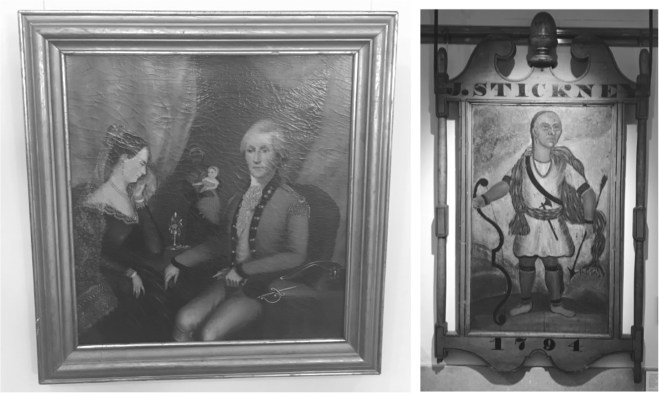
The notorious, brilliant, womanizer, Benjamin Thompson, depicted in a painting with his wife, daughter and slave Dinah. He would soon abandon his American wife. One of the beautiful signs at the New Hampshire Historical Society, was a J. Stickney tavern sign from Concord, NH. The beautiful sign depicts the Indian Grand Sachem King Phillip, also known by his native American name of “Metacom or Metacomet.”

My wife is on a quest to find cheap things to do close to home…and thank God for the Hippo, because it really is the guide to what is happening in New Hampshire. This past Saturday, she took us to Concord for a nice lunch at the Barley House and a trip to a sign exhibit taking place at the New Hampshire Historical Society Museum.  The signs were great, but there were many other interesting things on display. My favorite was “White Mountains in the Parlor: The Art of Bringing Nature Indoors,” which included many works by the White Mountain School painters. There were several paintings by Benjamin Champney whose name has become synonymous with the White Mountain art of the nineteenth century. The landscapes of the mountains were sweeping and beautiful. There was also a well attended lecture taking place about how the railroads influenced New Hampshire and the grand hotels of the White Mountains.

One of the oil paintings that fascinated me was  “Benjamin Thompson’s Farewell.” by Daniel G. Lamont. What was interesting to me is that it is a rare visible example of how prevalent slavery was in New Hampshire. The caption states “Painted from memory, this paining was commissioned by Sarah Thompson, Countess Rumford, showing her parents Sarah Walker Rolfe Thompson and Benjamin Thompson, in a British army uniform, seated at a table in 1775. A loyalist, Benjamin Thompson is about to leave his family with British military forces evacuating New Hampshire. Sarah Thompson as baby is held by the Thompson’s African-American slave, Dinah, standing in the background…”Little did I comprehend what I didn’t know until I came across the book, “Sex and the Scientist, The Indecent Life of Benjamin Thompson, Count Rumford. (1753-1814) In it we learn more about the importance of Dinah in the life of Sarah Thompson.”

“…This would not be the paternal aunt to whom she went when she was four but a female slave in the household name Dinah, who became Sally’s surrogate mother, spoken of with lifelong affection. And who had fairly exclusive care of her. This a slave nurtured the child and also smoothed over things for her. All her life, being sensitive, Sally had the need to go to someone to perform this same function and give the emotional support the enslaved black woman had provided. By the time Sally had the wistful family portrait painting, in which her mother and father were placed in the foreground and Dinah held her infant self, the America South was sentimentalizing slavery, which fed into Sally’s nostalgia and the artist’s stereotypical plantation mammy depiction so at odds with the parents, who look like cutouts of New Englanders.”

Thompson had met his wife in Concord NH. “Apprenticeships in the importing trade and the study of medicine, too, absorbed much of his young life until at the age of 19 he became a schoolmaster in Concord (earlier called Rumford) N.H. There he met and married a wealthy widow, Mrs. Sarah Rolf, who was also the daughter of Reverend Timothy Walker. In this position of influence, young Thompson met Governor Wentworth of New Hampshire who was impressed enough to name him Major in the 2nd Provincial Regiment.” After this painted scene, Thompson would sail back to England and abandon his wife and child in America. He would eventually reconcile with his daughter Sally  (Sarah?).

On Saturday, March 9, 2019 9 a.m. to 4:30 p.m.

Genealogy Workshop: The Scots-Irish in New England.

“Three hundred years ago, in 1719, a group of sixteen Scots-Irish families established a settlement in Nutfield (later Londonderry), N.H. They were part of a wave of Scots-Irish immigration to New England that would bring thousands of people to the New World. In New Hampshire, the Londonderry settlement became a jumping-off point for what was essentially a Scots-Irish invasion in the eighteenth century.  Join us for a day-long program with special guest speakers from the Ulster Historical Foundation from Belfast, Ireland, to learn more about the history of the Scots-Irish and conducting genealogical research on Scots-Irish families. Time will also be set aside for Q&A and for some tips on overcoming brick walls in your research. In addition, the Society will present for viewing—for one day only—the Shute Petition, which initiated the Scots-Irish exodus to New England.” Space is limited, and registration is required. The cost is $75 for New Hampshire Historical Society members and $125 for nonmembers. The day we were there new memberships were being offered for $34.99 or half price.


Windham Life and Times -January 25, 2019

Harvesting Ice in 1944 in Windham NH

ice-markewicz

Harvesting ice on Castle Hill Road in Windham NH

I was sad to hear that one of Windham’s long time residents had passed away recently. Mary Glance was very kind to me, in providing photographs of her family’s farm on Castle Hill Road for my book. I thought with the sub-freezing temperatures it was appropriate to show a ice harvesting scene from the Markewich farm from 1944. The men sport a great L.L. Bean look. Ice harvesting was an important part of rural life. The farmers harvested ice to keep their milk cold until it could be delivered. Ice was harvested on Cobbett’s Pond and Canobie Lake and there were ice houses along the shore of both lakes. Even after the advent of electric refrigerators, many camps on the lakes and ponds still used ice. For those of you who are interested, they have an ice harvesting day, using the old ice harvesting machinery every winter on Squam Lake. https://www.squamlakes.org/news/annual-ice-harvest-squaw-cove Also found something else that was interesting. The public can rent canoes and kayaks from the Squam Lake Association Center, 534 US Route 3, Holderness, NH. …No not in the winter! Every year, there are fewer and fewer “old-timers” left… you know who you are

Windham Life and Times – January 18, 2019

Windham and the Summit

Part 6– Conclusion

Mattie Clarke was one of those independent woman who grew up in Windham in the nineteenth century and flourished both locally and in the wider world. Woman like Mary Bradish Titcomb, Margaret Hughes Berry, Julia Baker and many others. Mattie Clark had a demanding career both on the Summit of Mount Washington and in Ormond, Florida. Any many very successful men trusted her and sought her out for her managerial skills. She used those skills and improvised a flourishing hotel in the rustic “Tip-Top House,” after the first Summit House burned in 1908. She was there again to manage the New Summit House when it opened in 1915.

Mattie Clark’s Gravestone on the Cemetery on the Plain, Windham NH.

Not only did Mattie Smith have and interesting career but she also invested her money well, no doubt gaining insight from the many leading businessmen she dealt with and served as guests. “She was on her way north from Ormond, Florida in 1933 when sickness overtook her while in the Buttonswood Beach section of  Warwick, Rhode Island and she died at 81.”

Tim Lewis in his research provided information regarding her will. “Clarke bequeathed her farm in Windham; a cottage on Orchard Lane in Ormond Beach known as the “Coacoochee Cottage;” stock from American Telephone and Telegraph, Swift and Co., Libby; Liberty Loan Bonds; Over $11-thousand dollars to friends; a thousand dollars to both the Ormond Union Church and the Colored Library of  Ormond, the latter to be invested to provide money for purchasing books. Two thousand dollars to the Windham Cemetery to be invested for perpetual care of the family plot. The Windham Library, Presbyterian Church, the New Hampshire Orphans Home in Franklin, the White Orphans Asylum in Jacksonville, Florida and the Nashua Protestant Home for Aged Women all received money from Miss Clarke.”

A path in Santa Lucia Plantation, Ormond Beach, where Mattie Clarke owned her cottage.


Windham Life and Times – January 11, 2018

WINDHAM AND THE SUMMIT

The Armstrong Homestead on Londonderry Road, was adjacent to the Clarke Farm.


Eugene Armstrong

Eugene Armstrong was I believe, a cousin of  Mattie Clarke, her mother being Deborah Armstrong. The Armstrong and the Clarke families lived on adjoining farms on Londonderry Road, in Windham. You may notice that I have changed the spelling of Clarke by adding an “e” to the end as carved on the family gravestone, not as spelled in Morrison’s History of Windham which eliminated the “e.”

Eugene Armstrong owned the store at Windham Depot for a number of years. In an Exeter Newsletter column written by William Harris . October 1, 1915, it says, “Eugene C. True of Derry, has bought of Eugene W. Armstrong the store, property and business at the Depot which the latter has conducted for a few years past. It is the stand formerly for a long period occupied by the late Edwin N. Stickney. Mr. True has been employed for some years in the furniture store of L.H. Pillsbury & Son, in Derry and is highly spoken of by those who know him.”

We also learn in The News-Letter, in November of 1912 that, “Fred S. Webster, Republican, was chosen representative by 60 votes to 41 for Eugene W. Armstrong, Democrat. Not known to me, was that Eugene Armstrong was also an engineer on the Cog Railway on Mount Washington. He was born in Windham on December 23, 1865. Tim “Jitney Jr.” Lewis says that he worked on Mount Washington from 1885 through 1908. “Eugene Armstrong is noted as a Mount Washington Railway engineer in 1907. ‘Engine No. 4 of the Mount Washington Railway, which has been in the shops at the Base for repairs, came up with freight on Saturday (August 17, 1907) for its trial trip and was put in regular service the same night, in charge of Engineer Armstrong.’ ” He was 12 years younger than his neighbor (cousin) Mattie Clarke. He worked twenty-four summers on the Mount Washington Railway and spent six winters working for Anderson and Price at the Ormond Hotel in Florida. He purchased the store in the Depot in 1910. He passed away on August 24, 1925 in Windham.

…Still looking for photographs of Mattie Clarke and Eugene Armstrong for Tim Lewis.


Windham Life and Times – January 4, 2018

Windham and the Summit

View of the Hotel Ormond, where Mattie Clark worked in Ormond Florida. Ormond Beach would become the winter home of John D. Rockefeller along with other noted residents.

Part 4—Mattie Clark and Ormond Florida

Mattie Clark’s employment at the Summit House on Mount Washington only lasted through the summer months. In the winter she was employed at to Hotel Ormond in Ormond Florida. Mattie Clark’s ties to Ormond, Florida, were through John Anderson. Anderson was of Scots-Irish descent as was Clark. Anderson’s family were pioneers in Wiscasset and later at Windham, Maine starting in the late 1600’s. John Anderson’s youth involved many adventures in and around the White Mountains…” “As mentioned earlier, John Anderson’s father (Samuel) was the organizer and leader of the movement resulting in the building of the Portland and Ogdensburg Railroad through the heart of the White Mountains. This was previously considered an incredible feat until accomplished by his father’s brother, John Farwell Anderson, Chief engineer (John’s uncle). General Samuel Anderson was president of this road up to the time of his death, in 1905.”

John Anderson was an early settler in Ormond, Florida where he owned and developed citrus plantations and later with his business partner Joseph Price, railroads and hotels. The connection with Mattie Clark must have begun with Anderson’s hotels and railroad in the White Mountains. “By this time, Anderson and Price had formed a partnership and were planning activities in New Hampshire during the summer season and in Florida during the winter months. The Portland and Ogdensburg Railroad was nearing completion in 1875 through the Crawford notch. Consequently, several hotels in the area were being designed and built, or expanded to accommodate rapidly increasing tourism in the White Mountains. The tourist activity in the White Mountains continued and by the mid 1880’s certainly inspired Anderson and Price to look into the possibility of a North-South railroad through Volusia County, Florida, and consideration for a hotel to accommodate guests during Florida’s mild winter months. The caveat was that Anderson and Price would be almost guaranteed year-round patronage by owning and managing hotels in both the north and the south… The first section of “The Ormond” hotel was constructed in the summer of 1887. Eventually Henry Flagler would purchase the hotel.

Pier on the Halifax River.

Of course, Mattie Clark was a manager at this hotel. She also owned a cottage on Orchard Lane in Ormond Beach known as the “Coacoochee” Cottage in the Santa Lucia Plantation. A brochure describes it this way; “Heavily laden with oranges and grapefruit, Santa Lucia Grove is in plain view from the veranda or front windows of the Hotel Ormond…The shell walk under the grape arbor upon the high river bank along the front of the orange grove an easy and most enjoyable stroll, particularly in the morning, when the red birds, mocking birds and blue jays are making merry a mong the orange trees, and in the dense foliage of the glossy green bays, and squirrels are chasing through the tops of oaks. The vine arbor is the scuppernong grape, the wine grape of Florida…On the walk you encircle the orange grove, passing when nearly back to the hotel, the luxurious log camp, ‘Coacooche’ pronounced Coa-coo-chee, the Indian name of the ‘Little Wild Cat,’ the great Seminole chief who lived, loved and made savage war along the Halifax and Tomoka Rivers.” At his death, John Anderson left Mattie Clark $500 in his will, stating that, “I give and bequeath to Miss Clark – Mattie A. Clark, of  Windham Depot, N. H. – to whose never-flagging interest and untiring efforts is due much of  the success I have had in my hotel business, $500, and I would also have sent to her the knitted afghan which she has made for me and in the possession of  which I have had much comfort and satisfaction.”  John Anderson, His Life and Times in Ormand Florida. Ronald  L. Howell.