Windham Life and Times – January 27, 2017

100 Years Ago in Windham

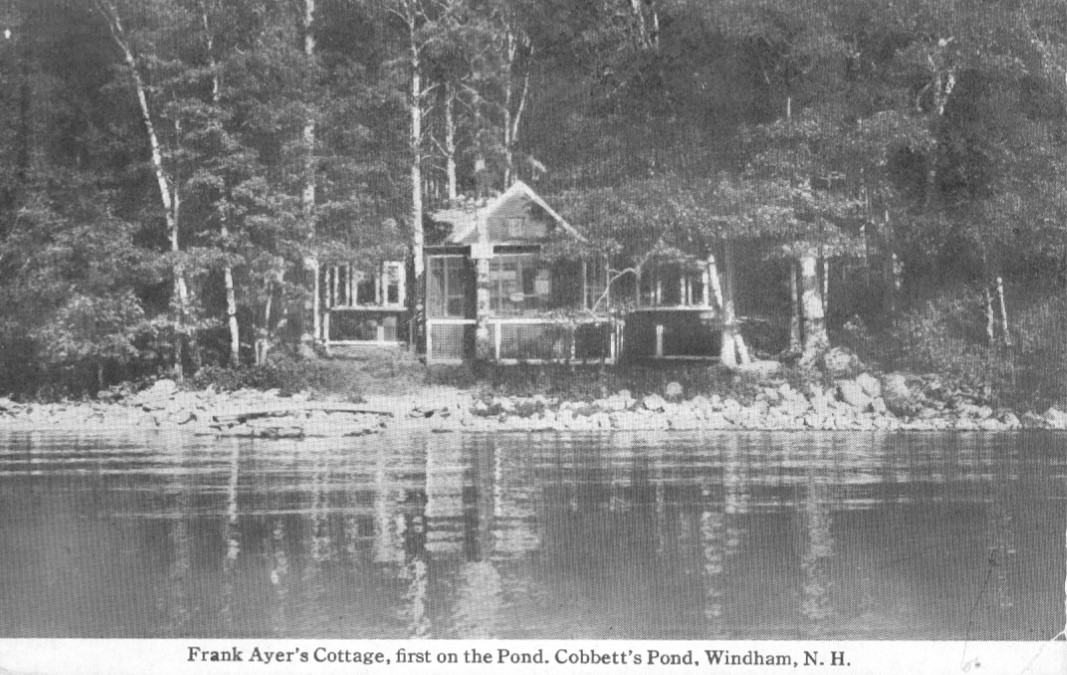
Frank Ayer's Cottage about 1898 as shown in the Granite Monthly.

Frank Ayer’s Cottage about 1898 as shown in the Granite Monthly

FRANK AYER DIES | ICE FISHING ON COBBETT’S POND

“WINDHAM, January 23.—Fishing through the ice at Cobbett’s Pond has been largely engaged in this winter. One pickerel 25 inches long is reported.”

“Frank H. Ayer, who recently died in Nashua, leaving a large estate and no immediate family, was the owner of ‘Pioneer Cottage,’ the first summer camp on Cobbett’s Pond, which he and others built in the spring of 1886.” (Died January 12th)

ayer-3

     Frank Hamilton Ayer was born in Nashua N.H., June 21, 1857. His parents were Francis Brown Ayer, M.D. and his wife Anne Marie (Baldwin) Ayer. His boyhood passed in his native city and his preparation for Yale was completed at Phillips Academy, Andover, Mass. From the time of graduation until 1891 he was connected with the Nashua Bobbin and Shuttle Company, of which he was at one time president and treasurer. In the latter year he retired from the above company and became the Eastern representative of the Ironton Door and Manufacturing Company, of Ironton, Ohio. In 1905, he relinquished his position and entered upon the real estate business in Nashua, largely in connection with his own investments and his interest in the development of Nashua. He was an enthusiastic golfer and built the first golf course in New Hampshire. He denies having ever indulged in extended travel, or having engaged in politics or any other avocations which offer themselves to the average citizen, and leaves it to be inferred that he has limited his activities exclusively to his business and family affairs. He married January 26, 1887, Ellen Frances Batchelder, daughter of Orison and Anne Maria (Clark) Batchelder of Manchester, N.H.. They have no children. “He hated sham and was a scornful critic of the bootlicking of his day and generation.” His wife died in 1910. History of the Class of Eighty, Yale Alumni Weekly

ayer-1

      The Nashua Bobbin and Spool Company is a long-established industry. Of its origin and progress in earlier times we have already written. It has supplied mills in every part of the country. Within a few months it has been reorganized with Frank H. Ayer, president and treasurer; G.H. Hatch, clerk; and Ira Cross, superintendent. It makes bobbins, spools and shuttles for all kinds of textile fabrics,–cotton, woolen, silk, linen, hemp and jute; also rollers for skates and other kinds of wood-work. The works are located on Water Street. The floorage of the shops is nearly three acres, and its business this year one hundred and fifty thousand dollars, and in good times twice that amount. White birch and maple are material for spools and shuttles, but of late dog-wood and persimmon are shipped from North Carolina. History of Nashua NH.


Windham Life and Times – January 20. 2017

Roadside Nostalgia

The Bea's on Route 11o in Methuen, Atomic Subs in Salem

The Bea’s on Route 110 in Methuen, Atomic Subs in Salem

BEA’S CUTLETS, ATOMIC SUBS AND HOWDY BURGER

Maybe its because I’m writing this at lunchtime and I haven’t eaten, I don’t know, but I’ve been overcome by a wave of nostalgia for the foodie heaven of my childhood. I know this isn’t exactly “Windham History” but if you lived in this town in the fifties, sixties and seventies you were familiar with these iconic road-side places.

Atomic Submarine was located on Route 28, in Salem, where the Burger King is today. According to blog.retroplanet.com they opened on 1965 and remained at the same location until 1984. The shop opened in the former VW dealership. The reason this place is so important to me, is not because of the food. You see, right next door there was a slot car place, where my brother and I used to hang out for hours on end.  One Saturday, we had our cars on the track as usual, when some kid came in yelling, “The Rolling Stones are next door at Atomic Subs.” And it was true. As I remember it, they were driving a van behind which they were pulling a trailer with their equipment. I confirmed this memory with my brother who was four years older at the time and for whom a Rolling Stones sighting was much more an impressive event. I remember eating the subs there. According to blog.retroplanet.com they offered a sub called the “Atlas” that was three feet long. Bill Littlewood and his wife Marge eventually owned 20 stores in the area and there was talk of going national but it soon all came to an end because of a dishonest book-keeper or so the story goes.

When I think back on the cutlet sandwiches that we used to get at Bea’s, my mouth begins to water. You remember how the huge cutlet, hung 3 inches beyond the roll. Legend has it that the family started making sandwiches from their tenement kitchen in Lawrence. I remember the Lawrence store on Broadway very well. The inside was gleaming stainless steel and mirrors. When I was a kid, I was totally intrigued by the mirrors, because they were  huge and on opposite walls, so they produced an unique optical illusion, with me descending into infinity and beyond. My grandfather, in the midst of a heart attack, asked to stop and get a Bea’s cutlet sandwich before they took him to the hospital. They were really that good!!!

beas-1

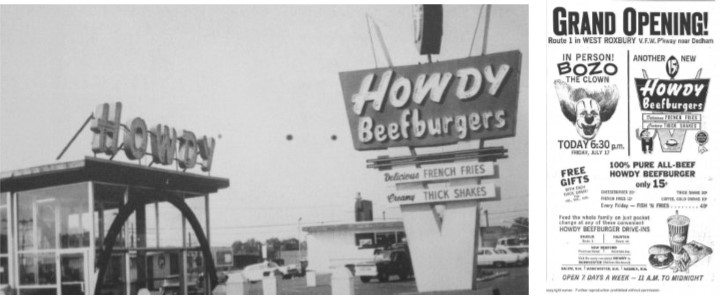
With the new Ray Kroc, “McDonalds” movie hitting theaters, it is appropriate to remember that New England’s first fast food restaurant was Howdy Beef Burgers. The one in Salem looked just like the one pictured. The chain was started by William Rosenberg, who also owned the Dunkin Donuts chain. They were hugely popular, probably because they were fast and cheap, unlike today. And the fries were really great, also unlike today, when all fast food fries pretty much suck. You could get a burger, incredible fries and a coke for just 37 cents.

beas-3

Of course, before Howdy Beef Burger there was the A&W Root Beer on Route 28, where they took your order and hung the tray on the side of your car.  There was also “Joes” which had great food and was always packed. As a kid, I remember waiting in line to get into that place!  I went for the red Jello and whipped cream which I was allowed to have if I ate my meal. And who could forget Findeisen’s ice cream stand. Chocolate marshmallow ice cream, under the willow trees by the Spicket River.  I really need to go and eat lunch… but I’m just now remembering the nice older Italian lady who used to serve me incredibly delicious meatball subs after high school, at “Gateside,” across from Canobie Lake Park…OK, OK, I’m off to lunch!!!


Windham Life and Times – January 12, 2017

WINTER AT CASTLE HILL FARM

ch-1

DURING THE YEARS IT WAS OWNED BY BEN AND JOSEFA MARKEWICH

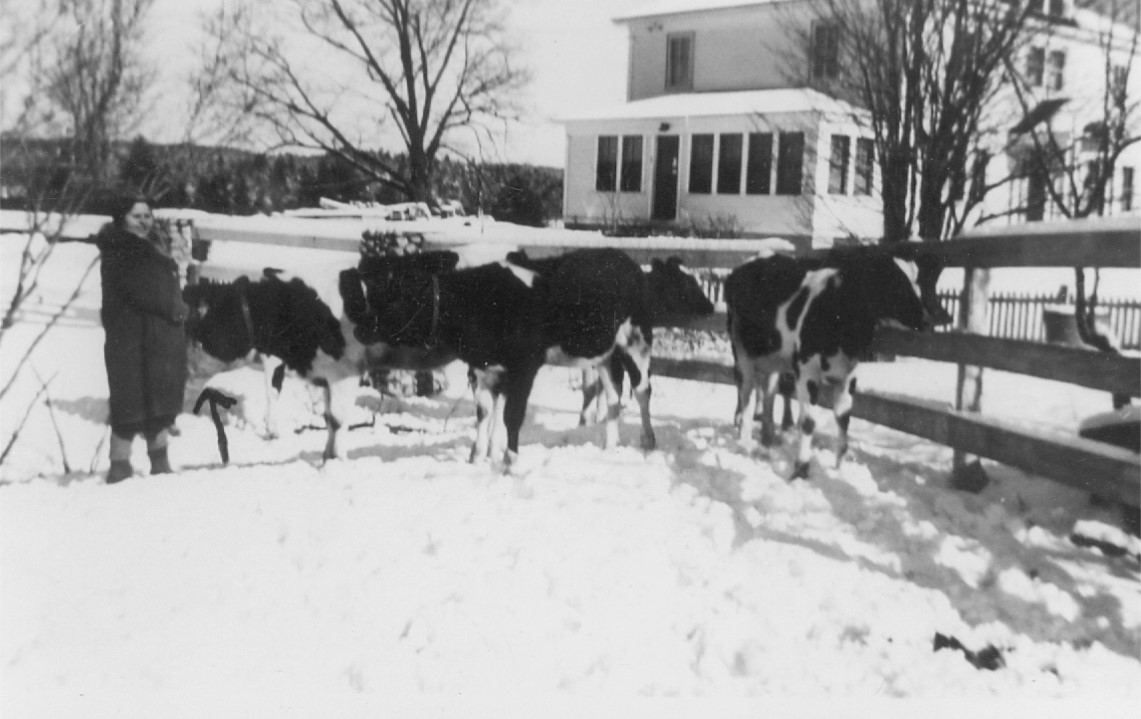
Ben and Josefa Markewich owned Castle Hill Farm in West Windham. It was one of the largest farms in town, running along both sides of Castle Hill Road and up Mount Ephraim  to where Heritage Hill and Bennington Roads are located today.   They ran a successful dairy farm which at one time had more than 65 cows, during the 30’s and 40’s. Josefa is shown above with the cows in front of her house. Winter brought different chores to the farm, like cutting ice for the household refrigeration and milk.

cb-3

ch-2


Windham Life and Times – January 6, 2017

Leaving Ireland

The Blight of Emigration Statues, are located on Derry Harbor, Northern Ireland. The man moves resolutely ahead, while the woman and child look back toward what’s being left behind.

The Blight of Emigration Statues, are located on Derry Harbor, Northern Ireland. The man moves resolutely ahead, while the woman and child look back toward what’s being left behind.

REVEREND JAMES MCGREGOR LEADS HIS PEOPLE TO THE PROMISED LAND: 1718

Leaving is such a revolutionary act! Staying in the place where you were born, among friends and relatives, and living within the scenery that has greeted you day in and day out is the easy path. The hard way, the path not taken by many of us, is to simply leave. To leave everything behind and to begin life anew.

A recent BBC article calls the Reverend James McGregor, the Moses of his Scotch-Irish flock, who lead his humble congregation to the promised land of America. “He was a veteran of the Siege of Londonderry and in 1701, Mr. McGregor, who was a fluent Irish speaker, became the pastor of a small Presbyterian church in Aghadowey. In 1710, the synod gave him the privilege of preaching in Irish. At that stage, Presbyterians were not allowed to hold office, teach or to conduct most civil ceremonies such as marriages and funerals. In early summer of 1718, Mr. McGregor and the major part of his congregation set sail for Boston on the brigantine Robert. The group consisted of about 200 people, primarily from 16 families and ranging in age from babies to an elderly couple aged 90.”

“The Presbyterian Historical Society of Ireland holds the session minute book for Aghadowey congregation, 1702-61, that covers the period when the Rev McGregor was minister of the congregation. The session minutes reveal the level of poverty in the area as illustrated by the increasing number of named poor people receiving assistance from the church recorded at almost every meeting of session up to and beyond 1718.  This was undoubtedly due to a succession of poor harvests, a downturn in the linen industry and high rents. The congregation struggled continually to support their minister in stipend, corn, a farm and lodgings to the extent that when McGregor left in 1718, he was owed two years stipend amounting to £80.  Clearly, economic conditions played a significant factor in the decision of many to emigrate. (Presbyterian Historical Society of Ireland.) 
aghodowdy

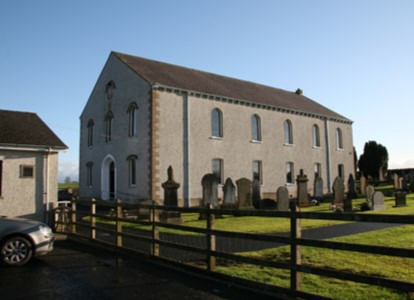
Presbyterian Church in Aghadowey, Northern Ireland

     Still even with the poverty and oppression, it would have been easier to stay, and many of the family members of those that left, did stay behind in Ireland. McGregor, gently prodding his congregation, to leave, promising as a group, they would be able to take on the wilderness with God’s help.

On the eve before embarking, Rev. McGregor gave a sermon, the manuscript which was preserved and related by Edward Parker in his History of Londonderry. “His discourse was from the appropriate words of Moses, when conducting the chosen tribes to the promised land: ‘If thy presence go not with me, carry us not up hence.’  In the application of the subject of their emigration, he states the following as reasons of their removal to America. 1. To avoid oppression and cruel bondage. 2 To shun persecution and designed ruin. 3. To withdraw from the communion of idolaters. 4. To have the opportunity of worshiping God, according to the dictates of conscience and the rules of the inspired word.”

Here is the account from Morrison’s, Among the Scotch-Irish: “On a certain September morning, in the year 1718, a cavalcade, in which women and children, whose dress and bearing bespoke the farming class, might have been seen leaving Aghadowey by the Derry road. In the cavalcade were a number of old-fashioned wheel-cars, with their low, solid wheels and broad bottoms, upon which were piled provisions, wearing apparel, and household effects. Accompanying the procession and acting as guide, philosopher, and friend, was a clergyman in the prime of life, and dressed in the simple garb of the Presbyterian ministers of that period. The clergyman was accompanied by his son, a boy of eight summers, whose name is now accorded and honored place in the national biography of the Great Republic of the West. As the cavalcade wends it way along the road, the people are ever and anon casting regretful looks at the waving fields of golden corn, the green valleys, and the wooded hills now assuming an autumnal brown, of their native parish.”

“The cavalcade is a band of emigrants, of about 100 families, on their way to Derry, there to embark for the Western World. The clergyman is Rev. James McGregor, second minister of the Presbyterian congregation, of Aghadowey, to which all the families belonged, and who accompanied them to America. The reasons which induced theses people to leave their native land and undertake a voyage across the Atlantic, which in those days was tedious and full of hardships, and to face the uncertain prospects of new settlers, were partly religious and partly agrarian. Being Presbyterians, they were subjected to the unjust and insulting provisions of the Test Act, under which it was penal for a person of their persuasion to teach a school or to hold the humblest office in the State. Then again, at the time of the Revolution, when a considerable part of the country lay waste, and when the whole framework of society was shattered, land had been let on lease at very low rents to the Presbyterian tenants. About 1717-1718 these leases began to fall in, and the rents were usually doubled and frequently tripled. Hence farmers became discouraged, and a number of them belonging to Aghadowey formed the design of emigrating to America, where they would be able to reap the fruits of their own industry.” Other Scotch-Irish on other ships joined them. The Robert landed in Boston, the 14th of October, 1718.

For more information check out:

http://www.1718migration.org.uk/


Windham Life and Times – December 30, 2016

Happy New Year

Robin's Nest Windham NH

Robin’s Nest Windham NH

ROBIN’S NEST TOURIST CAMP- ONE OF MY FAVORITE OLD SCENES IN WINDHAM

100 years ago, travel by automobile was transforming the country-side along major routes. Entrepreneurs sought out ways to exploit business opportunities presented by the growth of automobile ownership and traffic. Route 28 ran through Windham, and was one of the major highways from Boston to the White Mountains. Gas pumps were installed on many properties along Route 28. Moody Robinson, pictured, offered “fast food”  at his “Quick Lunch,” Socony gas, tourist accommodations and a pay phone.