Windham Life and Times – March 31, 2017

Eastern Illustrating and Publishing Company
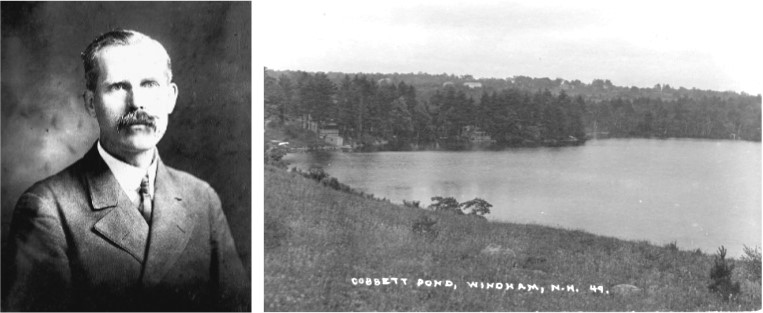
Herman Cassens and one of his Eastern Illustrating “real photo” postcards of Cobbett’s Pond in Windham.

Historic Glass Plate Images of Windham

You will remember this image that was in last week’s column. In looking at the postcard, I noticed that the name of the publishing company was imprinted on the back. Eastern Illustrating Company of Belfast, Maine. A little research online lead me to the Penobscot Marine Museum, where the Eastern Illustrating and Publishing Company collection is housed. There are literally tens of thousands of historic images in the collection. You can imagine my excitement as I viewed the forty or so photographs of Windham.

I spoke to Kevin Johnson, photographic archivist at the museum who told me the history of Eastern Illustrating and his involvement with the collection. The glass plates were almost lost in a flood! The museum gave me permission to present the Windham photographs to you in my Windham News column and in my blog. I am sure you’ll enjoy seeing these photographs as much as I did.

The history of the Eastern Illustrating is very interesting and what is presented here is from the Penobscot Marine Museum’s web-site. “In 1909, R. Herman Cassens, a young entrepreneur, started a postcard company, the Eastern Illustrating and Publishing Company, in the mid-coast town of Belfast, Maine. Postcards have always been a popular item, especially for travelers, but at the turn of the century they were the absolute rage.”

“At a time when the telephone was not an integral part of the American household and email was still nearly a century away, postcards provided both a visual and written link, whether from across town or across the country. Cassens saw a niche between personal/amateur postcards and the mass-produced postcards available in the bigger cities. He had a dream of “Photographing the Transcontinental Trail–Maine to California,” focusing on small rural towns and villages. He and his small crew of photographers traveled through rural New England and New York focusing their lenses on locally known landmarks, street scenes, country stores and businesses, events and people. The exposed glass plate negatives were sent back to the ‘factory’ in Belfast where they were processed, printed and sent back to the general stores for sale at ‘2 for 5 cents.’ ”

“Cassens sold his business in 1947 and died in 1948. Though his dream of photographing all 48 states was not realized, his company did manage to make over 40,000 glass plate negatives of New England and New York between 1909 and 1947. The images are fascinating on many levels. They take their viewers back in time to when the roads were still dirt, horse drawn carriages outnumbered cars, coastlines were still undeveloped and elms lined the streets.” You can learn more about how the collection ended up at the Penobscot Marine Museum by following this link: penobscotmarinemuseum.org/eastern-illustrating-publishing-company/ The museum is looking for donations for its efforts in restoring and publishing these and other photographs.

The good news is that for anybody who might be interested, the Penobscot Marine Museum will make high resolution prints on Fine Art paper, with archival pigment inks. So in the coming weeks, if you see a Windham scene that you might want to enjoy hanging on your wall, you can purchase it at the  https://penobscotmarinemuseum.org/historic-photo-prints/ Their collection also features historic photographs of towns throughout New England and New York. I saw beautiful views of Big Island Pond in Derry, Arlington Pond Reservoir and of the town of Salem while doing my research. Print sizes range from 8” x 10” to 24” x 30.”

I can’t wait to share these photographs with you, my loyal readers. In the coming weeks, you’ll see  many fascinating scenes of Windham past.
You can learn more about the Eastern Illustrating and Publishing Company and its photographic archive at: https://penobscotmarinemuseum.org/eastern-illustrating-publishing-company/

Purchase the North by Northeastern DVD featuring the photographs of the Eastern Illustrating and Publishing Company.

Donate to help preserve the photograph collections of the Penobscot Marine Museum.

Browse the Penobscot Marine Museum Photograph Collection.

Purchase Maine On Glass: The Early Twentieth Century in Glass Plate Photography by author Kevin Johnson
 

Windham Life and Times – March 24, 2017

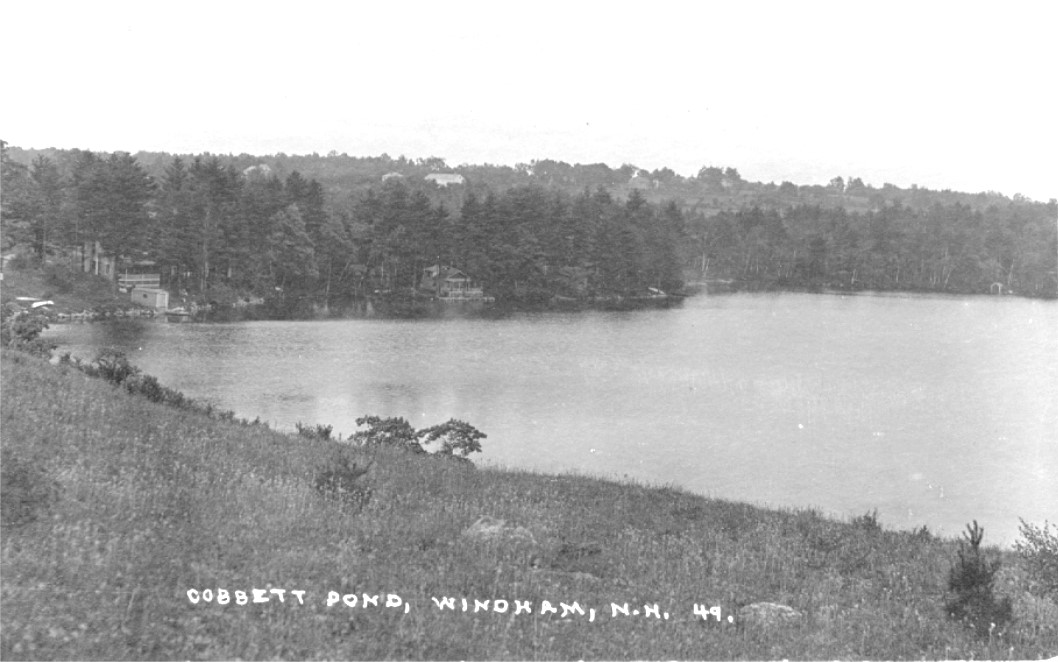
Cobbett’s Pond

Photograph Taken from the “Head of the Pond.”

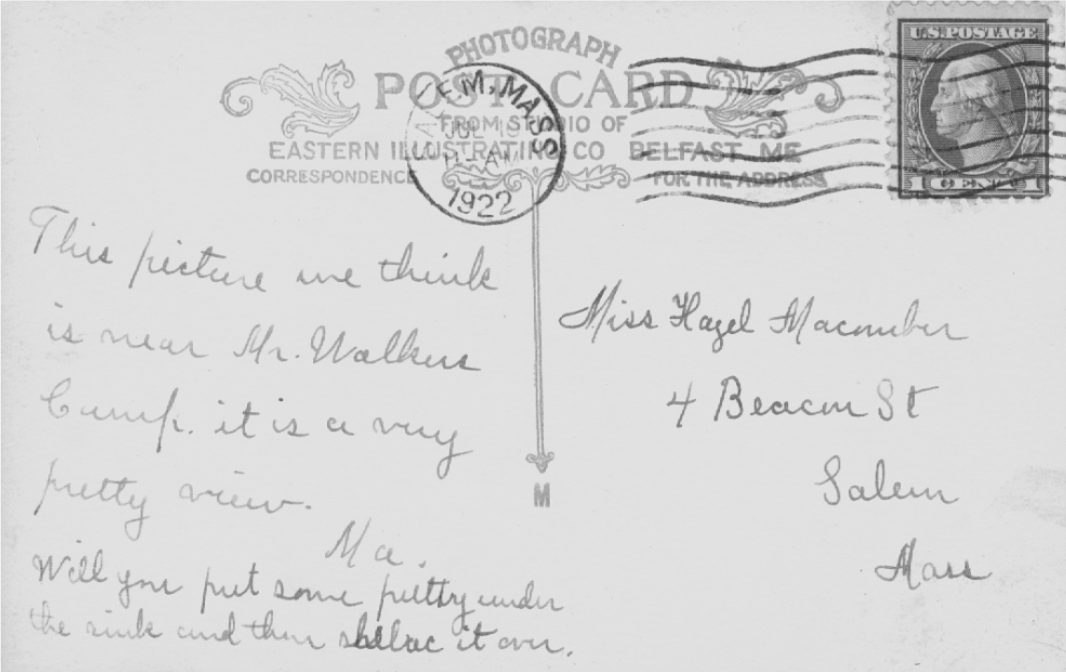
POSTMARK 1922: Miss Hazel Macober, 4 Beacon Street, Salem, Mass. “This picture we think is near Mr. Walker’s Camp. It is a very pretty view. Ma. Will you put some putty under the sink and then shellac it over.” This photograph is taken from where “Granite Hill” is located today. It’s a nice view of the Armstrong shoreline circa. 1922.

Windham Life and Times – March 17, 2017

100 YEAR AGO IN WINDHAM

JOHN PARK DIES SUDDENLY

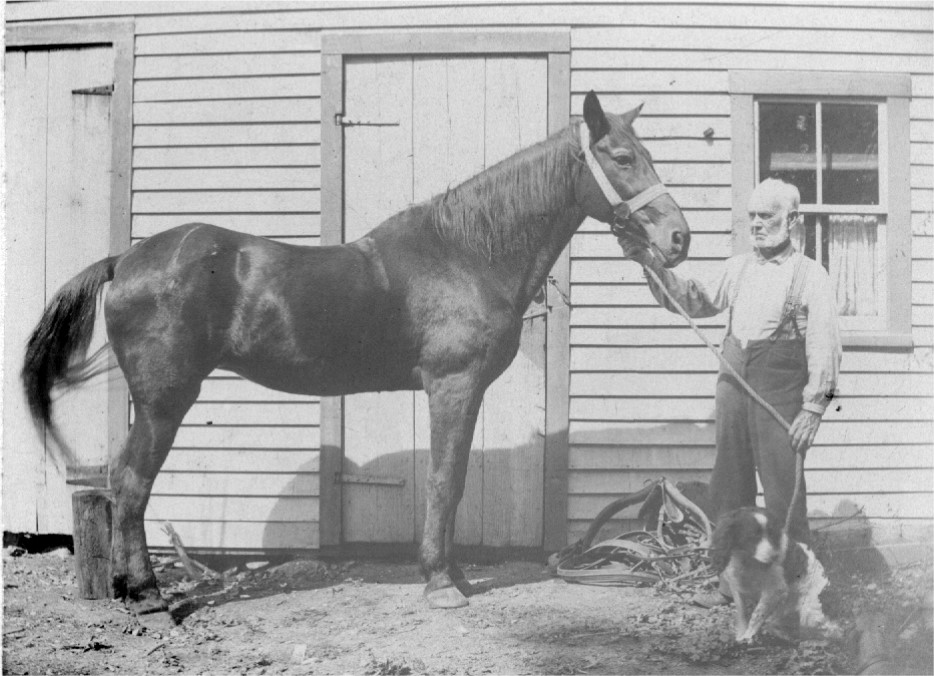
John Park pictured with his horse and dog in Windham NH

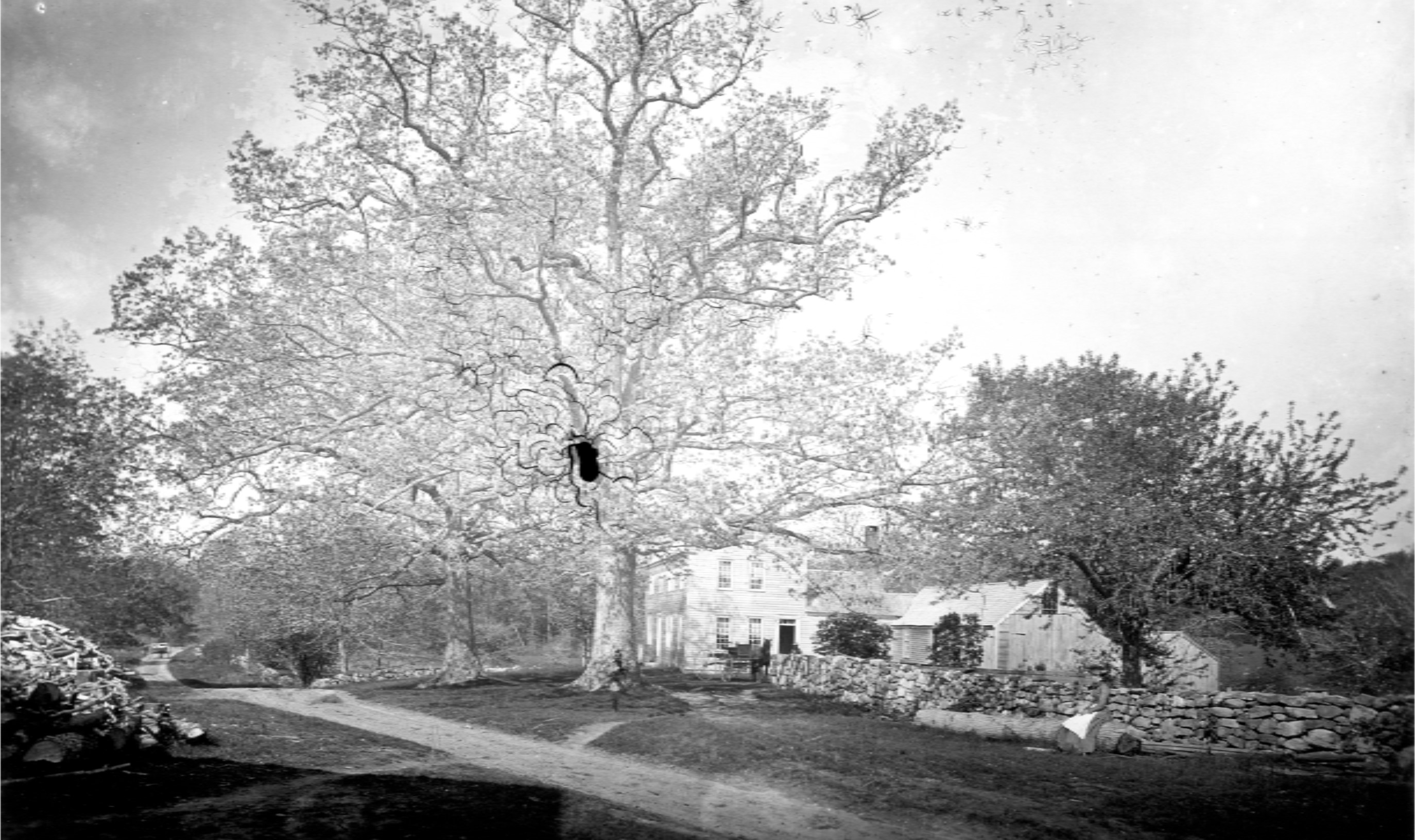
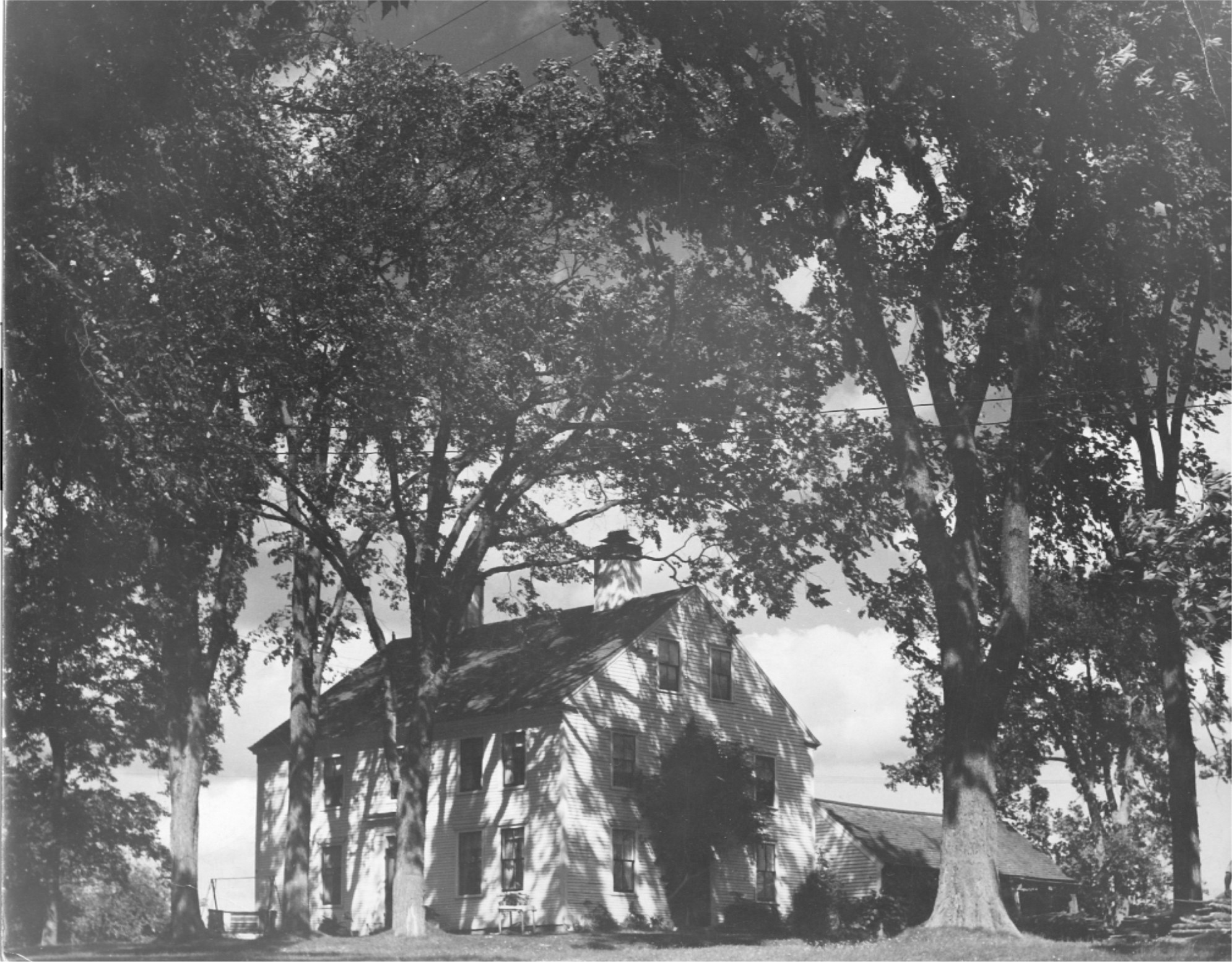
“On the evening of Monday, March 5, occurred the death of John A. Park with startling suddenness from acute indigestion. He had been somewhat indisposed for a number of days, but even on Monday night had been to the barn to assist in the chores. Soon after returning to the house he expired with hardly a moment’s premonition.”     “Mr. Park had not quite completed his sixty-ninth year, having been born April 27, 1848. He never married, but he and his sister, Miss Mary Ellen Park, had been life long residents on the old homestead on the Range, which has been previously occupied by none but their direct ancestors in the Park name, during the whole period of the town’s existence. The sister now left alone in the homestead has the deep sympathy of all. A younger brother, Joseph Willard Park, of South Boston survives with his family.”     “Their great-grandfather, Elder Robert Park, built the house and settled on the farm in 1742, the year of the town’s incorporation. Of two enormous oaks, remnants of the primeval forest, one yet remains to throw its shade over the lawn, and to excite the veneration of the passer.  The memories and ties which make sacred such an ancestral country homestead are something which the majority of people in these superficial days know nothing about.”

The Park Family Homestead, Range Road, Windham NH>

“Here Mr. Park passed the even tenor of his days, at peace with his Creator and his fellows, fulfilling his duties of a good citizen and having the respect and good will of all who knew him. In May, 1876, he united with the Presbyterian Church and, although living two miles away, few kept up more constancy than did he and his sister the good old habit of regular attendance at morning worship and Sunday School. In 1899 his fellow members testified their respect for him by electing Mr. park a ruling elder, a position filled by his father and other ancestors in former years. His native modesty, however, and declination for public office, prevented him from accepting the position. He was for years an officer in the Presbyterian religious society.”     “Mr. Park and his sister were remarkable for being of undiluted Scotch-Irish, Windham and Londonderry lineage. They were descended from the Parks, Cochrans, Dinsmoors, and Hemphills, and more remotely from families of Wear, McKeen, Nesmith, Waugh. Lintell, and Orr— Scotch names without exception. Mr. Park exhibited many of the virtues of that sterling God-fearing race.”

“The funeral was held on Thursday, Rev. Mr. Armstrong, of the Salem Depot Baptist Church, speaking in a comforting and fitting manner, and Mr. and Mrs. Worledge singing  ‘Asleep in Jesus’ and ‘They Are Gathering.’ The bearers were Mr. Worledge, C.I Alexander, J.E. Cochran and J.A. Nesmith, and burial was in the Cemetery on the Hill. Among the beautiful flowers from relatives and neighbors was a crescent from the Windham Grange, of which Mr. Park was a charter member, although of late honorably retired from membership. W.S. Harris


Windham Life and Time – March 9, 2017

100 Years Ago In Windham

The Upham Cottage on Left. North Shore Road, Cobbett’s Pond

Benjamin N. Upham Drops Dead

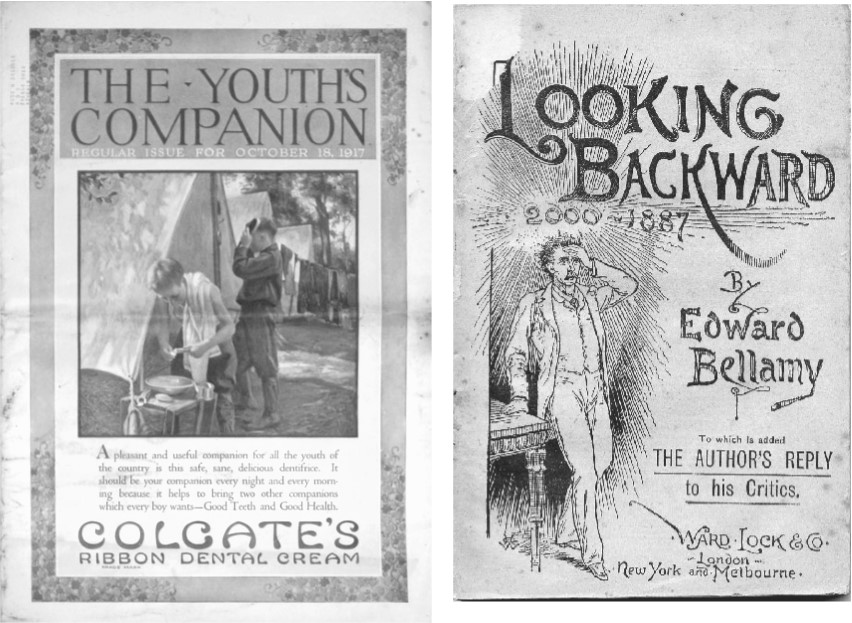
“WINDHAM, March 13, 1917— Benjamin N. Upham, of Dorchester, Mass., who has a summer cottage on Cobbett’s Pond, in which he took great interest, dropped dead on the street near his home in the storm of Monday evening, the 5th. He had long been connected with the Youth’s Companion, having charge of the premium department. Which, was quite a specialty with this popular paper. For some years, Mr. Upham was a deacon in the Ruggles Street Baptist Church  in Boston. He was a man whom it was good to know.” W.S. Harris 

Francis and Edward Bellamy

Benjamin Upham’s brother James, had a large role in the creation of the “Pledge of Allegiance.” Many patriots today, might be interested to know that, “The Pledge,” was written in 1892, by Francis Bellamy, a former Baptist minister, and an employee at the Youth’s Companion. (There has been a long running historical debate about who actually wrote “The Pledge,” with Upham’s family providing evidence that he actually did. However, today the authorship of the pledge is generally ascribed to Bellamy.) Both Bellamy and Upham were  “Christian Socialists.” Before joining the Youth’s Companion, Francis “was forced out of his Boston church for his socialist sermons, including topics like ‘Jesus the Socialist’ and a series of sermons on ‘The Socialism of the Primitive Church.’ ” Edward Bellamy, was Francis Bellamy’s cousin and also a socialist, who wrote Looking Backward, a utopian novel set in the far distant year 2000. “Bellamy’s vision sees the social ills of society cured by making America into a regimented worker’s paradise where everyone has equal incomes, and men are drafted into the country’s industrial army at the age of 21, serving jobs assigned by the state. Bellamy used the term “Nationalism” rather than “Socialism” as the descriptor of his governmental vision. He made this calculated move, to prevent a negative impact on sales of his novel and to better influence political ideas. Bellamy’s book inspired a political movement of “Nationalists Clubs,” and Francis Bellamy, author of “The Pledge,” was a founding member in Boston.      “The Pledge” would have been seen as an anathema to the founders of America, who felt that all of the rights of the government, only had legitimacy when they flowed from the rights of the individual, not the other way around.

    So where does James Upham fit in the picture? It was his job to generate revenue through the sale of premiums at the Youth’s Companion. According to Wikipedia, “In 1891, Daniel Sharp Ford, the owner of the Youth’s Companion, hired Bellamy to work with Ford’s nephew James B. Upham in the magazine’s premium department. In 1888, the Youth’s Companion had begun a campaign to sell American flags to public schools as a premium to solicit subscriptions. For Upham and Bellamy, the flag promotion was more than merely a business move; under their influence, the Youth’s Companion became a fervent supporter of the schoolhouse flag movement, which aimed to place a flag above every school in the nation. Four years later, by 1892, the magazine had sold American flags to approximately 26,000 schools. By this time the market was slowing for flags, but was not yet saturated.  In 1892, Upham had the idea of using the 400th anniversary of Christopher Columbus reaching the Americas to further bolster the schoolhouse flag movement.

The magazine called for a national Columbian Public School Celebration to coincide with the World’s Columbian Exposition. A flag salute was a part of the official program for the Columbus Day celebration to be held in schools all over America.”

The Pledge was published in the September 8, 1892, issue of the magazine, and immediately put to use in the campaign. Bellamy went to speak to a national meeting of school superintendents to promote the celebration; the convention liked the idea and selected a committee of leading educators to implement the program, including the immediate past president of the National Education Association. Bellamy was selected as the chair. Having received the official blessing of educators, Bellamy’s committee now had the task of spreading the word across the nation and of designing an official program for schools to follow on the day of national celebration. He structured the program around a flag-raising ceremony and his pledge.”

I pledge allegiance to my Flag and to the Republic for which it stands, one nation, indivisible, with liberty and justice for all.

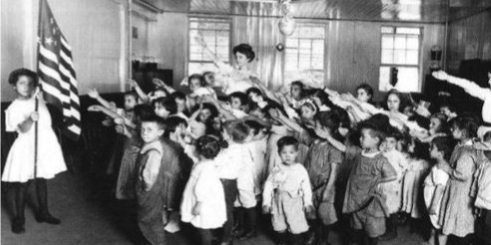
Students saying the “pledge” with the “Bellamy salute,” which looks very similar to the NAZI salute.

“For years the Pledge was accompanied with the “Bellamy salute,” a gesture invented by The Youth Companion’s marketing man, James B. Upham. In Bellamy’s own recollection, upon reading the pledge for the first time, Upham had snapped his heels together, raised his arm at half mast, and enthusiastically roared his support.” Of course, with the similarity to the NAZI salute, American politicians opted to change the salute to the more politically correct, hand over the heart, in 1942.

Benjamin Upham’s cottage was located on the North Shore on land leased from William Harris.  James Upham died in 1905, but his children visited the cottage. Both James Upham and Benjamin Upham worked in the premium department of the “Youth’s Companion.”

Windham Life and Times – March 3, 2017

100 Years Ago in Windham

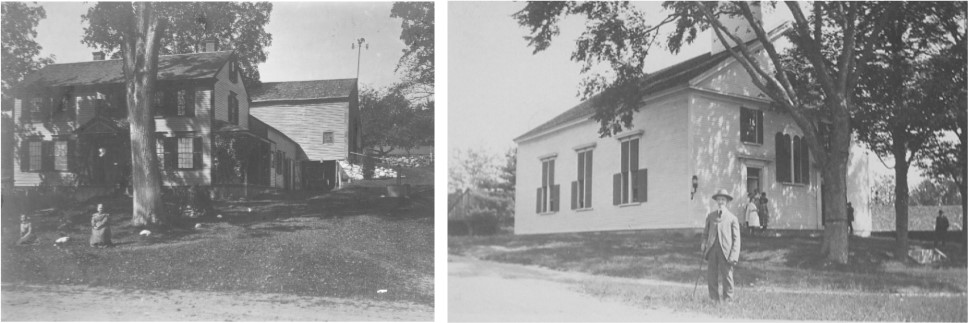
Dalton Warren Sexton in front of Windham Presbyterian Church. His home in the Center.

W.H. HARRIS | THE EXETER NEWSLETTER

WINDHAM, February 27. 1917.—Wenonah the eleven -year old daughter of Mr. and Mrs. R.E. Alley, has come home from Tower Hall sanitarium, Derry, where she has been for several weeks under treatment, which included an operation, for peritonitis. She has ha a hard time, and all are glad to know she is so far recovered.      Viola M. Jackson, daughter  of Mr. and Mrs. George E, Jackson, and a student at Pinkerton Academy, went to Nashua hospital Saturday and underwent an operation for the removal of the appendix. The operation was reported to be successful.

Dalton Warren and Family

Our oldest resident, Dalton John Warren, died on the 15th, at the home of George E. Jackson, where he had of late been cared for. He was in his 92nd year, having been born November 5, 1825. For more than a year he had been very feeble. His wife died about a year ago, aged nearly ninety. Mr. Warren had been a respected citizen and member of the church, and was sexton of the church building for many years. His only near relatives are a nephew, Dr. Warren, or Worcester, and a niece, Mrs. Frost, of Newburyport. The funeral was at White’s undertaking rooms, Derry, and burial was at West Manchester, Mr. Warren’s former home.

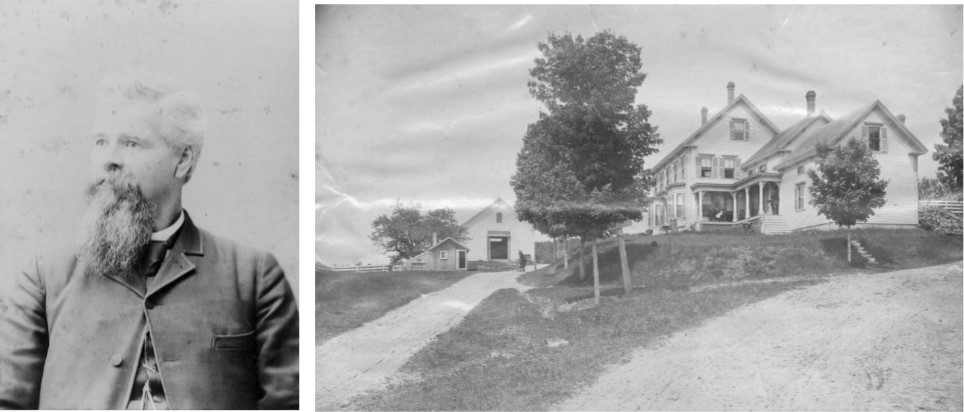
John H Dinsmore and his Farm on Indian Rock Road

John H. Dinsmore, one of our most prominent citizens and representative of one of the oldest families in town, is in feeble health at the present time.

The Nesmith Farm on North Lowell Road in Windham NH

Another resident, who to universal regret is in failing health, is Mrs. Ellen C. Nesmith, mother of J. Arthur Nesmith.      Mr. and Mrs. William A. Butterfield, having on February 25 reached the fiftieth Anniversary of their marriage, were visited by their children and grandchildren and some of their neighbors and the occasion was celebrated in a pleasing manner. Mr. Butterfield is a native of Bedford and served in the Third N.H. Regiment in the Civil War. Mrs. Butterfield was Sophronia L. Messer, a native of Plaistow. They have been respected residents of the Depot district of this town for 35 years. W.S.H.

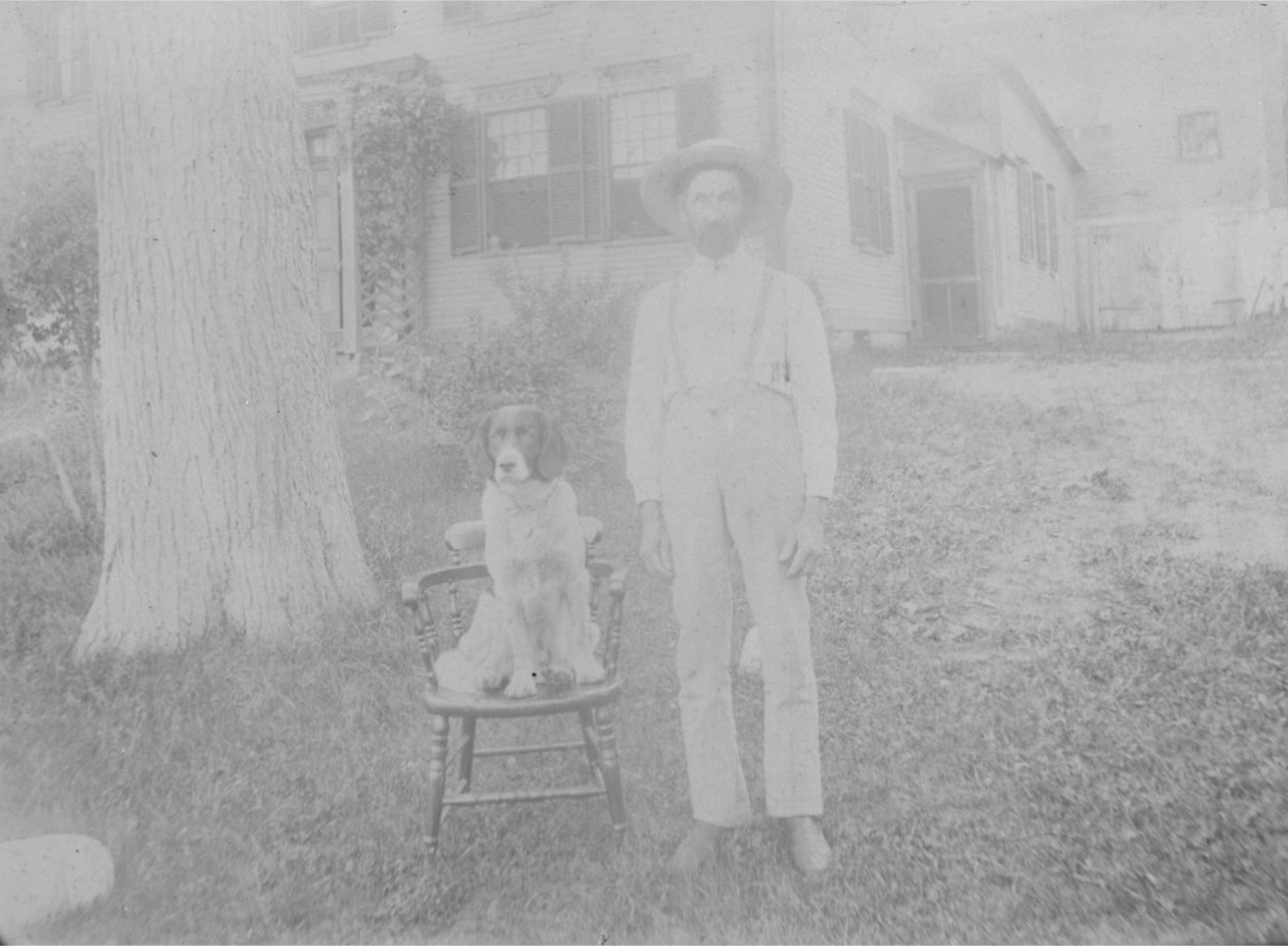
Dalton Warren and His Dog