Windham Life and Times – April 24, 2020

Almost Deja Flu

The 1918-19 Influenza Pandemic.

A conductor checks to see if passengers are wearing required masks in Seattle, in 1918. An open-air barber shop. Public events were encouraged to be held outdoors to hinder the spread of the disease during the influenza epidemic. The University of California, Berkeley, in 1919.

“Between 1918 and 1919, an outbreak of influenza spread rapidly across the world, and killed more than 50 million—and possibly as many as 100 million—people within 15 months. The speed of the pandemic was shocking; the numbers of dead bodies overwhelmed hospitals and cemeteries. Quarantine centers, emergency hospitals, public use of gauze masks, and awareness campaigns were all undertaken swiftly to halt the spread. But as World War I was coming to a close, millions of soldiers were still traveling across the globe, aiding the spread of the disease. While its exact origins are still debated, it’s understood that the “Spanish Flu” did not come from Spain. The name seems to have arisen as reporting about influenza cases was censored in war-affected countries, but Spain was neutral, so frequent stories appeared about the deadly flu in Spain…the battle against one of the deadliest events in human history, when the flu killed up to 6 percent of the Earth’s population in just over a year. The Atlantic. April 10, 2018

The congregation prays on the steps of the Cathedral of Saint Mary of the Assumption, where they gathered to attend mass and pray during the influenza epidemic, in San Francisco, California

“The strain was not only virulent and lethal but extraordinarily violent. It presented a suite of symptoms rarely seen with influenza—symptoms so unusual it was sometimes misdiagnosed as dengue, cholera, or typhoid. Patients exhibited a range of complications including hemorrhage from mucous membranes in the nose, stomach, and intestine. Flu sufferers sometimes bled from their ears and eyes, or even right through unbroken skin…And the 1918 flu targeted young adults. Those between ages 20-40 accounted for most of all deaths. The over 50 age group was far less affected. Perhaps more disturbing is the fact that the actual flu disease was not responsible for the majority of deaths associated with the influenza in 1918-19, it was secondary bacterial pneumonia so nasty pathologists conducting autopsies found the lungs in such a devastated condition the only thing they could compare it to was victims of poison gas. Military doctors called it “atypical pneumonia” back then. Today it’s referred to as Acute Respiratory Distress Syndrome (ARDS). The Army’s board judged that ‘more than half” of all the deaths among soldiers came from this atypical pneumonia.”

University of Montana, Missoula, 1919. During the influenza epidemic, classes were held outdoors. Influenza patients getting sunlight at the Camp Brooks emergency open-air hospital in Boston. Medical staff were not supposed to remove their masks. Photos from the (National Archives)

“Intense and protracted prostration led to hysteria, melancholia, and insanity with suicidal intent,” reported New York City Health Department’s chief pathologist on patients bedridden for so long if the disease didn’t kill them they were often driven mad with depression. https://buckrail.com/covid-nothing-new

“Putting infected patients out in the sun may have helped because it inactivates the influenza virus. It also kills bacteria that cause lung and other infections in hospitals. During the First World War, military surgeons routinely used sunlight to heal infected wounds. They knew it was a disinfectant. What they didn’t know is that one advantage of placing patients outside in the sun is they can synthesize vitamin D in their skin if sunlight is strong enough. This was not discovered until the 1920s. Low vitamin D levels are now linked to respiratory infections and may increase susceptibility to influenza. Also, our body’s biological rhythms appear to influence how we resist infections. New research suggests they can alter our inflammatory response to the flu virus. As with vitamin D, at the time of the 1918 pandemic, the important part played by sunlight in synchronizing these rhythms was not known. Doctors who had first-hand experience of open-air therapy at the hospital in Boston were convinced the regimen was effective. It was adopted elsewhere. If one report is correct, it reduced deaths among hospital patients from 40 per cent to about 13 per cent. According to the Surgeon General of the Massachusetts State Guard.” https://medium.com/@ra.hobday/coronavirus-and-the-sun-a-lesson-from-the-1918-influenza-pandemic-509151dc8065

Today’s Covid-19 or SARS-CoV-2 or whatever they’re calling it this week shares many of the attributes of past influenza outbreaks. Only time will tell if this time its different and to what degree. Hopefully, its not nearly as deadly.

California A Physics class, University of Montana, Missoula, 1919. During the influenza epidemic, classes were held outdoors.


Windham Life and Times April 17, 2020

What are You Afraid Of?

Living a life without fear, even in fearful times.

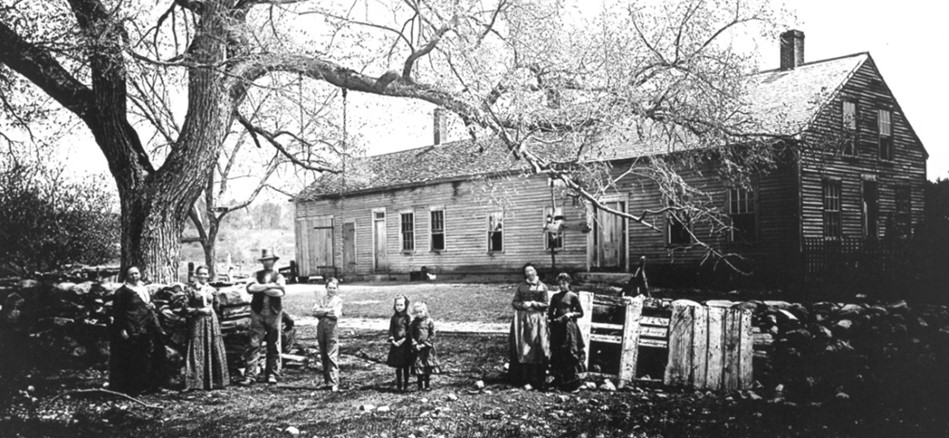
In the 19th century people were tough and resilient in the face of adversity. The Clark family pictured in the photograph above look as if they could have taken on just about anything. Their barn was burnt to the ground by a passing train. Look how the son, arms crossed,  models the determination of his father. Fear is one of man’s worst, latent, emotions, that gives rise to all of the evil found in the world. It lies behind hate, racism and oppression. We live in this world in order to find a path which overcomes fear. Jesus of Nazareth’s most commonly uttered line, in the face of disease, hatred or difficulty was, “Fear not!” I was always impressed by that, considering he was destined to be hung on a cross. The Buddhist insist that we should live as observers of the world, detached and utterly calm. After all they claim, all sentient beings, living organisms and even inanimate objects are connected; and our very act of observing brings the world, with God within all things, into existence. The Campbell Family is pictured below. The son doesn’t even have shoes to wear. They too look like they also could take on the world. Today, with all that we have, we certainly can too; fearlessly, with dignity and grace!

    A mother in the 18th and 19th century, faced the prospect of losing half of her large brood of children in one plague or another, that often swept through America.  That’s why people had large families. Doctors were few and far between, people couldn’t afford them anyway, so parents often had to face down devasting viruses and diseases alone in their homes. If you were badly hurt in a factory or on the farm you likely died or were forever maimed. There was no ambulance to rush you to a nearby hospital and no safety net to pay your bills. Yet, Americans faced the peril and went to work, unafraid. In the nineteenth century, it was common for embers of passing trains to cause huge forest fires that burned down many farms, even right here in Windham. Nobody gave a thought about banning trains. Hell, the settlers of Maine had to face down Indian attacks, scalping and forced slavery, in order to try to establish a home in America.

Morrison tells us in his history of Windham that, “Spotted Fever” Plagued Windham in 1812. “This alarming disease first appeared in the spring of 1812, and prevailed to an alarming extent that spring, but subsided somewhat during the warm weather.” (Because people were in the sun getting Vitamin D3 into their systems) “On the return of cold weather, it broke out afresh, but not with so much violence. Persons attacked with it would die in a few hours, and the disease was generally fatal. After this it prevailed for several years, but not so extensively (Because people exposed to the virus built up anti-bodies and immunity.)  Many persons died, three adults and thirteen children, a total of thirteen persons having died (in Windham) in one eight day period.”

“In the paper, “Character Trials, Managing Epidemic Disease in 19th Century America, PhD student John Runge states, “ ‘There is nothing that deprives men of the natural use of their reasoning powers so quickly and entirely as fear,’ a New Orleans newspaper reported in 1878. These written words, intended for the eyes of local yellow fever hysterians, speak to an unending struggle to cope with fear and its consequences. For those suffering from infectious disease, fear twists and fits into the very essence of a person or population, shaping the malleable perspective of the afflicted.”

“In the nineteenth century, infectious disease ravaged humans across the globe. Typhoid, cholera, the bubonic plague, and tuberculosis, to name a few, besieged the people of the world in epidemics and pandemics, resulting in hundreds of thousands of deaths. Cholera, a disease caused by the bacterium Vibrio cholerae, killed roughly half of those who contracted it. In the nineteenth century, epidemics in 1832, 1849, and 1866 in the United States alone were responsible for tens of thousands of deaths, so many that physicians, in some instances, ‘did not even bother to report their cases.’ Similarly the bubonic plague, known for its fourteenth century decimation of the European population, resurfaced in late nineteenth century Pacific-linked port cities like Hong Kong, Bombay, San Francisco, Buenos Aires, and elsewhere. Tuberculosis, meanwhile, was the number one cause of death in Europe and the Americas from the late eighteenth to the early twentieth century…”


Windham Life and Times – April 3, 2020

Windham Mid-Century Modern

Miss Cobbett’s Pond: 1958-9

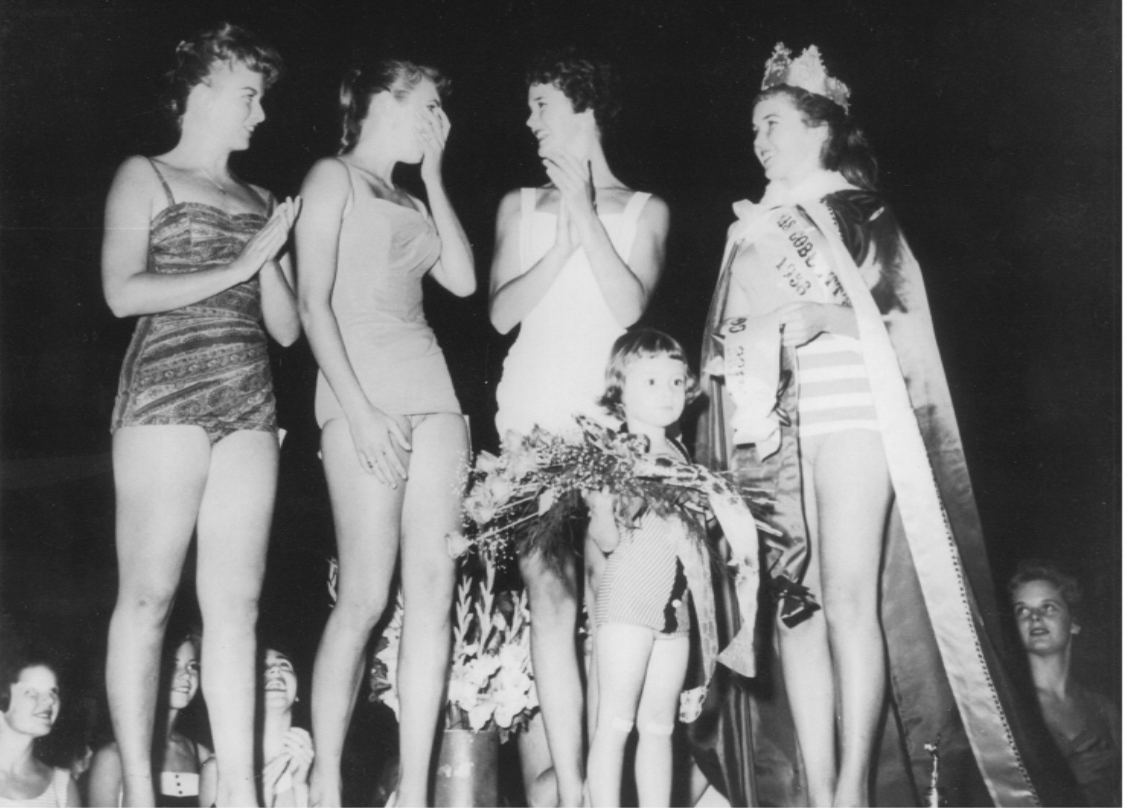
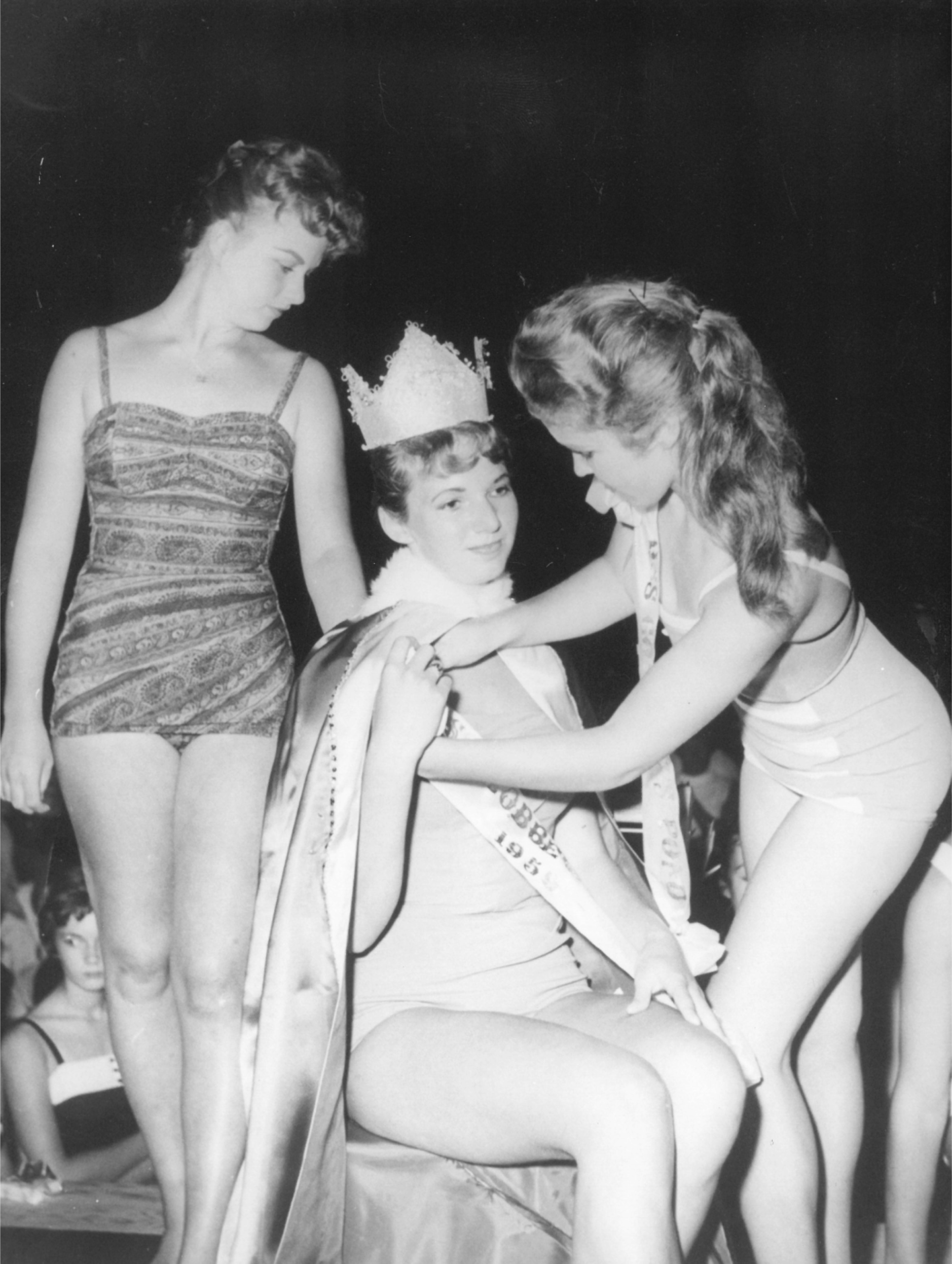
Left: Miss Marie Chadwick, Miss Cobbett’s Pond 1958, places the sash on Miss Cobbett’s Pond 1959. Above: The 1959 Miss Cobbett’s Pond Pageant. From left to right are unknown, Carol Drowns, (Miss CP 1959), Polly Ann Sanborn, and Marie Chadwick (Miss CP 1958). The little girl with the flowers is Ronnie Lou Thwaites.

“The Cobbett’s Pond Association held its annual banquet, entertainment and Miss Cobbett’s Pond beauty contest Wednesday evening at the town hall. Out of 37 original entrants , eleven finalists were selected: Anne Marie Barron, Mary Brady, Marie Chadwick, Linda Donovan, Charlene Twaites, Jerry Spawkett, Jackie Robinson, Paula Kelly, Michelle Roy, Sharon Price and Barbara Murray. The contest then narrowed to five; the Misses Baron, Chadwick, Kelley, Murray and Roy.”

“The three finalists were Michele Roy, 14, third, Anne Marie Barron, 16, second and Marie Chadwick 16, winner. Miss Patricia Larrabee of Salem, ‘Miss New Hampshire,’ crowned the winner and received special thanks for her help and cooperation. She was made an honorary member of the Association and invited to ride in a place of honor in the boat parade. Each contestant was awarded a gift from the Association and runners-up received cash prizes. Miss Chadwick received a cash award, flowers and gifts. All three will participate in the annual decorated boat parade at Cobbett’s Pond on Sunday August 24, at 2 P.M.” (The Derry News.) (Photos courtesy of Charlene Kane.)