Windham Life and Times March 25, 2022

The Dinsmoor-Park House

I have published the photograph of this house in the past. It was home first to Isaac Dinsmoor and his family and later the Park family. At the time of this photograph it was owned by Edward Searles. He owned all of the land on that side of Range Road, which he had rebuilt in order to surround his estate with stone walls. His land ran all the way to the shores of Canobie Lake. The reason I am sure it was owned by Searles at the time of the photograph is because of the ubiquitous wire fencing that he placed around his property. Rather unfriendly but effective for a reclusive millionaire. Searles added the mansard roof, moved the chimneys to the end walls and added the gambrel carriage house. Of course, people say that the location of the popular Windham Restaurant is haunted. All I can say is that one night before Christmas, in the back upstairs bedroom, a plate on our table, began to spin in circles of its own volition, or by the wispy hand of a spirit. It was witnessed by myself and several other people at our table. Its hard to believe that dirt roads once traversed this now busy intersection.  

Windham Life and Times –

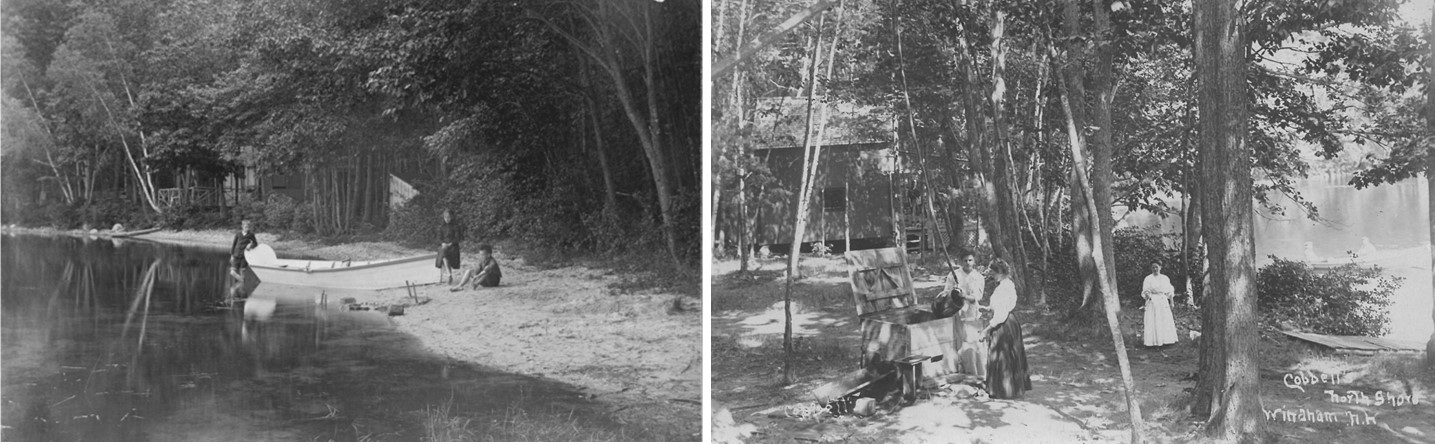
Glenwood Beach & Cottage on the North Shore of Cobbett’s Pond.


William Harris developed his “resort” on the North Shore of Cobbett’s Pond to be in harmony with it’s natural surroundings. Harris was an avid naturalist who collected the flowers and fauna of Windham. Unlike the tawdry and crowded vacation areas near the beach, he envisioned a place where people could enjoy the solitude and beauty of Cobbett’s Pond. For this reason, the cottages were very privately set among the woods of the shoreline. Glenwood Cottage is one of the last summer “cottages” remaining on the lake today. These photographs are from William Brooks, postcard views and the owners of Glenwood cottage. 

Windham Life and Times – March 11, 2022

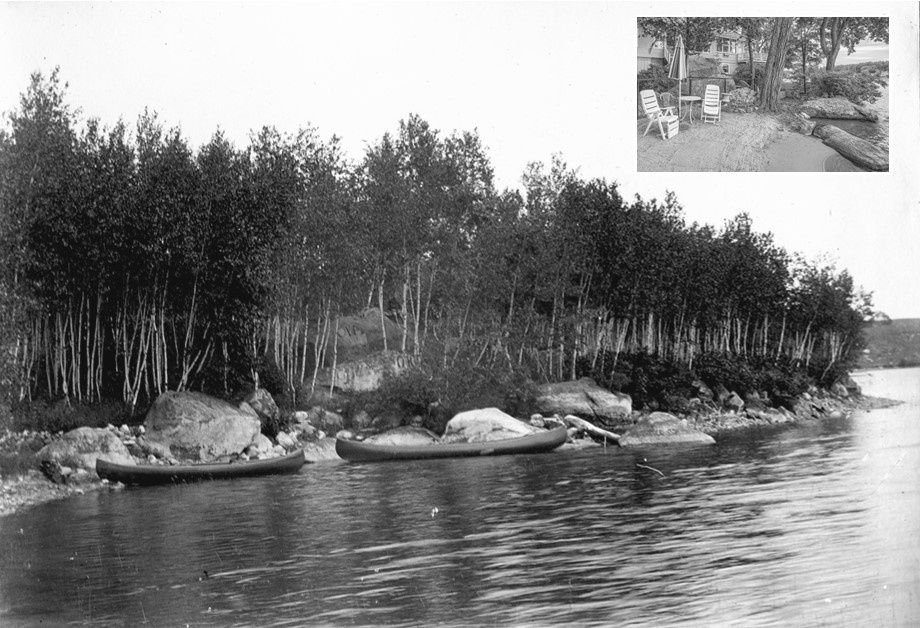
Birch Point – Cobbett’s Pond. A William Brooks Photograph 1900-1903.

Look at the hundreds of little birch trees covering this point and lining the shore of Cobbett’s Pond. The huge boulders are also interesting laid down by the glaciers. From Mr. Brooks diary we get an idea of where Birch Point was located. “June 30, 1900: The pond was covered in white caps…Afterward Howard went out alone and caught a crab and lost both oars while the boat went at a rapid rate toward the head of the pond before the wind. They went ashore at Birch Point and he borrowed a pair of oars and came home for an extra pair. Then he went after his own. August 18, 1900: A beautiful day. Warm but not hot. Mary and I took a picture of Indian Rock and then Harry and I took one of the canoes to birch point beyond Cobbetts’s Rock.

So, I just figured out where Birch Point is located, stupid me, it is the property our company sold last summer at the end of Gardner Road…take note of the two large boulders that are now located in front of the home.

Windham Life and Times – March 4, 2022

An Extraordinary African American Life: Nancy Gardner Prince (IV)

Nancy Gardner Prince continued to live in St. Petersburg, Russia where she made elegant children’s clothing “exquisitely crafted in the French and English styles,” that were purchased by the Czarina herself and other members at court. “The cold of climate did not agree with Nancy and after 9 1/2 years she departed St. Petersburg without her husband with the expectation he would follow shortly. She never saw him again. Nero Prince died in 1833 without returning to Boston.”

   Nancy Prince had no children of her own. “She held deep religious convictions apparently acquired from Backus (Tobias Wornton), her grandfather. She supported the anti-slavery movement. The remainder of her life was devoted to these missions, the anti-slavery movement, and the welfare of children; so important to her that it involved several trips to Jamaica and the West Indies. In Kingston, Jamacia she was an activist for children and here helped establish and orphanage.” 

    On her return from Russia, Nancy Prince “made her home at Rev. J.W. Holman’s, a Free Will Baptist until I sailed for Jamaica. There had been an anti-slavery society established by W.L. Garrison, Knapp and other philanthropists of the day. The design was the amelioration of the nominally free colored people of these States, and the emancipation of the slaves in other States. These meetings I attended with much pleasure, until a contention broke out among themselves; there has been a great change in some things, but much remains to be done; possibly I may not see so clearly as some, for the weight of Prejudice has again oppressed me, and were it not for the promises of God, one’s heart would fail, for He made man in his own image, in the image of God, created him male and female…”

    In her book she tells that “My mind, after the emancipation in the West Indies, was bent on going to Jamacia. A field of usefulness seemed spread out before me. While I was thinking about it, the Rev. Ingraham, who had spent several years there arrived in the city. He lectured in the city at the Marlboro Chapel, on the results arising from emancipation at the British Islands… He wished some one to go with him to his station, He called on me with the Rev. William Collier, to persuade me to go…I left America November, 16th, 1840 in the ship Scion, Captain Mansfield, bound for Jamaica…”     

    Prudence Fish, a historian of Gloucester describes Nancy Gardner’s story this way: “Just think about this story.  She was raised in the poorest conditions in Newburyport, then Gloucester.  Her life was a life of constant struggle and discomforts. In her younger days she endured cruel employers. Money Vose was an often cruel stepfather.  She was constantly worried about her siblings. Think of the financial burden she shouldered, the long walks to Salem and then to Boston in bad weather suffering frostbite in an effort to help feed her mother and siblings. Just think of young Nancy in the summer in Dogtown where she picked blueberries, strawberries, raspberries, blackberries and whortleberries to peddle in Gloucester for money to feed the family. Then imagine the improbability of finding herself in St. Petersburg, Russia being presented to the czar sitting on his throne!  Consider the sights she saw; palaces in Russia, the cities of Europe she visited then living in the tropics with long ocean voyages back and forth.  It is hard to get one’s head around her story.  Imagine how she must have felt.”

     “Nancy Gardner Prince died in Boston in 1859. She was 60 years old. Her cause of death was listed as dropsy. That old fashioned term usually meant edema caused by congestive heart failure.”

      In discussing Black history with local historians, they emphasized to me that racism, poverty and injustice was the lot of basically all African Americans in New England in the 18th and 19th century. Certainly that was the case for many, even for those that rose above it. However, in my research, over and over again, I find incredible stories of New England Blacks moving beyond their adversity and lifting themselves up, demonstrating their perseverance and fortitude. The life of Nancy Gardiner Prince is one such story and the Lew family of Dracut/Lowell is another, and I’m sure there are many, many others yet to be rediscovered and told. The other finding that astonished me, was that many institutions, particularly religious institutions in New England were integrated. Nancy Gardner attended the white Congregationalist church in Gloucester with her grandfather, Tobias Wornton, who was “very active” and “well-respected.” The Lew family was active in the Pawtucket Church on Mammoth Road. Lew passed along the family’s musical gift to his children and the family was active in the church’s choir. It should also be noted that the church organized the first anti-slavery meeting in the area in 1832.” Here in Windham  there were pews provided for the African Americans. And we now understand that over 5,000 men of full or partial Black descent fought in an integrated army in the Revolutionary War. Later on, with the onset of the Abolitionist movement, African Americans began to establish their own institutions like churches in Boston and the Prince Hall African American Masonic Lodge. This all leads to my final point; we should never discard or hide our history because it is too “painful,” or “racist.” It is so important that we look at history through a neutral lens. If we are ever to understand who we are as a people and how we became who we are, history, in all of its gory and glorious details must be upheld and preserved. Black history was hidden in New England because it was inconvenient for the abolitionist with their religious fervor for freeing the slaves in the South to admit that some of their grandfathers had owned slaves. So all of this history that is just now being rediscovered was hidden with the same justification that is being used today to hide and destroy our common American experience. Growing up in a mostly white New England, my perception of Blacks in the cities was that they had come in the Great Northward Migration of the twentieth century. The fact is that many Black families have been in New England as long as mine and it’s important we understand this fact.  I am very thankful to the historians of local town historians who recorded New England’s African-American history, of which we would know very little without their care in recording history as it was.

Mrs. Prince ended her book with the poem…

The Hiding Place.

Amid this world’s tumultuous noise, For peace my soul to Jesus flies; If I’ve an interest in his grace, I want no other hiding place.

The world and all it charms is vain, Its wealth and honors I disdain: All its extensive aims embrace, Can ne’er afford a hiding place. A guilty, sinful heart is mine, Jesus unbounded love is thine! When I behold thy smiling face, Tis then I see my hiding place.

To save, if one my Lord engage, The world may laugh, and Satan rage: The powers of hell can ne’er erase My name from God’s own hiding place… Should dangers thick impede my course, O let my soul sustain no loss; Help me run the Christian race, And enter safe my hiding place.

Then with enlarged powers of love, I’ll triumph in redeeming grace; Eternal ages will I praise My Lord for such a hiding place.

Windham Life and Times February 25, 2022

An Extraordinary African American Life: Nancy Gardner Prince

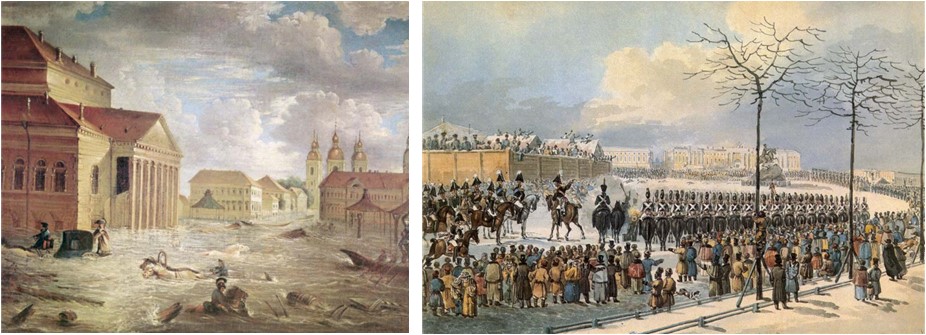
Fedor Yakovlevich Alekseev’s 1824 painting of the St Petersburg flood. The Decemberist Revolt

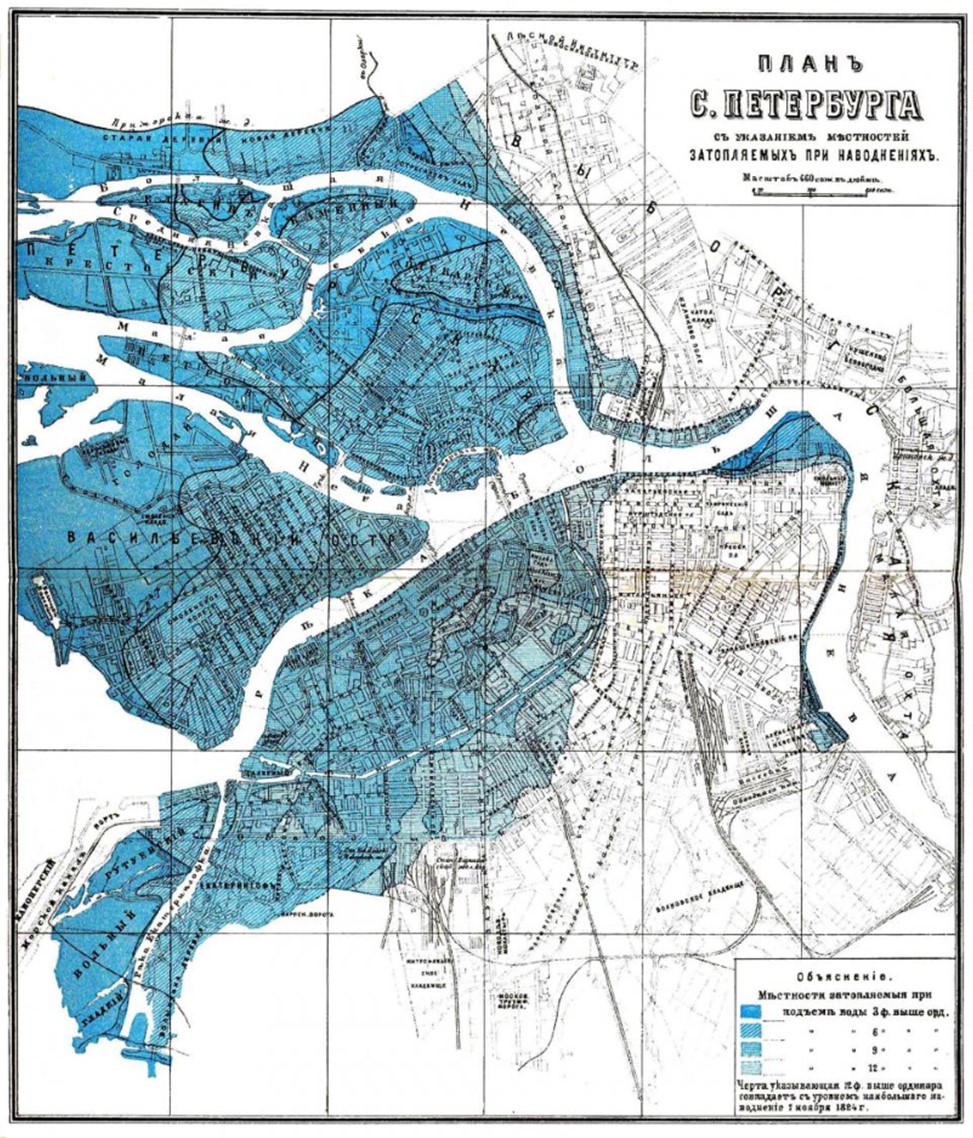
  According to Environment and Society “The flood of November 7, 1824 was the greatest flood in the history of St Petersburg. Short-lived storms surges are not unusual in St. Petersburg, which is located on the delta of the river Neva, but this one far exceeded the normal levels. On the evening of 6 November 1824, a storm broke out over the Baltic Sea, abating only toward morning. It caused surges to move eastward up the Gulf of Finland, and at 10 A.M. the flooding began. By 2 P.M. the Neva was already returning to its curse. However, during the course of the flood the Neva’s water level reached a record height of 4.2 meters above sea level, making it the most destructive flood the city ad ever witnessed.”

     What follows is Nancy Gardner Price’s eyewitness account of the flood. St. Petersburg was inundated October 9th, 1824. The water rose sixteen feet in most parts of the city; many of the inhabitants were drowned. An Island between the city and Cronstradt, containing five hundred inhabitants, was inundated, and all were drowned, and great damage was done at Cronstradt. The morning of this day was fair; there was a high wind. Mr. Prince went early to the Palace, as it was his turn to serve; our children boarders were gone to school; our servant had gone of an errand. I heard a cry, and to my astonishment, when I looked out to see what was the matter, the waters covered the earth. I had not then learned the language, but I beckoned to the people to come in; the waters continued to rise until 10 o’clock, A. M. The waters were then within two inches of my window, when they ebbed and went out as fast as they had come in, leaving to our view a dreadful sight. The people who came into my house for their safety retired, and I was left alone. At four o’clock in the afternoon, there was darkness that might be felt, such as I had never experienced before. My situation was the more painful being alone, and not being able to speak. I waited until ten in the evening; I then took a lantern, and started to go to a neighbor’s, whose children went to the same school with my boarders. I made my way through a long yard, over the bodies of men and beasts, and when opposite their gate I sunk; I made one grasp, and the earth gave away; I grasped again, and fortunately got hold of the leg of a horse, that had been drowned. I drew myself up covered with mire, and made my way a little further, when I was knocked down by striking against a boat, that had been washed up and left by the retiring waters; and as I had lost my lantern, I was obliged to grope my way as I could, and feeling along the walk, I at last found the door that I aimed at. My family were safe, and they accompanied me home. At 12 o’clock, Mr. Prince came home, as no one was permitted to leave the Palace till his Majesty had viewed the city. In the morning the children and the girl returned, and I went to view the pit into which I had sunk. It was large enough to hold a dozen like myself, when the earth had caved in. Had not that horse been there, I should never again seen the light of day, and no one would have known my fate. Thus, through the providence of God, I escaped from the flood and the pit.

     “Decembrist were “any of the Russian revolutionaries who led an unsuccessful uprising on Dec. 14, 1825, and through their martyrdom provided a source of inspiration to succeeding generations of Russian dissidents. The Decembrists were primarily members of the upper classes who had military backgrounds; some had participated in the Russian occupation of France after the Napoleonic Wars…”

This is how Nancy Gardner Prince remembered the revolt: “January, 1826, the corpse of Alexander was brought in state, and was met three miles from the city by the nobles of the Court; and they formed a procession, and the body was brought in state into the building where the Imperial family were deposited. March, of the same year, the corpse of Elizabeth was brought in the same manner. Constantine was then king of Poland, he was next heir to the throne, and was unanimously voted by the people, but refused, and resigned the crown in favor of his brother Nicholas. The day appointed the people were ordered to assemble as usual, at the ringing of the bells; they rejected Nicholas, a sign was given by the leaders that was well understood, and the people, great and small rushed to the square and cried with one voice for Constantine. The Emperor with his prime minister, and city governor, rode into the midst of them entreating them to retire, without avail, they were obliged to order the cannons fired upon the mob; it was not known when they discharged them that the Emperor and his ministers were in the crowd. He was wonderfully preserved while both his friends and their horses were killed. There was a general seizing of all classes, who were taken into custody. The scene cannot be described; the bodies of the killed and mangled were cast into the river, and the snow and ice were stained with the blood of human victims as they were obliged to drive the cannon to and fro in the midst of the crowd. The bones of these wounded who might have been cured were crushed. The cannon are very large, drawn by eight horses trained for the purpose. The scene was awful; all business was stopped. This deep plot originated, 1814, in Germany, with the Russian nobility and German, under the pretense of the Free Mason’s lodge. When they returned home they increased their numbers and presented their chart to the Emperor for permission which was granted. In the year 1822, the Emperor being suspicious that all was not right took their chart from them. They carried it on in small parties, rapidly increasing, believing they would soon be able to destroy all the Imperial branches, and have a republican government. Had not this taken place undoubtedly they would have at last succeeded. So deep was the foundation of this plot laid, both males and females were engaged in it. The prison-houses were filled, and thirty of the leading men were put into solitary confinement, and twenty-six of the number died, four were burned. A stage was erected and faggots were placed underneath, each prisoner was secured by iron chains, presenting a most appalling sight to an eye-witness. A priest was in attendance to cheer their last dying moments, then fire was set to the faggots and these brave men were consumed. Others received the knout, and even the princesses and ladies of rank were imprisoned and flogged in their own habitations. Those that survived their punishment were banished to Siberia. The mode of banishment is very imposing and very heart-rending, severing them from all dear relatives and friends, for they are never permitted to take their children. When they arrive at the gate of the city, their first sight is a guard of soldiers, then wagons with provisions, then the noblemen in their banished apparel guarded, then each side conveyances for the females, then ladies in order guarded by soldiers…”

“The St. Petersburg Flood of 1824.” Environment & Society Portal, Arcadia (2014), no. 7. Rachel Carson Center for Environment and Society. https://doi.org/10.5282/rcc/5387. tersburg-flood-1824