Windham Life and Times – January 6, 2017

Leaving Ireland

The Blight of Emigration Statues, are located on Derry Harbor, Northern Ireland. The man moves resolutely ahead, while the woman and child look back toward what’s being left behind.

The Blight of Emigration Statues, are located on Derry Harbor, Northern Ireland. The man moves resolutely ahead, while the woman and child look back toward what’s being left behind.

REVEREND JAMES MCGREGOR LEADS HIS PEOPLE TO THE PROMISED LAND: 1718

Leaving is such a revolutionary act! Staying in the place where you were born, among friends and relatives, and living within the scenery that has greeted you day in and day out is the easy path. The hard way, the path not taken by many of us, is to simply leave. To leave everything behind and to begin life anew.

A recent BBC article calls the Reverend James McGregor, the Moses of his Scotch-Irish flock, who lead his humble congregation to the promised land of America. “He was a veteran of the Siege of Londonderry and in 1701, Mr. McGregor, who was a fluent Irish speaker, became the pastor of a small Presbyterian church in Aghadowey. In 1710, the synod gave him the privilege of preaching in Irish. At that stage, Presbyterians were not allowed to hold office, teach or to conduct most civil ceremonies such as marriages and funerals. In early summer of 1718, Mr. McGregor and the major part of his congregation set sail for Boston on the brigantine Robert. The group consisted of about 200 people, primarily from 16 families and ranging in age from babies to an elderly couple aged 90.”

“The Presbyterian Historical Society of Ireland holds the session minute book for Aghadowey congregation, 1702-61, that covers the period when the Rev McGregor was minister of the congregation. The session minutes reveal the level of poverty in the area as illustrated by the increasing number of named poor people receiving assistance from the church recorded at almost every meeting of session up to and beyond 1718.  This was undoubtedly due to a succession of poor harvests, a downturn in the linen industry and high rents. The congregation struggled continually to support their minister in stipend, corn, a farm and lodgings to the extent that when McGregor left in 1718, he was owed two years stipend amounting to £80.  Clearly, economic conditions played a significant factor in the decision of many to emigrate. (Presbyterian Historical Society of Ireland.) 

aghodowdy

Presbyterian Church in Aghadowey, Northern Ireland

     Still even with the poverty and oppression, it would have been easier to stay, and many of the family members of those that left, did stay behind in Ireland. McGregor, gently prodding his congregation, to leave, promising as a group, they would be able to take on the wilderness with God’s help.

On the eve before embarking, Rev. McGregor gave a sermon, the manuscript which was preserved and related by Edward Parker in his History of Londonderry. “His discourse was from the appropriate words of Moses, when conducting the chosen tribes to the promised land: ‘If thy presence go not with me, carry us not up hence.’  In the application of the subject of their emigration, he states the following as reasons of their removal to America. 1. To avoid oppression and cruel bondage. 2 To shun persecution and designed ruin. 3. To withdraw from the communion of idolaters. 4. To have the opportunity of worshiping God, according to the dictates of conscience and the rules of the inspired word.”

Here is the account from Morrison’s, Among the Scotch-Irish: “On a certain September morning, in the year 1718, a cavalcade, in which women and children, whose dress and bearing bespoke the farming class, might have been seen leaving Aghadowey by the Derry road. In the cavalcade were a number of old-fashioned wheel-cars, with their low, solid wheels and broad bottoms, upon which were piled provisions, wearing apparel, and household effects. Accompanying the procession and acting as guide, philosopher, and friend, was a clergyman in the prime of life, and dressed in the simple garb of the Presbyterian ministers of that period. The clergyman was accompanied by his son, a boy of eight summers, whose name is now accorded and honored place in the national biography of the Great Republic of the West. As the cavalcade wends it way along the road, the people are ever and anon casting regretful looks at the waving fields of golden corn, the green valleys, and the wooded hills now assuming an autumnal brown, of their native parish.”

“The cavalcade is a band of emigrants, of about 100 families, on their way to Derry, there to embark for the Western World. The clergyman is Rev. James McGregor, second minister of the Presbyterian congregation, of Aghadowey, to which all the families belonged, and who accompanied them to America. The reasons which induced theses people to leave their native land and undertake a voyage across the Atlantic, which in those days was tedious and full of hardships, and to face the uncertain prospects of new settlers, were partly religious and partly agrarian. Being Presbyterians, they were subjected to the unjust and insulting provisions of the Test Act, under which it was penal for a person of their persuasion to teach a school or to hold the humblest office in the State. Then again, at the time of the Revolution, when a considerable part of the country lay waste, and when the whole framework of society was shattered, land had been let on lease at very low rents to the Presbyterian tenants. About 1717-1718 these leases began to fall in, and the rents were usually doubled and frequently tripled. Hence farmers became discouraged, and a number of them belonging to Aghadowey formed the design of emigrating to America, where they would be able to reap the fruits of their own industry.” Other Scotch-Irish on other ships joined them. The Robert landed in Boston, the 14th of October, 1718.

For more information check out:

http://www.1718migration.org.uk/


Windham Life and Times – December 30, 2016

Happy New Year

Robin's Nest Windham NH

Robin’s Nest Windham NH

ROBIN’S NEST TOURIST CAMP- ONE OF MY FAVORITE OLD SCENES IN WINDHAM

100 years ago, travel by automobile was transforming the country-side along major routes. Entrepreneurs sought out ways to exploit business opportunities presented by the growth of automobile ownership and traffic. Route 28 ran through Windham, and was one of the major highways from Boston to the White Mountains. Gas pumps were installed on many properties along Route 28. Moody Robinson, pictured, offered “fast food”  at his “Quick Lunch,” Socony gas, tourist accommodations and a pay phone.


Windham Life and Times – December 23, 2016

MASON’S STORE

Mason's Store: Range Road and Route 28, Windham/Salem Line.

Mason’s Store: Range Road and Route 28, Windham/Salem Line

NOW THAT’S A CLASSIC COUNTRY STORE VIGNETTE!

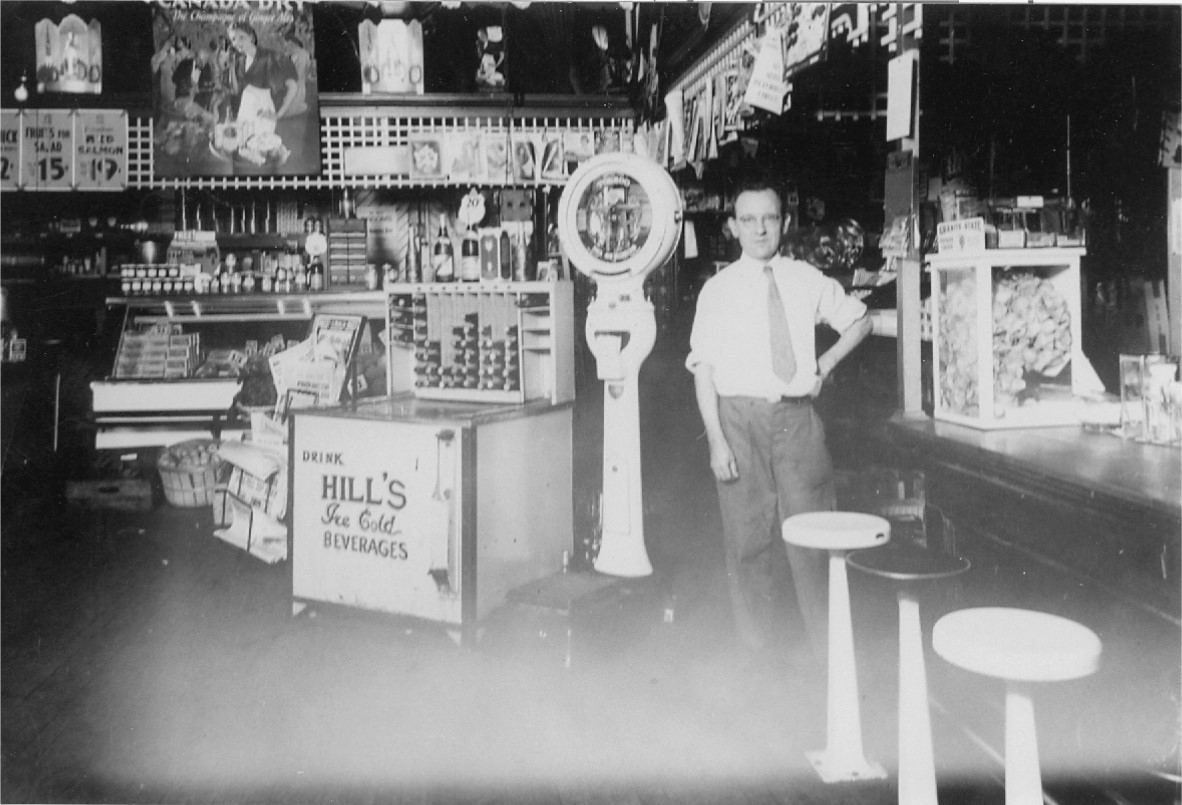
Bob Mason Sr. is shown in front of his store at Canobie Lake Station in the early 1930’s. The many signs advertise groceries, campers’ supplies, and Mason’s Ice Cream. A directional sign in the background advertises Hadley’s Beach, Armstrong’s beach, the Lake-view Golf Course, and the Windham Auto Inn. As seen below, the store features a lunch counter offering sandwiches, pies, and ice-cream treats. Granite State potato chips were dispensed from the glass container on the counter, and Hill’s ice-cold beverages are displayed in a vending machine. Mason’s was a convenient stop for camper’s heading to Cobbett’s or Canobie Lake.  Later Bob Mason Jr. modernized the property into a successful local supermarket for Windham and Salem residents.

masons-inside

Canobie Lake Station opened on November 9, 1885, with Albert Alexander as the station agent. He then started construction on a store nearby. The Canobie Lake Post Offcie was established hear on February 26, 1886, with Alexander as the postmaster. In this view, a later owner, Frank Nichols, stands in the doorway of his store while two ladies sit on the front porch. He operated a dry goods, grocery, and general country store.

Alexander's Store and Canobie Lake post office.

Alexander’s Store and Canobie Lake post office.

Windham Life and Times – December 16, 2016

Moeckel’s Park

moeckels-park

I found this advertising card for “Moeckel’s Park” at the estate sale at the Linton property.  According to the Moeckel Pond Village District web-site, the pond and dam were purchased by William and Gertrude Moeckel in 1921.  They rented boats and cottages along the shore of the pond and according to the card had a tea room and meals for the day trippers who came to enjoy this tranquil spot. The pond is now owned by the Windham Conservation Commission. Fund-raising continues by the Friends of Moeckel Pond to rebuild the dam so water levels can be restored in the pond.  More information can be found at moeckelpond.com


Windham Life and Times – December 9, 2016

100 Years Ago in Windham

Clarence and Ernest Harrington delivering witch hazel to the Gould Witch Hazel Distillery on the turnpike in Windham.

Clarence and Ernest Harrington delivering witch hazel to the Gould Witch Hazel Distillery on the turnpike in Windham.

W.S. HARRIS | THE EXETER NEWSLETTER: WITCH HAZEL

“WINDHAM, December 5.— The death of Charles M. Webber removes an industrious and respected citizen who came to town when a young man from Chelmsford, Mass.  His age was 50 years. He leaves an aged mother, a widow, two sons and one daughter.”

“Miss A. Leola Low, a native of Windham and daughter of Fred S. Low, died November 23 at the home of an aunt in Derry, at the age of 23 years. She had been afflicted with tuberculosis and had spent some years in the Pembroke and Glencliffe sanatoriums. The funeral was held in the Baptist Church, Derry, with burial in that town. She was highly esteemed by many friends.”

“A number of witch-hazel bushes bearing fresh blossoms were noticed Decembergould-4 1.” The distilling of witch-hazel was once a large business in New England. Both Gould and Merrimack witch hazel companies operated mills on Rockingham Road (the turnpike) and on Golden Brook Road. Carefully selected green twigs were boiled in large vats and the mixed with alcohol. This time of year, you can still see witch hazel blossoming in Windham. One of the easiest places to spot it is on the walking trail at Griffin Park. There are several bushes blossoming in the wooded buffer between the park and Johnson’s farm.

Witch Hazel blossoming in Griffin Park, December 6, 2016.

Witch Hazel blossoming in Griffin Park, December 6, 2016.

“On the second day of deer season, a 170 pound buck was accommodating enough to come out into the field near J.W.M. Woorledge’s home and allow itself to be converted into venison, to lessen the high cost of living.”


Windham life and Times – December 2, 2016

100 Years Ago in Windham

Top Left: “Goldings” or Golden Brook as it passes under Cobbett’s Pond Road (1910). Top Right: “Deer Ledge.”

Top Left: “Goldings” or Golden Brook as it passes under Cobbett’s Pond Road (Photograph taken about 1910). Top Right: “Deer Ledge” now know as Deer Leap.

W.S. HARRIS | THE EXETER NEWSLETTER

“WINDHAM, October 2.— Mrs. N.W. Garland has a dahlia plant with flowers of a lavender color, but one branch bears blossoms that are pure white.”

“J.E. Cochran and son Olin are building a large new hen-house and intend to enlarge their poultry business in the spring.”

“James E. Armstrong, formerly of this town, died recently in Lempster, and the body was brought here for burial.”

“Isaac A, Cochran, of Melrose, Mass., a member of the prominent Windham family, died lately at the age of 73 years.”

“Mrs. Flora O. Armstrong, the widow of George W. Armstrong, the donor of our library building, died recently at the Hotel Somerset, Boston. She inherited from her husband an estate of a half million dollars or more, which goes to her son and daughter.”

“Rev. Abraham Dunton, much to the regret of many, will terminate his pastorate here very soon and will remove to the scene of former labors in Illinois. His sermons during the two and one half years of his service here have been uniformly excellent; the social qualities of both Mr. and Mrs. Dunton are exceptional. We fear it will be a long time before their places here are filled.”

goldings-2

“The brook that flows out of Cobbett’s Pond and pursuing a southerly course joins Beaver Brook near Pelham Center, is called Golden Brook. The name originally was Golding’s, derived from a Peter Golding, of Boston, who as we are informed by Edwin M. Currier, of Dracut, Mass., purchased in 1682 a tract of  200 acres originally laid out to Jonathan Negus, ‘clerk of the writs.’ This land lay on the brook about a mile northeast of Pelham Center, near where it empties into Beaver Brook. The site of an old dam is still pointed out, where was located ‘Golding’s Mill.’ This man or some of his family undoubtedly owned land in Windham on the brook, as the early town records of Windham mention ‘Goldings meadow’ in 1762, ‘Goldings Road,’ 1742, or ‘Goldings Highway,’ 1749, as well as ‘Goldings Brook,’ in 1742. A small natural pond in the south part of this town and connected with the brook has been marked as Golden Pond on the maps for one hundred years. It is usually spoken of by people in its vicinity as Rock Pond, and Mr. Currier says this was its ancient name by which it was frequently referred to in the Dracut town records and the registry of deeds of Middlesex County. The name was sometimes Ledge of Rocks Pond, evidently derived from the remarkable cliff in its vicinity, known as Deer Ledge.” W.S.H.


Windham Life and Times – November 25, 2016

Frederick Bessell

Bessell joined the adventure in California searching for gold and stayed over 10 years.

Bessell joined the adventure in California searching for gold and stayed over 10 years.

PART 8: FREDERICK BESSELL’S LATER LIFE– AS A SETTLER ON THE FRONTIER, 1849 GOLD MINER AND A CIVIL WAR VETERAN.

So we know that Frederick Bessel was in Salem during the time of the White murder in 1830. What happened to him after that? Well it’s a really interesting story. The story of his later life can be found in “The History of Schuyler County,” in Illinois. It appears that like many Americans, he went West so he could reinvent himself, far from Salem. And it also appears that his love for adventure continued on in his later life.

We learn about Frederick Bessell’s later life in the biography of his son, Charles C. Bessell. “There are few of the interests associated with the material development of Schuyler County that have lacked the co-operation and practical assistance of Mr. (Charles) Bessell…He was born May 11, 1835, the eldest of  of a large family of children born to his parents. Frederick Lewis Alexander and Jane A. (Robinson) Bessell. The mother was a native of  the East, born in Putnam County, N.Y. in 1814, and at the age of twenty (June 15, 1834), she united in marriage with Frederick L.A. Bessell (who was 35) in the village of Rushville, Ill. The parents of this Mr. Bessell (father of the subject of this sketch) lived on the island of Sumatra; but a war breaking out, they sailed to Boston, Mass.. Mr. Bessell being born on the voyage, and in Boston and vicinity made his home until attaining manhood.” (This is totally contradicted by the accounts of the Whites in Salem, which say he arrived as a young boy, with trust funds and was brought up in the loving home of the Whites.) “While he was a mere child in years, he was deprived of the love and protection of both parents, a loss which was later accentuated in the death of his only brother. (He had two brothers.) “Cast upon his own resources at an early age, he proved himself equal to the occasion by accepting any honorable employment that came to hand, which consisted principally of farm work in the vicinity of Boston.”

“With such means as he had been able to save from his earnings, Frederick L.A. Bessell started for the Middle West in 1833, coming direct to Schuyler County, Ill., and after his marriage during the following 34, Brooklyn, Township, which he at once began to improve and in the home which he established in the wilderness all of his children were born. In 1848, he purchased property in Brooklyn, whither he removed with his family the following year. Coincident with this removal came the news of the finding of gold in California, and among those who left Brooklyn for the far West was Mr. Bessell, who made his way overland with ox teams. It was not until about 1860 that he returned to his Illinois home, but fate did not permit him to remain there long, for the drums of war soon sounded and all able-bodied men were called to the defense of the country. Mr. Bessell attempted to enlist from his home town but as the quota was then filled he went to Macon City, Mo., and enlisted in the Seventh Missouri Infantry. His service was brief, however, for he was soon taken with measles from the effects of which he died December 24, 1861.” His wife lived until 1900.

Frederick Bessel had six sons with his wife Jane between 1835 and 1848.

So there you have an end to the mystery of Frederick Bessell and his life before and after he set up camp in Windham. He came to America from Sumatra and was on one of the first American ships to open trade with Viet Nam. Then he went on to hold camp with Major Dudley in Windham, NH., and as a result of excessive spending on credit, was forced to declare bankruptcy. He arose from the ashes and moved to Illinois, where he married and had six sons. Then ever the adventurer, when he heard about the California gold rush, he left his family behind in search of fame and fortune.  After spending 12 years in California, he returned to Illinois, and at 57+/- years of age, volunteers to enlist in the Union Army during the Civil War. Quite a story, quite a life!

Name: Frederick Bessell
Death Date: 23 Dec 1861
Death Place: Regimental Hospital
Enlistment State: Missouri
Rank: Bugler
Company: Hacknago
Regiment: Blackhawk Cae


Windham life and Times – November 18, 2016

Frederick Bessel

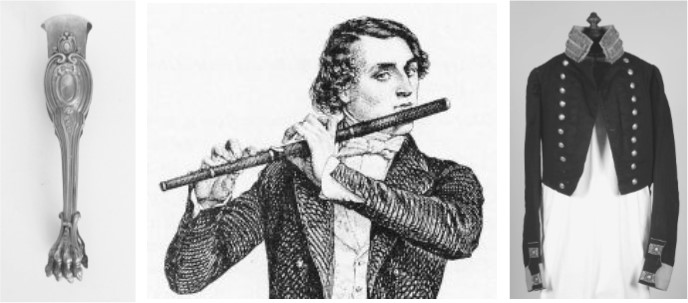
Among the items purchased by Frederick Bessell while at camp in Windham, were gold sugar tongs, military uniforms, flutes, guns, knives a decorated sleigh and plenty of alcohol.

Among the items purchased by Frederick Bessell while at camp in Windham, NH., were gold sugar tongs, military uniforms, flutes, guns, knives, a decorated sleigh and plenty of alcohol.

PART 7: BANKRUPT – THE CONSEQUENCES OF FREDERICK BESSELL’S WILD TIME IN WINDHAM

In a manila file box, held in the collections of the Phillips Library, of the Peabody Essex Museum, are contained all of the claims to Frederick Bessell’s fortune, which were part of his bankruptcy proceedings. In the Prince Family papers, 1732-1839, in Box 1, Folder 11, is referenced “Frederick Bessell bankruptcy.” 1823-1825. Many of the petitions for payment are made by local people, with recognizable names, from the Windham area. There are thousands of dollars in claims! What is truly amazing is the astounding amount of credit, that the good people of Windham and surrounding towns provided to Frederick Bessell.

The claims provide an interesting glimpse into Frederick Bessell’s time in Windham, by detailing the items he purchased, and the various services provided to him while at his camp.

Commonwealth of Mass. August 24th, 1824. Mr. Frederick L.A. Bessell to Abram Pratt Jr. For a short knife: $13.00. November 30th to a silver mounted knife: $60.00. November 30th to a large smooth bored gun: $25.00…

Among the claims are found receipts for copious amounts of alcohol, including, wine, rum, port and brandy.

Then there are the receipts for uniforms, verifying Morrison’s account that Major Dudley used the camp for military training. Among the items in a claim from Amherst, Jan. 10, 1825. Mr. F.L.A. Bessell to Thom. M. Benden. To making a blue uniform coat: $10.00; 5 1/2 yards of gold lace: $9.63; gold chains: $3.50; 6 1/2 …black silk: $8.00; 1 pair of black silk wings: $9.00. 3 yds. Blue cloth: $27.00. 6 gilt buttons: $6.84; The cost of Major Dudley’s coat is as follows: Material Total: $107.85. Labor: $40.00; Gold Wings: $11.00; One brown..$4.00 for a total for $162.85. Must have been a damn fine coat!

Then there were other bills. One has to wonder, if knowing that Bessell was a wealthy man, that they didn’t gouge a little bit with their claims. 1824: Mr. F.L.A. Bessell to William Manning: July 19: Most of Mr. Manning’s bills are mostly for labor and carting material back and forth from Massachusetts to Windham. To horses, wagon and expenses to Windham: $15.00; 2 small wagons, horses and expenses to Ditto: $16.00; …to Windham 6,8 Mr. Manning’s time and expenses: 10.00; Sending man to Windham for you, horse expenses: $3.00; … Merrill’s bill for painting Gig omitted 1823—$14.00; J Sadlers Bill varnishing and ornamenting sleigh: $5.00; 2 pair of lamps 10.00 12.00 –  $22.00… Total Bill for $264.87

Then there is this: F.L.A. Bessell to Robert Barnet. August 1824. Among the miscellaneous charges are: To washing $3.50; To washing: $8.17; to Altering pantaloons: .70; to ribbon: $4.17; Sewing silk ribbon: $1.98; Making window curtains @ 4/6 $5.25; …to Making night gown: $1.75; To Making bed pillows: $2.00…etc, for a total of $37.75.

Attorney J. Thom represented most of the local claimants. In 1824, Isaac A. Smith made a claim for 9 spoons, plate: $2.25; A pair of gold sugar tongs: $25.00; 1 Patent Flute & Flageolet: $10.00 plus other items for a total of $37.75. Bessell played the flute.

The most reasonable claim was from N.W. Pillsbury who worked many days for Bessell and charged just $1.75 per day for his labor with a yolk of oxen.

One of the largest claims was from Thomas and John Nesmith who were demanding repayment and damages of  $300 “for delivery of goods, wares and merchandise.” They operated the store at the Center. Frederick Bessell’s wild time in Windham led to bankruptcy and he became  a man without a fortune but as we will learn later, nothing could extinguish his longing for adventure.

The savage murder of Captain Joseph White, while he slept in his bed, in Salem, Massachusetts, was the crime of the 19th century. It happened in April of 1830. You’ll remember that Frederick Bessell was Captain White’s clerk on the voyage to the Orient. The crime would become the inspiration for various writings of Edgar Allen Poe and Nathaniel Hawthorne. There were thirteen stab wounds and a massive blow to the head, involved in his death. “The possibility that more than one assailant might have been involved and that a conspiracy might be afoot fueled unease. Salem residents armed themselves with knives, cutlasses, pistols and watchdogs, and the sound of new locks and bolts being hammered in place was everywhere. Longtime friends grew wary of each other. According to one account, Stephen White’s brother-in-law, discovering that Stephen had inherited the bulk of the captain’s estate, ‘seized White by the collar, shook him violently in the presence of family’ and accused him of being the murderer.” Since nothing was stolen the murderers motive was unclear. Later it was discovered that the murder was a conspiracy between J.F. Knapp. J.J. Knapp and George Crowninshield. The plot was to murder Captain White, then steal his will, so that when he died without a will, the bulk of his estate would go to the Knapp relatives. Little did the conspirators know, that the most recent will, leaving all to Stephen White, was held securely in his lawyer’s office. At the gathering of the White heirs, just after the murder, we hear the last report of Frederick Bessell. “Stephen White and his four children—son Joseph, the Harvard student, and three daughters, Harriet, Caroline, and Ellen—sat with Eliza Story White and her three daughters, Charlotte, fifteen, Mary, eighteen, and the very pregnant Mrs. Elizabeth Gray, twenty. Stephen’s brother John White was there, and Frederick Bessell…”


Windham Life and Times – November 11, 2016

Frederick Bessell

The Bessell Brothers Return Home

The Bessell Brothers Return Home

PART 6: FREDERICK BESSELL’S BROTHERS DIE TRAGICALLY NEAR THEIR BIRTHPLACE

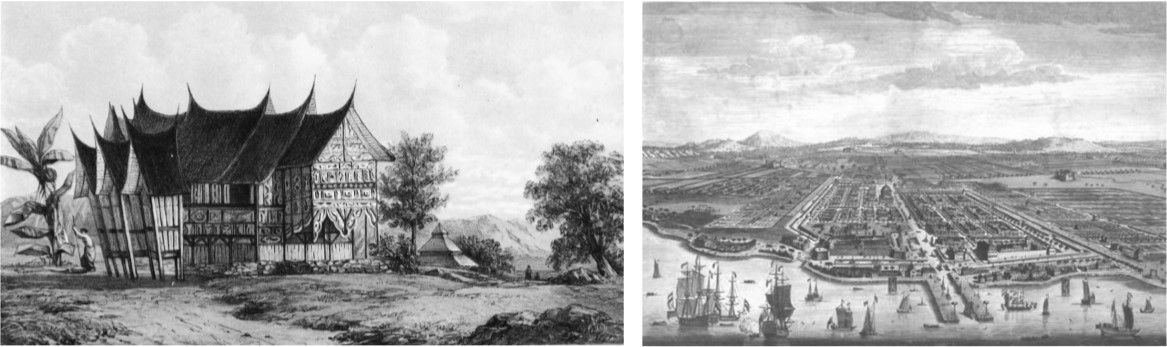
Just to recap what we’ve discovered about Frederick Bessell, A.K.A “F.L. Bissell,” the wild and rowdy occupant of “Bissell’s Camp,” who arrived along with Major Dudley, in Windham on a May day during 1823. While we’ve learned a lot about the Bessell brothers of Salem, Massachusetts, we know little about Major Dudley, other than the fact, that the Dudley’s were a very prominent family in Massachusetts and produced one of its earliest governors.  So the question remains, why did young Frederick Bessell, who was about twenty in 1823, end up pitching camp in Windham.  It is most certain, that the tragic deaths of his brothers played a part in his seeking an escape. This is what we know about Frederick Bessell’s brothers and how they died far from Salem but close to home.

“Far out at sea, on board the Salem brig, Mary & Eliza, the Bessell brothers were thriving. They had cleared Marseilles in April 1821, having gone first to Genoa and then back across the Atlantic to Rio de Janeiro, the capital of Brazil and home of Portugal’s King Joao VI… The Salem men noted with interest that Rio had begun direct trade with India and China, only a seven month round trip.”

“The Mary & Eliza sailed once again for the Mediterranean. As supercargo, Mathias Bessel turned over their cargo at Marseilles, perhaps taking on cases of opium as well as a treasure chest of specie. By 1820, American opium exports from Smyrna to the Orient has outstripped those of the British at Bengal. Batavia was the mart for the trade of Java; in Sumatra, especially along the Pepper Coast, each outpost now expected American vessels to bring Turkey opium as well as specie. Specie made the rajahs rich, and opium helped them consolidate power, for the rajahs and their favored lieutenants were the only suppliers for the growing population of addicts.”

“Well into the Indian Ocean by the end of May 1821, near the lonely volcanic island of Saint Paul, the Mary and Eliza ran into a violent gale from the north…The storm grew monstrous, with deafening winds and raging seas…In early June, Captain Beckford finally brought the battered Mary & Eliza up the channel to Padang. Beckford and the Besells conferred. The vessel needed more repairs than they could get there, but they had come all the way around the world to see their old home, and they had a keen desire to set foot on land, any land, after their terrifying experiences…The Mary & Eliza’s men stayed just long enough to get water and supplies and to make emergency repairs. It was a fatal mistake, for cholera morbus was rampant ashore, and Charles Bessell fell ill and died within days. He had gone home to be buried.”

“The crippled Mary & Eliza moved on eastward, toward the Strait of Sunda. Captain Beckford sailed on to Batavia, where Governor Franz Bessell had worked for the old Dutch East India Company. Here too they found great sickness, as was so often the case; but they had to stay. They came to anchor, and the surveyors inspected her. After hundreds of thousands of miles, eighteen years since her launch at the Magoun shipyard—at a point about as far away from Salem as one could get on the planet—The Mary & Eliza was finished.”

“During the same Thanksgiving season, the White family learned about the Mary & Eliza. Stephen White was especially anxious—losing Charles was a bitter blow, and he could not rest until Mathias was home. He opened Captain Beckford’s letter, and it was not good news. The Mary & Eliza had been condemned at Batavia. As passenger on another vessel, Captain Beckford and the crew were on their way, but not the supercargo; Mathias Bessell had died on July 17, aged twenty-three, a month after his brother. The sudden loss of Charles had been a fatal blow, leaving Mathias deeply depressed and unable to fight the effects of the Batavia epidemic.”

“It seemed impossible that the two brothers had been lost on their voyage of adventure and homecoming. Stephen White and Captain Joseph White experienced terrible grief in the deaths of these young men and in the brutal finish to the story of Joseph White Jr. and the two little boys whom he had promised to raise into gentleman.”

“Stephen composed and elegy for the Register, recounting the arrival of the boys and how, in ‘a family of strangers they were cherished with all the interest and care which the nearest ties could have claimed or created.’ Mathias himself—suave, generous, friendly, talented—was ‘truly, a virtuous man. He valued virtue for it intrinsic excellence, scanning and regulating his actions by its most rigid precepts. Integrity and honor were stamped upon all his transactions with mankind—it was not, however, that appearance of honesty, which circumstances and occasions and interest exact of us for effect, but an habitual and indelible principle upon the mind.’ ”

The tragic death of his only blood relatives, his brothers Charles and Mathias, must have had a devastating impact upon the young Frederick Bessell. It was after this personal blow, that we find him establishing his camp in Windham.


Windham Life and Times – November 4, 2016

Frederick Bessell

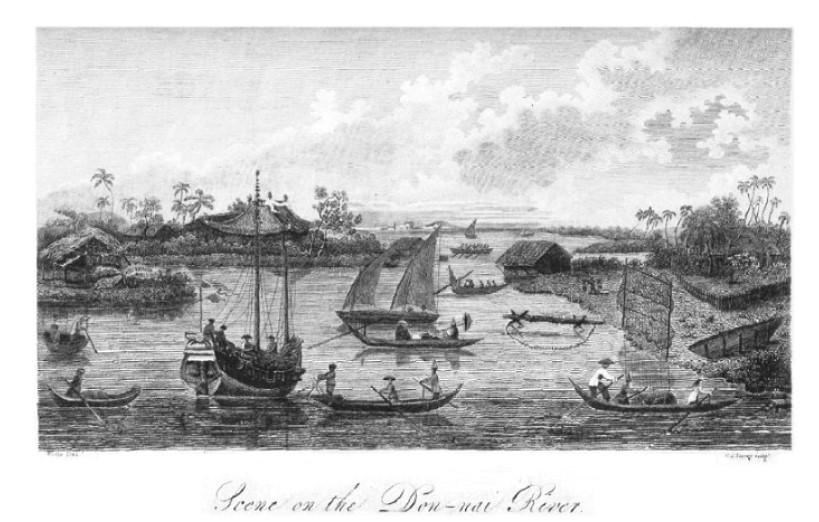
A View of the Don-nai River near Saigon from the book History of a Voyage to the China Sea

A View of the Don-nai River near Saigon from the book History of a Voyage to the China Sea

CAPTIAN JOHN WHITE AND HIS CLERK FREDERICK BESSELL IN VIETNAM

John White published the History of a Voyage to the China Sea in 1823. It is a fascinating account of the merchant ship Franklin exploring the “Orient,” in the early nineteenth century. It seems a decision was made by Captain White and his backers in Salem, to make this voyage in order to establish contacts and to open trade in Cochin China.  After setting sail from Salem to Batavia, the Franklin sailed for Saigon. And on this journey of discovery we also find our intrepid Frederick Bessell acting as Captain White’s clerk.

On May 24, 1819, having entered the Straits of Banca, they were attacked by a large contingent of Malay pirates in their well armed proa canoes including 12 pound cannons. These pirates were notorious for the cruelty toward European, and were known to slowly torture them to death. Having successfully repelled the pirate attack, Captain White entered Mintow, a Dutch settlement where he was told that the pirates were well known as being violent and jacked up on copious amounts of opium. Mintow, which must have been very much like Padang, where Francis Bessell was born, describes the population as being Chinese, Malay and “half-casts,” being the children of Malay, Chinese and the Dutch inhabits. The Franklin then sailed on to the Don-nai River, arriving on June 7th and entered a small bay at Vung-tau, where they awaited permission and a guide to take them up-river to Saigon.

The Captain and crew, upon meeting the local chief by the name of Heo, found him insatiable in demanding that they bestow on him gifts from the ship. In Canjeo “I prepared to accompany them to the village, taking with me Mr. Bessell, a young gentleman who acted in the capacity of clerk…” After spending many days trying to get permission proceed to Saigon, and after many meetings that ended in subterfuge on the part of the locals, a frustrated Captain White and crew departed to explore the coast of “Cochin China.” At Cape Turon, they learned that the king, had left Hue and was doing battle to recover land lost in a recent civil war. They also learned that two French trading vessels were to arrive soon, and the only items valued by the king were side arms which he could use in battle.

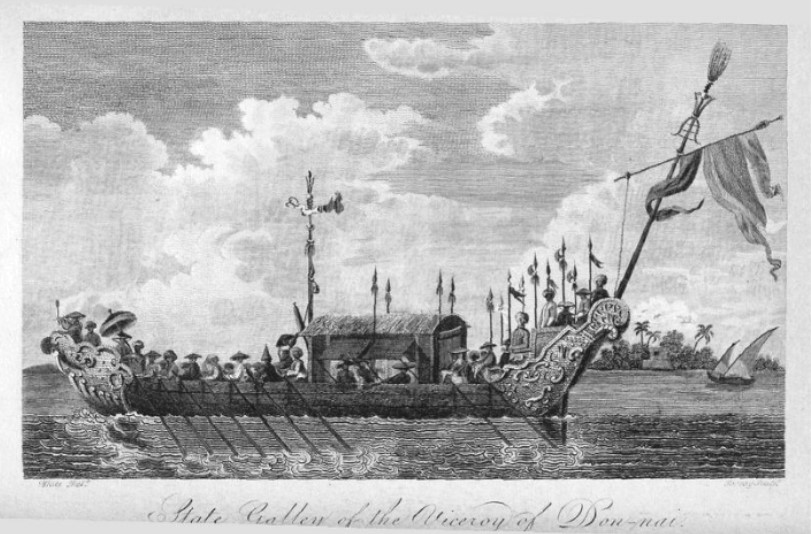
The State Galley of the Viceroy of Don-nai from Captain White's Account of Cochin China

The State Galley of the Viceroy of Don-nai from Captain White’s Account of Cochin China

“At dawn on September 7, (1819) the Franklin of Salem, became the first American vessel to reach Saigon. The crew dropped anchor a mile below the city and admired a wide river filled with ‘boats of light and airy construction, each, in many cases, managed by a single woman, in picturesque costume,’ while ‘great number of native vessels, of different sizes, plying in various directions upon the stream, gave a busy and lively interest to the scene.’ That first night, White and Bessell stayed in a typical riverbank house, standing on pilings two feet above the mud, sided with boards and roofed with enormous palm leaves. Inside were teenage girls, big jars of fish-pickle, pigs, ducks and fowls, a ‘blear-eyed old woman, furrowed and smoke-dried ,’ and asleep in a hammock, a miserable child, covered in filth and vermin, and emancipated with disease.’ The morning tide brought the Marmion, a Boston ship that White had encountered at Manila. Captain Brown and his supercargo, Mr. Putnam, came ashore, and they and White and Bessel were ‘surrounded by a bevy of woman, soliciting employments as merchandise brokers and offering assistance in purchasing cargos.’ He did not realize that they were eunuchs, designated as their culture’s trader caste. The Yankees demurred and went on to Saigon, where their appearance caused a sensation. At the ‘great bazaar or market-place,’ an ‘immense concourse of the wondering natives,’ manhandled these improbable don-ong-olan, strangers from the West, with their unreal faces like pale masks.”

“The Franklin and Marmion swung at their anchors for almost four months as their masters endured insults, indifference, and occasional rock peltings as they laid siege to the traders of Saigon. Through it all, the Yankees kept smiling, trying gamely to break through. Finally, the two captains understood. Women were forbidden to make bulk deals; and Western armament was wanted not goods. Giving up their dream of starting a new commerce, the two captains paid Spanish gold for half cargoes of sugar, promised to return with guns, and sailed away in their tall ships. Each had been given a parting gift of a young royal tiger and pen full of squirming puppies.”

“At Batvia, Brown sold White his sugar and the Franklin sailed for home on April 29 (1820).” The trip home was a disaster. When the tiger ran out of food because of bad weather White was forced to shoot her. Several men died of fever and sickness, and another died after falling from the topsail. Then a most violent hurricane struck, forcing the men to cut away the spars to prevent the ship capsizing. “Diseased and death haunted after two years at sea, Franklin staggered into Salem with an unprofitable cargo and three stumps where the masts had been.”  So ended Frederick Bessell’s harrowing, two year journey, to the Asia.

Sources:

John White,  History of a Voyage to the China Sea in 1823. Free e-book: https://archive.org/details/historyavoyaget00whitgoog

Death of an Empire, Robert Booth