Windham Life and Times – May 22, 2015

Indian Meadows

An Indian Settlement

An Indian Settlement

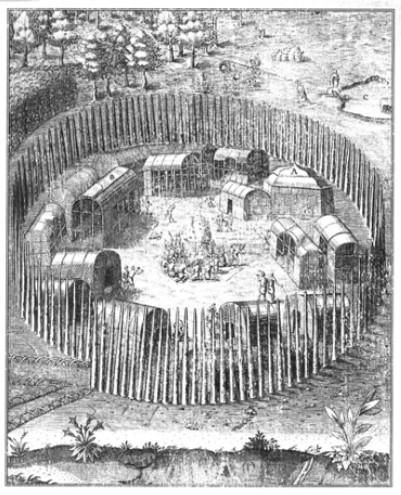
At right, is a late 17th century representation of an East Coast Algonquian village. A description of the semi-abandoned Pigwacket village made in 1703 by an English scouting party led by Major Winthrop Hilton states: “When we came to the fort, we found about an acre of ground, taken in with timber [palisaded], set in the ground in a circular form with ports [gates], and about one hundred wigwams therein; but had been deserted about six weekes, as we judged by the opening of their barnes [storage pits] where their corn was lodged.”  The bark-covered wigwams or longhouses in this view are typical of Abenaki dwellings used in this region.  By tradition, “Pigwacket” is said to mean “at the cleared place.”

One of the interesting items found in Joseph Howe’s Historical Sketch of the Town of Methuen, was the references to “Indian meadows.” In 1642, a large area along the Merrimack River, into southern New Hampshire, was purchased from the Native Americans. In the deed is states that, “We, Passaquo and Saggahew, with ye consent of Passaconnaway: have sold unto ye inhabitants of Pentuckett all ye lands we have in Pentuckett…in consideration of ye same three pounds & ten shillings.” Before the Europeans came, this area was heavily populated by Native Americans.
From the Bethel, Maine historical society we learn that, “…the Abenaki, an eastern Algonquian sub-group, maintained their historic homeland over an area stretching from the Iroquoian tribal lands in southern Québec to the northern Massachusetts border and from the Passamaquoddy territory in eastern Maine to the shore of Lake Champlain in western Vermont.  Translated as “people of the Dawnland” or “eastern people,” the Abenaki were composed of numerous bands of Native Americans historically identified by the names of the river valleys, or principal villages, in which they lived at the time of European contact.”

“Data is lacking for a reliable estimate of Abenaki populations before 1600, but it is reasonable to state that in that year several thousand individuals inhabited the White Mountain region of Maine and New Hampshire, with a total population in New England as a whole of well over 100,000 native people.  Interrelated through marriage, and sharing a common dialect, the Abenaki participated in an annual cycle of migration that took them southward to seashore camps for the summer, northward to deep woods hunting camps in the winter, and back to their riverside villages for late fall feasting and spring fishing and planting.”

“By the middle of the 17th century, the traditional Indian way of life in this region was undergoing drastic change.  An attitude of friendly curiosity turned to distrust and hostility as the native population watched their numbers rapidly dwindle due to virulent epidemics introduced by Europeans.  Indian intertribal relationships disintegrated due to the burgeoning fur trade and the introduction of firearms.  The demand for furs, especially, strained the native economy by using up time previously spent in search of large game for food and skins; the fur trade also made natives much more aware of the importance of territorial boundaries, a concept foreign to the Abenaki before European notions of private land use and ownership were imposed on the region.  The intermingling of cultures was further strained by the effects of the liquor trade, a significant component in English and French efforts to maintain Abenaki allegiances as the century wore on.”

Now, with that brief synopsis of Native American history in New England, we return to Indian meadows. It seems that in the early settlement of Haverhill, the most desirable tracts, was land that had been cleared by the Indians. Howe states, “….It is said that the uplands at the time were mostly covered by a heavy growth of timber, except and occasional spot burned over by fires set by the Indians. The meadows were, many of them, cleared and covered with a tall and dense growth of grass. The Indians were accustomed to burn the grass in the fall, that they might more easily capture the deer resorting to them to feed on the young grass in the spring. These meadows appear to have been much sought after by the early settlers, who obtained from them he principle subsistence for their cattle. They cut and stacked the hay in summer and in the winter drew it home on sleds. An early writer says of Haverhill: ‘keeping of cattle…encourages them to spend their days in those remote parts… being an overwhelming desire in most men after meadow land.’ ”

Native Americans were not the “live in harmony with the land” types we’ve been lead to believe. “The most significant type of environmental change brought about by Pre-Columbian human activity was the modification of vegetation. … Vegetation was primarily altered by the clearing of forest and by intentional burning. Natural fires certainly occurred but varied in frequency and strength in different habitats. Anthropogenic fires, for which there is ample documentation, tended to be more frequent but weaker, with a different seasonality than natural fires, and thus had a different type of influence on vegetation. The result of clearing and burning was, in many regions, the conversion of forest to grassland, savanna, scrub, open woodland, and forest with grassy openings.”(William M. Denevan) In Windham, the “Range” between Cobbett’s Pond and Canobie Lake was once a large, Indian settlement, which was abandoned. This may have been one of the “remote parts” of Haverhill that attracted first English and then Scotch-Irish settlers.
Windham Life and Times – May 15, 2015

Bridges Across Beaver Brook in Windham

scan0631

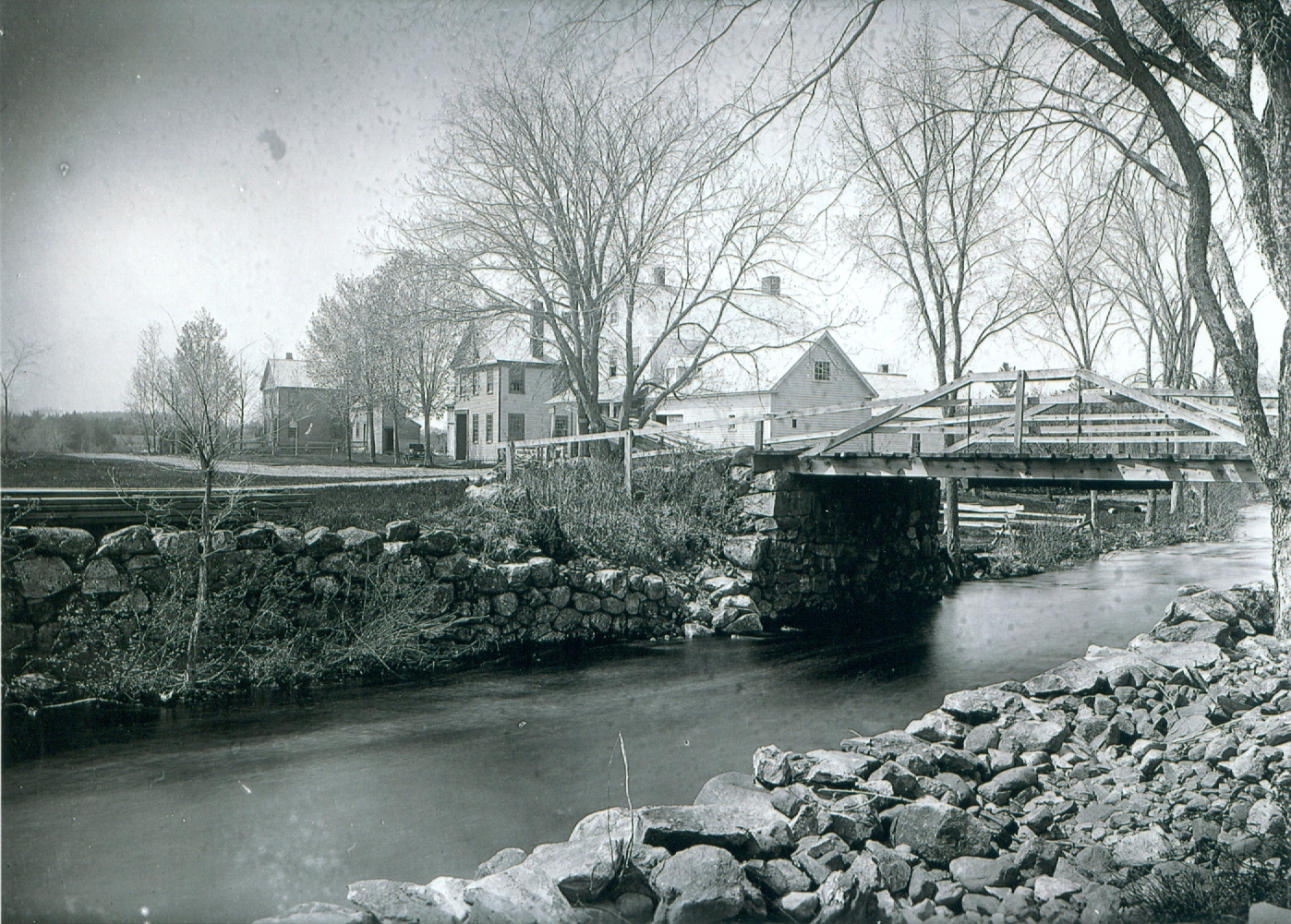
Early Bridge across Beaver brook. Image Courtesy of Society for the Preservation of New England Antiquities

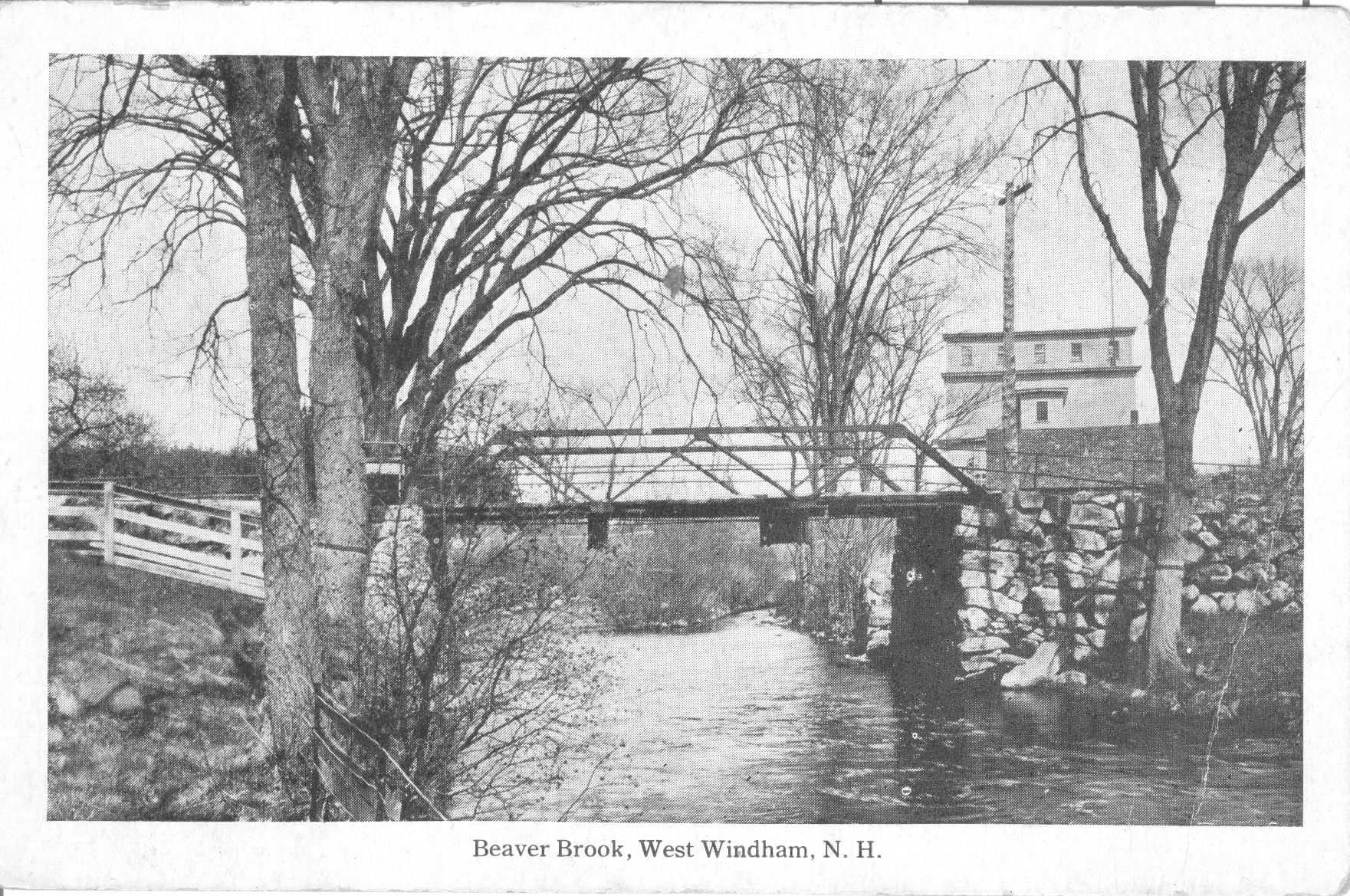
There are three major crossing points in Windham across Beaver Brook. The Mammoth Road bridge crossing is shown in the two photographs above. The brook also happens to be the town line between Windham and Londonderry. Mammoth Road was a toll highway, built in 1831, that ran from Hooksett to Lowell. On the left the old wooden span has been replaced with a metal bridge. The second crossing, again on the border between Windham and Londonderry was at Kendall Mills. This bridge stood in front of the dam that created Kendall Pond. The two photographs at the bottom show this crossing. The third bridge is located on Bridle Bridge Road. This road, before it was bypassed, was once the main route to Nashua and again was at the border between Windham and Hudson.

New metal bridge at the same location on Mammoth Road

New metal bridge at the same location on Mammoth Road

Windham Life and Times – April 30, 2015

Shadow Lake

“HITTY TITTY POND”

Shadow Lake sits on the border of Salem and Windham NH

Shadow Lake sits on the border of Salem and Windham NH

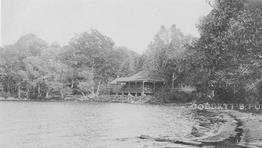
I just came across this postcard of Shadow Lake and it reminded me that this beautiful pond often gets forgotten, even though it is located in both Windham and Salem. In fact, this view is mostly of the Windham shore. According to Gilbert’s History of Salem, “The name given is in accordance with the spelling employed for more than one hundred years, having derived from the name by which the Indians designated this really charming lake. It has lately been corrupted into ‘Hitatit’ and ‘Hit-Tit,’ without any reasonable justification so far as we can ascertain. More recently the name Shadow Lake has been applied to it, but the old name still holds sway…. (1907)

“It lies in a wooded hollow among high hills of the northwest part of town, at the angle with the Windham line. The highway follows the east shore for the entire length of the pond, affording one of the most beautiful drives in Salem (Old Route 111). Summer visitors have recently erected several cottages in the groves along the lakeside.”

“In years gone by, when the lake filled the entire valley and extended far beyond its present limits, the stream from the westward flowed through the lake near what then was its center; but as the waters receded, the higher part of the bed, toward the south, was the first to be left above the surface, this bringing the south end of the of the lake (or that shore nearer toward Canobie station), nearer and nearer to the entrance of the brook. It must be understood that this brook, then as now, flowed through the lake. Then a still farther recession of waters left the brook entirely outside the lake on the south, in the channel it had been wearing through so many years. Some of the oldest residents today, remember when this was the condition. But this barrier between brook and the lake was gradually worn away by the severe freshets of successive springs and they once more joined their waters. As is well known, the brook now just cuts the south end of the lake, then with augmentation there received, hurries eastward to join its sister streams.”

Shadow-2

This became the old Route 111 in Salem NH

I’m just curious of the proof that it was an Indian name. I’m wondering why the original name would devolve from “Satchwell’s Pond” in the Haverhill Proprietors book back to an Indian name? Salem was laid out and settled in the 1650’s by residents of Haverhill MA. Theophilus Satchwell was a surveyor and early settler. According to Gilbert, “We recognize the name of one of the most prominent men of Haverhill, Theophilus Satchwell…While on his journeys through the forests beyond the Spicket he came upon a fair sheet of water hidden among the hills, which up to this time had been unknown to settlers. It received the name Satchwell’s Pond; but shortly after the land was laid out, and men became familiar with that part of town, it was found that there was another name. The Indians called it Hitty Titty; at least this is the spelling given by the settlers. The name Satchwell’s does not appear again…” Let’s see, a hidden pond takes on the exact name of a popular English hide and seek game. I know, I know, it’s an Indian name. In Fact, Canobie Lake went from Haverhill Pond to Polis’ pond (later Policy) which is an Indian name.

HITTY-TITTY

Hitty-titty in-doors,
Hitty-titty out;
You touch Hitty-titty,
And Hitty-titty will bite you.

     “These lines are said by children when one of them has hid herself. They then run away, and the one who is bitten (caught) becomes Hitty-titty, and hides in her turn.”

     The name of the pond was officially changed in March of 1913. “That the name of Hit Tit or Hitty Titty pond in the towns of Salem and Windham is hereby changed to, and the same shall be hereafter known and called Shadow Lake.” Approved March 14, 1913. Of course, you can understand the desire for a name change. Can you imagining the rollicking conversation on the porch of the summer cottages, that were built on the lake, late on a Sunday afternoon, after a beer or two, about why the lake was named Hitty Titty.

Windham Life and Times – April 23, 2015

THE PARK OAKS

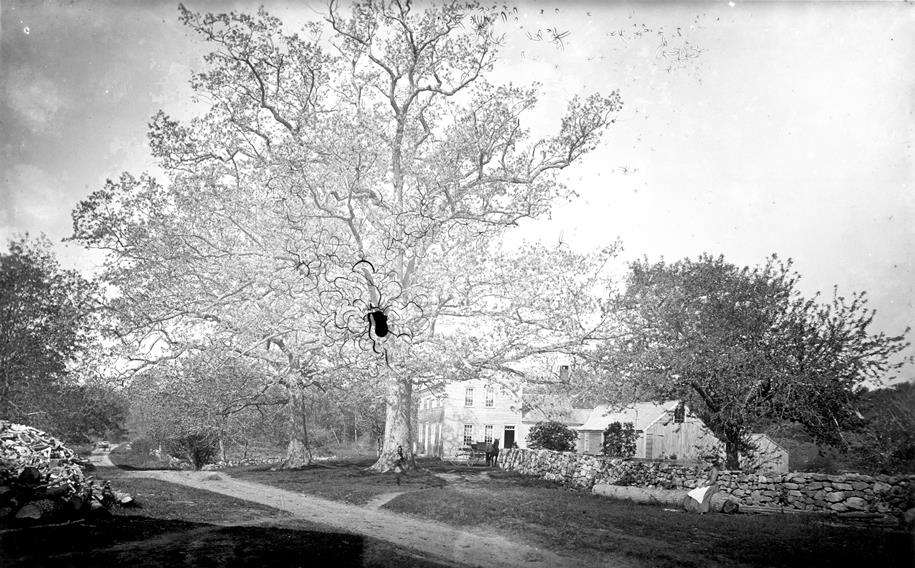
The Oaks at the Park Homestead, Windham NH. Baldwin Coolidge Photograph Courtesy of SPENA

The Oaks at the Park Homestead, Windham NH. Baldwin Coolidge Photograph Courtesy of SPNEA

100 YEARS AGO IN WINDHAM | W.S. HARRIS REPORTING

Windham April 23, 1915: “One of the two gigantic white oaks at the Park homestead on the Range died last year, and has been sawed down and reduced to firewood. Where cut it was a mere shell, over five feet across. About 1740, or 175 years ago, when Elder Robert Park cleared the farm and established a home where now his great grandchildren live, he left standing a row of three white oaks of the original forest. One of these long since disappeared, and now a single survivor stands, like Whittier’s ‘Wood Giant’ in ‘the loneliness of greatness,’ an object of veneration to every beholder and perhaps the only living object in all the township whose origin antedates the arrival of the pale-faced settler.”

g
‘What marvel that in simpler days
Of the worlds early childhood,
Men crowned with garlands, gifts and praise,
Such monarchs of the wildwood! ’

The last oak has long since disappeared. The home is still standing as of April 2015, next to Naults Honda.

Windham Life and Times – April 16, 2015

Club Miramar

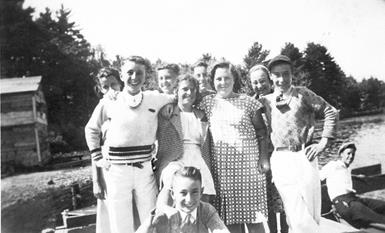
I.H.P. Cobbett's Pond, 1935

I.H.P. Cobbett’s Pond, 1935

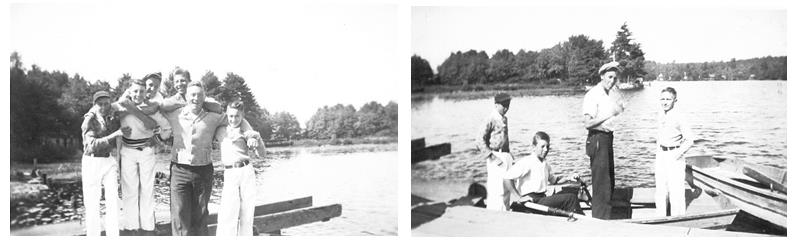
I recently acquired these old photographs which were taken on Cobbett’s Pond in 1935. Unfortunately, the people in the photographs have not been identified. The photographs were definitely taken at or near Bella Vista Beach. Bella Vista was a speak-easy for a time, but by the 1935 prohibition would have been over? Club “Mariana” is mentioned in “rural Oasis” and was a night-club/speakeasy owned by Rene Dubois. Could it have really been called Club Mirimar or Club Miramar? In 1935, the Bella Vista property was owned by Cecil and Ethel Banan. Do you know these people? E-mail and tell me what you know.

I.H.P. Cobbett’s 1935. Cobbett's Pond Club Mirimar 1935

I.H.P. Cobbett’s 1935. Cobbett’s Pond Club Mirimar 1935

Club Mirimar. Andrew 1935

Club Mirimar. Andrew 1935

Windham Life and Times – April 9, 2015

SIMPSON’S MILL

Simpson Mill 1

Simpson Mill as it looked in about 1898.

The photographs above and below were taken in 1898 and shows Simpson’s Mill. Joseph Simpson, “a fine carpenter and millwright being very ingenious” built a mill here in 1788-89 which was owned by shareholders. Thomas W. Simpson, who was no relation to Joseph, operated a grist-mill, saw-mill and lumber-mill here for much of the 19th century. He improved and added to the buildings. When the Simpsons operated the mill, the pond was known by the name of Simpson’s Pond.

As most of you know, the Deer Leap conservation land abuts this pond. According to Morrison, ”Deer Ledge lies north of J.W. Simpson’s pond, and is situated on the high, romantic, and precipitous sides of the hill of ledges. Its name is derived from the traditional fact, that an Indian drove a deer over the precipitous sides of this ledge into the water. The pond was called Deer-ledge Pond. I don’t know how the name morphed from Deer Ledge to DeerSimpson Mill3 Leap but it did at some point.

“The pond and island were sold to John Drinan in 1894. The right to cut and carry away all wood and timber on the island was reserved to the past owner, Thomas W. Simpson. When the pond and land were sold to the Moeckel family, the name of the pond changed once again to Moeckel Pond. There is an ongoing effort to rebuild the dam. Tax deductible donations marked for “Moeckel Pond” can be sent to Windham Endowment, PO Box 4315, Windham, NH or donate via WindhamEndowment.org. Check out all the Friends of Moeckel Pond information on Facebook at  https://www.facebook./friendsofmoeckelpond

The foundation of Simpson's Mill with Mill-Stones in  water.

The foundation of Simpson’s Mill with Mill-Stones in water.

Windham Life and Times – April 2, 2015

windham-cottage

In writing about the Worledge’s, Mitchell automobile, I was reminded about the fact that they were the owners of “Windham Cottage” located at Hampton Beach. So, I was curious to find more information about the property and its owners. I found the information I was looking for on the Hampton NH Historical Society web-site, in excerpts from the book, “Hampton: A Century of Town and Beach, 1888-1988” by Peter Evans Randall.
He writes the following, “Until 1893, Boar’s Head was center of Hampton Beach summer activity. In that year, the Boar’s Head House, owned and operated since 1866 by Colonel Stebbins H. Dumas, burned; after the fire, most of the Head remained empty until August 1904, when it was divided into lots that were sold at auction.”

“Despite the concern over the development of Boar’s Head, the auction was held on August 18 with 30 shorefront lots and 34 interior lots offered. Lot 61, about halfway up Cliff Avenue, was purchased by the Worledge family from Windham, New Hampshire. They had often visited the Beach, driving over in a horse and wagon. When the auction was held, they arrived to buy a lot. A nearby lot was purchased by Weinbecks, and the two families later acquired the long building that had been the hotel bowling alley. It was cut in half, a piece was moved to each lot, and the structures were rebuilt into cottages. The Worledge family cottage was named the Windham, and it was here that daughter Helen spent her early summers, playing with the children of Lewis Nudd, who owned the nearby Eagle House. Helen recalled playing near the New Boar’s Head Hotel windmill and the lovely hotel gardens. The hotel burned in 1907, the same year the standpipe was built on the Head, finally providing cottages with running water. Prior to this time, Lewis Nudd sold water to the cottages for $2 for the summer. Residents had to walk down to his well and carry the water back up for cooking and washing. Helen Worledge grew up to be Helen W. Hayden, Hampton’s first woman town clerk and selectman.”
“The Windham cottage was built beside a right-of-way down to the Lewis Nudd property. About 1908, Mrs. Nudd became too ill to cook meals for the Eagle House guests and Lewis Nudd feared he would lose his customers. Noticing that Mrs. Worledge often had many relatives staying at her cottage, Nudd asked her is she would agree to serve his guests three meals a day. Since she had been cooking for her own guests for free, Mrs. Worledge decided to try it for pay. Thus began a 35-year business for Mrs. Worledge, who later opened her own cottage to summer boarders, accommodating 24 people at a time. Some of these guests returned for 25 summers.

“In order to feed her guests, Mrs. Worledge relied on the various horse-drawn delivery wagons of the day. Helen Hayden recalls buying clams from Horace Bragg, who came twice a week, primarily in August, and purchasing meat from Jimmy Janvrin, who came three times weekly, making a separate evening trip if you needed a fresh-killed chicken. W. L. Redman delivered fresh fish and vegetables daily. Helen’s mother traded with H. G. Lane’s store in the Village. She recalls delivery man Warren Hobbs, a onetime Hampton selectman, as being “the most accommodating person I ever knew. He would come in, sit at your table and take the order. If you needed thread, shoestrings, medicine at the drug store, any notions, anything that came from another store, other than Lane’s, he would take your order, go downtown, buy the things for you, and bring them back in the afternoon.” She remembers as a child buying ice cream from an Exeter ice cream man. It came in a cardboard cup with a tin spoon for 5 cents.” The family moved back to Windham, and later to Derry Village, for the winter. They returned to Boar’s Head at Hampton Beach, each summer. Now you know the story of the boarding house named after the town of Windham. There was also a popular hotel on the beach named “The Pelham.”

Windham Life and Times – March 26, 2015

WINDHAM NH – 100 YEARS AGO

mitchell-1WINDHAM. FEBRUARY 12, 1915— “John W.M. Worledge has purchased a Mitchell automobile.” W.S. Harris, Exeter Newsletter. Well it was a regular car buying frenzy in Windham during the Winter of 1915, even without a President’s Day Sale. Mr. Worledge’s car was almost half the price of Mrs. Baker’s Cadillac. At that time, Mr. and Mrs. Worledge were operating Windham Cottage (More on that next week) on Great Boar’s Head at Hampton Beach. Having a car to travel back and forth from the coast, rather than taking a long, slow ride by horse and wagon, certainly would have been an advantage. John Worledge was Will Harris’ uncle and is pictured with his wife below.
Henry Mitchell was born in Scotland in 1810, and he moved to America in 1834. He and his wife Margaret settled in Fort Dearborn, which later became Chicago. Mitchell, a wheelwright, built the first wagon ever made in Chicago. Mitchell and his wife settled in Racine, Wis., in 1855. By 1877, the Mitchell & Lewis Co. was one of the largest and best-equipped wagon makers in the country.  The company had 7,200 employees and made more than 8,000 wagons a year. They were exported all over the world.
Henry Mitchell died in 1893. William Turnor Lewis, his son-in-law, took over the Mitchell company. His son, William Mitchell Lewis, or Uncle Bill as the family called him, started producing motorcycles. Six hundred Mitchell motorcycles were built in 1902. In 1903, the Mitchell Motor Car Co. built its first automobile. That was the same year as Henry Ford’s first car.  The company closed after building 86,966 cars and was liquidated in 1923. They even had their own sheet music tune:

Mr. and Mrs. Worledge

Mr. and Mrs. Worledge

Give me a spin in your Mitchell, Bill,
My goodness gracious I can’t keep still,
Buzz me along the boulevard,
Let her go Willie boy good and far,
Throw it wide open, I’ll hold on tight.
I don’t care a fudge if my hair’s a fright,
There’s nothing that gives me such keen delight,
As a spin in your Mitchell, Bill.”

Windham Life and Times – March 19, 2015

Mrs. Baker’s Cadillac

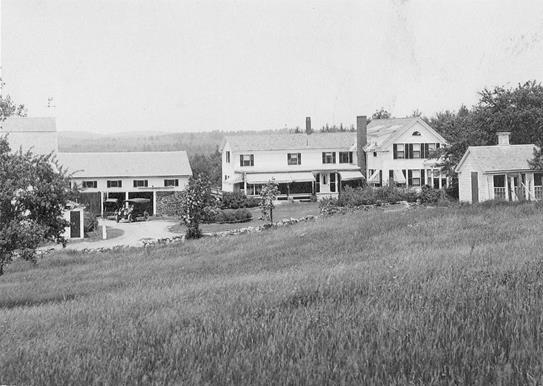
Julia Baker's House with Cadillac out front.

Julia Baker’s House with Cadillac out Front

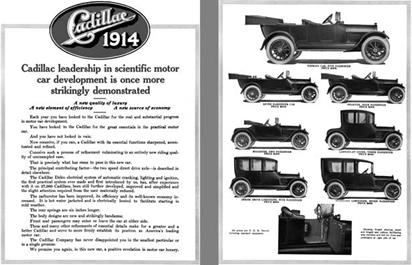
“WINDHAM. FEBRUARY 12, 1915—Mrs. Julia M. Baker has a new seven passenger Cadillac.” W.S. Harris, Exeter Newsletter. The Cadillac open tourer for seven passengers was a popular model with large families and in 1914-15 would have set back Mrs. Baker $2075. She could well afford it since she was the proprietor of the popular Baker’s Grove on Cobbett’s Pond. This rather interesting photograph of Mrs. Baker’s home, on Range Road in Windham, shows the Cadillac parked in the drive, in front of the abandoned horse buggy. It must have been a thrill, tinged with a little bit of melancholy, to trade your horse in for a car.

Baker's Grove on Cobbett's Pond, Windham NH

Baker’s Grove on Cobbett’s Pond, Windham NH

“In 1914, Cadillac became the first manufacturer to mass produce V-8-powered automobiles. The compact design of the Cadillac V-8 enabled the overall frame length to be shortened by 10 or more inches, making the car more sturdy and easier to handle. Cadillac raised the bar for performance with the industry’s first V-type, water-cooled eight-cylinder engine. This 314 cubic inch engine produced 70 horsepower at 2,400 RPM and was the industry’s first major step in development of high-speed, high-compression engines. The following year, it was made standard on all Cadillac models.”

Baker's Cadillac

Windham Life and Times – March 12, 2015

100 Years Ago Today in Windham NH – W.S. Harris Reporting in the Exeter Newsletter

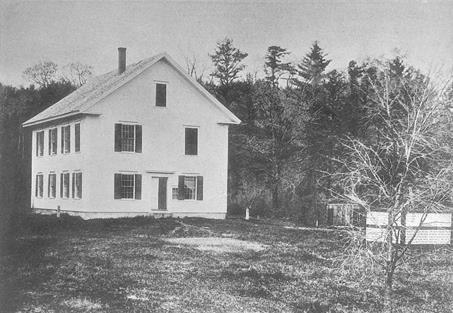
Windham Presbyterian Church showing horse sheds.

Windham Presbyterian Church showing horse sheds.

“WINDHAM , March 9. — Strangers often comment on the large number of horse-sheds at the center of our town. There is one day of the year when they are all occupied and that is town meeting day.”

The sheds harken back to the days when people traveled to town meeting or church on Sunday by means of a horse. During the time of the meeting or services the horse and their buggies needed a place out of the weather. There is an interesting story about Robert Dinsmoor’s arrival at the old meeting house on the hill. You need a little background. “In person, the Rustic Bard was of massive build, broad shouldered, heavy limbed, about five feet ten inches in height, and about two hundred pounds in weight.” His first wife Mary “Polly” Park was his true love, and she died giving birth to their thirteenth child. “With this large family, the eldest but 16 years of age, the demand on him to supply a step-mother was imperative, but the task that would stare a woman in the face would seem appalling…he induced Mary (Davidson) Anderson, then the recently the widow of Samuel Anderson, to assume the trying position of second wife to a leading man in the church, with a wide social acquaintance to be maintained, the cares of a farmer’s life to be provided for, and a family of eleven children…” The marriage was one of mutual respect, but not love. “He uniformly rode to meeting in the ‘one horse shay,’ and as invariably had, “ma’am’ (as he always called Mary, his second wife) with him; she was, like himself, large and portly. He rode up to the west end door of the meeting-house, that being the nearest his pew in the old church, stopped the horse, that was uniformly a good-sized gentle bay, and sat in the chaise for ’ma’am’ to back out, which she uniformly did, as do courtiers in the old world retire from the presence of royalty. Once I remember the good woman caught her foot or dress on the footstep of the chaise and, losing her center of gravity, thereby fell over backwards on the ground. The fall confused her brain and she did not rise immediately; her husband did not dare drop the lines for fear the horse might injure his wife, and he called for aid.” Such were the perils of getting to church by a horse drawn shay. The horse-sheds were removed in the early twentieth century with the advent of the automobile. Of course, the town meeting was a long winded affair, and would have taken place in the town hall.

Windham Town Hall about 1880.

Windham Town Hall about 1880.

Town Meeting 1915: W.S. Harris Reporting– There was much interest in the election to-day and a long discussion over the auditors’ report, they having approved the selectman’s report of the financial standing of the town. It seems the Selectmen abated some $1,100 of taxes due from a former tax collector now removed from town, as being in their judgement the best way to settle up the account, but this did not meet the approval of the approval of all voters. The matter was finally laid on the table and the meeting proceeded with the election of officers. First Selectman Samuel F. Campbell declined re-election and William L. Emerson was chosen by a large majority but declined. Third Selectmen Rufus H. Bailey was then advanced to first place, and John E. Cochran and Frederick J. Hughes were chosen as his colleagues…It was voted to raise $1,000 for town expenses, $3,000 for highways and bridges, $2,500 to be used for permanent construction, of which $300 was appropriated for the Range Road near the Hazeltine place. It was voted that a culvert be built near Mrs. Burnham’s residence.

The inventory of the town as compared with that a year before indicates that the bottom has dropped out of something, the total valuation standing at $732,389, as compared with over six and a half millions in April of 1913. (I believe this had something to do with the valuation of the property of Edward Searles) The vital statistics show 6 births, 5 marriages and 10 deaths.