Windham Life and Times – April 9, 2015

SIMPSON’S MILL

Simpson Mill 1

Simpson Mill as it looked in about 1898.

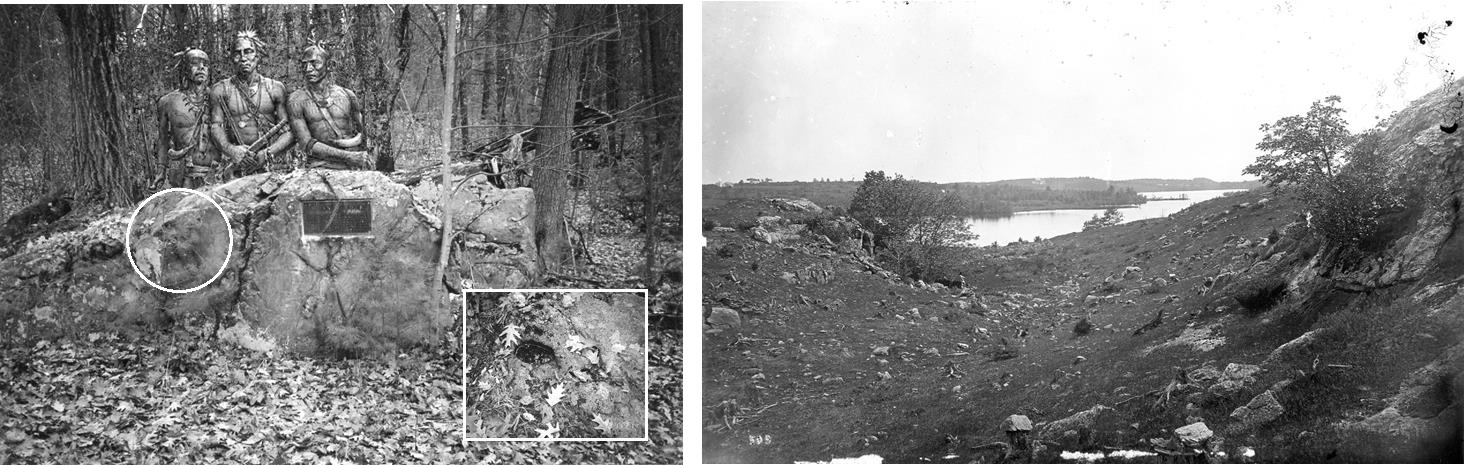
The photographs above and below were taken in 1898 and shows Simpson’s Mill. Joseph Simpson, “a fine carpenter and millwright being very ingenious” built a mill here in 1788-89 which was owned by shareholders. Thomas W. Simpson, who was no relation to Joseph, operated a grist-mill, saw-mill and lumber-mill here for much of the 19th century. He improved and added to the buildings. When the Simpsons operated the mill, the pond was known by the name of Simpson’s Pond.

As most of you know, the Deer Leap conservation land abuts this pond. According to Morrison, ”Deer Ledge lies north of J.W. Simpson’s pond, and is situated on the high, romantic, and precipitous sides of the hill of ledges. Its name is derived from the traditional fact, that an Indian drove a deer over the precipitous sides of this ledge into the water. The pond was called Deer-ledge Pond. I don’t know how the name morphed from Deer Ledge to DeerSimpson Mill3 Leap but it did at some point.

“The pond and island were sold to John Drinan in 1894. The right to cut and carry away all wood and timber on the island was reserved to the past owner, Thomas W. Simpson. When the pond and land were sold to the Moeckel family, the name of the pond changed once again to Moeckel Pond. There is an ongoing effort to rebuild the dam. Tax deductible donations marked for “Moeckel Pond” can be sent to Windham Endowment, PO Box 4315, Windham, NH or donate via WindhamEndowment.org. Check out all the Friends of Moeckel Pond information on Facebook at  https://www.facebook./friendsofmoeckelpond

The foundation of Simpson's Mill with Mill-Stones in  water.

The foundation of Simpson’s Mill with Mill-Stones in water.

Windham Life and Times – April 2, 2015

windham-cottage

In writing about the Worledge’s, Mitchell automobile, I was reminded about the fact that they were the owners of “Windham Cottage” located at Hampton Beach. So, I was curious to find more information about the property and its owners. I found the information I was looking for on the Hampton NH Historical Society web-site, in excerpts from the book, “Hampton: A Century of Town and Beach, 1888-1988” by Peter Evans Randall.
He writes the following, “Until 1893, Boar’s Head was center of Hampton Beach summer activity. In that year, the Boar’s Head House, owned and operated since 1866 by Colonel Stebbins H. Dumas, burned; after the fire, most of the Head remained empty until August 1904, when it was divided into lots that were sold at auction.”

“Despite the concern over the development of Boar’s Head, the auction was held on August 18 with 30 shorefront lots and 34 interior lots offered. Lot 61, about halfway up Cliff Avenue, was purchased by the Worledge family from Windham, New Hampshire. They had often visited the Beach, driving over in a horse and wagon. When the auction was held, they arrived to buy a lot. A nearby lot was purchased by Weinbecks, and the two families later acquired the long building that had been the hotel bowling alley. It was cut in half, a piece was moved to each lot, and the structures were rebuilt into cottages. The Worledge family cottage was named the Windham, and it was here that daughter Helen spent her early summers, playing with the children of Lewis Nudd, who owned the nearby Eagle House. Helen recalled playing near the New Boar’s Head Hotel windmill and the lovely hotel gardens. The hotel burned in 1907, the same year the standpipe was built on the Head, finally providing cottages with running water. Prior to this time, Lewis Nudd sold water to the cottages for $2 for the summer. Residents had to walk down to his well and carry the water back up for cooking and washing. Helen Worledge grew up to be Helen W. Hayden, Hampton’s first woman town clerk and selectman.”
“The Windham cottage was built beside a right-of-way down to the Lewis Nudd property. About 1908, Mrs. Nudd became too ill to cook meals for the Eagle House guests and Lewis Nudd feared he would lose his customers. Noticing that Mrs. Worledge often had many relatives staying at her cottage, Nudd asked her is she would agree to serve his guests three meals a day. Since she had been cooking for her own guests for free, Mrs. Worledge decided to try it for pay. Thus began a 35-year business for Mrs. Worledge, who later opened her own cottage to summer boarders, accommodating 24 people at a time. Some of these guests returned for 25 summers.

“In order to feed her guests, Mrs. Worledge relied on the various horse-drawn delivery wagons of the day. Helen Hayden recalls buying clams from Horace Bragg, who came twice a week, primarily in August, and purchasing meat from Jimmy Janvrin, who came three times weekly, making a separate evening trip if you needed a fresh-killed chicken. W. L. Redman delivered fresh fish and vegetables daily. Helen’s mother traded with H. G. Lane’s store in the Village. She recalls delivery man Warren Hobbs, a onetime Hampton selectman, as being “the most accommodating person I ever knew. He would come in, sit at your table and take the order. If you needed thread, shoestrings, medicine at the drug store, any notions, anything that came from another store, other than Lane’s, he would take your order, go downtown, buy the things for you, and bring them back in the afternoon.” She remembers as a child buying ice cream from an Exeter ice cream man. It came in a cardboard cup with a tin spoon for 5 cents.” The family moved back to Windham, and later to Derry Village, for the winter. They returned to Boar’s Head at Hampton Beach, each summer. Now you know the story of the boarding house named after the town of Windham. There was also a popular hotel on the beach named “The Pelham.”

Windham Life and Times – March 26, 2015

WINDHAM NH – 100 YEARS AGO

mitchell-1WINDHAM. FEBRUARY 12, 1915— “John W.M. Worledge has purchased a Mitchell automobile.” W.S. Harris, Exeter Newsletter. Well it was a regular car buying frenzy in Windham during the Winter of 1915, even without a President’s Day Sale. Mr. Worledge’s car was almost half the price of Mrs. Baker’s Cadillac. At that time, Mr. and Mrs. Worledge were operating Windham Cottage (More on that next week) on Great Boar’s Head at Hampton Beach. Having a car to travel back and forth from the coast, rather than taking a long, slow ride by horse and wagon, certainly would have been an advantage. John Worledge was Will Harris’ uncle and is pictured with his wife below.
Henry Mitchell was born in Scotland in 1810, and he moved to America in 1834. He and his wife Margaret settled in Fort Dearborn, which later became Chicago. Mitchell, a wheelwright, built the first wagon ever made in Chicago. Mitchell and his wife settled in Racine, Wis., in 1855. By 1877, the Mitchell & Lewis Co. was one of the largest and best-equipped wagon makers in the country.  The company had 7,200 employees and made more than 8,000 wagons a year. They were exported all over the world.
Henry Mitchell died in 1893. William Turnor Lewis, his son-in-law, took over the Mitchell company. His son, William Mitchell Lewis, or Uncle Bill as the family called him, started producing motorcycles. Six hundred Mitchell motorcycles were built in 1902. In 1903, the Mitchell Motor Car Co. built its first automobile. That was the same year as Henry Ford’s first car.  The company closed after building 86,966 cars and was liquidated in 1923. They even had their own sheet music tune:

Mr. and Mrs. Worledge

Mr. and Mrs. Worledge

Give me a spin in your Mitchell, Bill,
My goodness gracious I can’t keep still,
Buzz me along the boulevard,
Let her go Willie boy good and far,
Throw it wide open, I’ll hold on tight.
I don’t care a fudge if my hair’s a fright,
There’s nothing that gives me such keen delight,
As a spin in your Mitchell, Bill.”

Windham Life and Times – March 19, 2015

Mrs. Baker’s Cadillac

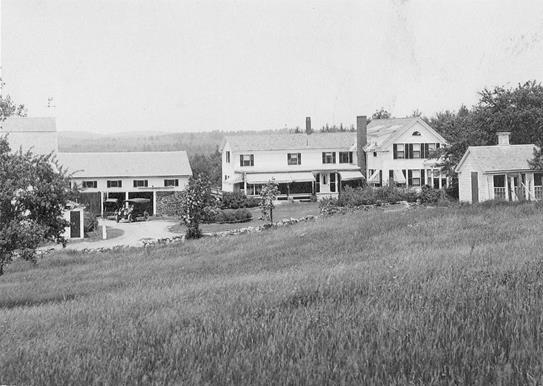
Julia Baker's House with Cadillac out front.

Julia Baker’s House with Cadillac out Front

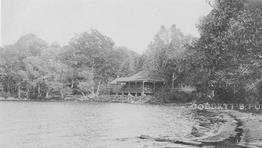
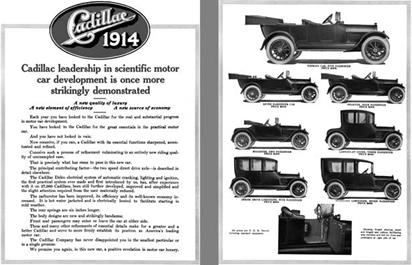
“WINDHAM. FEBRUARY 12, 1915—Mrs. Julia M. Baker has a new seven passenger Cadillac.” W.S. Harris, Exeter Newsletter. The Cadillac open tourer for seven passengers was a popular model with large families and in 1914-15 would have set back Mrs. Baker $2075. She could well afford it since she was the proprietor of the popular Baker’s Grove on Cobbett’s Pond. This rather interesting photograph of Mrs. Baker’s home, on Range Road in Windham, shows the Cadillac parked in the drive, in front of the abandoned horse buggy. It must have been a thrill, tinged with a little bit of melancholy, to trade your horse in for a car.

Baker's Grove on Cobbett's Pond, Windham NH

Baker’s Grove on Cobbett’s Pond, Windham NH

“In 1914, Cadillac became the first manufacturer to mass produce V-8-powered automobiles. The compact design of the Cadillac V-8 enabled the overall frame length to be shortened by 10 or more inches, making the car more sturdy and easier to handle. Cadillac raised the bar for performance with the industry’s first V-type, water-cooled eight-cylinder engine. This 314 cubic inch engine produced 70 horsepower at 2,400 RPM and was the industry’s first major step in development of high-speed, high-compression engines. The following year, it was made standard on all Cadillac models.”

Baker's Cadillac

Windham Life and Times – March 12, 2015

100 Years Ago Today in Windham NH – W.S. Harris Reporting in the Exeter Newsletter

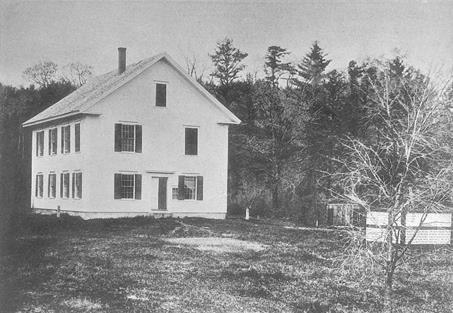
Windham Presbyterian Church showing horse sheds.

Windham Presbyterian Church showing horse sheds.

“WINDHAM , March 9. — Strangers often comment on the large number of horse-sheds at the center of our town. There is one day of the year when they are all occupied and that is town meeting day.”

The sheds harken back to the days when people traveled to town meeting or church on Sunday by means of a horse. During the time of the meeting or services the horse and their buggies needed a place out of the weather. There is an interesting story about Robert Dinsmoor’s arrival at the old meeting house on the hill. You need a little background. “In person, the Rustic Bard was of massive build, broad shouldered, heavy limbed, about five feet ten inches in height, and about two hundred pounds in weight.” His first wife Mary “Polly” Park was his true love, and she died giving birth to their thirteenth child. “With this large family, the eldest but 16 years of age, the demand on him to supply a step-mother was imperative, but the task that would stare a woman in the face would seem appalling…he induced Mary (Davidson) Anderson, then the recently the widow of Samuel Anderson, to assume the trying position of second wife to a leading man in the church, with a wide social acquaintance to be maintained, the cares of a farmer’s life to be provided for, and a family of eleven children…” The marriage was one of mutual respect, but not love. “He uniformly rode to meeting in the ‘one horse shay,’ and as invariably had, “ma’am’ (as he always called Mary, his second wife) with him; she was, like himself, large and portly. He rode up to the west end door of the meeting-house, that being the nearest his pew in the old church, stopped the horse, that was uniformly a good-sized gentle bay, and sat in the chaise for ’ma’am’ to back out, which she uniformly did, as do courtiers in the old world retire from the presence of royalty. Once I remember the good woman caught her foot or dress on the footstep of the chaise and, losing her center of gravity, thereby fell over backwards on the ground. The fall confused her brain and she did not rise immediately; her husband did not dare drop the lines for fear the horse might injure his wife, and he called for aid.” Such were the perils of getting to church by a horse drawn shay. The horse-sheds were removed in the early twentieth century with the advent of the automobile. Of course, the town meeting was a long winded affair, and would have taken place in the town hall.

Windham Town Hall about 1880.

Windham Town Hall about 1880.

Town Meeting 1915: W.S. Harris Reporting– There was much interest in the election to-day and a long discussion over the auditors’ report, they having approved the selectman’s report of the financial standing of the town. It seems the Selectmen abated some $1,100 of taxes due from a former tax collector now removed from town, as being in their judgement the best way to settle up the account, but this did not meet the approval of the approval of all voters. The matter was finally laid on the table and the meeting proceeded with the election of officers. First Selectman Samuel F. Campbell declined re-election and William L. Emerson was chosen by a large majority but declined. Third Selectmen Rufus H. Bailey was then advanced to first place, and John E. Cochran and Frederick J. Hughes were chosen as his colleagues…It was voted to raise $1,000 for town expenses, $3,000 for highways and bridges, $2,500 to be used for permanent construction, of which $300 was appropriated for the Range Road near the Hazeltine place. It was voted that a culvert be built near Mrs. Burnham’s residence.

The inventory of the town as compared with that a year before indicates that the bottom has dropped out of something, the total valuation standing at $732,389, as compared with over six and a half millions in April of 1913. (I believe this had something to do with the valuation of the property of Edward Searles) The vital statistics show 6 births, 5 marriages and 10 deaths.

Windham Life and Times – March 5, 2015

100 Years Ago Today in Windham NH – W.S. Harris Reporting in the Exeter Newsletter

Albert Farmer Pre-Cut House in West Windham NH

Albert Farmer’s Pre-Cut House in West Windham NH

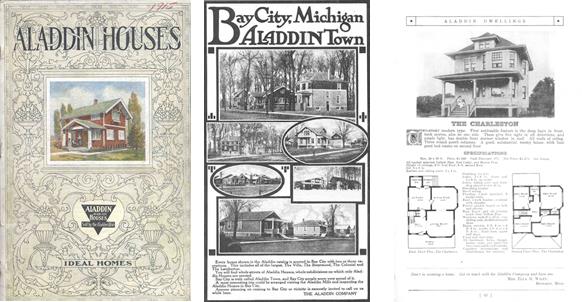
WINDHAM , March 2. — Albert W. Farmer’s house at West Windham nears completion and presents a fine appearance. This is one of the ready-made houses, the materials coming from Bay City, Mich., every timber and board cut for its place, and only needing to be put together according to the blue-print plans. Mr. Farmer and his son and H.Y. Gilson, who are doing the work, are enthusiastic over this way of building a house, and say there is a great savings in expenses, the materials for the whole house costing under $1,300. This house stood until a few years ago, on Haverhill Road, on the right, just before the intersection with Mammoth Road.

Aladdin Homes Catalog from 1914 Showing Model Selected by Albert Farmer

Aladdin Homes Catalog from 1914 Showing Model Selected by Albert Farmer

“The Aladdin Company of Bay City, Michigan was one of America’s most long lived manufacturers of mail-order, “kit homes.” Begun in 1906 by two brothers, Otto and William Sovereign, the family-owned firm continued to manufacture houses until 1981. Over the firm’s long history it sold over 75,000 homes to both individual and corporate customers.” There slogan was “Built in a Day.”

From Wikipedia: “Aladdin quickly expanded to become one of largest mail-order house companies. By 1915 sales surpassed $1 million. In 1918 Aladdin alone accounted for 2.37 percent of all housing starts in the United States, around 1,800 homes. The company’s greatest success came from sales to industries which constructed company towns around new plants, mines and mills. The town of Hopewell, Virginia was largely developed by the DuPont Company using Aladdin homes. In 1917 Aladdin shipped 252 houses to Birmingham England, for the Austin Motor Company who built Austin Village to house workers for munitions, tank and aircraft manufacture during World War I”  

Windham Life & Times – February 19, 2015

The Great Snow of 1717

A woodcut depicting the Great Snow of 1717

A woodcut depicting the Great Snow of 1717

So you think we’ve got a lot of snow this winter? This is nothing compared to the “Great Snow of 1717.” According to Sidney Perley, writing in 1891, in his Historic Storms of New England, “In December, 1716, snow fell to a depth of five feet, rendering traveling very difficult, and almost impossible except on snow shoes. The temperature throughout the winter was moderate, but the amount of snow that fell that season has never been equaled in New England during three centuries of her history. Snow fell in considerable quantities several times during the month of January, and on February 6 it lay in drifts in some places twenty-five feet deep, and in the woods a yard or more on the level. Cotton Mather said that the people were overwhelmed with snow.”

"Ye Whiners! Ye don't know what a great snowfall is about." The Ghost of Cotton Mather

“Ye Whiners! Ye don’t know what a great snowfall is about.” The Ghost of Cotton Mather

On March 7, 1717, Rev. Cotton Mather made the following diary entry: “Never such a Snow, in the Memory of Man! And so much falling this Day, as well as fallen two Dayes ago, that very many, of our Assemblies had no Sacrifices.” He also called it “One horrid snow.”

The Boston News-letter reported, ‘Not fit for man nor beast,’ No horse could brave it. Nor any ships. No vessels arrived this week.” (The New Yorker)

Again from Sidney Perley we read, “The great storm began on February 18 and continued piling its flakes upon the already covered earth until the twenty-second; being repeated on the twenty-fourth so violently that all communication between houses and farms ceased. Down came the flakes of feathery lightness, until:

‘…the whited air Hides the hills and woods, the river and the heaven, And veils the farmhouse…all friends shut out the housemates sit, Around the radiant fireplace, enclosed, In a tumultuous privacy of storm.’

“During the storm enough snow fell to bury the earth to the depth of from ten to fifteen feet on the level, and in some places for long distances twenty feet deep.”

From New England Historical Society website; “The events were so unusual that he and other contemporary diarists made note of how exceptionally harsh it was throughout New Hampshire, Massachusetts and Connecticut. Throughout the region snow totals from the back-to-back storms were recorded of four, five and six feet, with drifts as high as 25 feet. Entire houses were covered over, identifiable only by a thin curl of smoke coming out of a hole in the snow. In Hampton, N.H., search parties went out after the storms hunting for widows and elderly people at risk of freezing to death. It wasn’t uncommon for them to lose their bearings and not be able to find the houses. Sometimes they were found burning their furniture because they couldn’t get to the woodshed.”

Snow shoes were often the only means of traveling through the snow.

Snow shoes were often the only means of traveling through the snow.

According to Perley, “Many cattle were buried in the snow, where they smothered or starved to death. Some were found dead weeks after the snow had melted, yet standing and with the appearance of life. The eyes of many were so glazed with ice that being near the sea they wandered into the water and drowned. On the farms of one gentleman upwards of eleven hundred sheep were lost in the snow. Twenty-eight days after the storm, while the search for them was still in progress, more than one hundred were found hurdled together, apparently having found a sheltered place on the lee side of a drift, where they were slowly buried as the storm raged on, being covered with snow until they lay sixteen feet beneath the surface. Two of the sheep were alive, having subsisted for four weeks of their entombment by feeding on the wool of their companions…Other animals lived during several weeks imprisonment under the snow. A couple of hogs were lost, and all hope of finding them alive was gone, when on the twenty-seventh day after the storm they worked their way out of a snow bank in which they had been buried, having subsisted on a little tansy, which they found under the snow. Poultry also survived several days burial, hens being found alive after seven days, and turkeys from five to twenty. These were buried in the snow some distance above the ground, so they could obtain no food whatever.

“The wild animals which were common in the forests of New England at this period were robbed of their means of subsistence, and they became desperate in their cravings of hunger…Bears and wolves were numerous then, and as soon as night fell, in their ravenous state they followed the deer in droves into the clearings, at length pouncing on them. In this way vast numbers of these valuable animals were killed, torn to pieces, and devoured by their fierce enemies. It was estimated that nineteen out of every twenty deer were thus destroyed.” (Perley)

“The carriers of the mails who were called ‘postboys,’ were greatly hindered in the performance of their duties by the deep snow. Leading out from Boston there were three post roads, and as late as March 4 there as no traveling, the ways being still impassible, and the mail was not expected,  though it was then a week late. March 25 the ‘post’ was traveling on snow shoes, the carrier between Salem, Mass., and Portsmouth N.H., being nine days in making his trip to Portsmouth and eight days returning, the two towns being about forty miles apart. In the woods he found the snow five feet deep, and in places it measured six to fourteen feet.” (Perley)

“Many a one-story house was entirely covered with snow, and even the chimneys in some instances could not be seen. Paths were dug under the snow from house to barn, to enable the farmers to care for their animals, and tunnels also led from house to house among neighbors if not to far apart. Stepping out of a chamber (second story)  window some of the people ventured over the hills of snow….Coffin in his History of Newbury, Mass., ‘Love laughs at locksmiths and will disregard a snowdrift.’ A young man in town by the name of Abraham Adams was paying his attention to Miss Abigail Pierce, a young lady of the same place, who lived three miles away. A week had elapsed since the storm, and the swain concluded that he must visit his lady. Mounting his snow shoes he made his way out of the house through a chamber window, and proceeded on his trip over the deep snow packed valley and huge drifts among the hills beyond. He reached her residence, and entered it, as he had left his own, by way of the chamber window. Besides its own members, he was the first person the family had see since the storm, and his visit was certainly much appreciated.” (Perley)  Accounts differ, some saying the couple were newlyweds, but whatever was the case, they had their first child on November 25, 1717.

“In the thinly settled portions of the country great privation and distress were caused by the imprisonment of many families, and the discontinuance of their communication with their neighbors. Among the inhabitants of Medford, Mass., was a widow, with several children, who lived in a one-story house on the road to Charlestown. Her house was so deeply buried in snow it could not be found for several days. At length smoke was seen issuing from a snow-bank, and by that means its location ascertained. The neighbors came with shovels, and made a passage to a window, through which they could gain admission. They entered and found the widow’s small stock of fuel exhausted, and that she had burned some of her furniture to keep her little ones from suffering with cold. This was but one of many incidents that occurred of a similar character.” (Perley)

Of course, in 1717, the Scotch-Irish had not even begun their settlement of Nutfield. It is doubtful they heard about the “Great Snow of 1717,” for if they had, they might have abandoned their emigration to New England in 1718. When the Scotch-Irish did arrive, they experienced many privations during the harsh winter of 1718-19. Their ship was frozen in at Portland, Maine, and many nearly starved to death there.

So quit thy whining, ye that have central heat, heated automobiles, plowed roads, and plenty of food in the refrigerator. Look to your rugged New England ancestors for courage. And take note, there is still plenty of winter left, and most of the snow that fell in 1717 occurred at the end of February. There is still time yet!

According to Wikipedia, the dates of the storms were different and caused by volcanic activity. “The winter, even prior to the Great Snow, had been the worst in memory. The temperatures had not been unusually cold, but in December 1716, there had already been snow to the depth of 5 feet. By the end of January, there were drifts 25 feet high in a few places, overwhelming the people living in New England at the time. There had been a series of volcanic eruptions circa 1716. Ash circulating the globe in the upper atmosphere from the eruptions of Mount Kirishima in Japan, Kelud in Indonesia and Taal Volcano in the Philippines likely contributed to the exceptional New England snowfall. The great snow, depending on the source, began on February 27 or March 1. On February 27 a typical New England nor’easter passed through, with snow falling on some areas and other places receiving a mix of snow, sleet, and rain. The first major snowstorm occurred on March 1, with another on the 4th, and a third, the worst among the three, on the 7th. At some points, the snow would lighten and stop, but the sky would remain cloudy, showing no signs of clearing. Some of the oldest Native Americans had said that even their ancestors never spoke of a storm of this magnitude.”

Windham Life and Times – February 5th and 12th, 2015

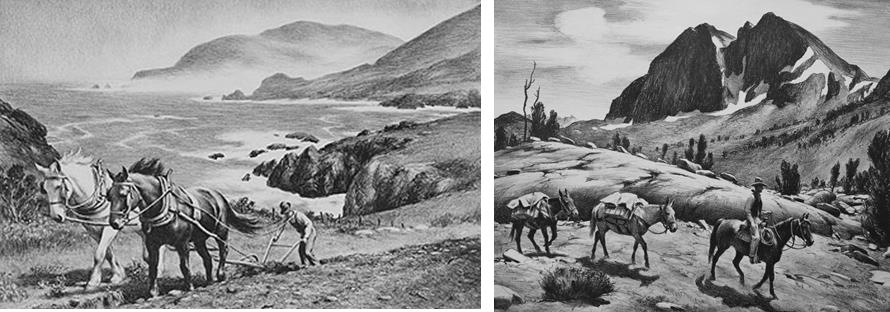
The Famous Artists Born in West Windham NH

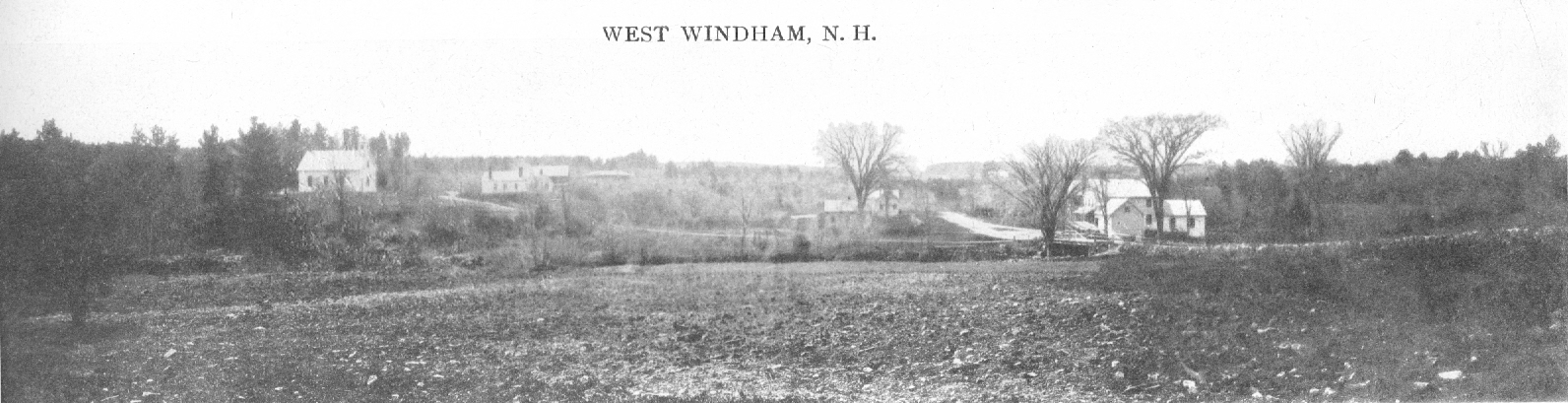
A view of West Windham, New Hampshire

A view of West Windham New Hampshire

There must have been something in the water of West Windham, that was the catalyst for two children that were born and raised here, to become noted American artists. Mary Braddish Titcomb and Howard E. Smith both spent their early childhood in this scenic village overlooking Beaver Brook. Miss Titcomb lived here for much of her early life, becoming a teacher in the Windham schools. Smith lived in the village until he was fourteen and his family moved to Boston Massachusetts.

This blog post was inspired by an article in the Exeter News-Letter, written 100 years ago, by William Harris in 1915.

Self Portrait

Self Portrait

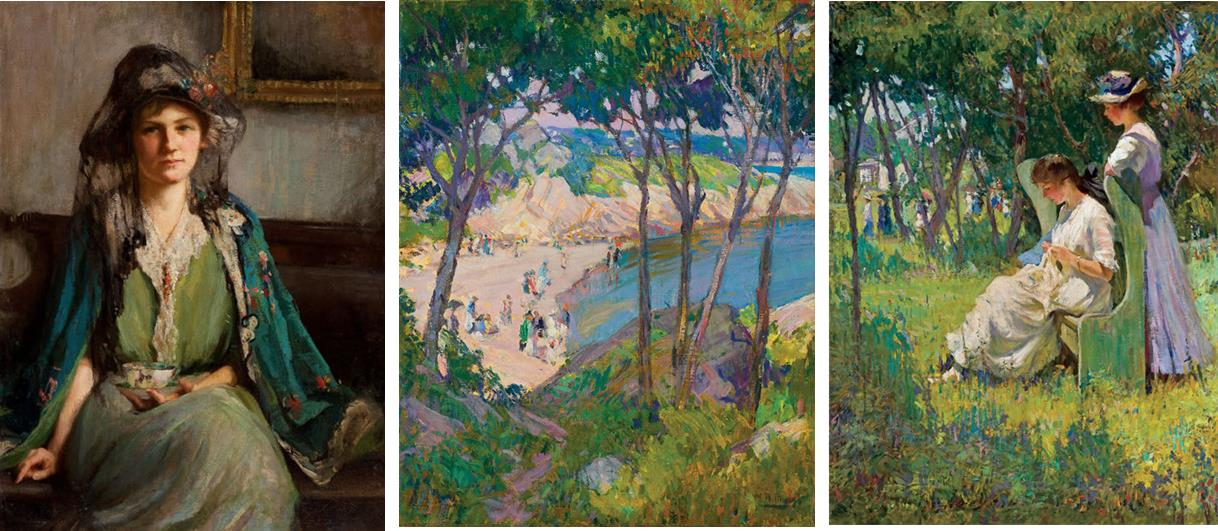
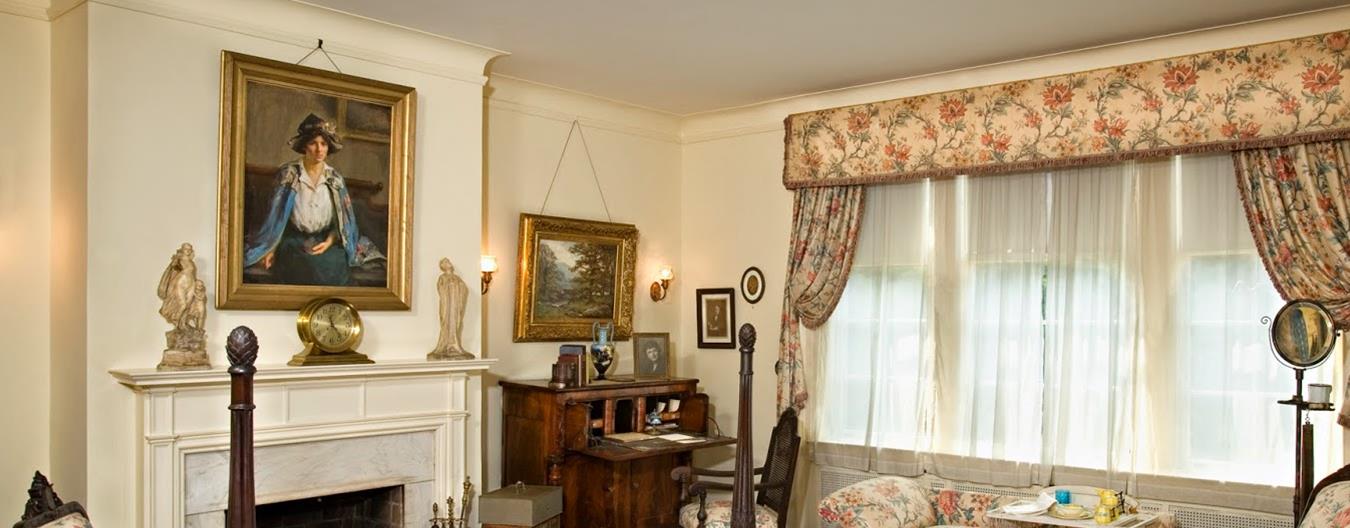
“WINDHAM, February 9.— A native and former resident of Windham has painted a picture which has been purchased on its merits by President Wilson and now hangs in the White House. Miss Mary Braddish Titcomb as a girl in West Windham had no unusual advantages except such as came from her excellent parentage and her own ambition and persistence. In 1880 and 1881 our correspondence to the NEWS-LETTER shows several commendatory references to Miss Titcomb as teacher in Windham Center school and as an elocutionist. Even then she was interested in painting. Later she was a teacher of drawing in the schools of Brockton Mass. Now as we learn from last Saturdays’ Boston Journal, Miss Titcomb has a studio on Clarendon Street in Boston where she does work which is seen at all large exhibitions throughout the country. The particular painting which took the president’s fancy as he saw it at the recent biennial exhibition at the Corcoran Art Gallery in Washington is entitled, ‘Portrait of Geraldine J.,’ and shows a pretty young woman wearing a beautiful mandarin coat of blue. The Journal article refers to Miss Titcomb as a conscientious and painstaking artist who ‘has worked while others played, and painted better each year.’ Miss Titcomb was born here September 27, 1858, the daughter of Edward and Sarah Jane (Abbott) Titcomb.”

Examples of Mary Braddish Titcomb's work. "Two Girls on Right sold for $120,000 in 2011.

Examples of Mary Braddish Titcomb’s work. “Two Girls on right, above, sold for $120,000 in 2011.

“Mary Bradish Titcomb was described as an independent woman. She is listed as a portrait painter but is best known and appreciated for her impressionist paintings of rural and coastal New England scenes. She is described as taking the traditional stylistic ideals of the Boston Impressionism and infusing it with a modern sensibility. Mary was born in Windham, NH and supported her artistic education by teaching school in the Boston area. She studied at the Boston Normal Art School and the Boston Museum School under such well-known American painters as Edmund Tarbell, Philip Leslie Hale and Frank Benson. She was a frequent exhibitor at the Copley Society.”

"Gerraldine J." now hangs of over a bedroom fireplace in the Wilson House in Washington D.C.

“Gerraldine J.” now hangs over a bedroom fireplace in the Wilson House in Washington D.C.

“Although primarily associated with New England, Mary was known to have gone on sketching trips to Arizona, Mexico and California.In 1901 Mary left teaching to dedicate her life to painting. After living in the Fenway studios she bought a house in Marblehead, MA where she could paint the kinds of coastal scenes she loved. President Woodrow Wilson admired Titcomb’s “Portrait of Geraldine J.” and bought it to hang in the White House. Mary died in Marblehead, MA in 1927.”

Self Portrait

Self Portrait

“WINDHAM, February 23.— Since writing the little story of Miss Titcomb’s success as a painter, we have been informed by Mrs. M. Eva Pratt of Revere, Mass., formerly of this town, that another Boston artist of distinction, Howard Everett Smith was also born at West Windham, scarcely more than a stone’s throw from the birthplace of Miss Titcomb. He was one of several children born to Charles Smith and his wife, Sarah (Goodwin) Smith, while the father was the proprietor of the village store at Wes Windham and postmaster. He also served the town several years as selectman. The son, who was born April 27, 1885, received a scholarship for travelling abroad from the Boston Museum School, and is a teacher in the School of Drawing in Boston. He is especially good a illustrating, but also paints; he has recently married and gone to the Northwest to paint winter scenes. Perhaps the picturesque surroundings of the little hamlet of West Windham, with its babbling Beaver Brook flowing between pine and hemlock crowned ridges, had their influence in awakening the artistic sensibility in these now noted artists, whose childhood was passed there.”

Smith-1
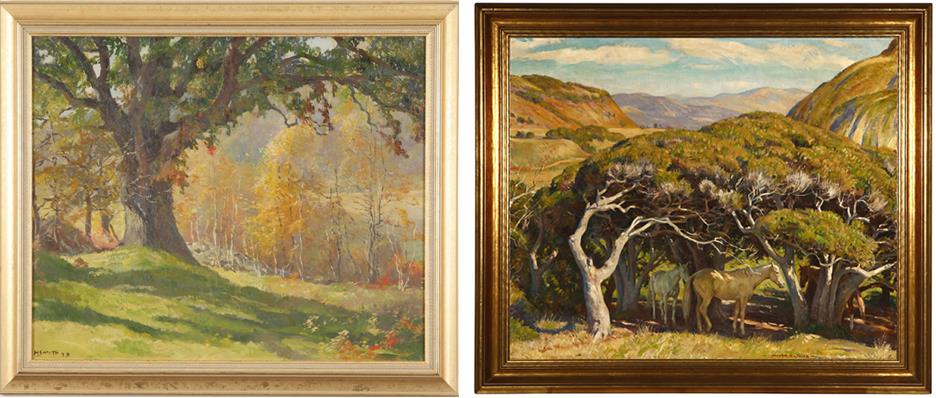
“A portrait painter, illustrator, etcher, and painter. Born in West Windham, NH on April 27, 1885.  His mother encouraged his interest in art, and he studied both drawing and watercolor at a young age. One of his earliest instructors was a veterinarian, who had Smith closely study the anatomy of his subjects. This was to stand him in good stead, as he later became recognized as a master of portraiture. In 1899, his family moved to Boston. He attended Boston Latin School before continuing his art studies, first at the Art Students’ League in New York and then two years with Howard Pyle. Returning to Boston in 1909, he studied with Edmund Tarbell at the School of Art of the Boston Museum. His illustrations appeared in ”Harper’s” and ”Scribner’s” between 1905 and 1913, and for several years he taught at the Rhode Island School of Design.”

“Having been awarded the Paige Traveling Scholarship in 1911, he left for Europe. The scholarship enabled him to study and travel throughout Europe for two years. Smith financed additional year’s travel through his profitable and long time association with Harper’s Monthly. In 1914, he returned to the United States and began teaching at the Rhode Island School of Design. Here he met Martha Rondelle, whom he married later that year. They were to have three children, Jeanne, Jacqueline and Howard E. Jr. Smith’s  career took off in the teens and twenties. He won numerous prizes including the Hallgarten Prize in 1917 and the Isidor Medal in 1921, both from the National Academy. In the twenties, he and his family spent many of their summers in Rockport and Provincetown. He was one of the founders of the Rockport Art Association. While in Provincetown, the family became friends with Eugene O’Neill, who asked Smith to illustrate his first published play.

Smith-2
“In 1936, the Smith family visited Carmel and in 1938 settled there. His work continued to be exhibited on the East Coast, while he became active in the local art community of the Monterey Peninsula. He served on the Board of Directors of the Carmel Art Association from 1942 to 1949 and again in 1963 and 1964. After his wife’s death in 1948, he moved to Mexico for a number of years, often spending summers in Carmel. He returned to Carmel, living there until his death in 1970”

Smith-Illustration
“Smith was an American impressionist who was known for his illustrations, his portraits and his equine paintings. He worked not only in oil and watercolor, but did a wide variety of graphics, often using as subject matter the horses and cowboys of the West. Jacqueline Cagwin said of her father ”He was a gallant, a gentleman in every sense of the word. People always mistook him for a banker. He always said he would loathe going to an office and keeping rigid hours, yet he worked in his studio until five and spent his evenings etching and reading.”

 scan0588


Windham Life and Times – January 29, 2015

100 Years Ago in Windham NH | W.S. Harris – Reporting in The Exeter Newsletter

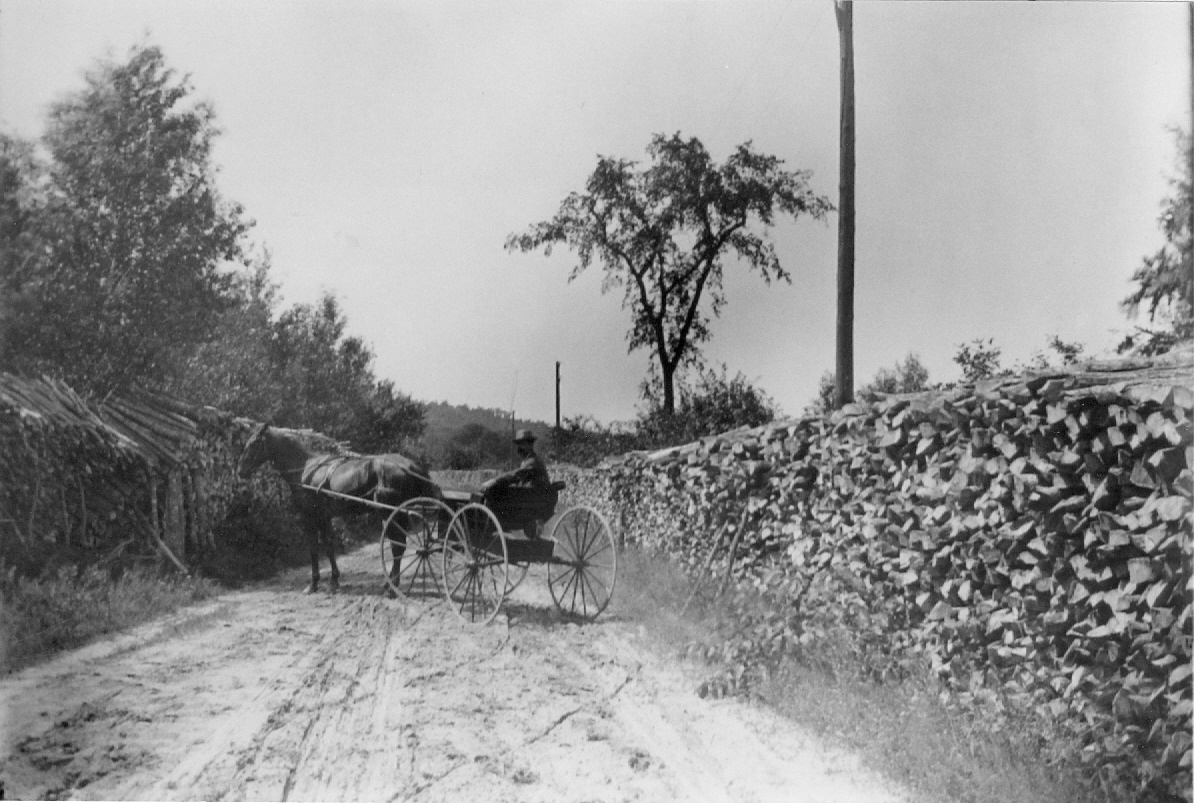
WOOD SALES DROP DUE TO SWITCH TO COAL

Piles of cord-wood line a road in West Windham NH, waiting to be shipped out of town on the rail line.

Piles of cord-wood line a road in West Windham NH, waiting to be shipped out of town on the rail line.

“WINDHAM, NH: December 29.—Mrs. Dalton J. Warren had a fall last week which caused bad bruises on her head, hand and side. Mr. and Mrs. Warren are a very aged couple, he being 89 and she 88, and both quite feeble. Mrs. Mary L. Jackson is caring for them for the present. Miss Alice L. Anderson sent in to the Warrens a fine Christmas dinner, all prepared. Other neighbors have shown kindness, for all which the Warrens express much gratitude. It is in time of misfortune and sorrow that the sympathy and ministry of friends is most appreciated. It is then that the question, ‘Who is my neighbor?’ receives its best answer…Thankful for small favors, we note with pleasure that the days are growing a trifle longer. But the cold seemed to strengthen last week a good deal faster than the days lengthened. Six and eight below were the marks at the Center, ten at the Junction.”

“It would be interesting to know who is so concerned lest the present writer should blame Germany for the European war. Three times have voluminous packages of literature have been received from New York, setting forth the various ways the righteousness of Germany’s cause.  Presumable some organization is sending this literature broadcast over the country. It would be more to the purpose if they would spend their energies relieving the poor Belgian nation, that has been literally smashed to pieces, body and soul, for no other crime than desiring to mind its own business in peace.”
“Selectman and Representative elect Samuel F. Campbell who lives on the borders of the town. Is prominent in fraternal and social affairs in Derry and Londonderry, where he has many friends, as well as in his home town. His Londonderry friends to the number of nearly 150 gave him a surprise reception at the town hall in that place and presented him a fine toilet case.”
“WINDHAM, NH: January 19.— Albert Farmer is rebuilding his house which was burned last summer, and will have a fine set of buildings when completed, but the shade and fruit trees are not so readily replaced.”
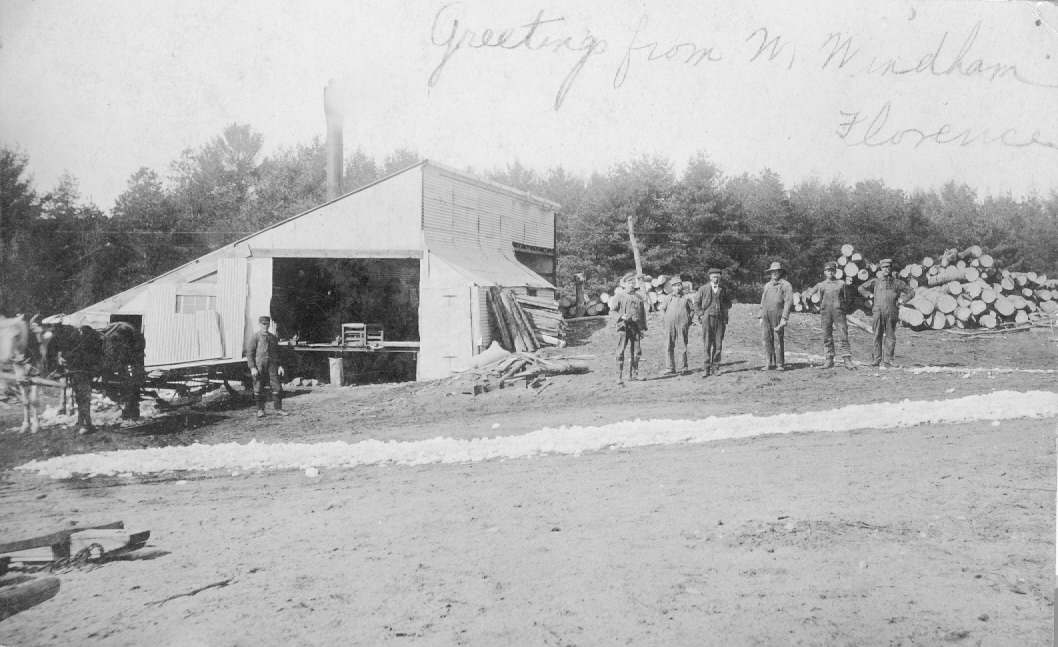
“WINDHAM, NH: February 1.—The brick-yards have furnished one of the principle markets for cord-wood. Now it is said they are beginning to use coal for burning brick, and the demand for wood has fallen off. Standing hardwood growth is about as valuable as Orchard Hill’s salt marsh land.

A sawmill operating in West Windham NH

A sawmill operating in West Windham NH

“The Ladies Benevolent Society will hold its mid-winter festival and sale Thursday evening of this week. Henry V, Baril, a magician from Worcester, MA. will furnish entertainment. after which supper will be served. Other features will be a fancy table, ice cream booth and mystery tree. Mrs. Nesmith is in general charge of affairs in the upper hall, and Mrs. Worledge in the supper room.”
“Windham has added its mite to the funds for relieving the Belgians. The millions of dollars sent from this country will doubtless do good, but the cause of all the misery still goes on without even a protest from this great and influential nation. We are saving one life while a hundred more are being destroyed. The great and pressing duty before that part of the world which has gone entirely mad is to find some way to stop and forever prevent such horrible actions as Europe is now exhibiting.”

Indian Rock Road, Windham NH

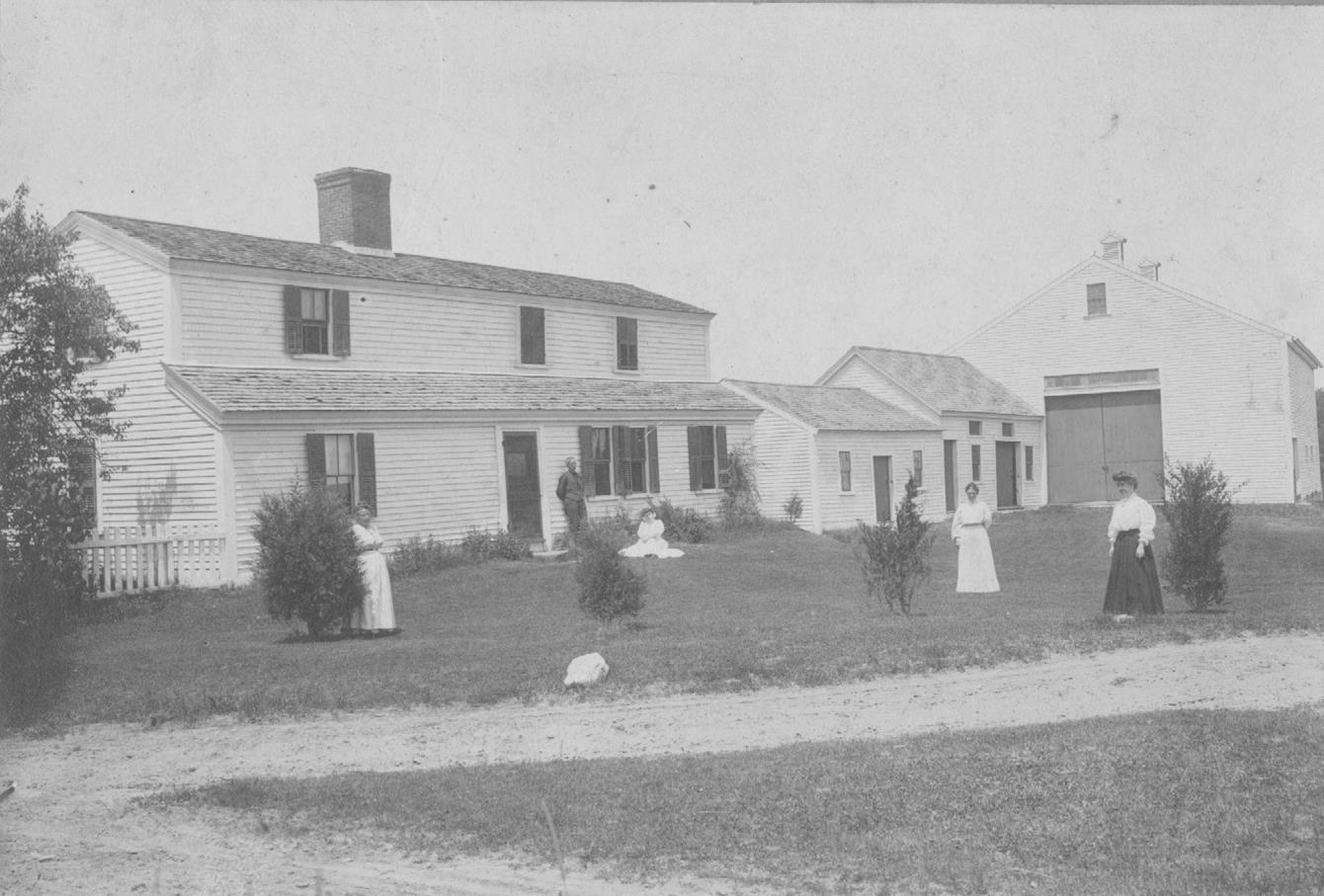
Morrison Family Homestead

Morrison Family Homestead

The changes on Route 111 and Interstate 93 in Windham NH have totally transformed the area which was composed of Dinsmoor Hill and Indian Rock Road. At the turn of the twentieth century, this scenic country road traversed some incredibly beautiful scenery. Beginning at it’s intersection with Range Road, Indian Rock Road, where the Morrison family homestead once stood, it began a decent toward Cobbett’s Pond in the Valley below. Along the way, this scenic road passed hills, farms and the shores of a truly panoramic lakes-shore view. Much of the land along the road was part of the Dinsmore Family farm.

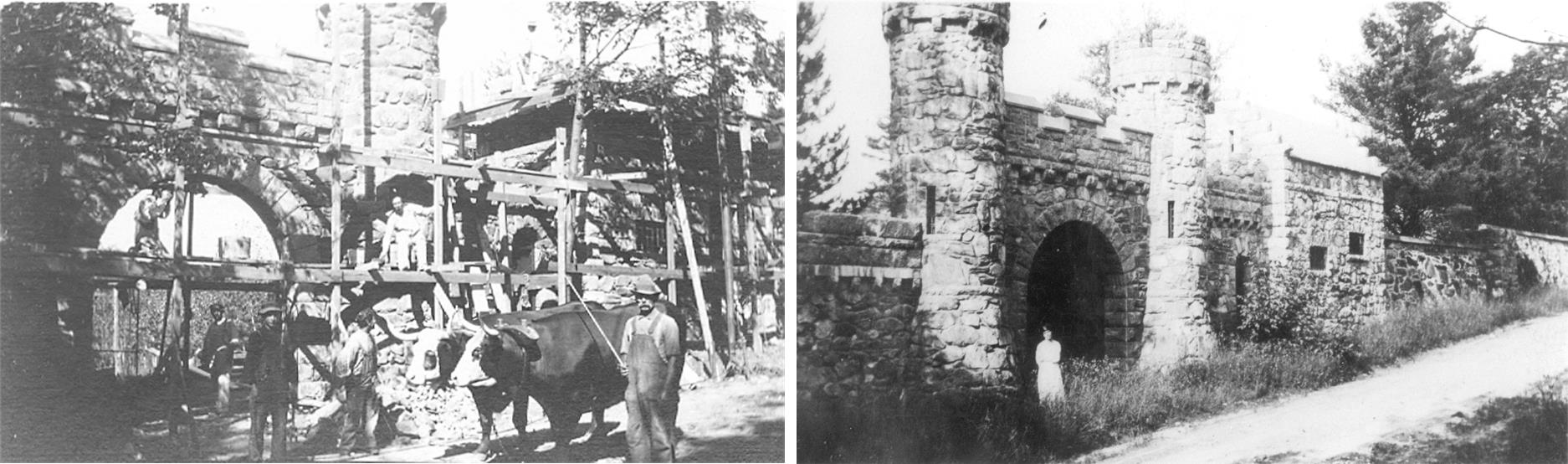
Searles Castle, Windham NH, Main Gate

Searles Castle, Windham NH, Main Gate

"Behind the Walls" View of Searles Castle

“Behind the Walls” View of Searles Castle

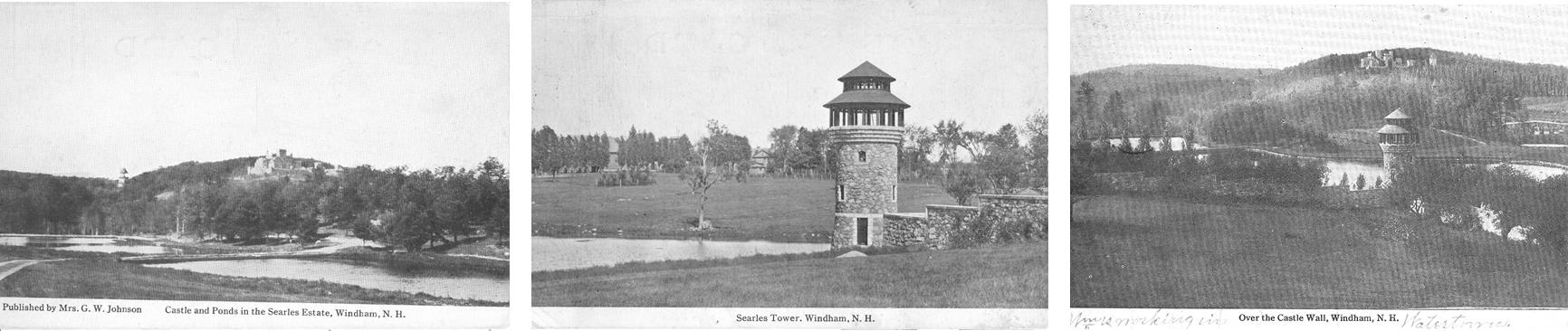
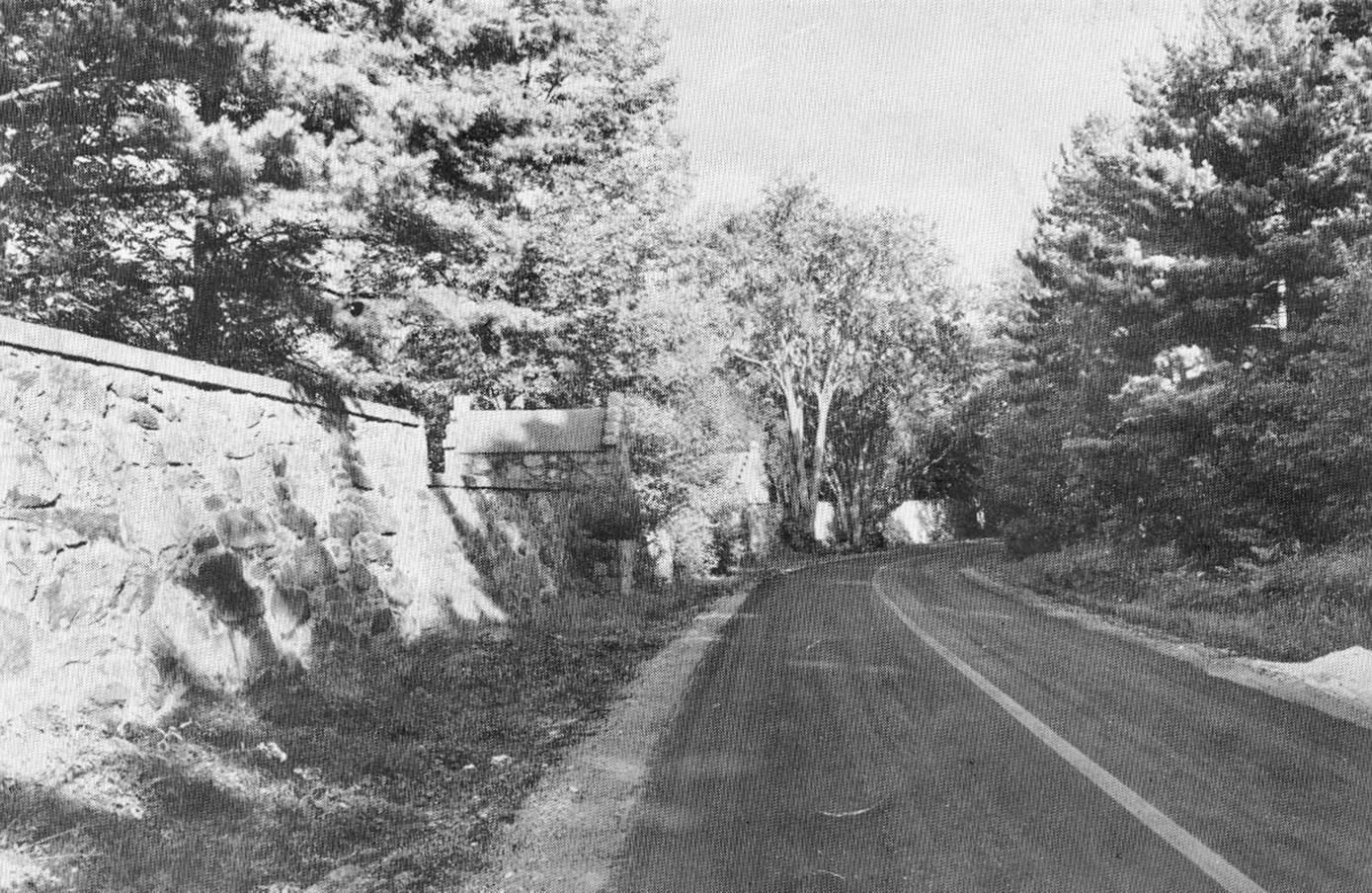
The biggest change along Indian Rock Road, at the beginning of the twentieth century, was the construction of Searles Castle. Ponds were dug, walls were built and the castle itself could be seen rising on the distant hillside. The main feature a traveler along the road would have noticed would have been the gate-house that was built right on the road. At this time , the road passed behind where Citizens Bank is located today. The road was moved when Route 111 was reconstructed by the state of NH in the 1950’s.

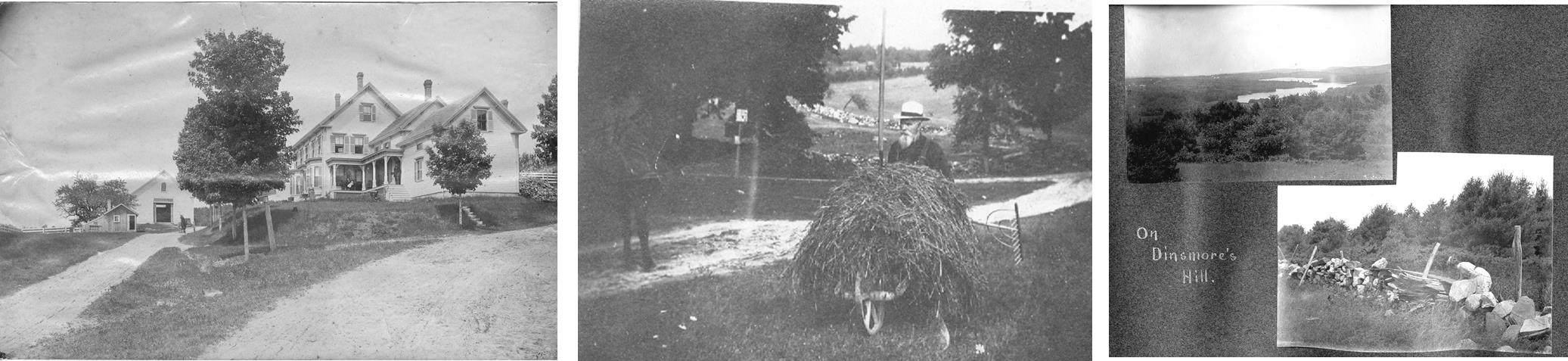
Dinsmore Farm and Dinsmoor's Hill in Windham NH (John H. Dinsmore pictured

Dinsmore Farm and Dinsmoor’s Hill in Windham NH (John H. Dinsmore pictured)

Continuing along Indian Rock Road, you would have come to the John H. Dinsmore farm. The road actually ran between the barn an the house, where the horse and carriage are shown in the photograph above. When Route 111 was rebuilt in the 1950’s this stretch of Indian Rock Road became Wyman Road where the Windham Exxon was located. Today the southbound exit ramps pass just about where the house was located. The road shown veering to the right was county road which was a straight shot to Windham Depot. When Interstate 93 was built it was discontinued except on one end, but it could still be seen, making its way in the median strip of the highway, before the most recent construction. John Dinsmore’s land ran to Cobbett’s Pond and his son George Dinsmore Sr. built a stone house on Indian Rock Road, past the farm, when he returned from Wyoming. He built the house himself, with his own hands. Across the street from the house he built a barn. The road was still dirt at the time. There would have been glimpses of the pond from the road but it would have really come into view at Dinsmore Ravine. Today you can still see it from the road near Rocky Ridge Road.

When Route 111 was rebuilt in the 1950’s this stretch of Indian Rock Road became Wyman Road, where the Windham Exxon was located. Today the southbound exit ramps pass just about where the house was located. The road shown veering to the right was County Road, which was a straight shot to Windham Depot. When Interstate 93 was built, it was discontinued except on one end, but it could still be seen, making its way, lined with stone walls, in the median strip of the highway, before the most recent construction. The picture at the upper right shows John H. Dinsmore pushing a wheelbarrow beside Indian Rock Road. County Road and Dinsmore Hill is behind him. The southbound lanes of Interstate 93 are located today, just about where the beautiful stone wall is shown in this photograph. After passing the barn, Indian Rock Road took a steep decent into a gully where a small brook ran into Cobbett’s Pond. On the left, there was a hillside, totally cleared of trees, that offered a panoramic view of Cobbett’s Pond to anyone who took the time to climb it. Today, the residences of “Granite Hill” are located there. On the water, near the brook, John Dinsmore’s son, George Dinsmore Sr., built cottages. At this time, many farmers, who owned frontage on Cobbett’s Pond were doing the same. You might want to know if these photographs make me nostalgic. Since I never knew this time or place in Windham, I do feel that something is lost but it’s not really tangible because I never experienced it. For the people of my grandfather’s generation, however, the construction of Interstate 93 changed everything

George Dinsmore Sr. built the stone house and was know for his tall tales.

George Dinsmore Sr. built the stone house and was know for his tall tales.

George Dinsmore Sr., loved to tell tall tales and his favorite character was his heroic grandmother. According to his account, the brook that crossed Indian Rock Road, near his house, was known as “Scalding Brook.” There was a reason for this rather peculiar name. Back when Mr. Dinmore’s grandmother, was in her prime, she was quite the woods-woman. The men who cleared trees in Windham had nothing on her. She would cut down massive trees and chopped wood at such an incredible rate of speed, that her double sided axes would glow red hot. The reason why the brook was called “Scalding Brook” was because Grandmother always had several red hot axes cooling in the water of the brook. In fact, the water in the brook boiled red hot constantly from the axes and the towns-people would bring their pigs there to boil the hides. Mr. Dinsmore’s grandmother would be what you would call an emancipated woman and her strength made her a legend in Windham, as well as in surrounding towns. In fact, she lived to be 104 years of age, but sadly died in child birth while digging a well. She passed away thirty feet below ground. When Grandmother was in her prime, there used to be competitions in Windham to see who could plow the most field with a team of horses. The men did their best to beat Mrs. Dinsmore but she had a maneuver that none of them could match, and for this reason, she always won the competition. When the men and their teams would reach the end of a row, they would have to take the time to get their horses turned around. Grandmother didn’t have this problem, because of her great strength, she just picked her team of horses up over her head and turned them in the row. In this manner, she always won. And of course, Mrs. Dinsmore was quite the watermelon farmer. She grew championship watermelons that were almost as big as a small houses. She grew these on Dinsmore Hill, high above the valley below. They grew so mammoth that she had to prop them up with large planks of wood. One day, she was on the hillside, hoeing weeds around her melons, when she accidentally hit one of the boards holding them in place. All of a sudden, there was a tremendous roar, as the first one, then all of the giant watermelons became dislodged and began to roll down the hill toward the valley, carrying Grandmother along with them. The poor lady would have surely drowned but she was able to grab onto a giant watermelon seed and survive. That is how Cobbett’s Pond came to be. As a great story-teller, George Dinsmore Sr., would have added more details and feigned sincerity, in order to take his listeners in, but you get the idea. The pictures show George Dinsmore Sr. and the stone house that he built by hand, early in the twentieth century. Many of you, will remember the barn that sat across the street. At left, my great-grandmother is standing in front of the stone house. Behind her, Indian Rock Road, passes over “Scalding Brook,” with John H. Dinsmore’s barn in the background. Of course, the rock shown behind her, was once located near Indian Rock. It was the chief’s chair and he used to sit in it while the members of his tribe ground corn. Grandmother, carried the stone chair on her back, and placed it where it still sits today, in front of my grandfather’s house on Indian Rock Road.

Most of us who pass along Indian Rock Road, never consider this area was for thousands of years, the home to Native American tribes. Morrison says that “the Indians of this town were of the Pawtucket nation, and derived their name from the Pawtucket Falls at Lowell, MA… Their domain included New Hampshire. Efforts were made to Christianize the Indians at Pawtucket previous to 1653, and it is not improbable that the same Indians whose wigwams were on the banks of our ponds, and whose canoes glided over our waters, taking fish therefrom, may have heard the gospel at Pawtucket (now Lowell), twelve miles away…The Indians congregated at the Falls, as it was a good place for fishing. Our Indians, confined to no permanent places of abode, of course visited these Falls, as the rushing of its waters could be distinctly heard in Windham, before they were in 1818-20, turned from their rocky bed for the Lowell factories. The last great chief of this tribe was Passaconnaway. In 1660, at a great feast and dance, he warned his people, as a dying man, not to quarrel with their English neighbors, as it would be the means of their own destruction. They left this section as a residence about 1685, but in their wanderings for fifty years after, spent much time at the Falls. After the settlement of Londonderry Colony, there is but one recorded instance of Indian cruelty to a citizen of Londonderry,—that of the killing the boy on the banks of Golden Brook in what is now Windham.”

Indian Rock and Dinsmore Ravine leading to Cobbett's Pond

Indian Rock and Dinsmore Ravine leading to Cobbett’s Pond

“In early days the Indians used to encamp on the shores of Cobbett’s’ and Policy Ponds, and many arrowheads have been found as they were turned up by plows near the shore…” I was told that there was a large agricultural settlement located in Windham, between Cobbett’s Pond and Canobie Lake. Native Americans did in fact have large settlements and open agricultural fields. Of course, the Indian grinding holes, on “Indian Rock,” prove that corn was grown by the Indians in the area. Back when Cobbett’s Pond Road was rebuilt by the state of New Hampshire, a great number of Native American implements and tools were found in the there.
So that is why there is a memorial plaque on Indian Rock. It is there to remember a forgotten people, who once lived nobly and in harmony with nature. It allows us to picture in our minds, these people sitting upon this rock, grinding their corn, as they looked out through the ravine to the shores of Cobbett’s Pond. Before Route 111 was rebuilt in the 1950’s, Indian Rock was visible from the road.

THE PLAQUE SAYS- INDIAN ROCK- “Over these rock strewn hills and through these woods the Indians roamed on their hunt for game, on these waters their canoes were launched in their quest for fish, nearby fields yielded their harvest of corn and on this rock it was ground in to meal.” This tablet erected by the Town of Windham, A.D. 1933.”

The Harris Homestead and North Shore of Cobbett's Pond

The Harris Homestead and North Shore of Cobbett’s Pond

Continuing along Indian Rock Road was the Harris Homestead which was built by the Rev. Samuel Harris in 1811. He was a beloved pastor at the Windham Presbyterian Church. His son, William Harris wrote a “Windham” column for the Exeter Newsletter from 188o though 1917. His columns and interest in Windham History have preserved much of what we know about Windham’s past.  Beginning in the late 1800’s, William Harris began a summer resort on the North Shore of Cobbett’s Pond, building several cottages and renting them out to summer tourists, by the week and month. The Harris Homestead was located where Windham Village Green is today.

Inidan Rock Road Ended in the Center of Windham

Inidan Rock Road Ended in the Center of Windham

The final section of Indian Rock Road was laid out much differently than it is today. When Route 111 was widened and straightened in the 1950’s, it was also rerouted to bypass the Center of town. Today, this bypassed section of Route 111, runs from about where “Windham Commons” is today to the current intersection with North Lowell Road. Prior to the 1950’s, Indian Rock Road, ran along what is Church Street today. It ended right in front of the Presbyterian Church, where it intersected with Lowell Road. Yes, Lowell Road, because before the bypass of the Center, there was no Lowell and North Lowell Roads, there was just Lowell Road. 1) The view looking from where the “Village Green” is today toward the “Center.” 2) The current location of the plaza where Klemm’s Bakery is located. 3) The site of “The Commons,” the wall is still there. 4) Indian Rock Road before it became Church Road. 5) Indian Rock Road running in front of the Windham Presbyterian Church. 6) The intersection of Indian Rock Road and Lowell Road. I hope you enjoyed this look back at Indian Rock Road. Within a couple of years, you will never be able to imagine that it could have looked as it did and you will also have forgotten how it looked just 10 years ago.

Indian Rock Road prior to the 1950's Reconstruction

Indian Rock Road prior to the 1950’s Reconstruction