Windham Life and Times – June 29, 2018

The 1718 Migration – Events and Celebrations

     “This year marks the three hundredth anniversary of the migration of a number of families from the Bann Valley to a new life in North America.”

“In order to commemorate this, Ulster University shall host a gathering of academic and community writers who shall explore the connections between Ulster and North America. The event will examine three main shared areas of interest between the two places: culture, family and space. It is hoped that this will prompt a re-examination of the impact of literature and ideas, family and genealogy and space and landscape that have shaped the relationship between the two places then and since. This conference is a sister conference of the Maine Ulster Scots Project Ulster Diaspora Reunion and Conference which will be held August 14-16, 2018, in Brunswick Maine at Bowdoin College Campus. Afterlives of 1718”

What’s so fascinating to me, is that the historians and scholars in Northern Ireland have such an intense interest it the Scots-Irish both there and in America. In contrast, for many American descendants of the Scots-Irish and American historians, their influence on America is in the very hazy past. Robert Dinsmoor, The Rustic Bard, is better known in Northern Ireland than in America. The contributions of the Scots-Irish to the Revolution in American are better known there than here, where the colonist are portrayed as a monolithic group, which they were not.

MAINE ULSTER SCOTS                                                                                    

Schedule of Events

Tuesday, Augus 14, 2018

8:30 AM- 4:30 PM Full day Guided Bus Tour of Historic Portland for Pre-registered guests.

4:00 PM – 5:00 PM Conference Registration Bowdoin, Thorne Dining Hall

5:00 PM – 9:00 PM Cocktail Hour & Dinner with Special Keynote event for speakers and 5 day ticket holders only. Sponsored By Northern Ireland Bureau

Wednesday, August 15, 2018

8:00 AM – 9:00 AM Conference Registration Thorne Dining Hall

9:00 AM-10:00 AM Welcome & Opening Roundtable “Immigration – Emigration Ulster to Maine Causes, Consequence, Conditions” Kresge Auditorium, Bowdoin College

10:00 AM -11:00 AM

Concurrent Presentations 1-3

1. Maine Before 1718 – Dr. Emerson “Tad” Baker, Salem State University

2.TBD

3. 1718 Families Project – Mr. Colin Brooks

11:00 AM – 12:00 AM

Concurrent Presentation 4-6

4. Rustic Bard Poet- Robert Dinsmoor – Dr. Frank Ferguson, Ulster University

5.Title To Be Announced -Mr. Chris Sockalexis, Penobscot Nation Tribal Historic Preservation Officer

6. Allagash Community Under Siege- Mr. Darrell McBriety

12:00 PM – 2:00 PM Free buffet lunch for 5-day ticket holders- Moulton Hall, Bowdoin College

2:00 PM – 3:00 PM Roundtable 2 “Exploring the Diaspora” -Kresge Hall

3:00 PM – 4:00 PM

Concurrent Presentations 7-9

7. “Hardscrabble and good old times amongst the Scotch Irish in Maine” – Mr. Alister McReynolds

8. “By Another Route: The Ulster Scots and the Scottish Prisoners of 1650-51” – Dr. Carol Gardner

9.  From Kilrea to Kittery and beyond, the Sterret(t) Saga- Mr. Bob Starrat

4:00 PM – 5:00 PM

Concurrent Presentations 10-12

10. Scots-Irish Religious Folkways in Mid-Coast Maine; The Presbyterian Founding 1729-1763– Mr. Carl R. “Chip” Griffin III, Esq.

11. Relationships with the land: The Scots-Irish Experience in the District of Maine – Mr. John T. Mann, President Emeritus, Maine Ulster Scots Project

12. Wilson Family in Maine- Ms. Delia Wilson Lunsford

7:00 PM – 9:00 PM Private Meet & Greet for presenters and 5-day ticket holders only, Hosted by the Scottish Affairs Council, special guest Joni Smith, at The Daniel, Brunswick Maine. Cash bar, casual setting.

Thursday, August 16, 2018

7:00 AM-8:00 AM Walk in Conference Registration Location TBD

8:00 AM -10:00 AM Round Table 3 “Religious History” with 1718 Woodside sermon offered by Rev. James McCaughan of Dunboe Church, Articlave, Northern Ireland and Brunswick, First Parish Church Reverend Mary Bard.

Round Table Panel with experts on clergy and migration. – First Parish Church, Brunswick.

10:00 AM- 11:00 AM

Concurrent Presentations 13-15

13. Woodside in Dunboe Parish Northern Ireland- Dr. Alison McCaughan

14. 1718 Migration; Connections Coincidences, Consequences- Dr. Linde Lunney, Royal Irish Academy

15. NEHGS DNA Studies- Mr.  Tom Dreyer, New England Historic Genealogical Society

11:00 AM – 12:00 AM

Concurrent Presentations 16-18

16. Role of Religion in Migration – Dr. William Roulston, Ulster Historical Society

17. TBD

18. Gaelic Poetry Expert Title TBD- Ms. Holly Morrison

12: 00 PM Free buffet lunch for 5-day ticket holders- Moulton Hall, Bowdoin College

2:00 PM – 3:00 PM Roundtable “Somerset Archaeology” -Kresge Hall

3:00 PM – 4:00 PM

Concurrent Presentations 19 – 21

19. Rathlin Island to Lubec, The Sam Henry Collection- Ms. Sarah Carson, Causeway Coast and Glens Borough Council’s Museum Service Officer

20. Woodside Homestead Archaeology – Mr. Fred Koerber

21. TBD

Concurrent Presentations 22-24

19. Forest & Coasts, The Ballads of Maine, -Ms. Julia Lane, Castlebay

20. Fort Richmond Archaeology- Dr. Leith Smith, Maine Historic Preservation

21. The Irish New Settlement on Merrymeeting Bay- Ms. Barbara Desmarais, Brunswick Historian

6:30 PM- 9:30 PM Evening Special Event: “Fiddle Traditions in Ulster-Scots Music, Then & Now”  Open to the Public Tickets available to all. Free to 5-day ticket holders.

Friday, August 17, 2018

Open to all pre-registered ticket holders on first come, pre-paid basis.

8:30 AM – 12:00 PM Historic Tour 3 “MEETING HOUSES and PARTING PLACES; FINDING the “COMMON GROUND”

1:00 PM – 5:00 PM Historic Tour 4 “Archaeology: MacFadden Site & Merrymeeting Bay

6:00 PM Special pre-games Ceildh sponsored by St. Andrews Society of Maine– Topsham Fairgrounds – Free and open to the public!

Saturday, August 18, 2018

9:00 AM – 4:00 PM 40th Annual Maine Highland Games and Scots Festival, hosted by St. Andrews Society of Maine

Open to the public, Free to 5-day ticket holders. Tickets may be pre-purchased or purchased at the gate. Click here for more info.

So for all of you with family names such as the Boyd, McGregor, Cornwell, Holmes, Nesmith, Davidson, Cochran, Dinsmore, Moore, Armstrong, Hopkins, Ramsay, Thompson, Jameson, Paterson, Mitchell, Wilson, McBride, Gray, Anderson, Greg, McGovern, Hordock, Campbell, McLaughlin, MacFadden,  Galt, Todd, King, Black, Tarbell, McAlester, Robb, Lindsay, Barr, Black, Christy, Craig, Smith, Irwin, Bryce, Dunlop, Knox, Kincaid, Hendry, Duncan, Gilmore, McKeen, Stirling, Caldwell, Smiley, Morrison, Hogg, Hanson, Hazleton, Hunter, Richey, Walker, McNeal, Orr, Lord, Alexander, Clendenin, Clark, Barnet, Allison, Steele, Starrett, Stuart and many others; you might just have Scots-Irish roots. Many of these names were on the 1718 petition emigrate to Governor Shute or part of the migration.
1718 MIGRATION: BROCHURE WITH PLANNED EVENTS IN NORTHERN IRELAND.
THE ULSTER SCOTS IN NEW ENGLAND
THE MAINE ULSTER SCOTS PROJECT

Windham Life and Times – June 22, 2018

The 1718 Migration

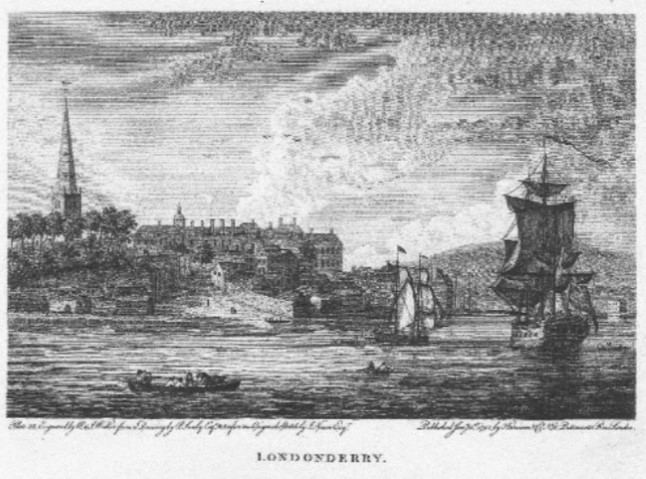
Londonderry, North Ireland

The Scots-Irish and Why they are Important in American History

In many places in Northern Ireland and North America the 300th Anniversary of “The Great 1718 Migration,” will be celebrated by the descendants and friends of the Scots-Irish. While not the first migration of people from Ireland to America, the 1718 Migration was the first successfully organized migration to America. Significant numbers of families from the north of Ireland traveled on sailing ships to Boston and went on to found communities in America, at first in Massachusetts, New Hampshire and Maine and onwards throughout the continent.

During this season, 300 years ago, the migration from Northern Ireland would have just begun. The small ships Robert and William from Coleraine and The McCallum, The Mary and Elizabeth, and the William & Elizabeth all left from Londonderry with passengers and supplies and  would now be on the high seas. Besides being small for an ocean crossing, these sailing vessels were never meant to carry human cargo which made the journey arduous for all of those onboard.

Over the next several weeks, I plan to retell the story of the 1718 Migration. This will include the reasons why they left Northern Ireland and why their experience in Ireland made them some of the most intractable small “d” democrats in America. The 1718 Migration was the beginning of a giant wave of Ulster Migration to America with many Scots-Irish populating the sparse lands of New England, Western Pennsylvania and the mountainous regions of the south.

One of the most famous Scots-Irish descendants was “Old Hickory” himself, President Andrew Jackson, who in one individual, aptly personified the character of this race of people.  As president, Jackson sought to advance the rights of the “common man” against a “corrupt aristocracy” and to preserve the Union. This was popularism directly from Scots-Irish roots. Born in the colonial Carolinas to a Scotch-Irish family in the decade before the American Revolutionary War,” Jackson freed America from the control of the elites and killed the Central Bank for over one hundred years. This laid the groundwork for great prosperity and growth in America. A time when common people were free to make their fortunes.

In his speech to congress, Jackson’s warnings are even more appropriate for America today. “It is to be regretted that the rich and powerful too often bend the acts of government to their selfish purposes. Distinctions in society will always exist under every just government. Equality of talents, of education, or of wealth can not be produced by human institutions. In the full enjoyment of the gifts of Heaven and the fruits of superior industry, economy, and virtue, every man is equally entitled to protection by law; but when the laws undertake to add to these natural and just advantages artificial distinctions, to grant titles, gratuities, and exclusive privileges, to make the rich richer and the potent more powerful, the humble members of society-the farmers, mechanics, and laborers-who have neither the time nor the means of securing like favors to themselves, have a right to complain of the injustice of their Government. There are no necessary evils in government. Its evils exist only in its abuses. If it would confine itself to equal protection, and as Heaven does its rains, shower its favors alike on the high and the low, the rich and the poor, it would be an unqualified blessing.”

This longing to be free from the control and dictates of the elites with the right to enjoy the fruits of ones own labor without being plundered by the powerful and well connected, the desire for a weak central government and “states rights;” all of this is at the at the heart of the Scots-Irish soul and character. You can thank your freedoms to them because they were the very opposite of the Puritans and in many ways explains the differences that once existed between New Hampshire and Massachusetts.

How was the Scots-Irish character different than the Puritans you ask? The Scots-Irish were all in on “live free and die, death is not the worst of all evils,” idea which was coined by General John Stark,  a Scots-Irish descendant born in Londonderry, NH. The Puritan mantra should sound familiar today, since they saw themselves as morally superior and as such, felt that people should shut up, follow their dictates and if a witch or two got burned so be it. The Puritans saw the “Christian community,” or “the collective” as important; the Scots-Irish were champions of individual rights.

As I continue to write this, I am a little worried about my New England roots, however, as a descendant of the Scots-Irish, I feel free to insert the opinion of a southerner into this discussion of the “self-righteous, Puritan, Yankees.” Thomas Jefferson had a strong dislike of Yankees as did many other Americans. “The novelists Washington Irving, James Finemore Cooper, James Kirke Paulding, and Herman Melville, among others, wrote novels that ridiculed the “Yankee” mentality that they all abhorred.  (In Irving’s story of “The Headless Horseman” Ichabod Crane was a Yankee who had come from Connecticut to New York and “made himself a nuisance” so a young New Yorker played a trick on him to send him packing back to “Yankeeland”).  Thomas Jefferson himself once complained that “It is true that we are completely under the saddle of Massachusetts and Connecticut, and that they ride us very hard, insulting our feelings, as well as exhausting our strength and substance.”  This was long before anyone began debating the issue of slavery.  The Yankees said Jefferson, “were marked with such a perversity of character” that America was bound to be forever divided between Yankees and non-Yankees.”

Clyde Wilson,  an admitted apologist of the south, says rather eloquently about the Yankee, that ” The Southern people warned others about the radical utopians of New England, and even went to war to get away from them, but to no avail. Now all Americans, not just Southerners, are subject to the whims of “those people” and their never ending mission to recreate, not only America, but the entire world in their bizarre, sanctimonious image.”

Today, you still find the morally superior “New Yankee” and their hangers on supporting elitist causes worldwide. Yes this is a broad brush, but it more fun than a much deeper and boring analysis, and I have so little room here. These two streams of traits are still at war with each other in America today.  The drive to stifle free speech and protect people from individual opinion has it s roots in the Puritan heritage of community control and self-righteousness. “The deplorables;” decent, hard working folks, “the silent majority” who go to work every morning to support themselves, just want the government and the New “Puritans” to leave them the hell alone; this American character descends in large part from Scots-Irish roots. Jungian’s might see this all as a battle for the soul of the collective unconsciousness of America.  Pay attention; It is!

Samuel Green writes in an American Antiquarian Society article, The Scotch-Irish in America, “For hundreds of years before the beginning of the seventeenth century the Scotch had been going forth continually over to Europe in search of adventure and gain. As a rule, says one who knows him well, ‘he turned his steps where fighting was to be had, and the pay for killing was reasonably good.’ The English wars had made his countryman poor, but they had also made them a nation of soldiers.” And so it was the Scots-Irish who were the most ardent supporters of the American Revolution, comprising 40 percent of the army. It was their descendants from the hills of the south, men who in the vast majority of cases owned no slaves, but felt, in the Jacksonian tradition, that a powerful central government telling the states what they could and could not do was evil, fought and died for the confederacy.

Jim Webb says in Born Fighting,  “I wanted this book to be right and I wanted it to be read—by those who are the product of this cultural migration, by those who have forgotten or ignored it, and those who wish to understand how populist-style American democracy was created and still thrives.” To state it a bit differently, in the context of recent American politics this is the story of the core culture around which Red State America has gathered and thrived. Its tendency toward egalitarian traditions, mistrust of central authority, frequent combativeness, and an odd indifference to wealth make the Scots-Irish a uniquely values-based culture, whose historical journey has been marked by fiercely held loyalties to leaders who will not betray their ideals…  Great lines from country music— an art form created and dominated by the Scots-Irish—are continuing testimony to the pervasiveness of these themes:  “I can be had, but I can’t be bought.. Take this job and shove it, I ain’t working here no more…We’ll put a boot in their ass, that’s the American way…You can stand me up at the gates of hell but I won’t back down….You can’t stomp us out and you can’t make us run, ‘cause we’re them old boys raised on shotguns… And so on. And, so, ever, on again…” (Think Johnny Cash/Tom Petty)

Well, I’ve traveled well beyond the subject at hand, which is the Migration of 1718. Over the coming weeks there will be more about the migration, the people who made the trek and what happened on the way. You’ll see how nasty, insulting and inhospitable the insular Puritans were to the newly arriving immigrants.   In many ways, the Scots-Irish, simply by living their lives, defined some of the most noble attributes of Americans.

If you’re interested is some thought provoking reading check out: Born Fighting: How the Scots-Irish Shaped America, by Jim Webb and The Yankee Problem, An American Dilemma, Clyde N. Wilson


Windham Life and Times – June 15, 2018

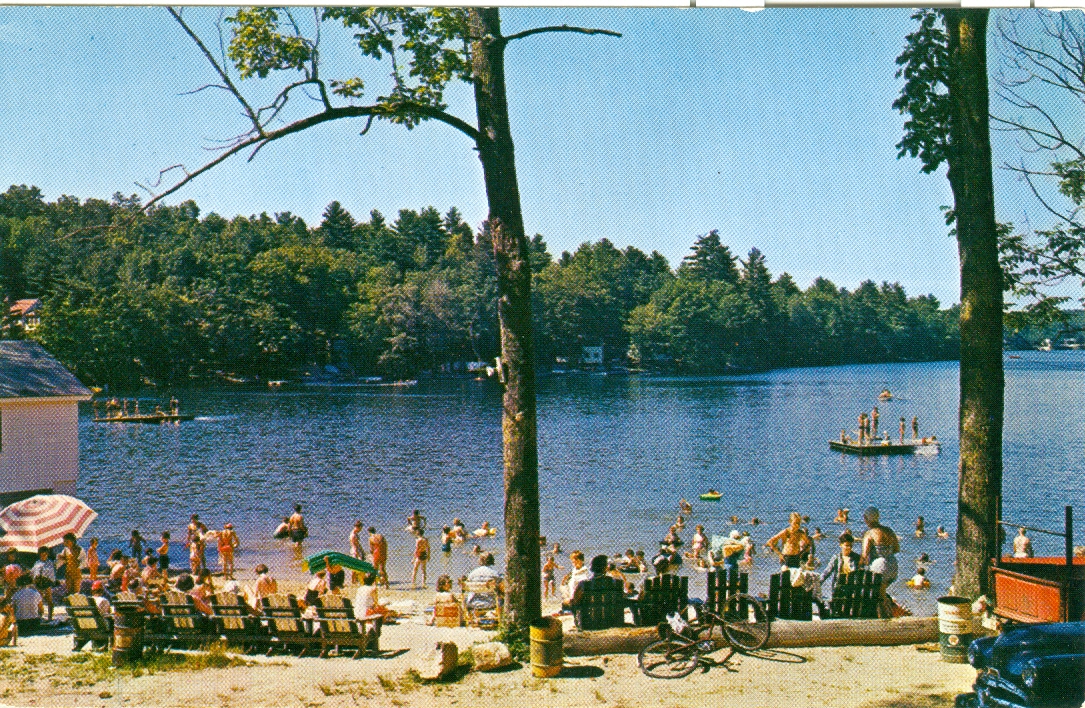
Random Glimpses of Cobbett’s Pond

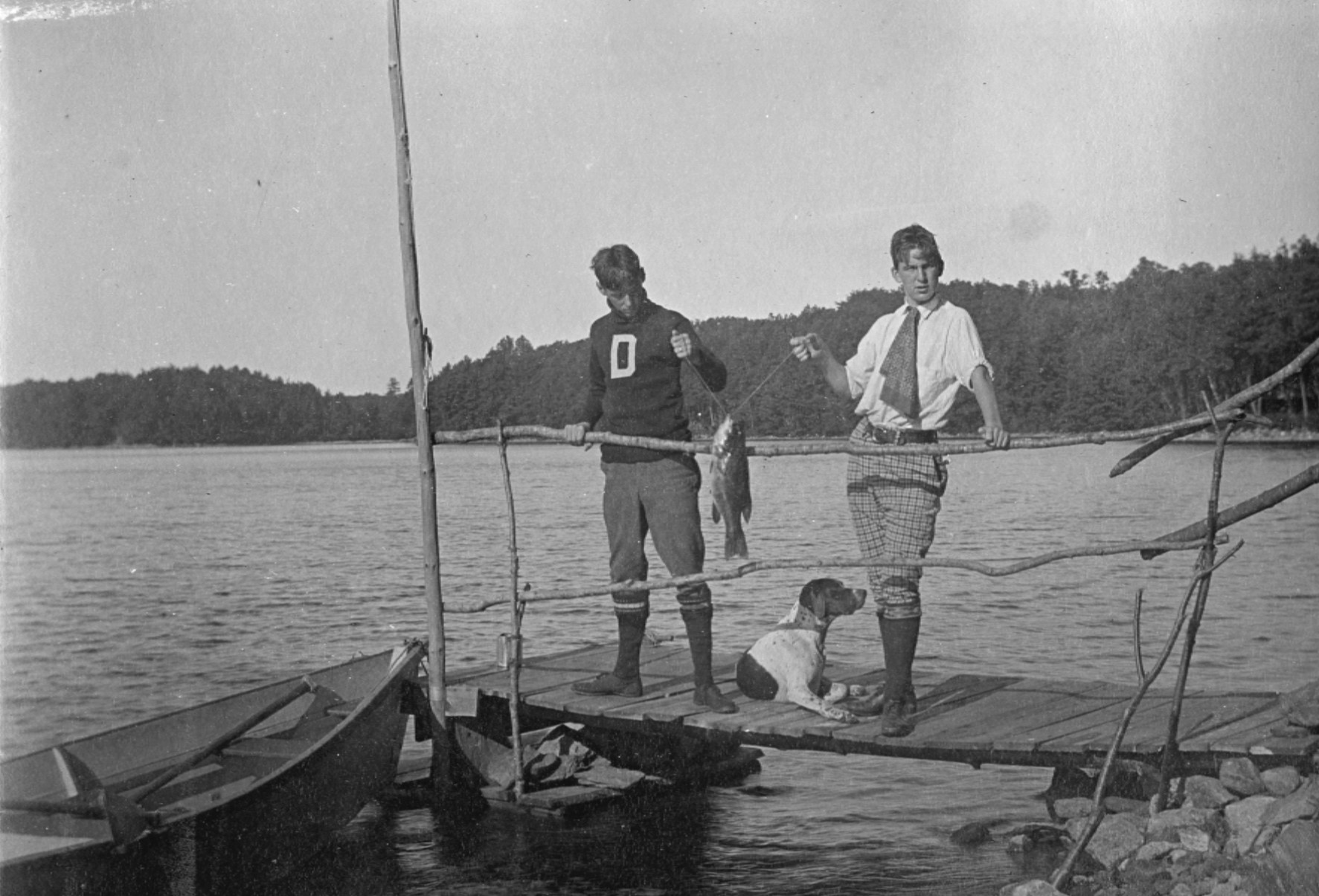
William Austin Brooks Diary, June, 1900

June 16, 1990 (Saturday): Last night Howard and I came back to Fairview. He, like everyone else, thinks it is a pretty place. This morning we launched the canoe for the first time on Cobbett’s Pond. Mary and I went out early and she caught a 20 inch pickerel. Later Howard caught one, and John another, 16 inches. I cut a birch and set up cots in the tent with a little stand between them at the head so they look quite shipshape. The children have been on and in the water all day. It has been perfect, clear, cool, with a fresh breeze.

     Yesterday morning I was at the Smith farm at Green Harbor and today I am here. It is nice on the shore, especially in a place like that where you get the country and the ocean but I love the woods and hills the best, and this pond with its clear water, encircles by green hills with the breath of pines is the place for me. John and I saw a small heron with a snake near Tupelo Point. We had pickerel for supper and they were delicious.

Pictures taken today:

The Narrows from the camp.

The children and boat on the beach.

Toward Breezy Point from the Camp.

The shore at the mouth of the brook.

June 17, 1900 (Sunday): Mary and I went out fishing this morning but caught no fish. We have the flags flying in honor of Bunker Hill and they make the place look very gay. Howard hates to go back to school tomorrow. Mary and I walked through the woods to Wyndham Lodge and on the way found a ledge of rocks similar to those at the Camp. The Maple Leaf Viburnum is in blossom, a very pretty shrub. John and Auston have four turtles, on of them they think is a musk turtle. Austin in trying to catch one, sat down in the water all over much to our amusement.

June 18, 1900: Howard and I left the pond this morning. I went to New Bedford and Howard to Cambridge. He swam a two mile race today at Harvard Boat House, a part of the 125th anniversary of Bunker Hill. He won first prize, a gold watch.


Windham Life and Times – June 8, 2018

Windham’s Most Famous Boulder

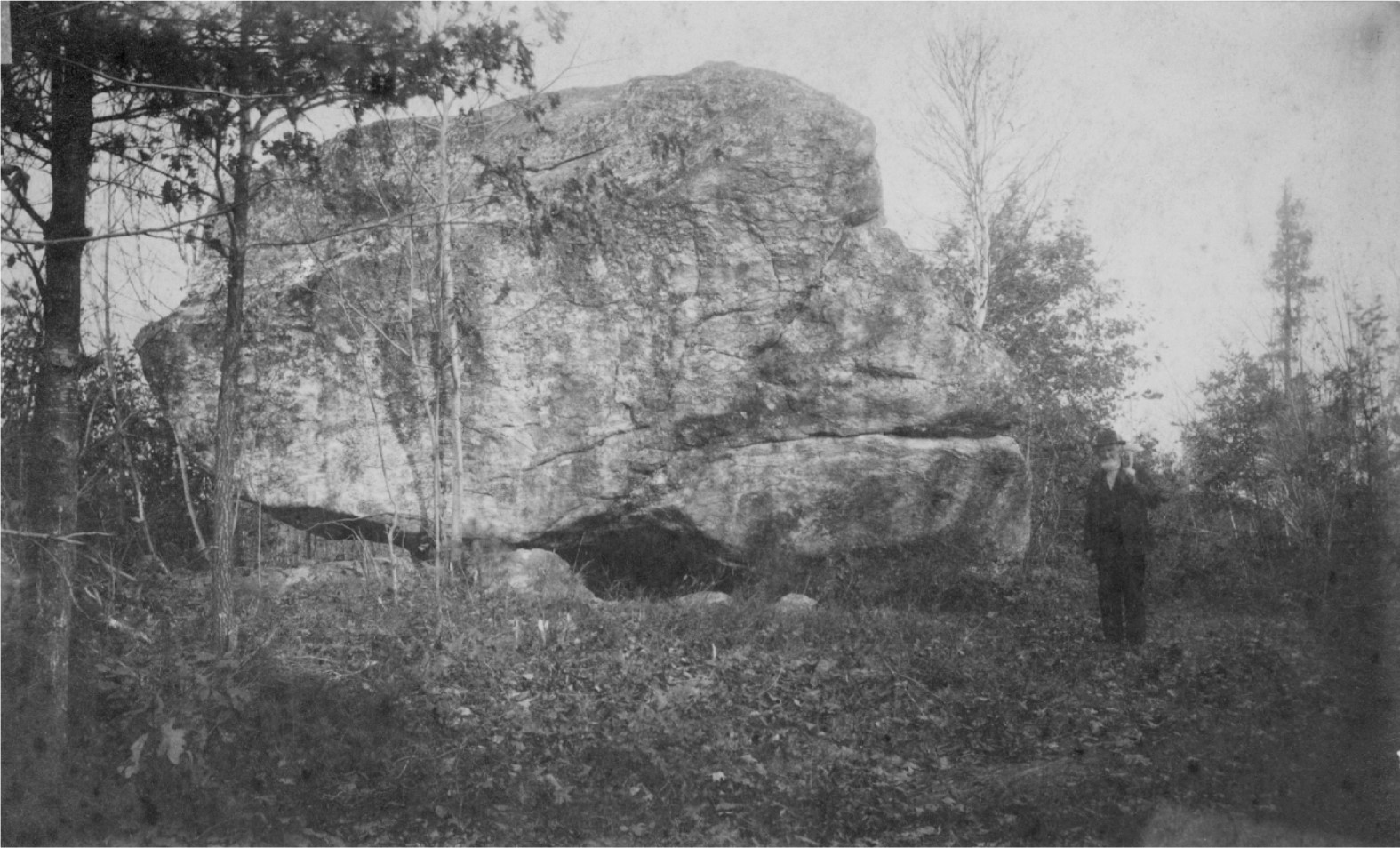
Butterfield Rock

Funny thing, how in Victorian times, you could turn a rock into a tourist attraction. There was (is) the famous “Frog Rock” in Mont Vernon NH. Then there was (is) Madison Boulder, in Madison NH., which is thought to be the largest glacial erratic boulder in North America. Butterfield Rock is also an erratic boulder which is a certain type of rock that was transported by glacial ice and deposited on bedrock of different type of rock. Of course the most famous “rock” in New Hampshire is more of a rock face, which was a huge tourist attraction until it crashed to the ground on May 3, 2003. The demise of the “Old Man of the Mountain” was truly a sad day for all of us who grew up in New Hampshire. The photograph of Butterfield Rock was taken by Baldwin Coolidge in the late 1800’s. The gentleman in the photograph is unknown. Looking at this photograph it hit me that the Victorian tourist promoters in Windham, could of done much better, if they had just called Butterfield Rock, Monkey Rock instead!


Windham Life and Times – May 25, 2018

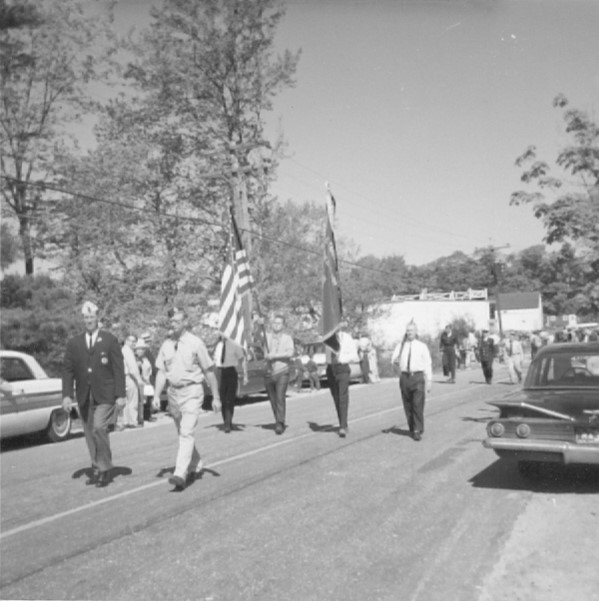
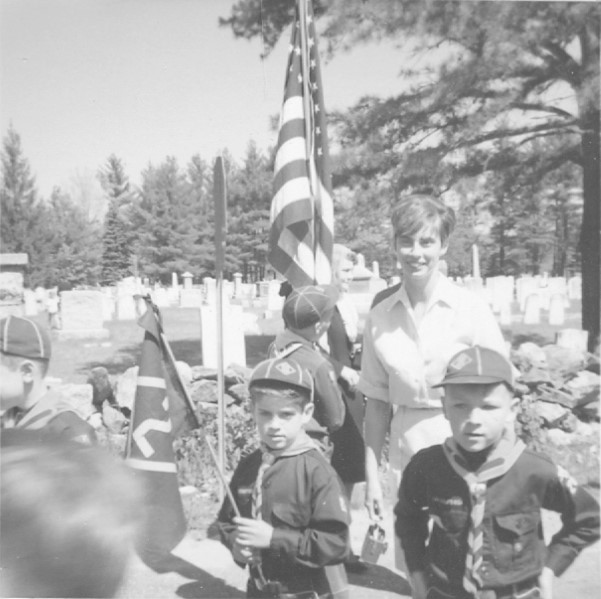
Memorial Day Parade and Services in the 1960’s.

   I came across these  old photographs of the parade and services for Memorial Day in Windham. They would have been taken sometime in the mid 1960’s. My Dad, George Dinsmore, is shown marching in the color guard holding the American flag. I believe the gentleman on the right, with the rifle, is Bob McCartin.  My mom, Marion Dinsmore, is pictured in the photograph on the right. She was a den mother for a number of years with Cub Scout Pack 266. The two scouts pictured are Kenny Montgomery and Tommy Wilson. Be sure to get out on Monday and carry on the good old Windham tradition of remembering those who sacrificed to defend this country and keep it free, as well as, support those marching in the parade!

Windham Life and Times – May 18, 2018

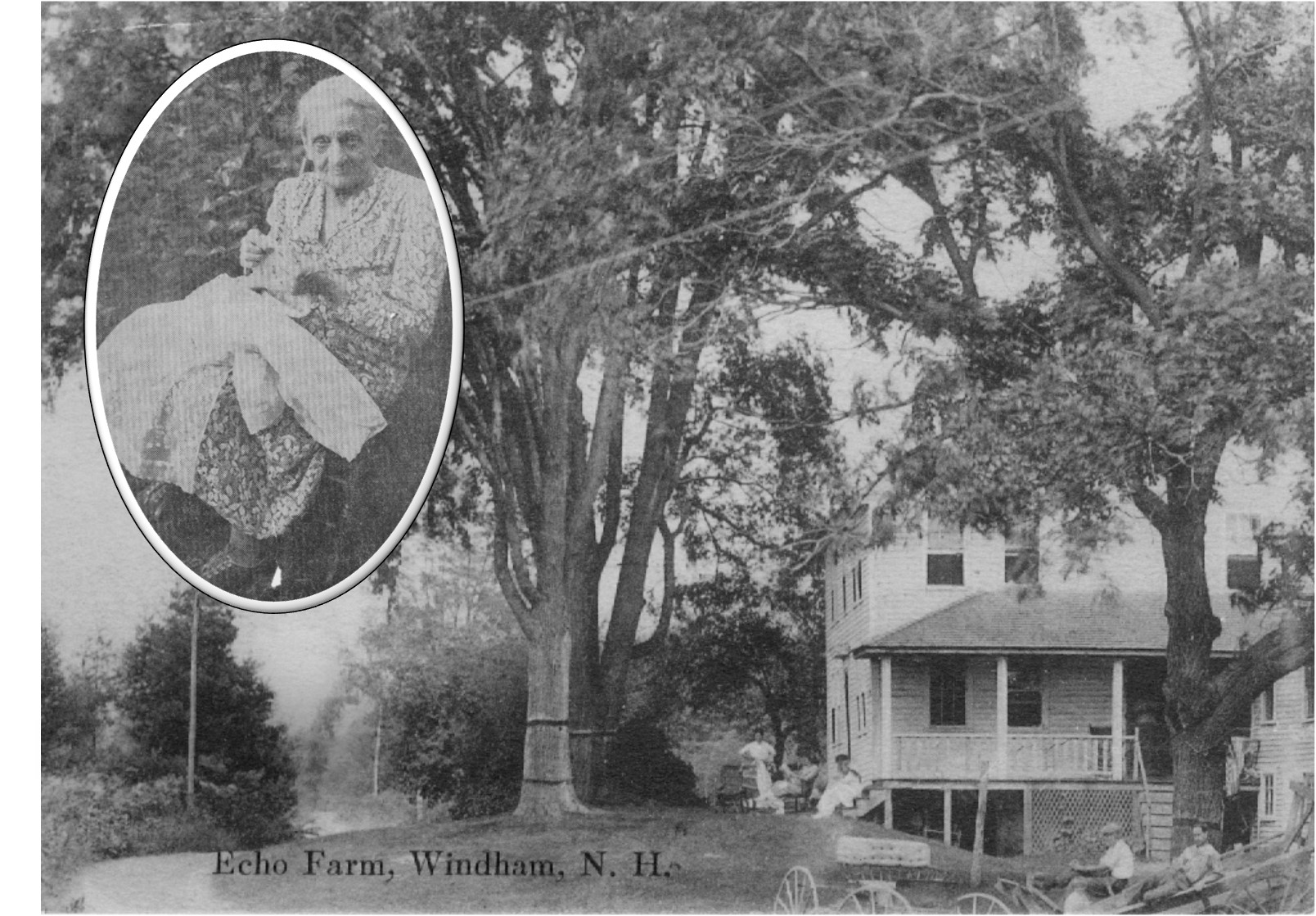
Had Kin in Every U.S. War

Mrs. Henry Gilson | July 28, 1942

Mrs. Gilson is shown above knitting for the Red Cross during World War II. She and her husband purchased the J.C. Armstrong farm in 1898. It is pictured above and below and was located on Haverhill Road between the Center and West Windham. She was the librarian at Nesmith Library from 1922 until 1943. She was born in 1869 and died in 1950.

    Manchester Union Leader:  “Windham, July 27.— A remarkable family war record—dating back to the Revolution— is possessed by Mrs. Henry Y. Gilson of this 200-year-old town. Relatives have taken part in practically every war in which this country has been engaged since its birth, a fact of which she is duly proud but quite modest.”

“Two great, great grandfathers of Mrs. Gilson participated in the famed Boston tea party. They were Joseph Shed and William Wheeler, both of whom are buried in Tomb 69, Granary burying ground, near Park Street church, Boston, in the same cemetery with Paul Revere. Some of the colonist masquerading as Indians for this party changed their clothes in the general store of Mr. Shed in Boston. Two other great, great grandfathers served as captains in the war with Britain, Caleb Kimball and Samuel Carr.”

“Lorenzo B, Kimball, father of Mrs. Gilson served in the Civil war, along with two of her uncles, William H. Shed, who died a war prisoner, and Henry Fargo. The local woman’s husband, who died six years ago, was a first lieutenant in the Spanish-American War, Two of his brothers, and a brother-in-law, also took part in that conflict, besides several cousins. The trio were Howard A. Gilson, now in Chelsea, Mass., veteran’s hospital, recovering from a major operation; Valentine E. Gilson, who later served as a color guard for a Connecticut governor, and died two years ago; and Louis Winchenbach of Lexington Mass. “

“A son of Mrs. Gilson, Henry E. Gilson of Sunapee, was a fireman in the U.S. Navy in the First World War, and is now endeavoring to enlist in this war. A son-in-law, Paul B. Evans of Windham, also saw service in the European battle, enlisting at the age of 18. A nephew of Mrs. Gilson, Frederick F. Harmon, a brigade runner, was killed in the Argonne engagement.”

“A grandson Paul G. Evans, 19, enlisted in the U.S. Navy last January and is stationed at Boston as a second class seaman. Another grandson, Robert W. Evans, has tried twice to enlist in the Navy, but was rejected because of a slight ear ailment. He has been taking regular treatment, however, and when he made his second try last Thursday was told to come back a week later and there would be no doubt about his acceptance.”

“Mrs. Gilson is also doing her part in civilian defense activities. She serves at the local report center two afternoons weekly and does knitting for the Red Cross. She has been the librarian of the Nesmith Public Library for 20 years.”

She has belonged to the Molly Reid chapter D.A.R., of Derry for more than 25 years, and is past president of the Windham Woman’s club. She is a trustee of the Windham Presbyterian church and holds membership in Windham grange and Mizpah lodge of Derry.”


Windham Life and Times – April 27, 2018

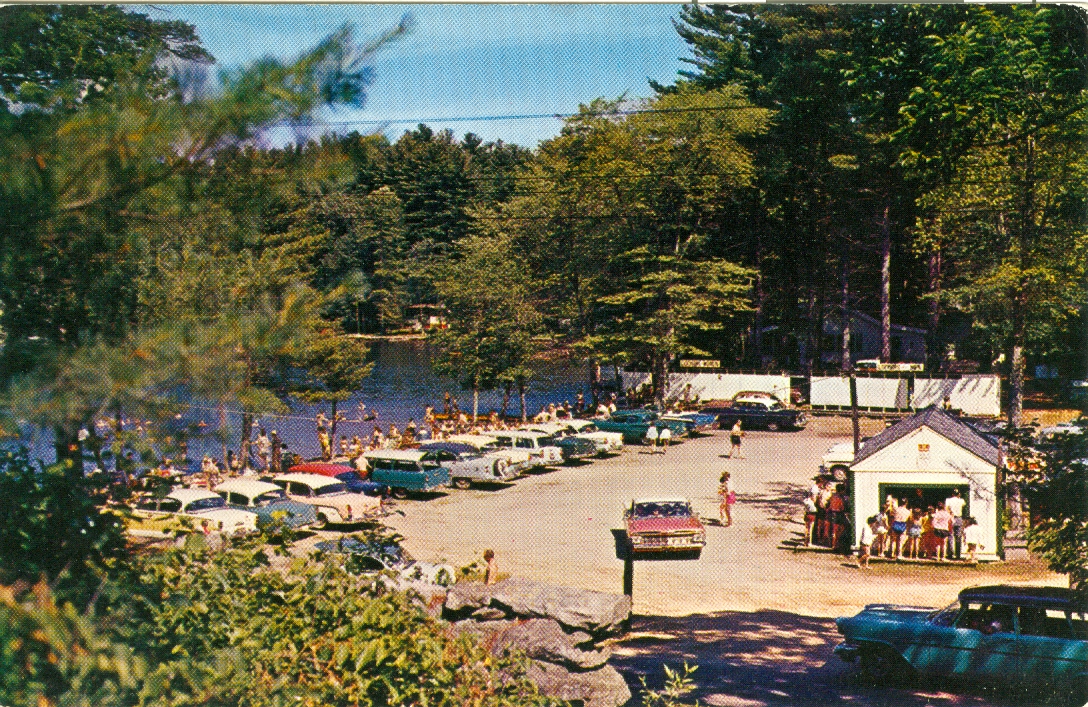
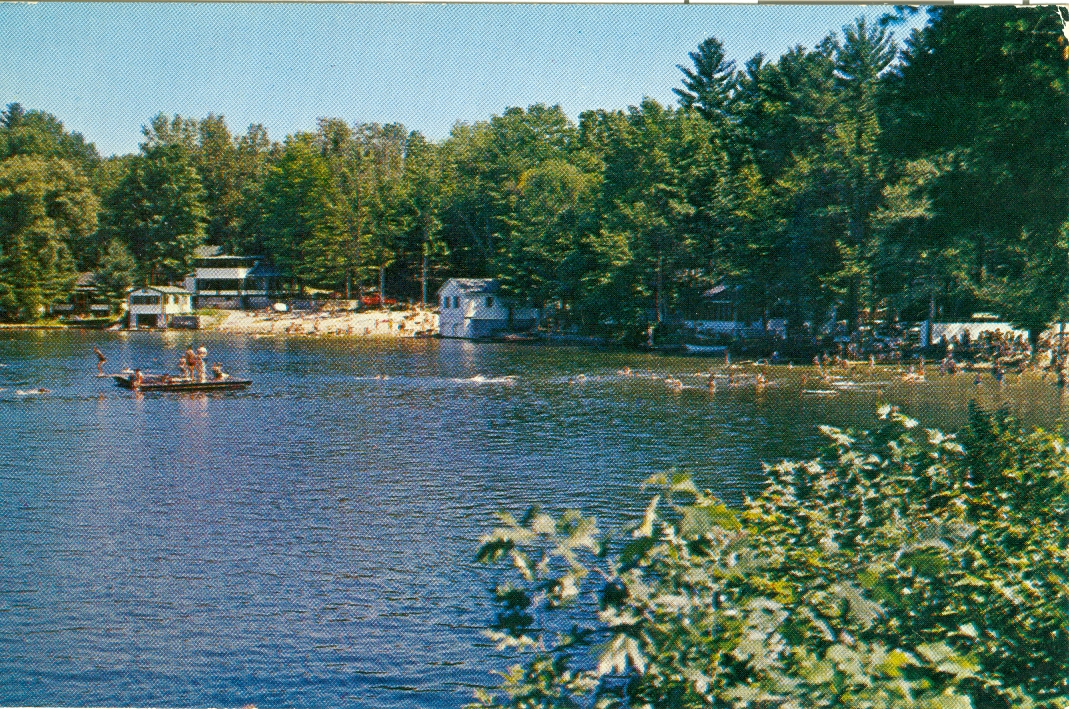
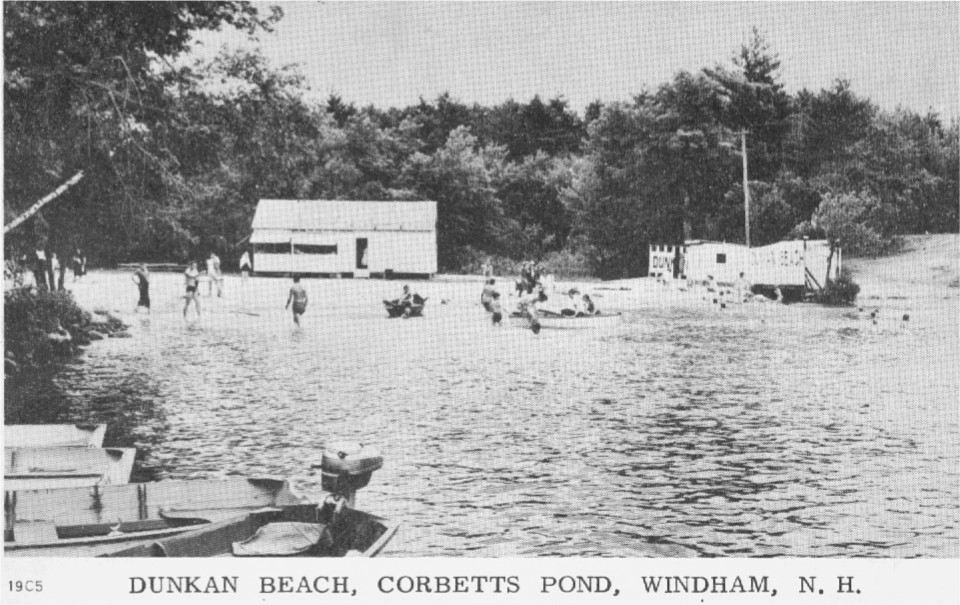
Dunkan Beach

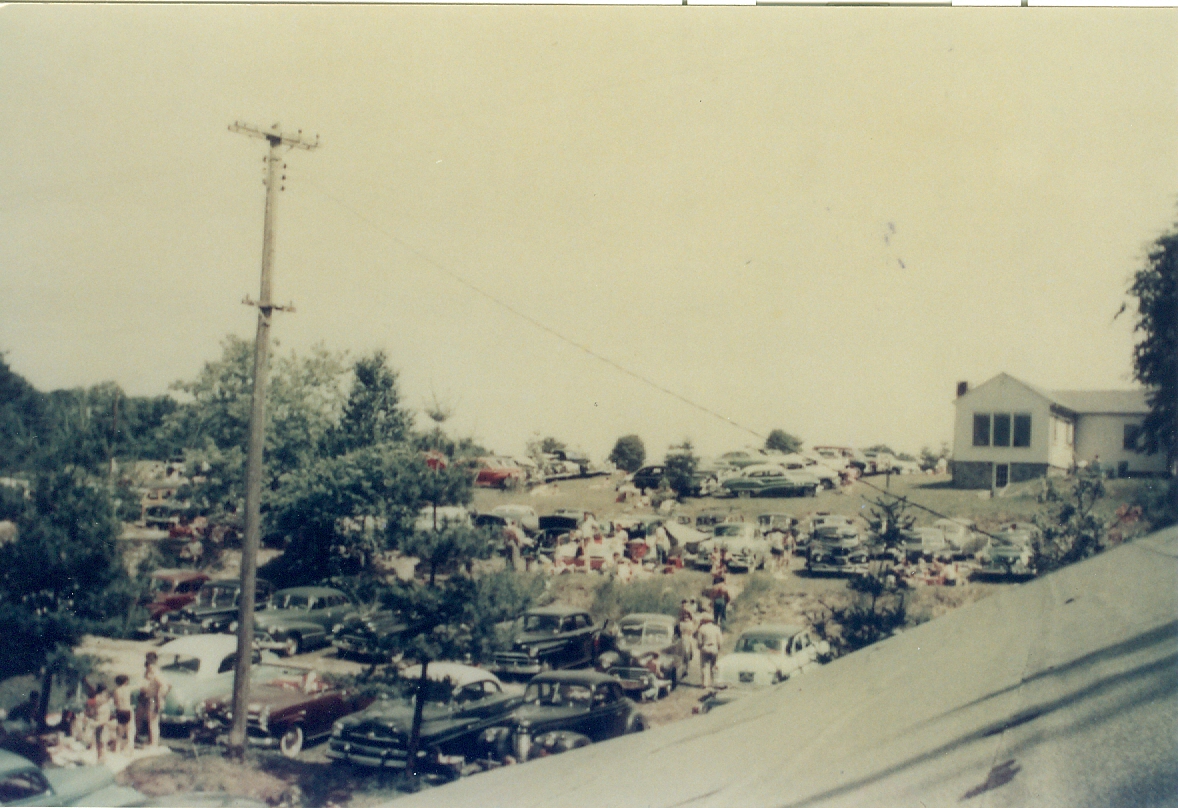
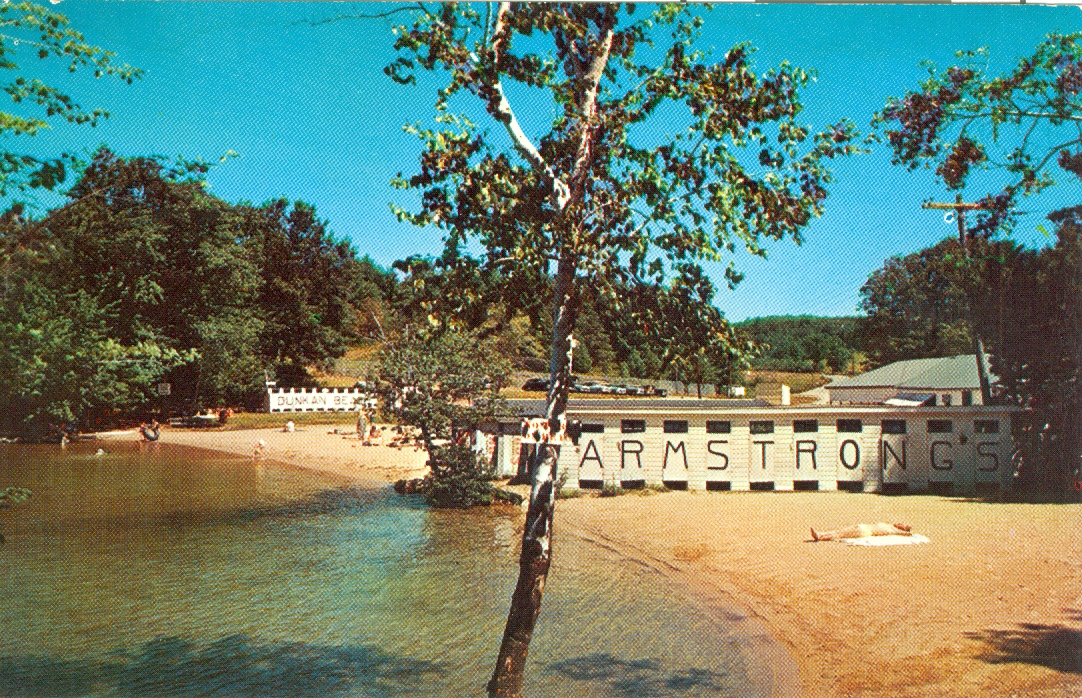
George Dunkley purchased this property on Cobbett’s Pond in the 1930’s and set about operating a public bathing beach here.  It was said that Mr. Dunkley had intended the name to be Dunkin Beach like the doughnut chain, but the sign maker made a mistake so the name became Dunkan Beach instead. He built a refreshment stand selling hot-dogs, soft drinks and ice cream. Later a pavilion was added with pinball machines, a jukebox and bowling alleys. “It was rumored that during the early forties there were one armed bandits housed in the boat house.” Speaking of boathouses, the whole east end of Cobbett’s Pond used to be covered with small, wooden, black and white row boats, for a far as the eye could see, many crammed with people and nearly capsizing.  Of course, Dunkan Beach was located where Castleton is today.


Windham Life and Times – April 13, 2018

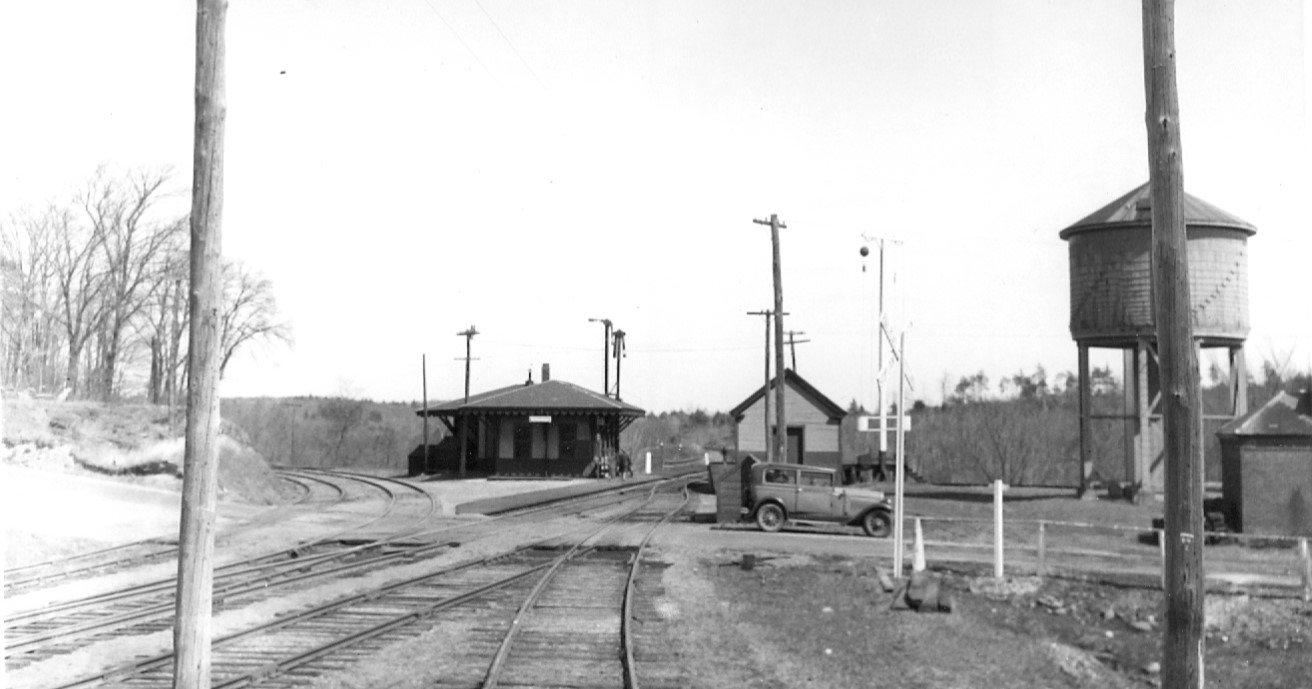
Windham Junction

The Boston and Maine Railroad Station at Windham Junction circa 1930

There was a time in New Hampshire, in the late 1800’s, when the state government was controlled and did the bidding of the Boston and Maine Railroad. They picked the candidates and dictated many of the important decisions. By 1930, when this photograph was taken, the glory days of the B & M Railroad were long over. Describing the “Depot” about that time, Richard Hoisington says in the B&M Bulletin that, “In 1927, the general store and its attached buildings were destroyed in a spectacular fire that threatened other buildings in the junction area. After the fire, Postmaster Clyde began selling groceries and before long he installed gasoline pumps as well. Although his store inventory was limited, it is said that ‘if he didn’t stock it, he could get it for you.’ Clyde was postmaster until 1945 when the store was closed and eventually torn down in 1965. Effective September 14, 1935, the Windham station agency was closed and the sale of tickets discontinued. The few passengers who wished to entrain at Windham could buy their tickets from the conductor. Passenger service on the Manchester and Lawrence Branch was reduced to a single round trip daily prior to World War II. Weekday trains consisted of a gas-electric car and a trailer.  A K-7 Consolidation powered Sunday trains. The last scheduled passenger train, NO. 1511, consisting of gas-electric No. 182, was operated July 10, 1953 by conductor Harold Leavitt, Engineer John Bryant and Baggageman, Bernard Walls.”


Windham Life and Times – April 6, 2018

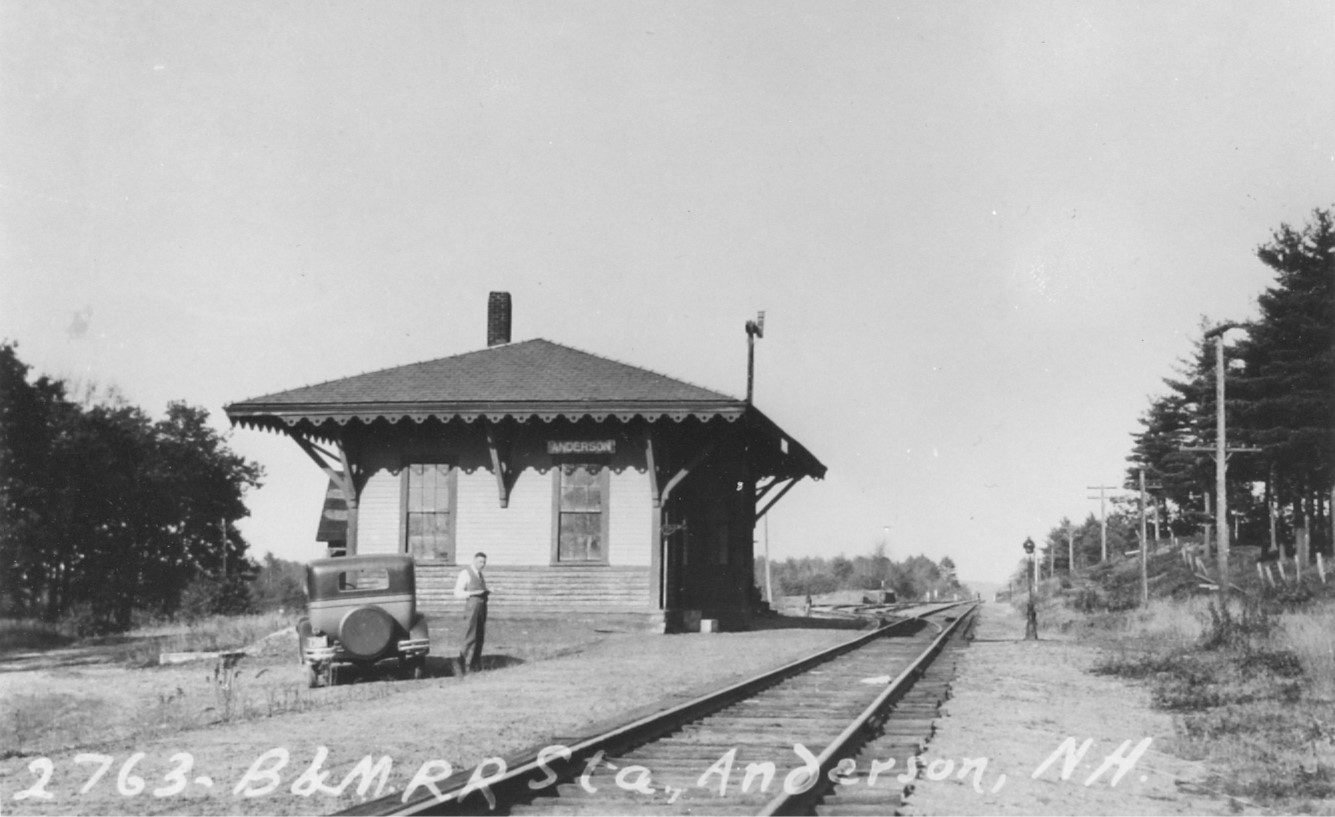
Anderson Station

Anderson Station was located in West Windham. It was originally built in conjunction with the Nashua & Rochester Railroad. Trains started running in 1874. This WN&R Railroad line was sold to the Boston and Maine Railroad June 1911. This picture is a witness to the coming end of the line. The last train, No 827, was operated by conductor Howard Andrews and Engineer Henry Bliss on March 3, 1934. The station was named for William Anderson a notable West Windham resident.